
Specifications
- Fuel types
- Petrol
- No of seats
- 5
- Boot space
- 380 litres
- Dimensions
- 4,108 mm x 1,954 mm x 1,459 mm
- Fuel economy
- 51.4mpg
- Acceleration (0-62mph)
- 7.4 seconds
- Insurance group
- 22E
- Body style
- Hatchback
- CO2 emissions
- 124-125g/km
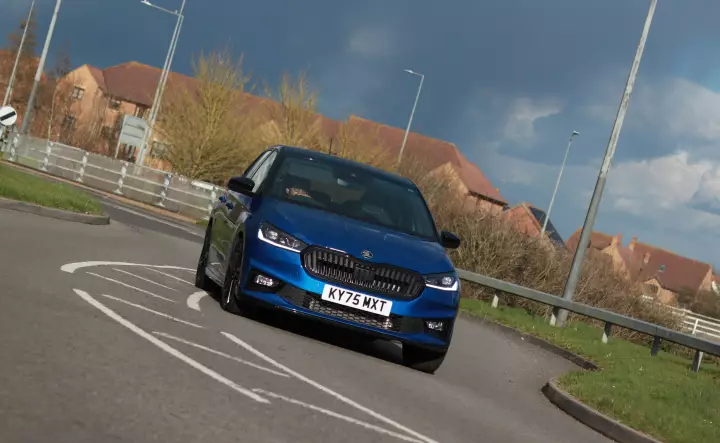
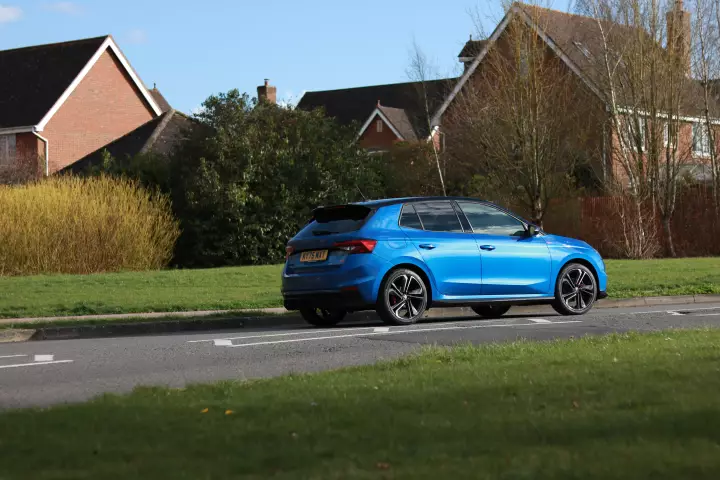
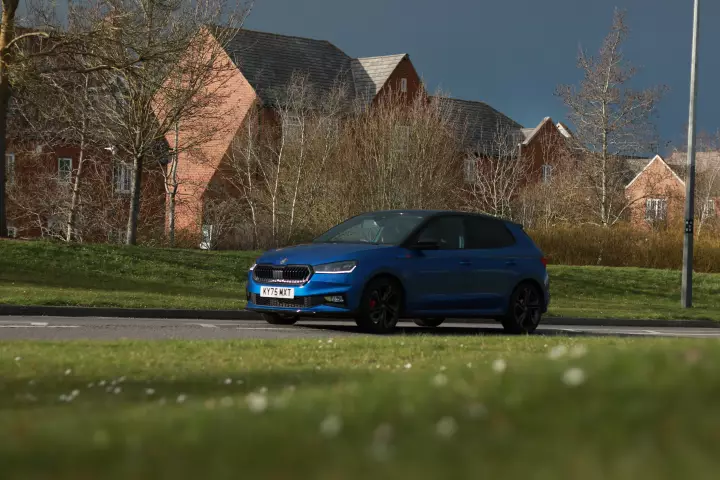
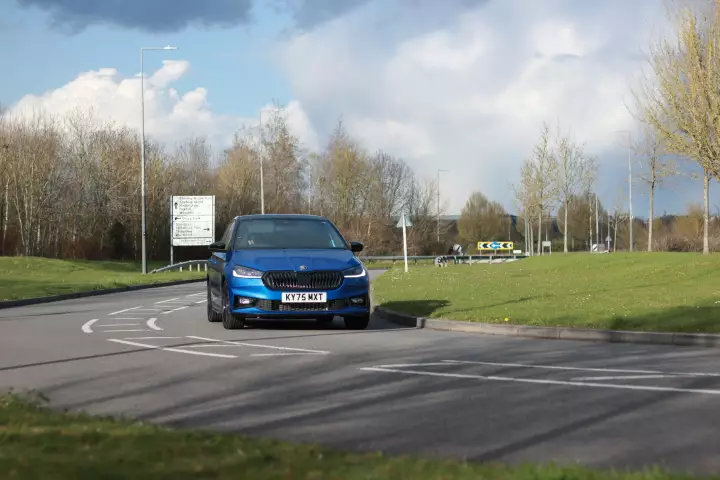
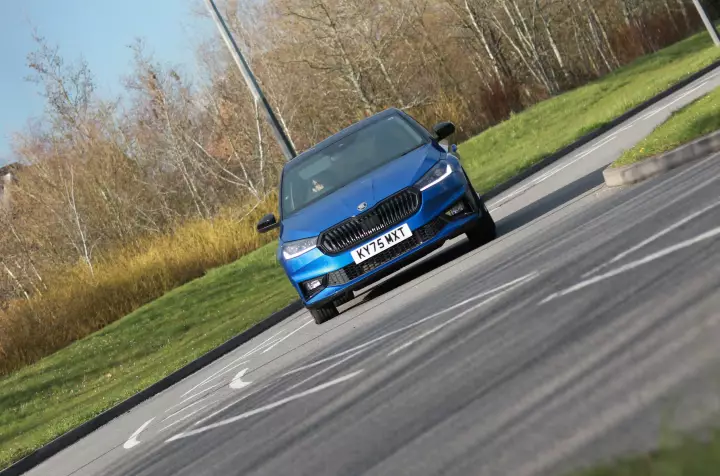
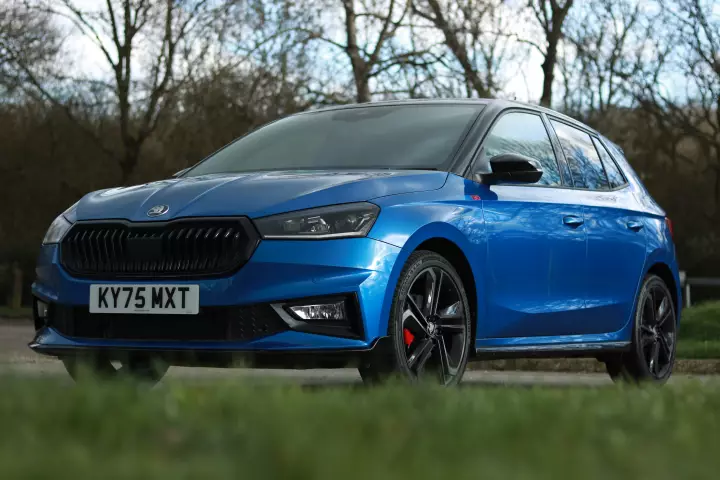
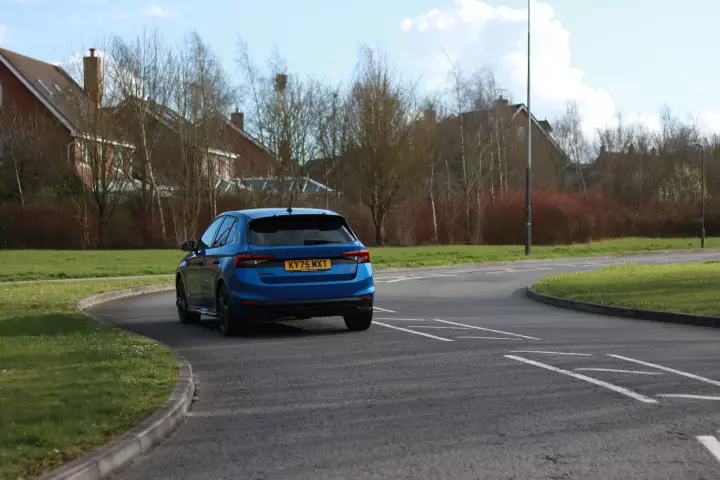
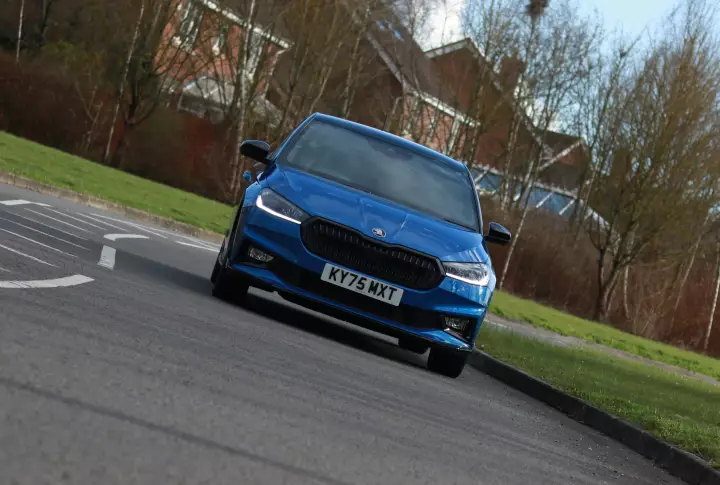
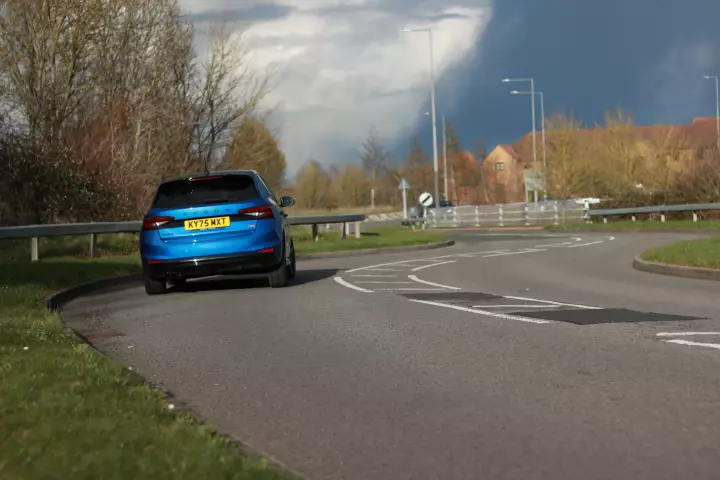
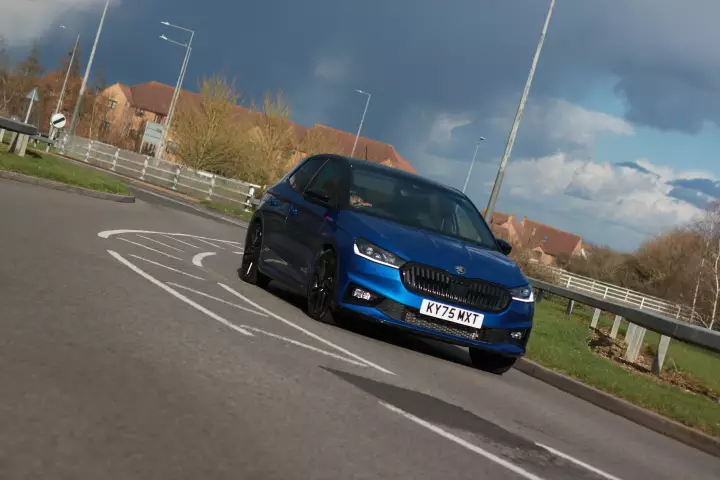
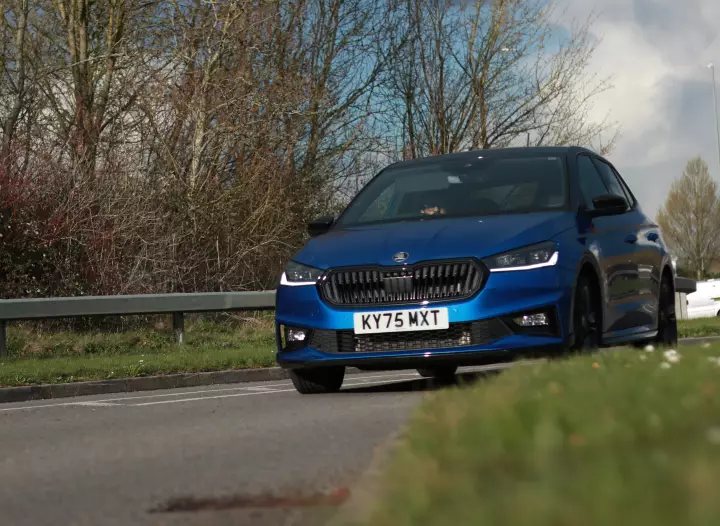
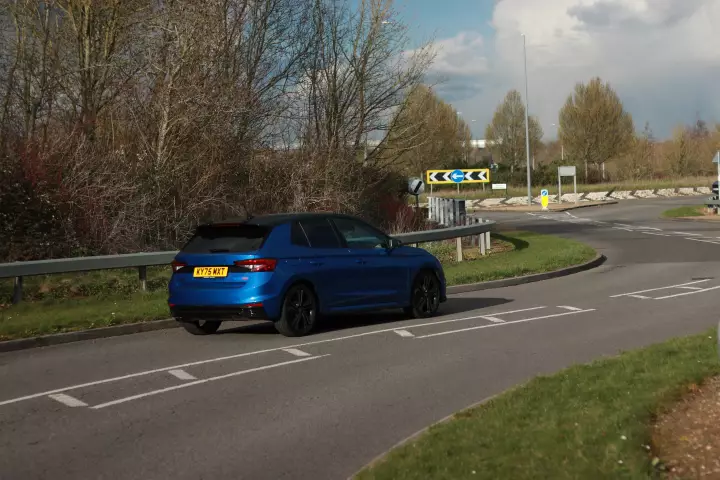
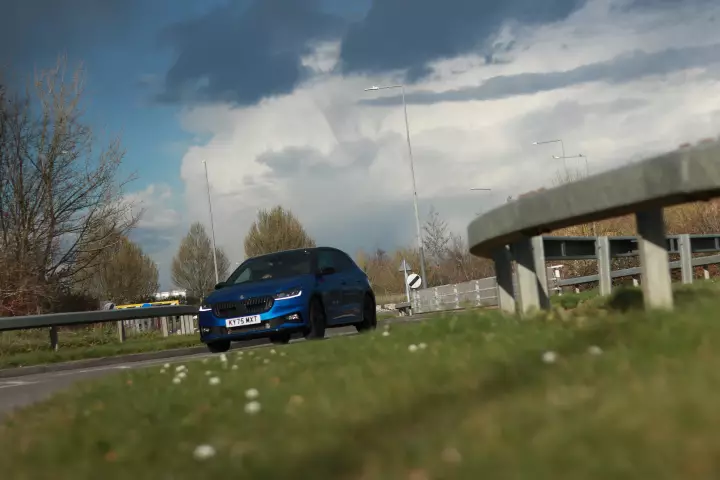
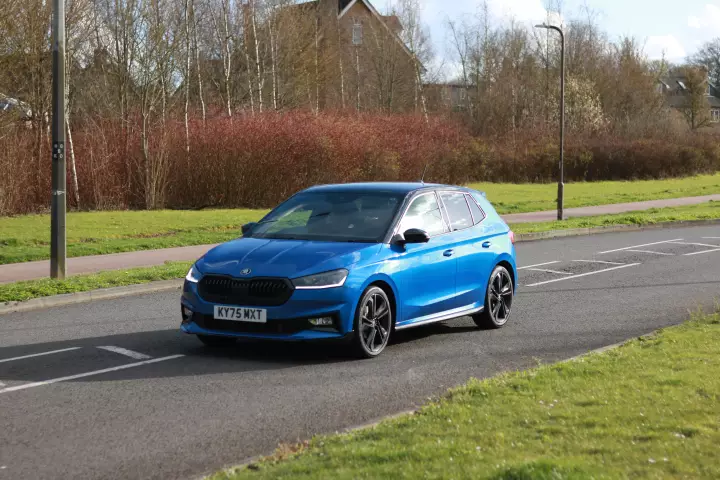
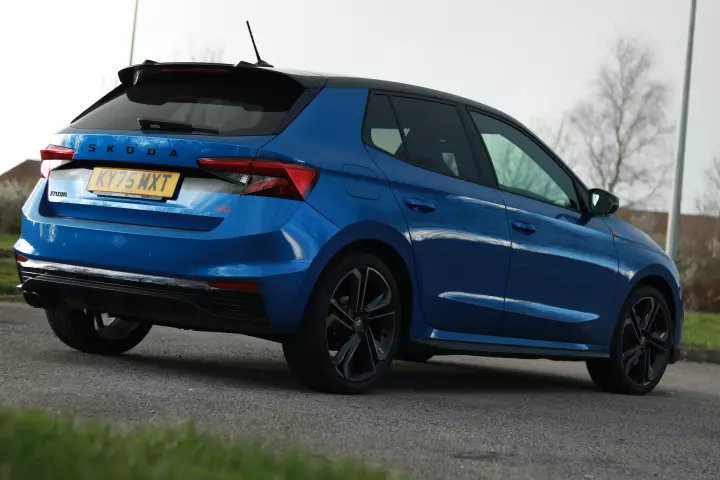
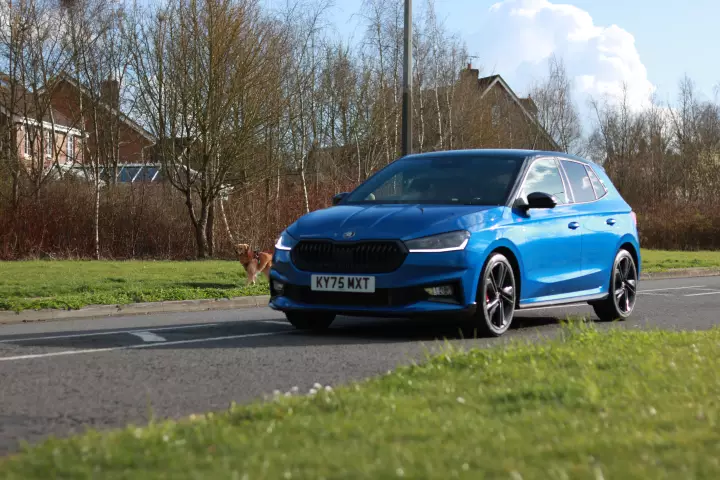
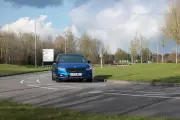
It’s 2026 and hot hatches are starting to disappear. Skoda’s Fabia vRS is one such example. But Skoda hasn’t yet given up. The Czech brand has tweaked its accomplished supermini, giving it more power and character to create the Fabia 130 – a 175hp warm hatch that sits between the standard Fabia and the Fabia vRS. We drove one to see whether this warm hatch should be on your shopping list.
AA Cars Rating: 4.1/5
How we test carsIf I’m buying a used Skoda Fabia, I’d start with the service history and MOT record. I’d then check the transmission carefully. On automatic models, it should pull away cleanly and change gears smoothly. On manual cars, the clutch should feel even and progressive, with a clean bite point. On older or higher-mileage examples, I’d also listen for any rattle on cold start and check that the correct timing-chain or cambelt work has been carried out for that particular engine.

Reece Proctor is a Roadside Patrol at The AA, with practical experience in both workshop and roadside roles, and specialist expertise in hybrid and electric vehicles.
Read bioThe Fabia is generally a simple, reliable car, which helps long-term ownership. It is not overloaded with complex electrical kit, so there is usually less to go wrong than on more feature-heavy rivals.
Fabia ownership is usually straightforward in the first five years, but regular servicing still matters. My advice would be to combine the annual service with a proper inspection, so the suspension, brakes, underbody and general wear items are checked over before small issues become bigger ones.
Battery health is worth checking once the car gets to around five years old, even though many original batteries last longer than that. Exact service intervals can vary by engine, age and whether the car is on a fixed or flexible service regime, so it is worth checking the handbook and service record for the example you are buying.
When buying an older Fabia with high miles, also pay close attention to the timing chain or a cambelt. If there is a rattle on cold start, or no evidence that the right maintenance has been carried out, it is worth investigating further.
Running costs are one of the Fabia’s strengths. Tyres, brakes and most routine service items are usually reasonably priced because parts are common and widely available. In most cases, there are no big hidden ownership costs.
Yes, generally the Skoda Fabia is a reliable hatchback. It has a strong reputation, and it is common to see these cars cover well over 100,000 miles. They are more likely to come in for routine servicing than for serious mechanical faults. There is not one standout engine or gearbox issue that defines the Skoda Fabia, which is a big part of why it remains a reliable used buy.
The Fabia 130’s biggest trait is that it doesn’t pretend to be a hot hatchback. Instead, it’s a thoroughly accomplished and practical supermini that is brisk and involving to drive without compromising on other areas.

Adithya is the Content Editor at AA Cars and a Motoring Journalist, with over 1,000 published articles across numerous publications.
Read bioA brand-new Skoda Fabia 130 comes with an on-road sticker price of £29,995. There are many options available such as adaptive cruise (£345), heated front seats (£250), etc. With most of the options ticked, the price does go up to £33,000. The Fabia 130 is a relatively new model to commemorate 130 years of Skoda. So used examples are still only finding their way to the used market. However, we do have plenty of used and nearly new Skoda Fabia Monte Carlo models available for great prices.
Under the hood, the Fabia 130 uses a tweaked 1.5-litre TSI Evo 2 engine from the standard Fabia, and it now makes around 25hp more, resulting in 175hp and 250Nm of peak torque. This is thanks to an optimised intake, vibration damper and rocker arm to handle the extra hp. The engine is paired with the 7-speed DSG automatic, which has also seen some updates such as optimised shift points and double-clutch downshifts in sport mode.
All these numbers and mechanical jargon translate to a 7.4-second sprint to 62mph with a top speed of 141mph – making this the fastest Fabia ever, pipping the vRS by 1mph. In terms of chassis updates, Skoda says the 130 features Monte Carlo spec sports suspension (lowered by 15 mm), 18-inch alloy wheels and recalibrated steering.
Going by the numbers, it’s evident the Fabia 130 is a quick car. It also feels reasonably quick when you drive it. The engine develops peak power as you near 6000rpm with 250Nm available from low down at 1500rpm. So, driveability around town is noteworthy, with the Fabia coming across as easy to potter around. Push on, and the first thing you notice is how smooth and progressive the engine feels. There’s no major step-up or surge of torque; it all feels rather straightforward. This, along with the flat soundtrack makes the Fabia 130 feel effortless than exciting.
The 7-speed DSG is responsive and happy to move up or down the gears. Special mention for the conventional gear shift lever. It’s old-school, but it works so well. Although we have no complaints with the DSG gearbox, we do wish Skoda also offered a manual option for more involvement. There are four different drive modes: Eco, Normal, Sport and Individual. Sport mode stiffens up the steering and throttle response, but the changes are not pronounced enough to make a world of difference. The thing is, the Fabia 130’s powertrain is in a relaxed state at all times. It can be brisk when you ask it to be, but there’s no duality here. It is an easy-going and well accomplished hatchback.
Considering the current state of our roads, the Fabia 130’s ride is refreshing. It remains supple at all speeds and handles bad roads surprisingly well for a small hatchback. There is a certain sophistication in how it rides and the overarching theme and focus is comfort. Take it down some B roads and the Fabia feels direct and safe with some adjustability. But it doesn’t feel sharp or energetic around corners. There is a bit of body roll, but it’s well-judged and grip levels are strong. We also liked the sturdy brakes and how refined the ride was, with minimal road noise even at high speeds.
What doesn’t help, however, is the steering, which is missing valuable feel or feedback. It is light at low speeds and weighs up a bit with speed but feels inert off the centre, sapping some involvement. Overall, there is some driving involvement, and the comfort levels stand out. If you’re after a sorted hatchback that is reasonably fun without compromising on ride quality, the Fabia 130 is compelling. It never tries to cross over the line where hard-edged, angry hot hatches exist. At the same time, it’s not dull and uninteresting like its standard supermini peers.
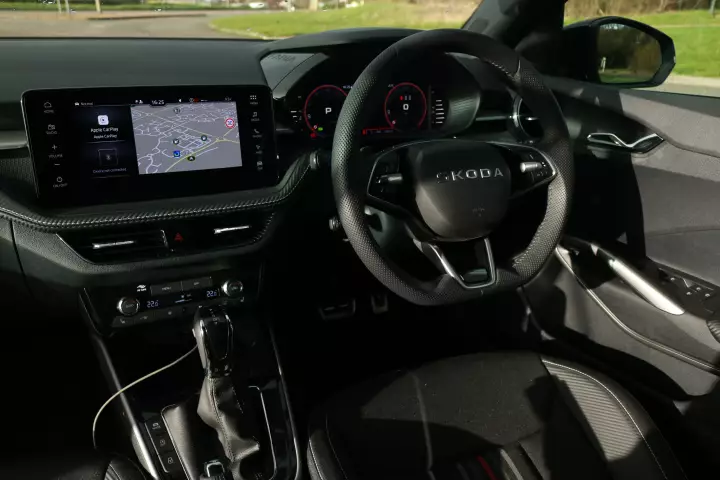
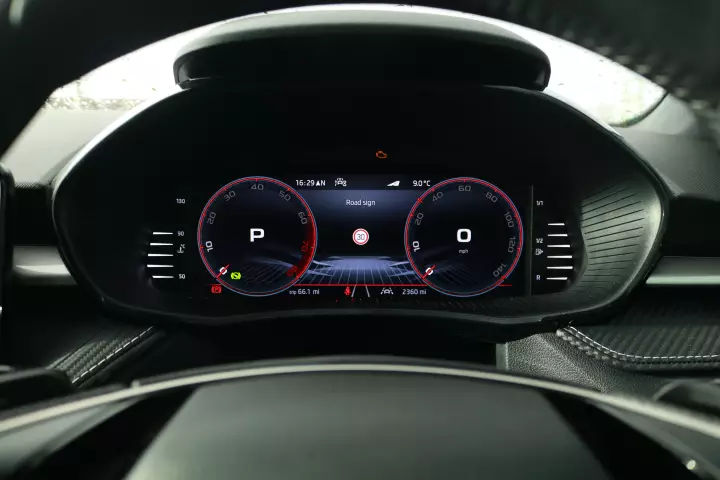
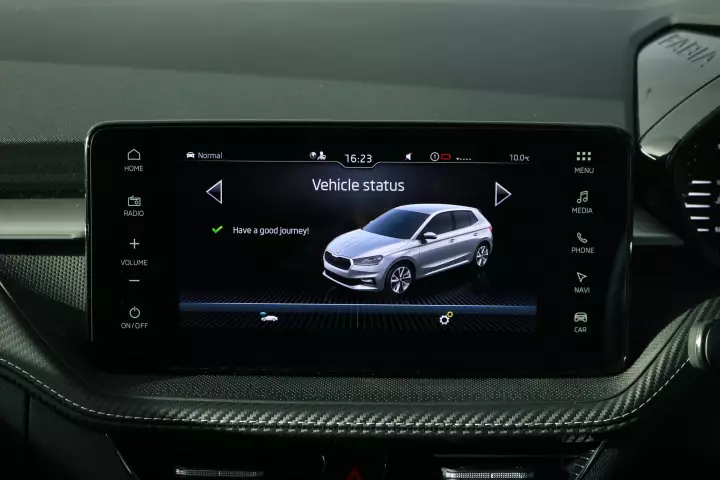
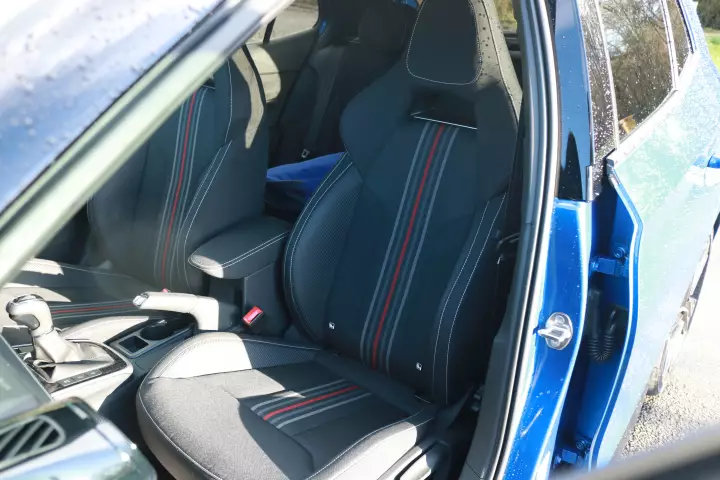
For the 130, Skoda is offering sports seats for the front that are manually adjustable and offer great support with just enough under-thigh support as well. They are not as aggressive as some sports seats with stiff cushioning and side bolsters. Apart from this, the interior is identical to the standard Fabia, but that is no bad thing. What you get is a conventional interior, physical aircon controls, a great steering and overall cabin theme that is easy to get used to. All controls are intuitive and the central 9.2-inch infotainment and the 10.25-inch driver’s display are both easy to read.
Quality levels are what you expect from an affordable supermini, with occasional hard plastics around, especially the bottom and top of the dashboard and the door cards. There are lots of storage areas around, although we missed a wireless charger (not standard, available as an extra cost option). Immediate touchpoints are all well-finished, especially the high-quality steering. In essence, the cabin feels like it’s from a decade ago, but from a usability perspective, it’s simple and nearly perfect.
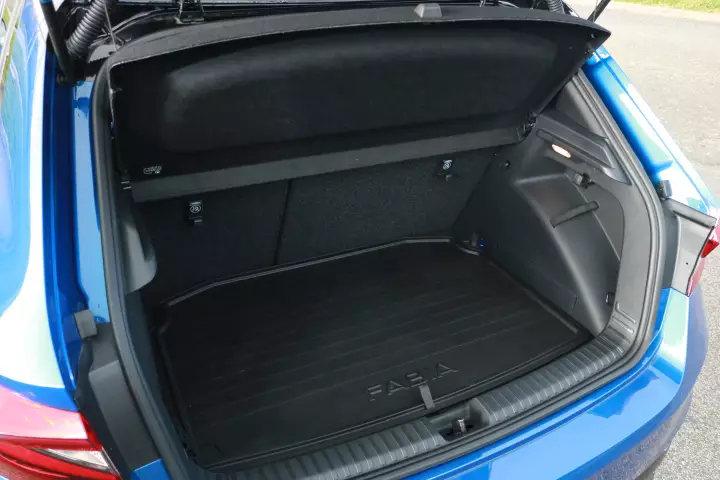
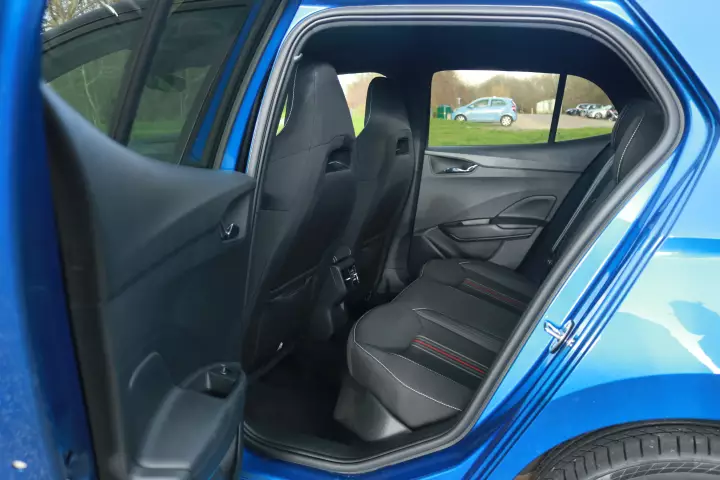
The Fabia is arguably one of the most practical superminis you can buy today. And the same can be expected from the Fabia 130. There’s a large 380-litre boot with ample interior room for four adults. The rear seats are shaped well, and you never feel cramped or uncomfortable in the Fabia. For a small hatchback, space utilisation is impressive and at not point does it feel cramped, even at the rear. Practicality is Fabia’s forte, and the 130 is no different.
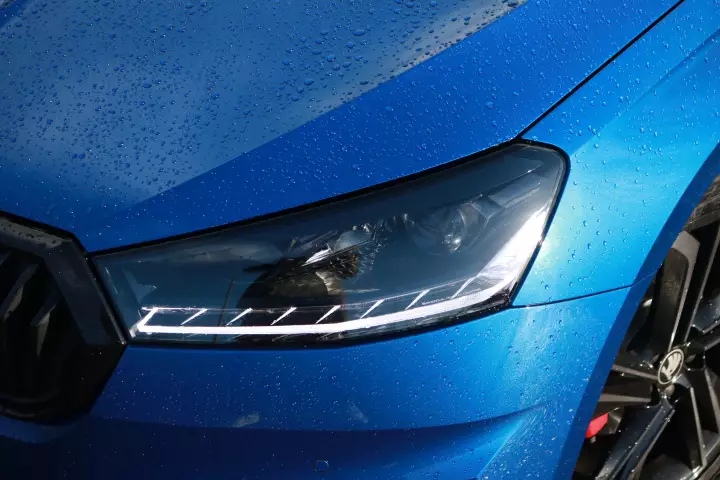
As standard, you get 18-inch wheels, a 6-speaker sound system, dual-zone air conditioning, manually adjustable sports seats, ambient lighting, a 9.2-inch touchscreen unit, a 10.25-inch driver’s display, light and rain sensors, tyre pressure monitoring system, LED headlamps, start-stop system with regenerative braking, wireless Apple CarPlay and Android Auto support, etc. There are also USB-C charging sockets with fast-charging functionality (2x front, 2x rear).
As options, you can also tick heated seats, heated steering wheel, blind spot detection, assist features such as adaptive cruise control and adaptive lane assist, knee airbags and rear side airbags, wireless phone charger, and a 7-speaker surround sound system. That said, our test car’s base 6-speaker audio system felt more than enough with a decent sound stage.
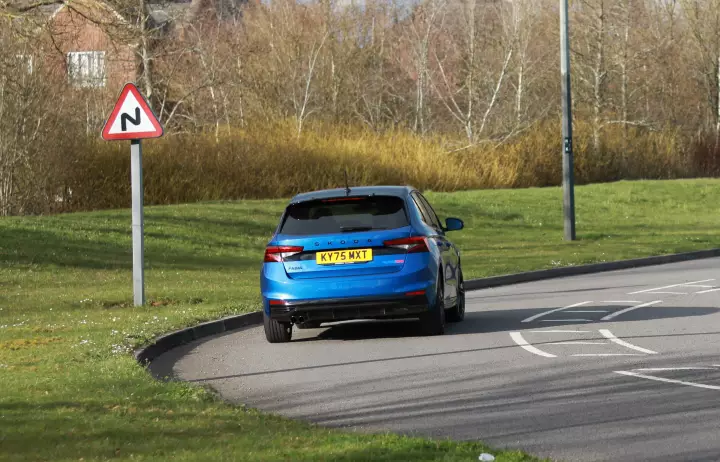
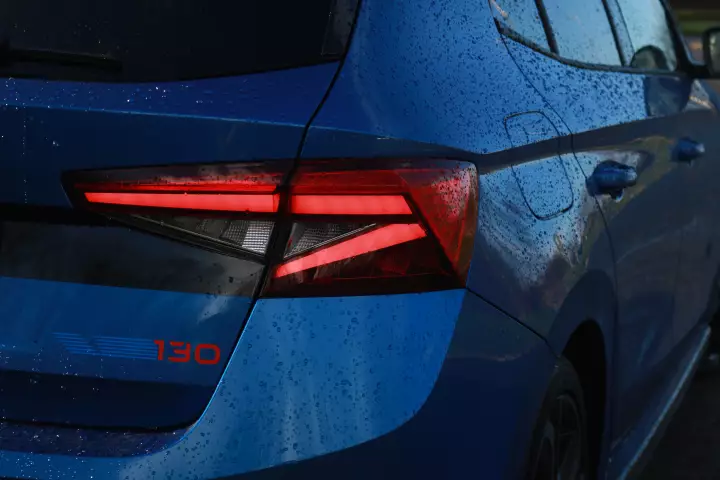
There are four colours to choose for the Skoda Fabia 130. The single-tone option is the Black Magic pearl, while the Moon White Metallic and Race Blue Metallic, like our test car, are dual-tone. Meanwhile, spend £410 more and you get the Velvet Red Metallic, which really stands out with the 130 decals, and the blacked-out bumpers.
The Skoda Fabia is a safe car as it was awarded five stars by Euro NCAP in 2021. Although this test is a couple of years old, it is the same generation of the car, making it fairly representative of the current model. In terms of safety features, apart from standard features, you can opt for various driver assists. Our test car was equipped with adaptive cruise and lane assist, both of which functioned flawlessly during our time with it.
Skoda claims the Fabia 130 returns 51.4mpg. In our testing, we were consistently seeing similar numbers on the on-board display. In fact, along a 50-mile mixed motorway run with traffic, variable speed limits and some 30 mph zones, we saw more than 62mpg. Take this number with a pinch of salt, but if anything, it suggests that Skoda’s claimed figures are more than achievable, also thanks to cylinder deactivation (without being obvious, the 1.5-litre engine can run on two cylinders at low speeds to save fuel).
As for emissions, the Fabia 130 emits 124-125 g/km CO2. In comparison, the standard Fabia Monte Carlo with 148hp also has the same emission figures. First-year road tax for the Fabia 130 comes in at £440.
Connect with us


