Specifications

Fuel types
Mild hybrid/e-Power hybrid
No of seats
5
Boot space
455-504 litres
Dimensions
4,425mm x 1,835mm x 1,625mm
Fuel economy
e-Power (62.8 - 64.2mpg), mild hybrid (44.1 -45.6 mpg)
Acceleration (0-60mph)
7.6 seconds (e-Power), 9.2 to 10.2 seconds (mild hybrid)
Insurance group
21 to 32
Body style
SUV
CO2 emissions
100 - 142 g/km
Browse 2,897 in stock

AA Mechanic Review

If I’m buying a used Nissan Qashqai, I would always check for the correct service history, as poor/irregular servicing could result in problems with timing chains or turbos which could be a costly repair. I would also check for signs of water ingress into the vehicle, especially in the boot area and the footwells, making sure there are no signs of dampness.

Carl Price
Carl Price

Carl Price is a Maintenance Controller at The AA, with 19 years’ experience as an AA roadside patrol. He shares practical advice on car maintenance, common breakdown causes, and what to check before you buy or service a vehicle.

Read bio

4.0/5

Repairs

Older, higher-mileage Nissan Qashqai models can develop a few predictable faults, so it’s worth knowing what to look out for before you buy.

• Injectors (petrol and diesel): injector issues can crop up on higher-mileage cars and may show up as rough idle, hesitation, poor fuel economy or an engine warning light.

• Timing chain wear: some owners report early timing chain problems. This is more likely on cars that haven’t been maintained properly, especially if oil changes have been missed or delayed.

• DPF issues (diesel models): diesel particulate filter (DPF) problems are commonly linked to repeated short journeys and town driving, where the filter doesn’t get hot enough to regenerate. Regular longer runs (for example, motorway journeys) help reduce the chance of a blocked DPF.

Maintenance

If you’re considering an older Qashqai with lots of miles, also pay attention to:

• Suspension noises: knocks, creaks or rattles can point to worn suspension bushes. These are normal wear-and-tear items, but repairs can add up.

• Switchgear niggles: minor problems with buttons and interior controls do get mentioned. They’re often straightforward to fix but check everything works during a test drive.

Is the Nissan Qashqai a reliable car?

Yes, Nissan Qashqai models tend to hold up over time and we have seen cars with over 100,000 miles and still performing well. Regular servicing and maintenance are key and some care for the bodywork should see them hold up well over the years.

Browse 2,897 in stock

AA Editorial Review

“There’s a valid reason why the Nissan Qashqai is so popular. It delivers on the expectations of a family SUV. We were particularly impressed by how effortless it is to drive and with the e-Power, it drives like an EV but without having to plug it in.”

How we test cars at AA Cars
Adithya Gopal
Adithya Gopal

Adithya is the Content Editor at AA Cars and a Motoring Journalist, with over 1,000 published articles across numerous publications.

Read bio

4.2/5

How much does it cost?

A brand-new Nissan Qashqai starts at £30,615 for the base Acenta Premium trim with the 1.3-litre mild hybrid engine. Meanwhile, for the same trim with the flagship e-Power, you need to pay a premium of £34,860. Tick some more options and opt for the fully loaded Tekna+ with the e-Power, and you’re looking at £43,210. But there is some good news - if you’re considering a used or a nearly new car, we have many examples for sale including low mileage Tekna+ e-Power variants from £34,000.

Engine and performance

Overview

There are two engine/powertrain options for the 2026 Nissan Qashqai. The first one is the 1.3-litre mild hybrid unit available in two states of tune (138/156hp) coupled with a 6-speed manual or a CVT automatic. Then there’s the innovative e-Power that uses a 1.5-litre three-cylinder turbo petrol engine that acts solely as a generator to power an electric motor that drives the wheels. Total output is rated at 202hp with a peak torque of 311/330Nm (standard/sport mode). Nissan claims the e-Power can do 0-62mph sprint in 7.9 seconds (7.6 in Sport mode), with a top-speed of 105mph.

But, how exactly does the Nissan Qashqai e-power work? It’s simple. You put in fuel like any normal car. This fuel is used by the 1.5-litre engine, which charges a lithium-ion battery and powers the electric motor that drives the front wheels. This means, you don’t need to plug in the Qashqai e-Power. It drives like an electric car, but without the need for charging, thereby eliminating range anxiety. This setup also translates to a smooth and near-silent driving experience combined with an impressive, claimed fuel consumption of 64mpg. On paper, the e-Power sounds like the best of both worlds. But does it work as promised? To answer that, we’ve road tested the Qashqai e-Power in the range-topping Tekna+ trim.

Nissan Qashqai performance

Out on the road

Press the start/stop button and the Qashqai powers up in eerie silence, ready to go. There are three driving modes: Eco, Standard and Sport. In all three modes, the Qashqai drives mostly like an EV, with instant response off the line and a linear power delivery. The throttle response is dialled down from rest for a smooth start, but once on the move, the e-Power responds quickly making it an extremely easy car to drive.

Within city limits and 20/30mph zones, the Qashqai e-Power can often run on electric power at light throttle inputs. However, when you need more acceleration, there is a feeble delay in response as the engine turns on and spins up to supply the extra voltage to the electric motor. Even when the engine kicks in, it is not pronounced as a conventional car. There is only a slight thrum that is sure to go unnoticed with the aircon blower turned up or the music blasting. Thanks to this, refinement is strong in the Qashqai e-Power, and it delivers on the promise of a quiet and relaxing drive.

Eco mode is the most reserved with dampened throttle response and noticeably delayed acceleration. We found this mode works best if you’re trundling along a 20mph zone or heavy traffic zones. Standard mode improves upon Eco and feels perfect with the right amount of response and acceleration for most Qashqai owners. Sport mode does 0-62mph run in 7.6 seconds, and it clearly shows. Although we would’ve liked a bit more kick off the line, Sport is quick and adequate for closing gaps or accelerating down a busy slip road with enthusiasm. It also tightens up the steering for better control.

The Qashqai e-Power also features an EV-only and e-pedal mode. The former prioritises electric running where conditions allow. But it switches off automatically when you accelerate harder and remains unavailable at high speeds or when the battery is low on charge. Meanwhile, the e-pedal mode mimics one-pedal driving with stronger brake regeneration to charge the battery.

Nissan Qashqai on the road

Ride and handling

Overall, the Nissan Qashqai is able to find a good balance between ride and handling. However, it is obvious that the priority was comfort over anything else. As such, it rides well over city roads and tackles undulations or broken roads easily. The ride is isolated from the tarmac and supple enough for most buyers. But take it down a poorly patched B-road or a road with potholes (or craters), you will notice the business in the ride. It tends to fidget around, and the ride never really settles down, even if you slow down.

However, we believe some of this might be due to the large 20-inch wheels on our test car. So, if you want the smoothest riding Qashqai, a smaller wheel might be a better option. But do note that Nissan only offers a multi-link rear suspension system for Qashqai equipped with the 20-inch wheel. Other variants feature a simpler torsion beam rear suspension.

Increase the pace and you’ll notice the body control is well-judged and despite being an SUV, the Qashqai e-Power turns into corners predictably. The steering is quick off the centre and remains direct, but there is not much in terms of feel or feedback. Grip levels are good for an SUV, and the Qashqai never feels cumbersome. Braking feels sure-footed, however, there is an occasional and slight uneven brake pedal feel when transitioning between regeneration and friction brakes. This might catch some new drivers off, but it’s something you’ll get used to within time.

Nissan Qashqai ride and handling

Interior and features

Interiors

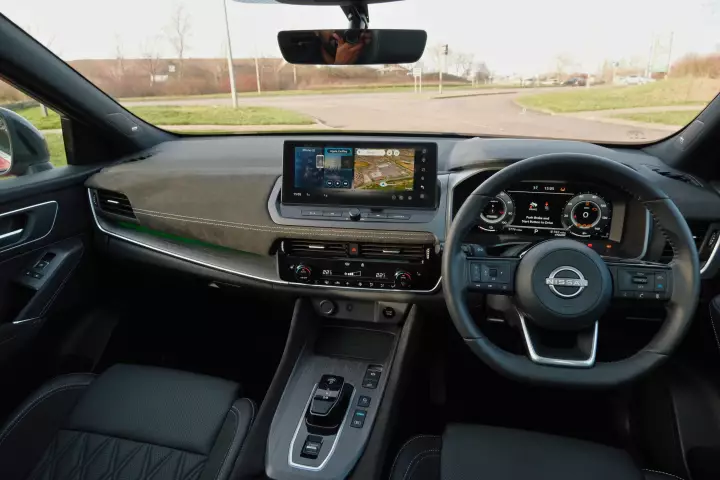
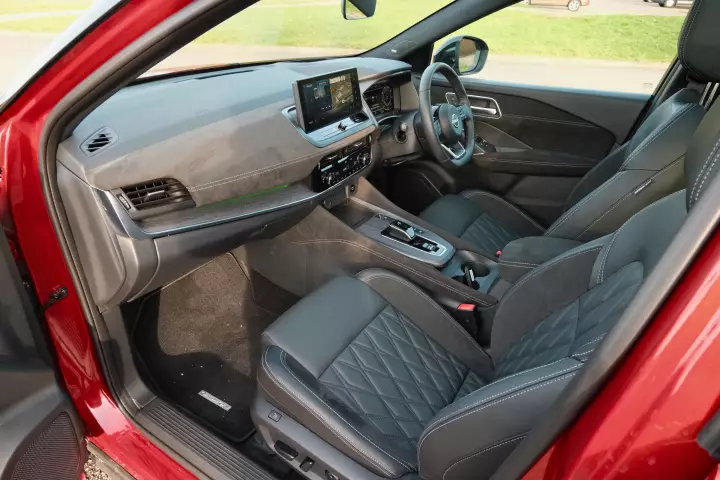
The Qashqai has come a long way from its humble beginnings as a crossover with forgettable interior design and quality. The third-generation Qashqai upped the style quotient with a makeover. The key theme here is usability, and the layout is straightforward and old-school, in a pleasingly positive way. All controls are exactly where you expect them to be, with actual switchgear for all ventilation controls, along with adequate physical buttons for volume and media control.

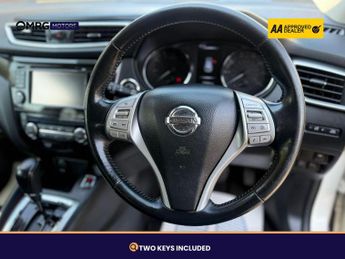
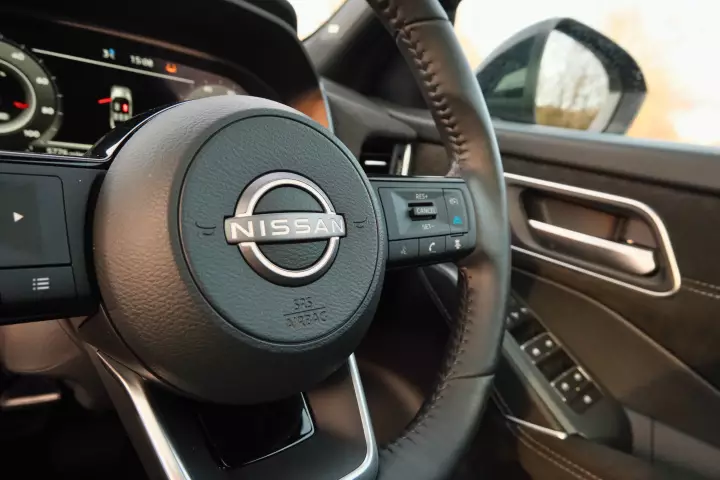
Our test car being the loaded Tekna+, featured suede and quilted leather, uplifting the overall cabin quality significantly. While everything is perfect, there’s a chance you might find the interior design a bit too simple. However, from an ergonomic perspective, it’s near perfect and that ranks high in our books. When it comes to the interior quality, all the touchpoints feel plush enough, including the steering that features numerous toggles/switches for the advanced driver assists.

Nissan Qashqai interior

Boot space and practicality

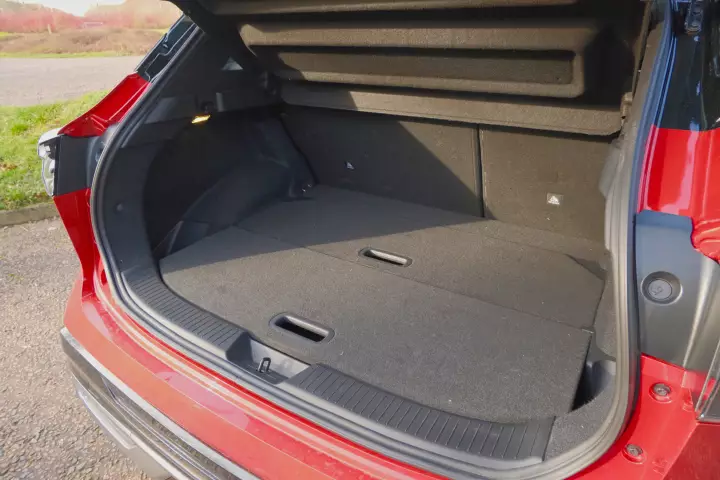
Boot space for the Qashqai depends on its trim. For instance, the Acenta Premium offers the most boot space at 504 litres, followed by the N-Connecta, N-Design and Tekna at 479 litres. Meanwhile, our test car, the top-spec Tekna+ offers the least boot space at 455 litres (the punchy Bose sound system with its boot-mounted subwoofer takes up some room). There’s adequate boot space for a small family, but rivals like the Kia Sportage and the Tucson offer a bigger boot.

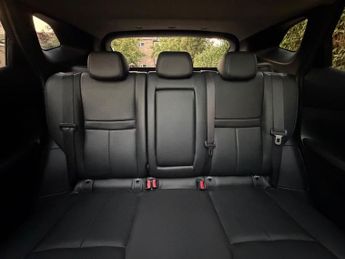
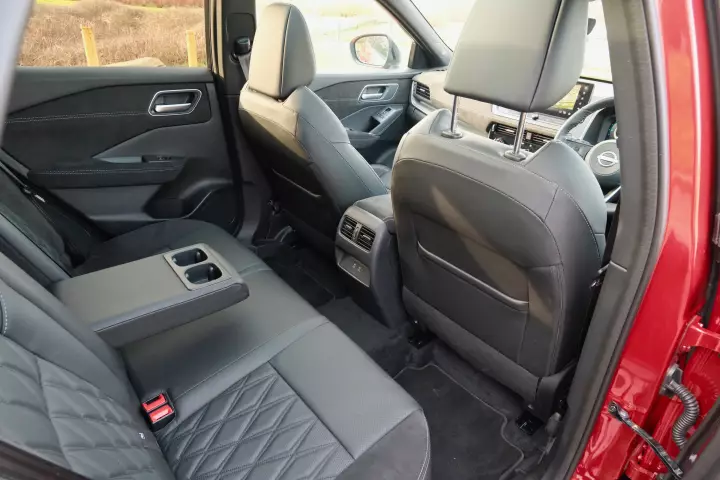
Cabin space up front is decent with seats that are really supportive with ample leg and head room. The Qashqai’s rear doors open wide at near 90-degree, meaning getting in and out is as easy as it gets. Plus, the doors are handy if you have to get in a child seat. When inside, you’ll notice the space is adequate for a small SUV, with enough head room (despite the panoramic roof eating into some space). One thing every passenger has remarked is how you sit with the legs hunched up; but this is more pronounced with taller occupants. And fitting three adults might be a squeeze, especially due to the hump in the middle row.

From a storage perspective, the front door bins are all reasonably sized, with enough storage in the centre console in the form of two cup holders and a dedicated area for the 15W wireless charging and two USB Type C ports. At the rear, you also get two cup holders in the drop-down arm rest and two USB Type C ports below the rear AC vents.

Nissan Qashqai boot space and practicality

Features

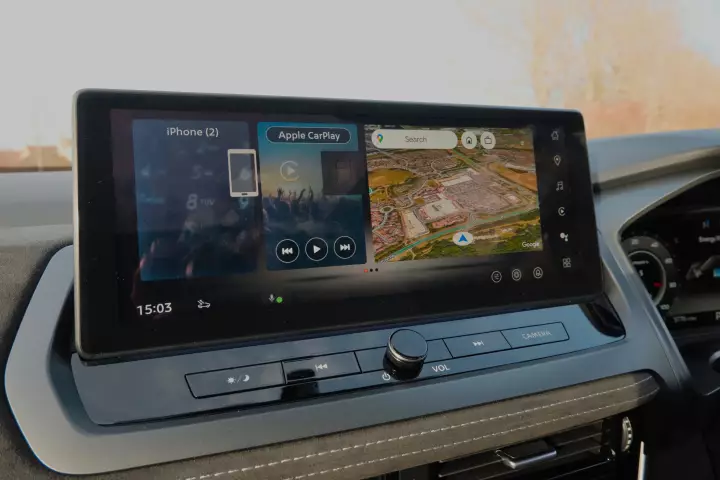
Standard feature highlights in the Qashqai are the 12.3-inch touchscreen, rain sensing wipers, dual zone automatic air-conditioning, rear-view camera with 4 sensors, tyre pressure monitoring system, lane support systems, traffic sign recognition, high beam assist, three drive modes, etc.

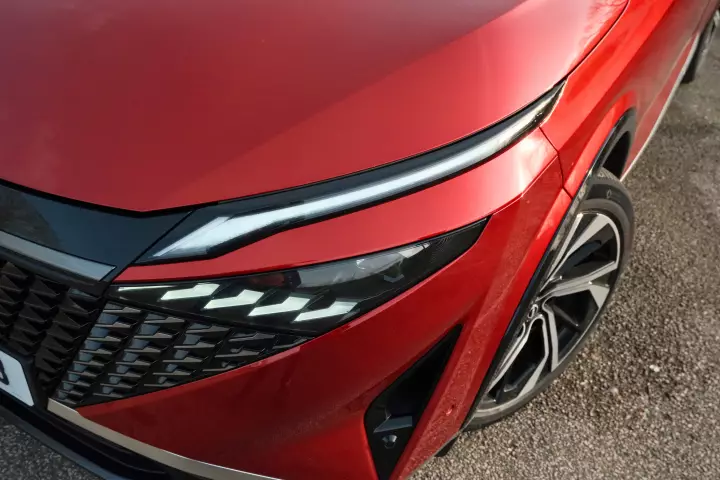
Our test car being the Tekna+ was loaded with 20-inch alloy wheels, suede interior with quilted leather, 8-way adjustable driver set with memory function, front massage seats, Bose 10-speaker sound system, rear multi-link suspension, adaptive LED headlights, panoramic roof, 10.8-inch heads-up display, powered tailgate, heated steering, heated seats, heated windscreen, and a 360-degree camera with park assist and side cameras so that you never kerb the wheels. On that note, we are impressed by how easy it is to park and manoeuvre the Qashqai, thanks to all-round views and the hood view which shows you what’s immediately ahead of the car.

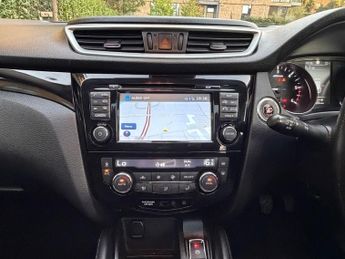
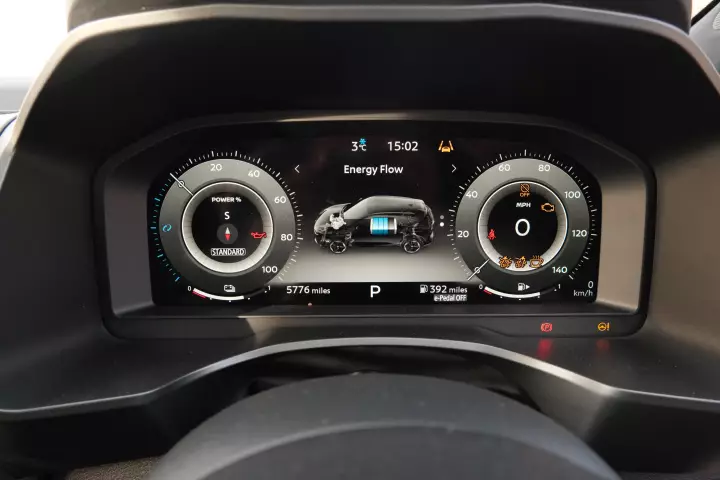
The main 12.3-inch touchscreen is easy to navigate with a clear user interface and slick operation. It also supports wireless Apple CarPlay/Android Auto along with Google voice assistant, a Google Maps-based navigation system and Google Play entertainment options. In front of you, there’s the crisp and clean all-digital driver’s display that shows everything from media to navigation.

Nissan Qashqai feature

Trim and colour options

The 5 trim options on offer are Acenta Premium, N-Connecta, N-Design, Tekna, and the Tekna+. The e-Power is available in all trims.

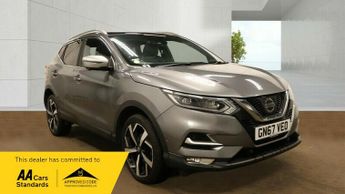
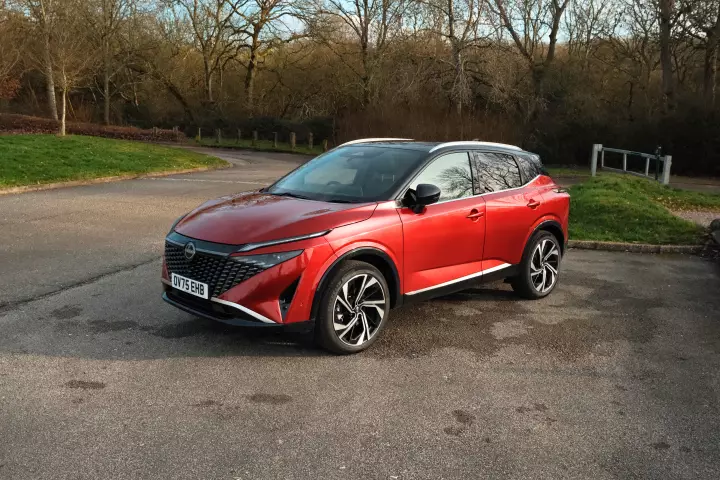
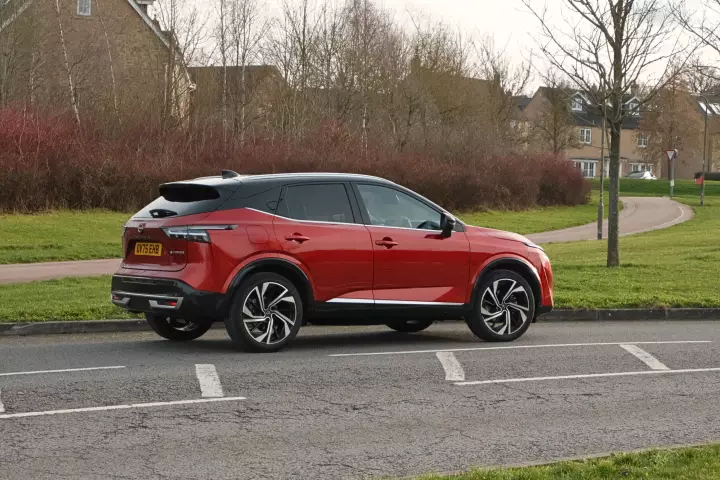
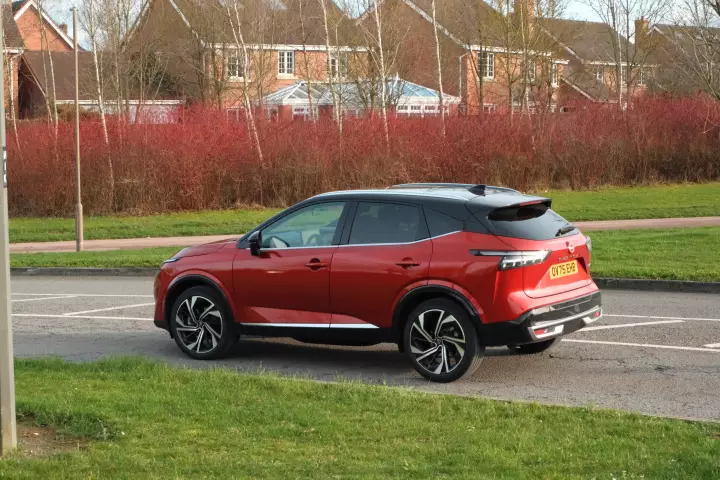
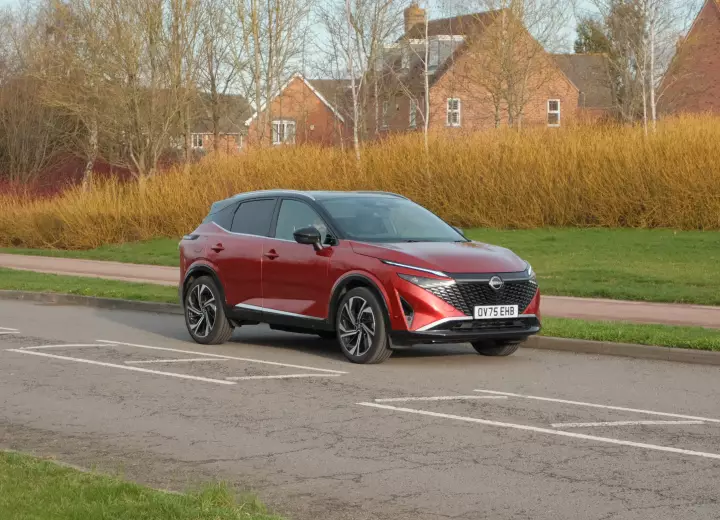
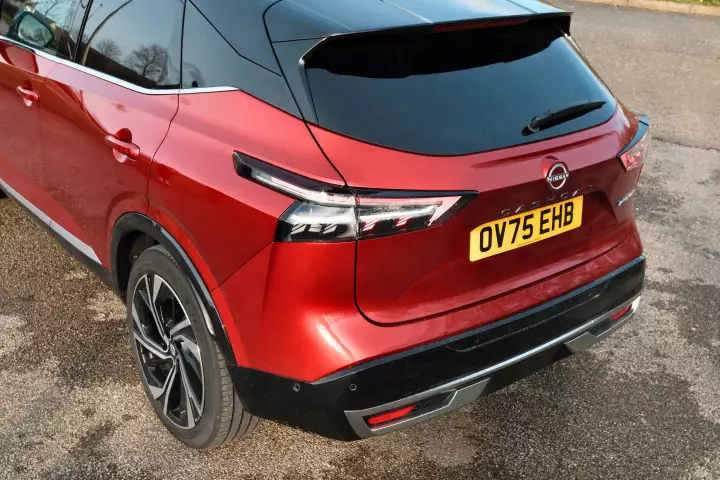
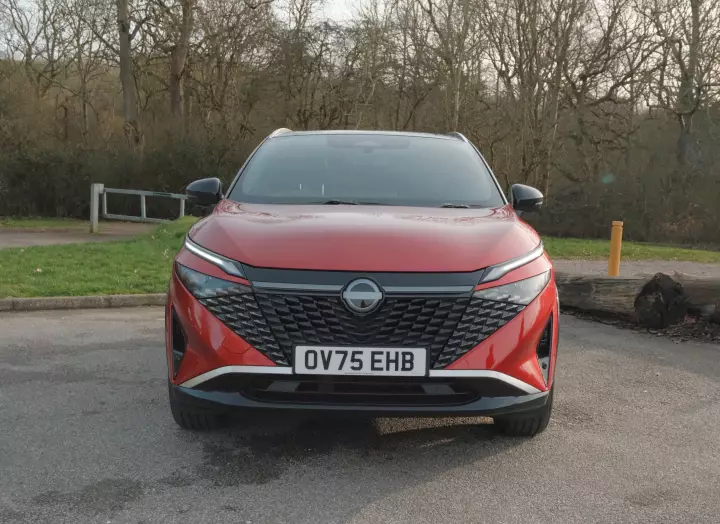
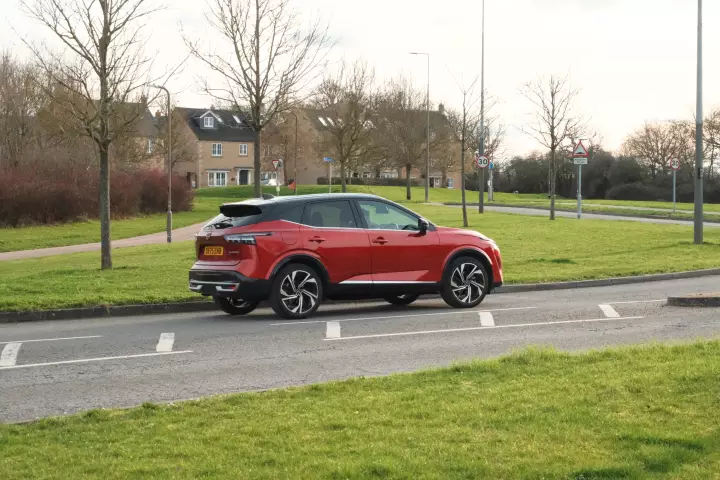
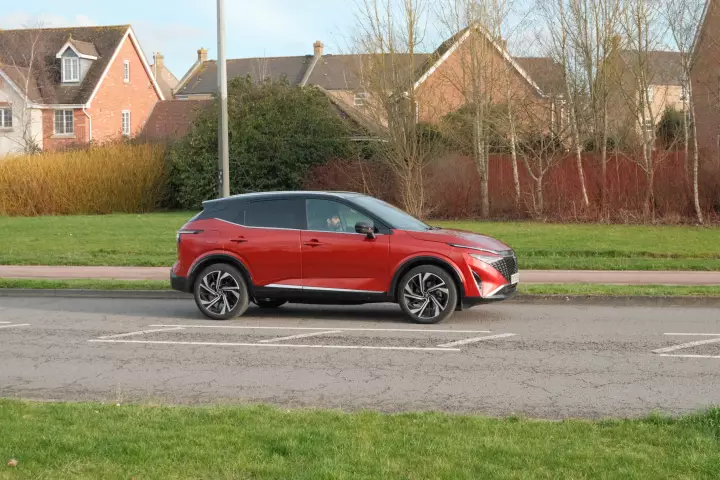
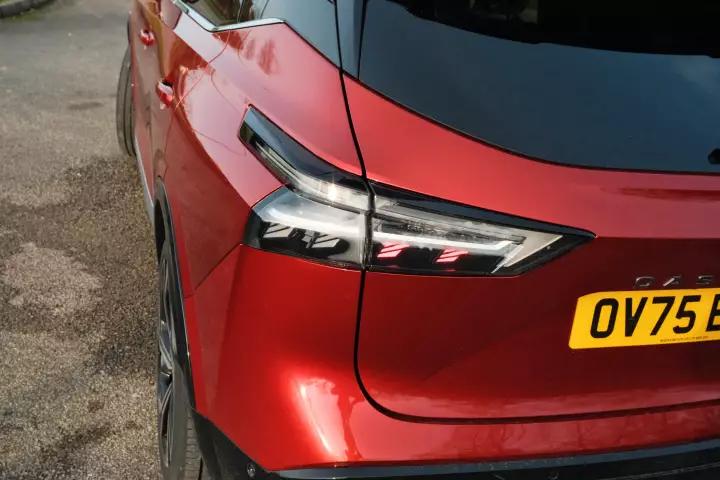
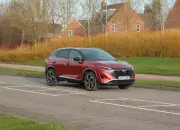
As for colour options, there are eight: Ceramic Grey, Pearl White, Pearl Black, Gun Metallic, Blade Silver, Magnetic Blue, Ocean Deep, and Fuji Sunset Red, which was our test car. The last three colours are also available as a two-tone option.

Nissan Qashqai trim and colour

Safety and reliability

The current generation Nissan Qashqai scored 4 stars in the Euro NCAP test, making it a safe car, but not the safest in the segment as the Hyundai Tucson and the Kia Sportage have scored 5 stars. However, looking into the scores, the occupant and child safety scores are acceptable, but it got low scores for vulnerable road users and safety assist features.

Nissan offers the ProPilot suite of advanced driver assistance systems from the N-Connecta trim onwards. We are happy to report that all systems work as promised on paper, with the head-up display helping you keep your eyes on the road. The intelligent cruise control comes in handy for those long motorway stints and all the systems are easy to navigate.

Nissan Qashqai safety and reliability

MPG, emissions and tax

Nissan claims between 44.1 and 44.8 mpg for the base 138hp 1.3-litre petrol engine versions while the 156hp 1.3-litre petrol versions are expected to return between 44.8 and 45.6 mpg. Going by the numbers, these are respectable numbers for a family SUV. However, if fuel economy is a priority, you should highly consider the e-power version. Nissan claims it can return a maximum of 64.2 mpg.

On our time with the car, with a combined 90-mile motorway run with some traffic, we managed to see an impressive 62.9mpg. This was attained without much effort, but we did use the EV-only mode for the last 8 miles through 20/30 zones. So real figures (according to the car’s on-board display) are close to Nissan’s official figures. The Qashqai e-Power also returned notable fuel efficiency inside city limits, thanks to the EV-only mode.

In terms of CO2 emissions, the Qashqai is rated between 142 and 100g/km (lowest for the e-Power). The low CO2 emissions of the e-Power also translate to cheaper first year road tax than the mild hybrids. Having said that, the Qashqai is not as cost-effective as some plug-in hybrid rivals in terms of Benefit-in-Kind tax as there is no PHEV option with electric only range.

Nissan Qashqai MPG, emissions and tax
Browse 2,897 in stock