
Specifications
- Fuel types
- Petrol
- No of seats
- 5
- Boot space
- 456 litres
- Dimensions
- 4,226 mm x 1,805 mm x 1,533 mm
- Fuel economy
- 47.9mpg
- Acceleration (0-62mph)
- 7.4 seconds
- Insurance group
- 21/22
- Body style
- Compact SUV
- CO2 emissions
- 135g/km
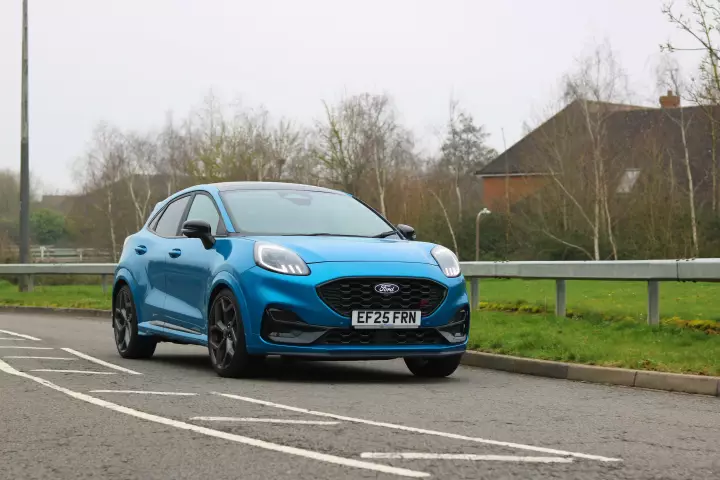
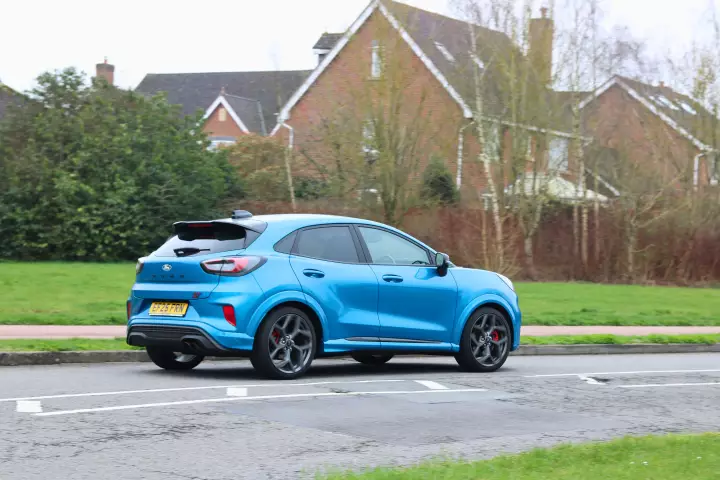
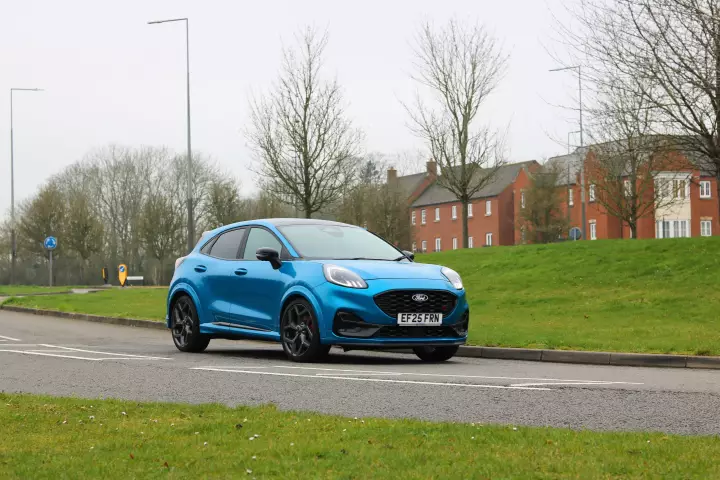
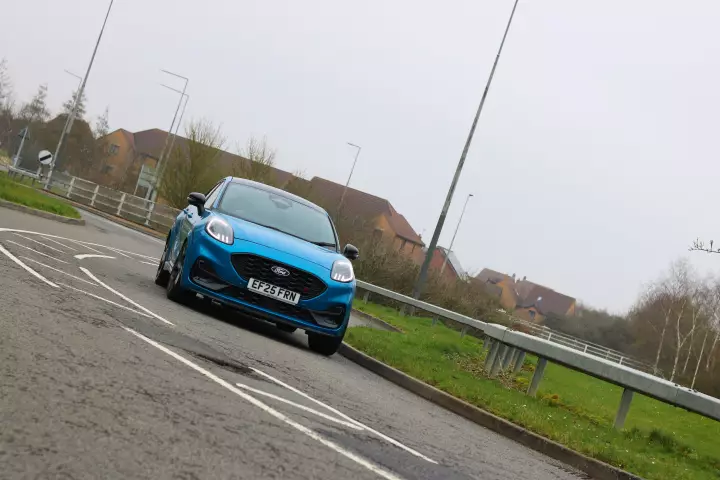
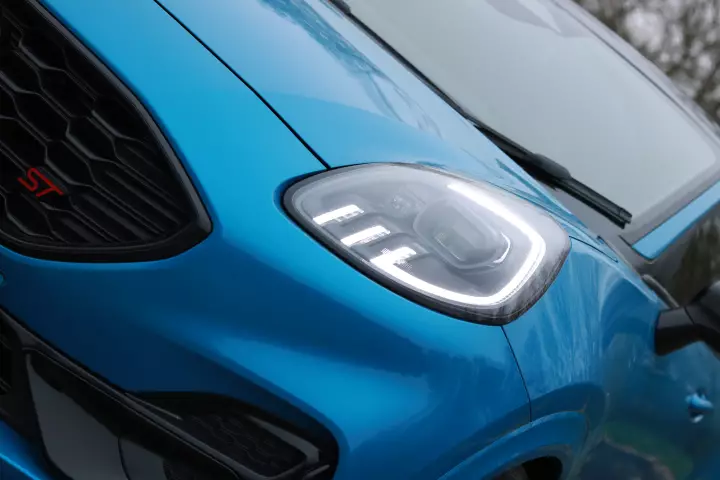
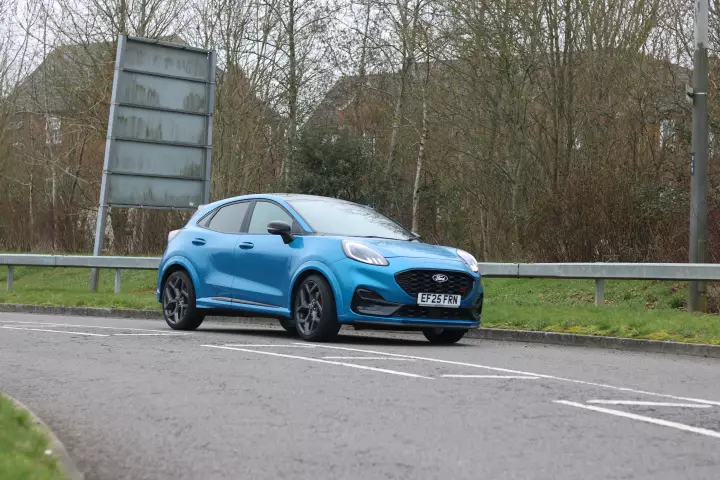
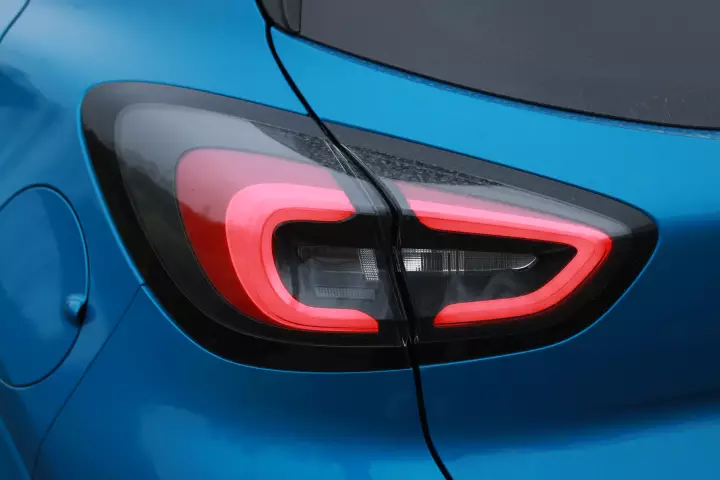
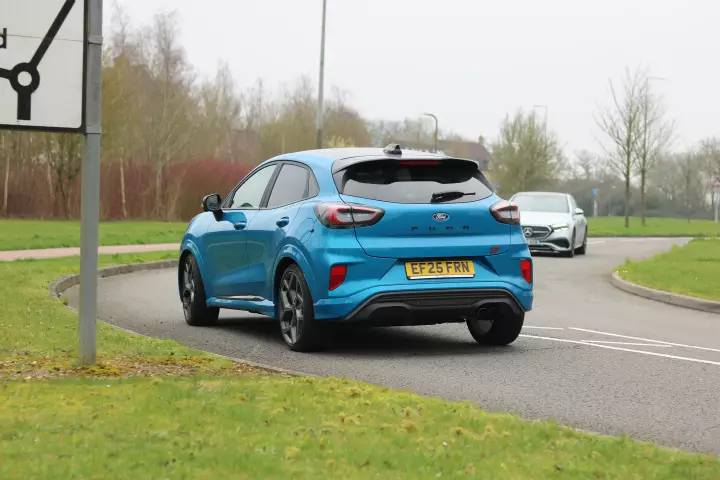
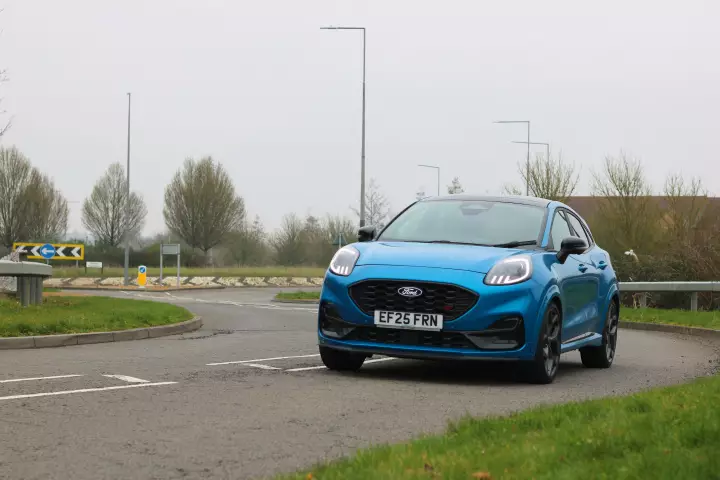
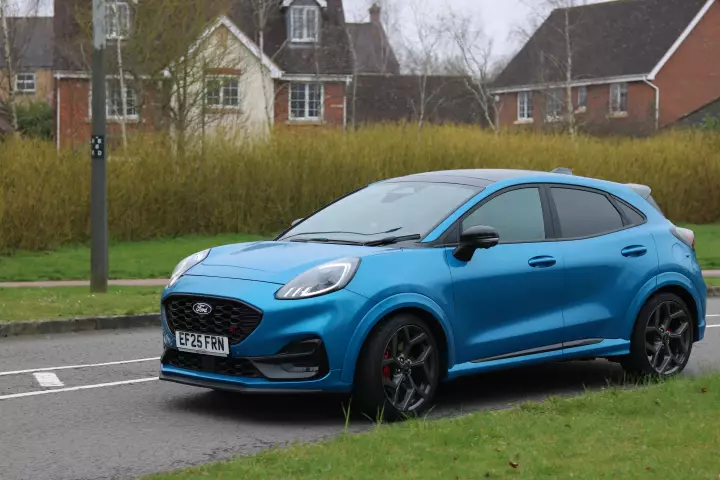
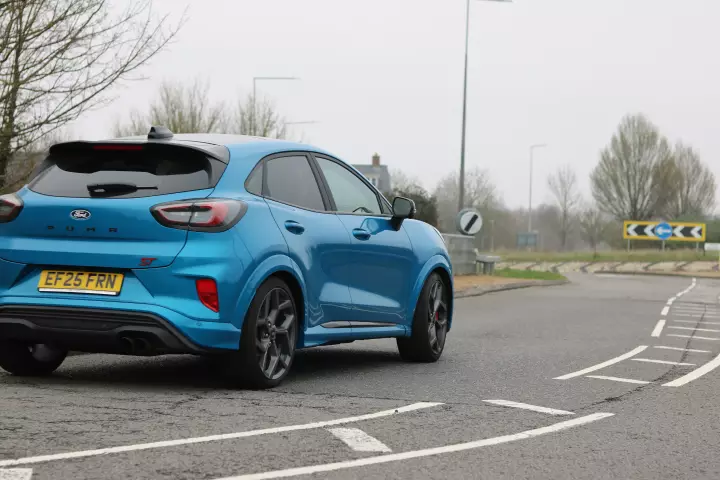
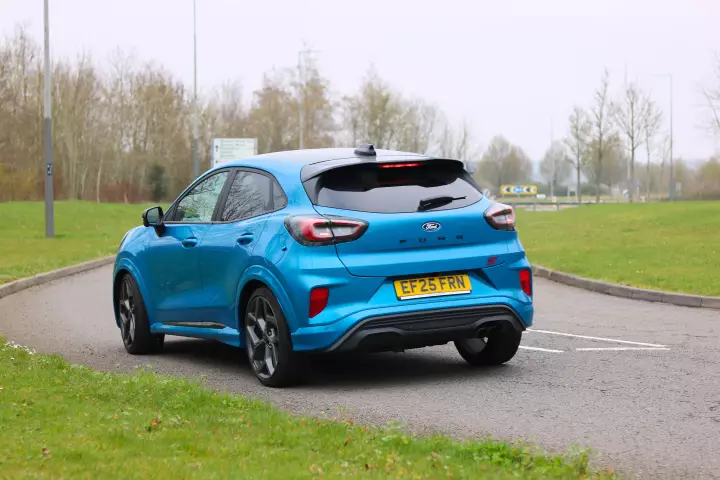
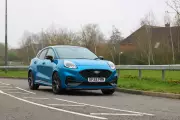
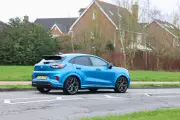


The Ford Puma ST made a strong impression in 2020, as it justified the ST badge with a rorty 200hp 1.5 EcoBoost engine and 6-speed manual. Fast forward to 2024, Ford dropped these and replaced them with a 168hp 1.0 EcoBoost and a 7-speed automatic. With the Fiesta and Focus ST long gone, the Puma ST remains the only model from Ford’s affordable performance outlet. So, we drove the 2026 Puma ST to see if it’s still a driver’s delight.
When buying a used Ford Puma, I’d always check the service history and make sure software updates have been carried out, especially on early models. Overall, the Puma is a solid and dependable car if it’s been looked after properly.

Tony brought a wealth of frontline experience to the AA Press Office, having spent many years as a dedicated AA patrol. His time on the road included the honour of being named AA Patrol of the Year.
Read bioThe Ford Puma is generally a reliable car, but like any modern vehicle, there are a few common issues worth keeping an eye on – most of which are straightforward to resolve.
Overall, these are manageable issues, and parts availability is good – meaning repairs are usually quick and affordable.
Keeping on top of servicing is key to getting the best out of the Puma.
Service interval: We suggest every 12 months or 12,500 miles though some service schedules run to two years / 20,000 miles.
Regular oil changes help maintain engine efficiency and longevity.
Brake and tyre wear should be monitored, particularly on models with larger wheels.
Later 1.0-litre EcoBoost engines use a timing chain rather than the belt found on earlier models, which helps reduce routine maintenance. On those earlier engines, it’s worth noting the timing belt is typically due for replacement at around 100,000 miles.
Yes, the Ford Puma is widely regarded as a dependable and well-engineered small SUV. With regular servicing and care, it should provide many years of trouble-free motoring. Most of the commonly reported issues are minor and easily resolved, which reinforces its reputation as a practical and reliable choice.
The Puma ST is fun-to-drive with sharp steering and taut body control. But it only appeals if you can live with some compromises and look past its predecessor’s shadow.

Adithya is the Content Editor at AA Cars and a Motoring Journalist, with over 1,000 published articles across numerous publications.
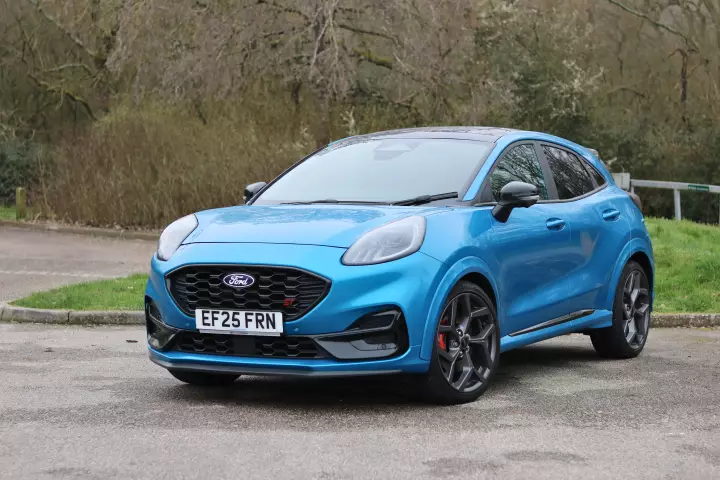
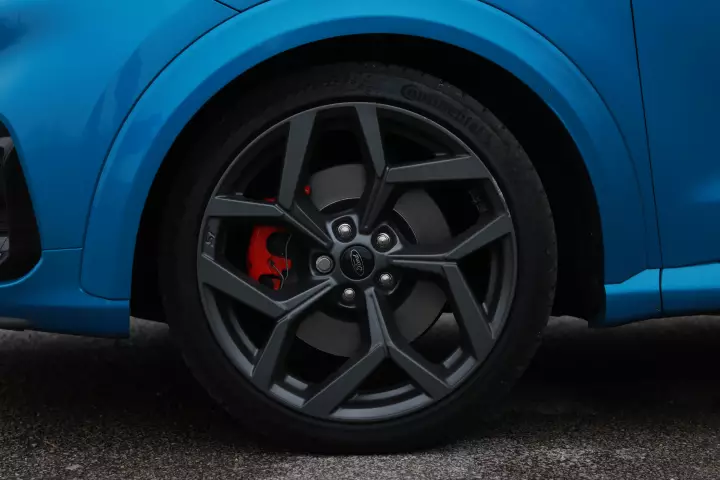
Read bioFor a brand-new Ford Puma ST, the base price is £33,980 without any options. Tick some options, such as the panoramic roof and the ST handling pack (different 19-inch wheels, KW suspension, illuminated front scuff plates, a round steering wheel, and a contrast black roof), and the price jumps to around £36,000. And if you’re considering a used Puma ST, we have many 2025 examples for sale with low miles from £26,000.
The Puma ST is offered with one engine and gearbox option. That is a 1.0-litre three-cylinder EcoBoost unit with 48V mild-hybrid support to develop 168hp and 248Nm (compared to 200hp and 320Nm of the old 1.5 Puma ST). The gearbox is Ford’s 7-speed dual-clutch Powershift. Meanwhile, the top-speed is rated at 130.2mph.
Apart from that, all the chassis changes are carried over, this includes stiffer rear suspension twist-beam, Ford’s patented vectoring springs, Hitachi twin-tube frequency reactive dampers, faster steering rack, bigger 325 mm front brakes with tweaked brake booster, etc, over the standard Puma.
Right from the burble when you fire up the 1.0-litre, you know the engine is more special than the 1.0-litre in the standard Puma. The unit makes some racket; you can hear the intake and turbo spooling up, while the exhaust note is also pronounced enough. Although it’s down on power compared with before, it still propels the Puma with enthusiasm. The low- and mid-range power delivery is strong and consistent, while it tapers off as you reach 6,000 rpm. At low speeds and within city limits, the Puma ST is responsive and pulls hard without any turbo lag. But the gearbox can occasionally feel perplexed and hesitant to drop a gear or upshift and ride the torque. In eco mode, the throttle response is heavily subdued, while in normal mode, it is the right amount most of the time.
If you’re feeling enthusiastic, there’s the sport mode, which brings in some theatre. It opens up the exhaust valve, pipes in some synthetic noise, changes the digital cluster to a darker shade with shift lights, and sharpens up the throttle response. A result of all this is the Puma ST feeling sportier and offering an experience that almost justifies the ST badging. The paddle shifts are rapid, and the gearbox also comes with S mode (apart from D), which holds on to gears more and makes the shifts harder and faster. It also downshifts as you slow down to complete the experience. Sadly, with the mid-life update, Ford stopped offering track mode and launch control.
As a standalone crossover SUV, there’s no doubt the Puma ST’s performance is more than adequate, and it offers the thrills you expect from a Ford Performance offering. That said, it’s completely normal to draw a comparison with the older version, a clearly more special car – also lighter by 36 kg. But it’s now three years since it was discontinued. So, unless you are eyeing a used example, the Puma ST remains a niche, especially at the price point. That is, if you want a crossover SUV that stands out, delivers sharp handling and strong performance when you need it, the Puma ST is still worth a look.
The Ford Puma is inherently based on the Ford Fiesta’s platform, and this should essentially make it engaging to drive, right? Well, it does. The Puma ST drives more or less like a taller Fiesta ST. Although there were significant changes to the powertrain, the chassis remains the same, except for the omission of the performance pack with the limited-slip differential.
You will instantly notice the quick steering and how the Puma can change direction effortlessly. Body roll is contained, and the Puma turns into a corner with an enthusiasm that is rare to find in a tall crossover SUV. Grip levels are strong, and there’s a likeable balance to how the Puma reacts to mid-corner steering inputs. Meanwhile, the lack of a limited-slip differential becomes evident when you up the pace and get on the throttle early in a corner. This makes the Puma ST scrabble for grip, despite running grippy Continental Sport Contact 7 tyres, occasionally leaning towards understeer, unless you ease off the throttle or brake, which brings in some rotation.
To summarise, it is still engaging around corners and tight B-roads, but we do wish Ford offered the LSD with the handling package (which includes the KW coilovers). Updates to the brakes are noticeable from the stronger bite and positive pedal feel. The downside of all these positive handling traits is the ride quality. The Puma ST makes do with passive dampers, so it’s always in a racy mode, with the ride definitely on the stiff side, more evident at low speeds. But increase the speed and the ride quality improves and becomes firm and flat without feeling bouncy like at low speeds. We have not tested the optional handling pack with the KW dampers, but the general consensus is that it is stiffer than the standard car with Hitachi dampers.
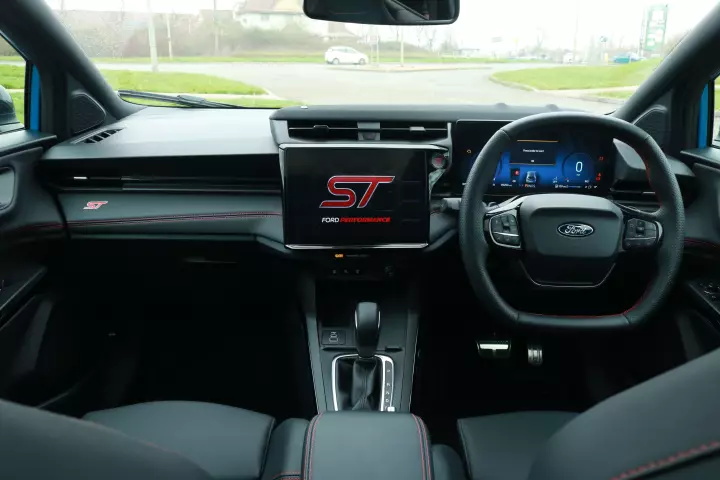
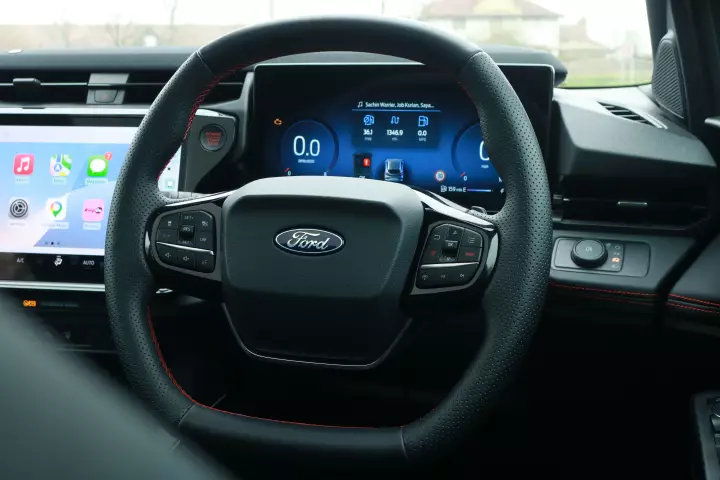
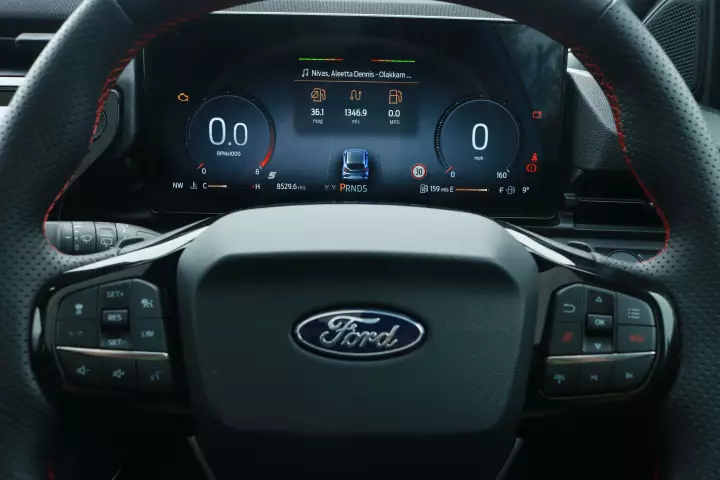
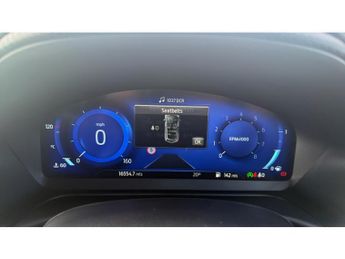
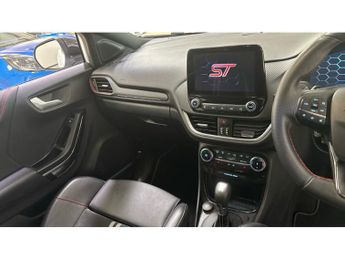
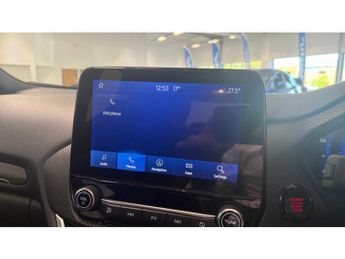
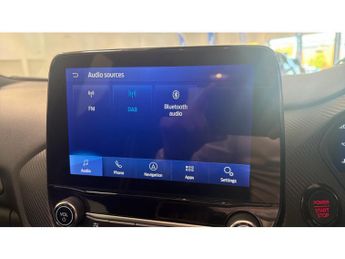
Before the 2024 revamp, the Puma’s interior was heavily Fiesta-inspired with design bits that were known to us. However, with the update, Ford has completely revised the cabin to incorporate more technology features such as the huge 12.0-inch touchscreen that hosts the latest Ford SYNC infotainment. There’s also a new squared-off steering wheel and an all-digital 12.8-inch instrument cluster to complete the package.
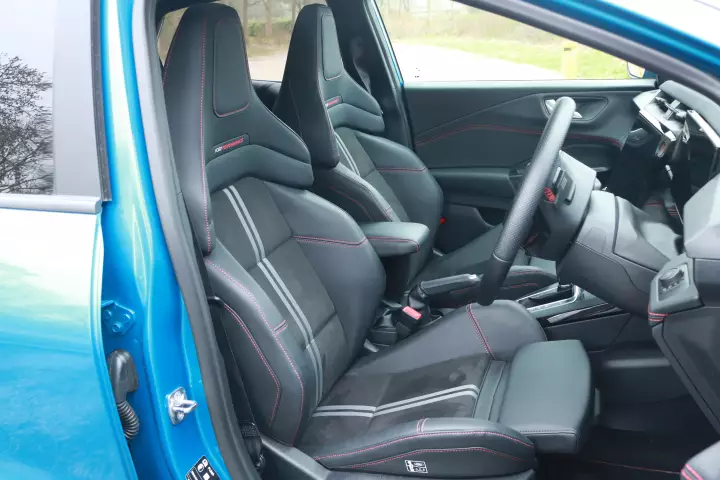
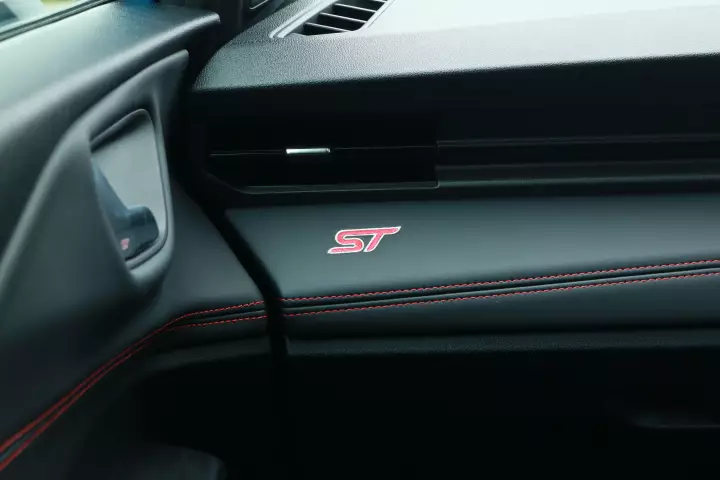
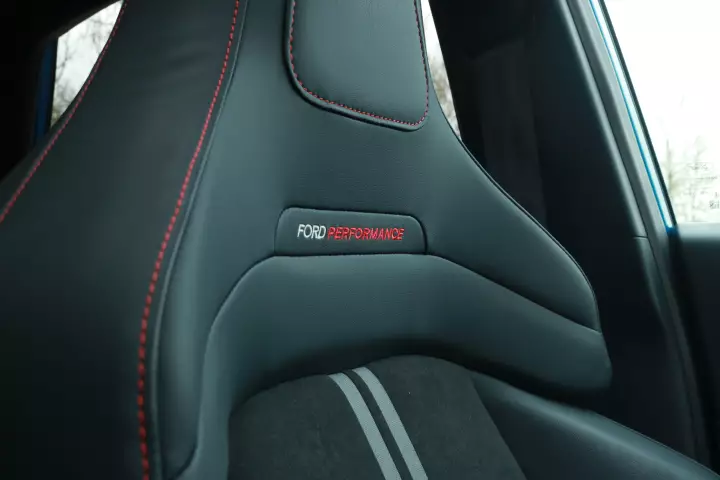
The new design changes are not so welcome, as the update means the dashboard sits higher, hindering some visibility in contrast to the old design. The huge touchscreen is really easy to use, but we particularly don’t like how crucial functions are now integrated into this unit. For instance, to adjust the blower speed, you need to take your eyes off the road now. It’s the same for all air-con functions, while thankfully Ford has opted for a physical rotary knob for volume controls. The cabin quality remains the same and feels right for the asking price. Everything feels solid, but you will struggle to find any premium materials, and you do come across many hard plastics. For the ST, you also get lots of badges and the stiff yet super-supportive 6-way adjustable front sports seats with extendable under-thigh support.
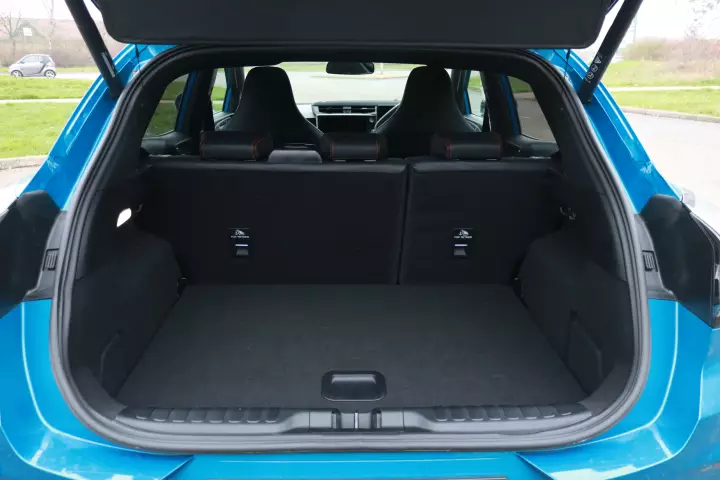
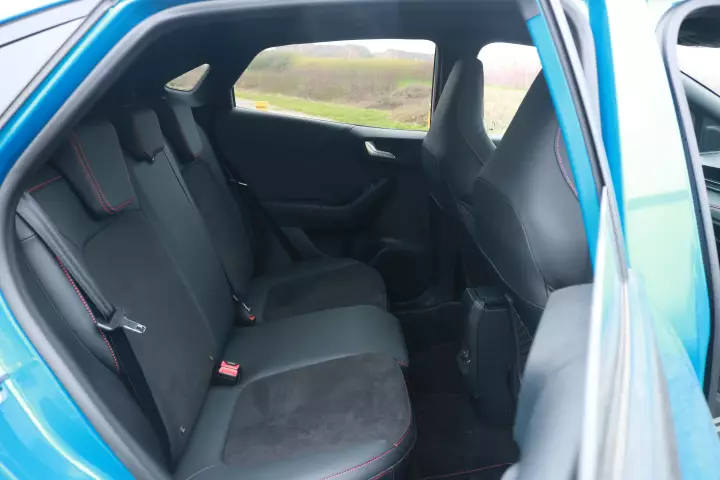
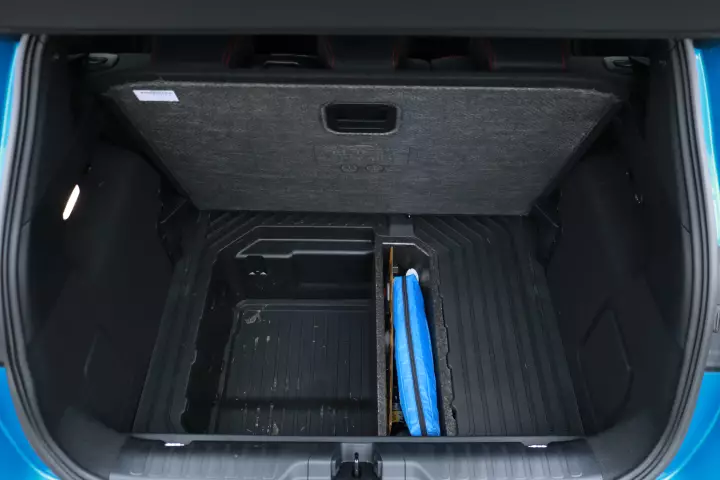
The Puma ST boasts one of the biggest boots in its segment, with 456 litres helping its case. There’s also a clever 80-litre Megabox storage area under the boot floor, which also features a drain plug for muddy shoes or anything wet. Overall cabin space is not class-leading by any yardstick, but the Puma makes the best use of space with good seating space for four adults at best. There are many storage spaces, a large glovebox, and deep door bins. Knee room at the rear is adequate, while tall passengers might struggle with the headroom, with the panoramic roof taking up some space.
The 12.8-inch digital cluster and the 12-inch SYNC touchscreen with wireless Apple CarPlay and Android Auto support are the standout features, along with wireless charging, a punchy 10-speaker B&O audio system, FordPass Connect (connectivity feature using a SIM card for remote controls), powered tailgate, Quickclear heated windscreen, heated front seats and steering, selectable drive modes, cruise control with intelligent speed assist, 19-inch wheels, etc. Generally, the Puma is well loaded with features – the heated windscreen and the Megabox extended boot space are our top picks.
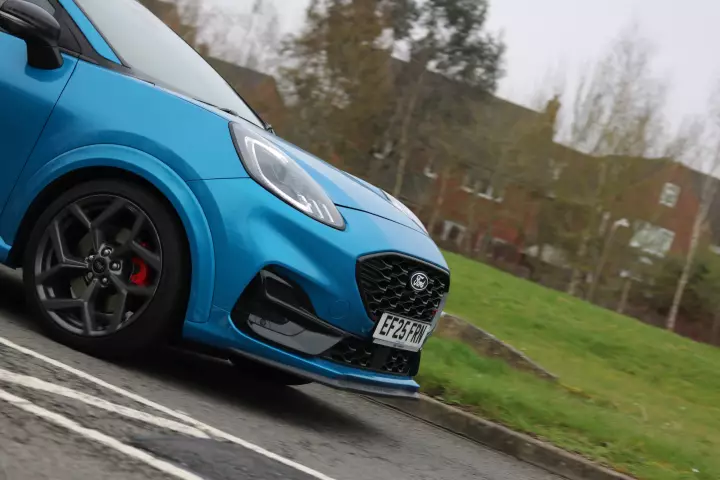
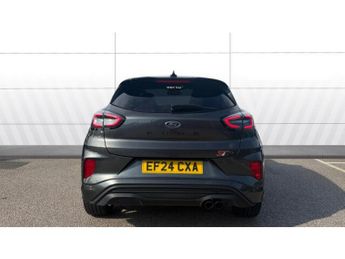
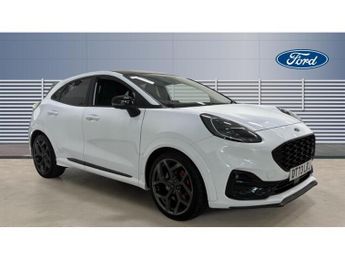
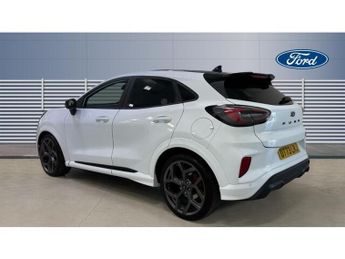
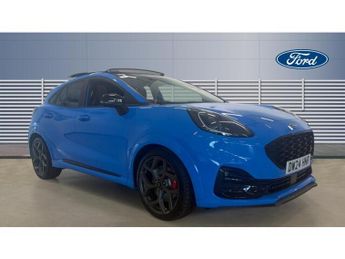
There are seven colours in store for the Puma ST: Frozen White is free, while Agate Black, Cactus Grey, Solar Silver, Fantastic Red, Electric Yellow and Digital Aqua Blue (our test car) add an extra £800.
The Ford Puma scored 4 stars in the 2022 Euro NCAP test. However, the compact SUV did manage to score 5 stars back in 2019 when it debuted. The variance in score is because the test parameters have changed. The Puma is a safe car with a decent crash test score, but there are rivals with a 5-star safety rating like the Seat Arona and the Toyota Yaris Cross.
In terms of safety features, the Puma ST gets a 360-degree camera, forward collision warning with automatic braking, cruise control with speed limiter, lane-keeping steering, and automatic headlights with an automated high-beam system, rain-sensing wipers, and adaptive cruise control. Ford’s driver-assist features work as promised, and the large all-digital driver’s display keeps you updated on how the systems are working.
The Puma ST offers a respectable fuel economy at 47.9 mpg. This, along with the small 42-litre tank (45-litre for the Puma ST 1.5), means the real-world range is only around 400 miles. On our test, which combined city, motorway and B-roads, the range dropped to just 370 miles.
As for emissions, the Puma ST emits 135 g/km of CO2. In comparison, the standard Puma with the 125hp version generates only 122 g/km of CO2. A small price to pay for the performance. First-year tax for the Puma ST will cost you £540.
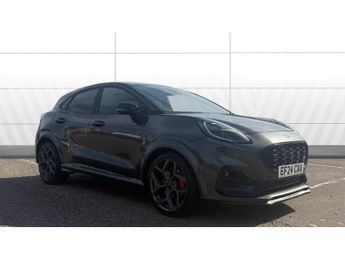
 Harlow
Stoke-On-Trent
Stoke-On-Trent
Connect with us


