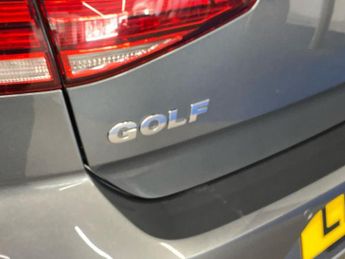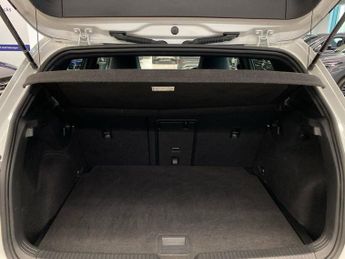
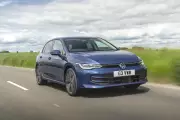
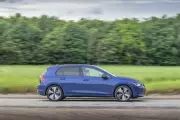

Specifications

Fuel types
Petrol, Diesel, Plug-in hybrid
No of seats
5
Boot space
273 - 381 litres
Dimensions
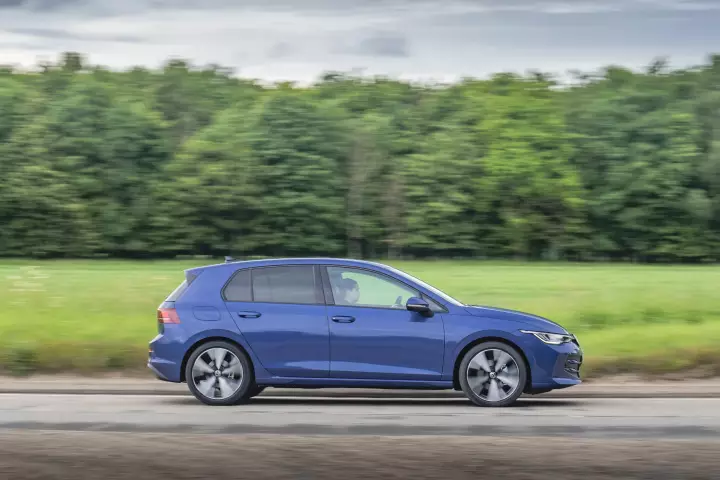
4,284mm x 1,789mm x 1,491mm
Fuel economy
Petrol (38.2 - 56.5mpg)Diesel (56.5 - 67.3mpg)PHEV (49.6mpg)
Acceleration (0-60mph)
7.4 - 9.8 seconds
Insurance group
17E, 18E, 19E, 20E, 21E, 22E, 23E, 24E, 25E, 26E, 27E
Body style
Hatchback
CO2 emissions
6 – 127g/km
Browse 4,458 in stock

AA Mechanic Review

Tony says when buying used “I would look for the service history for any mileage discrepancies and whether the timing chain/belt has been replaced for high mileage examples. This is a part subject to wear and tear and hence could be up for replacement by 80,000 miles on Golf's TSI turbo petrol engines. I would also keep an eye on the infotainment system and also check for any accident history by closely inspecting the panel gaps (uneven gaps between two body panels might be a sign of an accident repair).”

Tony Rich
Tony Rich

Tony brought a wealth of frontline experience to the AA Press Office, having spent many years as a dedicated AA patrol. His time on the road included the honour of being named AA Patrol of the Year.

Read bio

4/5

Repairs

As Volkswagen Golf vehicles get older, the infotainment system could become slow, laggy and unresponsive on some occasions. This can be resolved by a software update, carried out by Volkswagen or an approved repairer.

On older Golf models, window regulators have also been known to fail, often resulting in the window being stuck in an open position. Most garages will be able to address this issue for a reasonable price. As the parts are readily available, time off the road should not be impacted too heavily.

Maintenance

Although most Golf models will have a mileage countdown for service intervals, it’s always best to make sure the vehicle has had its maintenance carried out prior to that. This will keep the engine’s performance at its best. Typically, around 10,000 miles or 12 months whichever comes first.

Timing chains/belts on the Volkswagen Golf may also require replacement – some as early as 60,000 miles. Price of replacement starts from a reasonable £400 and upwards. This is something you should consider for long-term ownership as timing chain/belt is an important part that needs to be replaced between 60,000 and 100,000 miles for most cars. You could visually inspect it, but it’s always best to replace it within manufacturers specified intervals as a failed timing chain/belt could lead to a catastrophic engine damage.

In the first five years of ownership there are fixed service schedules typical for new cars.

• 1st Service (Oil Service): at 9,000 miles or 12 months.

• 2nd Service: At 18,600 miles or 24 months.

• 3rd Service: At 27,900 miles or 36 months.

• Flexible service schedule thereafter following manufacturer recommendations

Regarding hybrid models, Volkswagen provides an 8-year/100,000-mile warranty on any high voltage batteries if service intervals and maintenance checks have been meticulously followed.

Is the Volkswagen Golf a reliable car?

Volkswagen has always been renowned for reliability and quality. Providing service and maintenance are kept up to date it should hold up well over the years. We regularly see these models showing an odometer reading of more than 100,0000 miles and performing like new, which shows the Golf can be reliable if you are on top of the maintenance.

Browse 4,458 in stock

AA Editorial Review

“The Volkswagen Golf is a mature, classy and well-rounded hatchback that will impress you without trying too hard. It delivers where it matters and is the sensible choice for anyone looking for a family hatchback”

Adithya Gopal
Adithya Gopal

Adithya is the Content Editor at AA Cars and a Motoring Journalist, with over 1,000 published articles across numerous publications.

Read bio

4/5

How much does it cost?

For a brand-new Volkswagen Golf, prices range between £28,150 and £32,490 depending on the trim, engine, and gearbox you select. However, you could purchase a pre-owned Golf for as low as £10,000 for a 2020/21 model year. Given that the Volkswagen Golf has been around since 1974, you can find older generations for prices under £5,000.

Engine and performance

Overview

With the Volkswagen Golf, you get to choose from a wide range of engine and gearbox options. This could seem overwhelming at first glance. However, it’s easier to understand once you split them into petrol, hybrid, and diesel.

Petrol and hybrid engines: 110hp 1.0 eTSI (mild hybrid), 204hp 1.4 TSI (plug-in hybrid), 130hp 1.5 TSI 130, and a 150hp 1.5 eTSI 150 (mild hybrid).

Diesel engines: 114hp 2.0 TDI, and a 150hp 2.0 TDI.

For more performance-conscious buyers, Volkswagen offers the GTI, GTD and R versions of the Golf. In 2024, Volkswagen updated the Golf and its engine options (known as the Golf MK8.5). With this update, the base 1.0-litre eTSI was replaced by a 114hp 1.5 TSI, the 1.4 TSI plug-in hybrid was replaced by a 1.5 unit with a larger battery while the GTD was discontinued. All these engines are paired with a 6-speed manual or a 7-speed DSG automatic gearbox.

Volkswagen Golf performance

Out on the road

We tested the 1.5-litre 150hp eTSI, a popular choice for Golf buyers. This setup features a 1.5-litre TSI petrol engine coupled with a 48-volt mild hybrid system (which includes a belt-driven starter-generator and a 48-volt lithium-ion battery). This means the 1.5 eTSI offers better fuel economy than a conventional engine while also delivering strong performance, thanks to the hybrid assistance.

Around town, you notice the 1.5-litre is smooth and non-intrusive, offering a refined and quiet driving experience. Put your foot down, and the engine’s 150hp/250Nm output becomes obvious. Progress is quick, with the engine pulling stronger as the revs climb, helping with overtakes and merging into motorways. The 7-speed dual-clutch automatic works intuitively, shifting up and down the gears swiftly without any of the jerkiness at low speeds that DSGs are known for. This is also partly thanks to the eTSI hybrid system, which provides a minor electric boost at low speeds.

Overall, the Golf with the 1.5 eTSI engine offers seamless performance at low and high speeds, resulting in a car that you feel instantly comfortable with. The 1.5-litre mild-hybrid setup is also versatile and offers a good mix of performance, refinement and efficiency, making this a suitable option for most buyers.

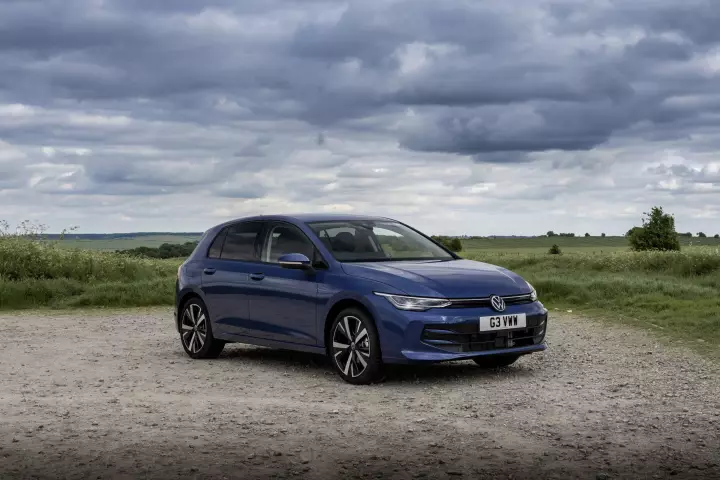
Volkswagen Golf on the road

Ride and handling

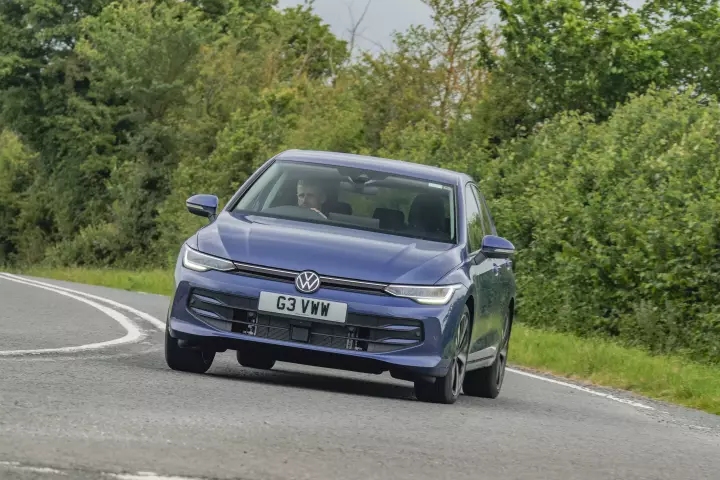
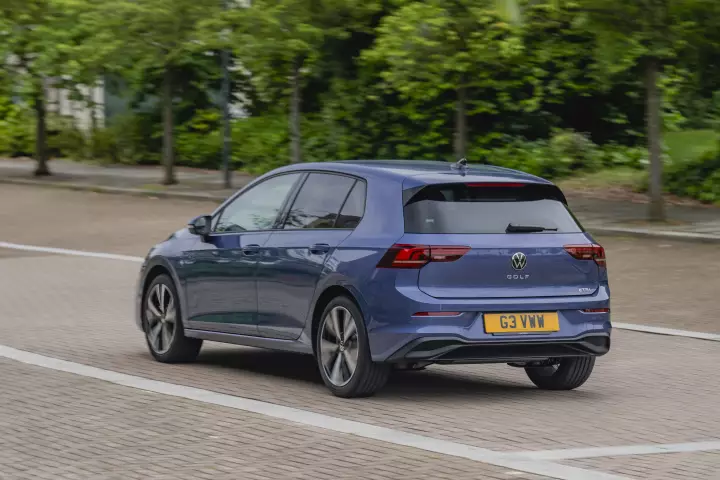
The Volkswagen Golf is known for striking the right balance between ride and handling. The steering is direct and weighs up well, but it is not as quick to respond as some rivals. Body control is impressive through corners with the Golf exhibiting a safe and predictable character when rushed through corners. Yes, it is not the most involving drive, nor does it have the agility of some rivals. But it remains surefooted and composed through corners and undulations on the road. The ride quality never comes across as floaty, and the Golf feels comfortable tackling bumpy British B roads, even at high speeds.

Out on the motorway, the same qualities shine through. High-speed stability is noteworthy, as the ride is flat at high speeds without any bobbing or tossing. Refinement inside the cabin is what you expect from a car in this segment, but this also depends on the fuel type (petrol engines are more refined than diesel engines). The only downside of the Golf’s handling is that for more enthusiastic drivers, the standard Golf might come across as a bit unexciting. However, as a solution, Volkswagen offers numerous performance models, including the popular GTI.

Volkswagen Golf ride and handling

Interior and features

Interiors

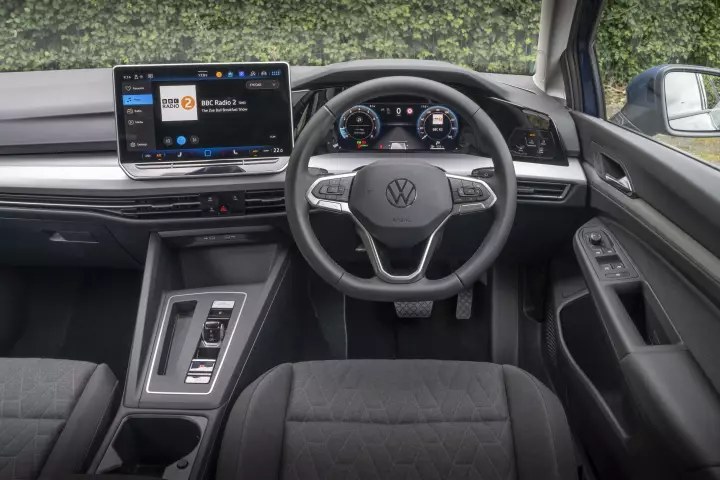
When the MK8 Volkswagen Golf debuted in 2020, the interior underwent a complete overhaul, with a digital transformation featuring a large touchscreen unit. However, the core ethos remained. It was still a well-designed and high-quality interior. With the 2024 update, Volkswagen tweaked it even further and removed some features, such as the touch-sensitive steering wheel buttons.

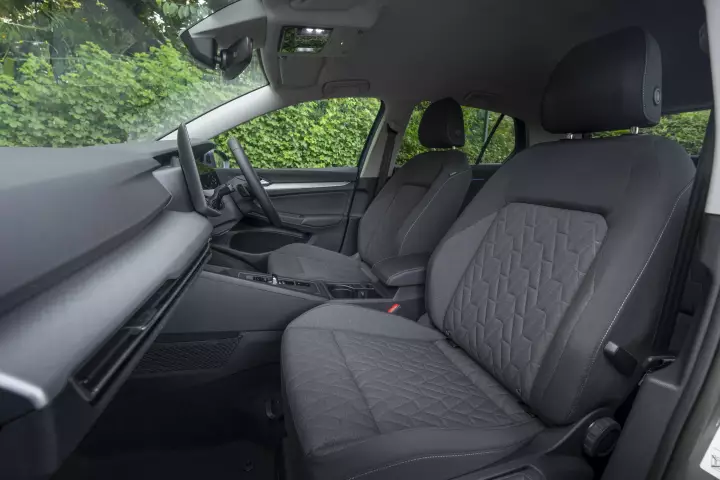
The interior quality feels adequate, but it never comes across as plush as the Peugeot 308. It exudes a well-built and robust feel, but it lacks a premium feel at times. There are many feel-good materials, such as the well-finished leather steering wheel. However, overall, the Golf’s cabin doesn’t feel particularly posh.

Volkswagen Golf interior

Boot space and practicality

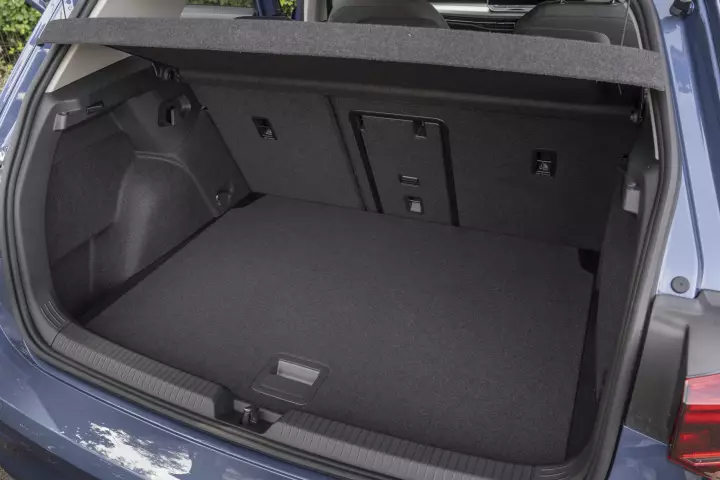
With a boot space of 381 litres, the Golf is not primed to win any accolades. For a car of its size, the boot is promising in space and matches rivals like the Ford Focus. To increase the space to 1,237 litres, you can drop the rear seats (though they won’t fold flat). If a big boot is a deal-breaker for you, we strongly suggest taking a look at the Skoda Octavia.

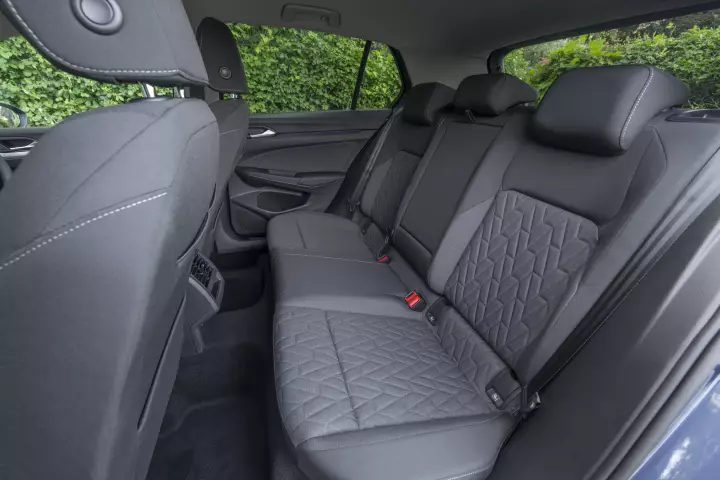
Cabin space, however, might win you over. Space up front is roomy, while the rear seats offer a reasonable amount of space. Headroom and legroom are on the positive side, but a third passenger might be a squeeze. There are plenty of cubbyholes and storage areas throughout the cabin, and a pair of ISOFIX child seat mount points are integrated into the rear seats.

Volkswagen Golf boot space and practicality

Features

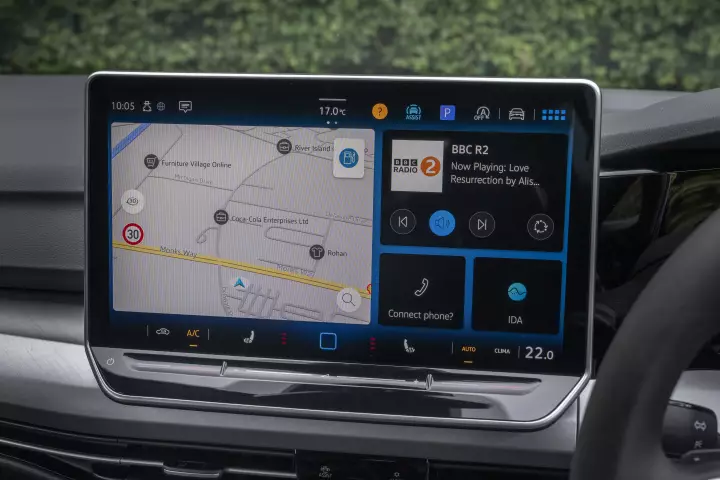
All trim options of the Golf offer a touchscreen infotainment system, integrated nicely so that you don’t have to take your eyes too far off the road. The current MK8.5 Golf offers a 13-inch touchscreen system, as opposed to the 10-inch unit on the MK8 version. Both units are large enough, with a snappy user interface and easily accessible functions. Standard features include wireless phone charging, sat-nav, Bluetooth, and Apple CarPlay/Android Auto integration.

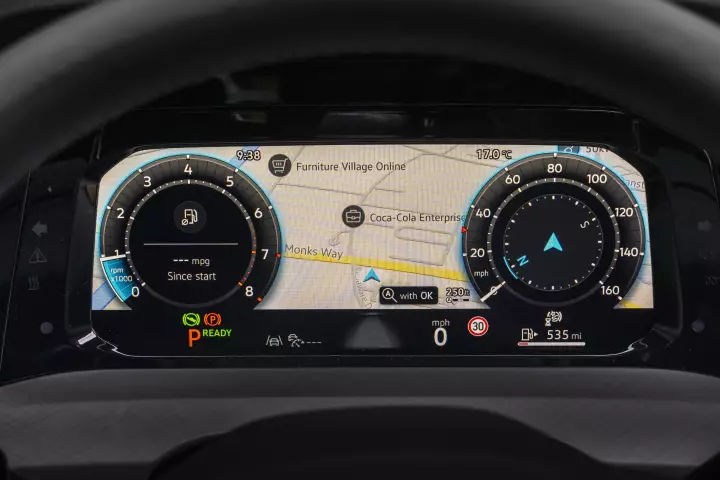
Although the touchscreen is useful, there are moments when we wish Volkswagen offered physical controls, especially for the air-con system. VW updated the controls with the MK8.5 Golf to make them more user-friendly, but they can still be fiddly at times due to the lack of physical knobs for important features. Meanwhile, you get the 10.25-inch digital driver’s display, which is easy to read on the move with bright colours and sharp graphics. Other feature highlights include ambient lighting, drive modes, keyless entry, and a host of driver-assist features.

Volkswagen Golf feature

Trim and colour options

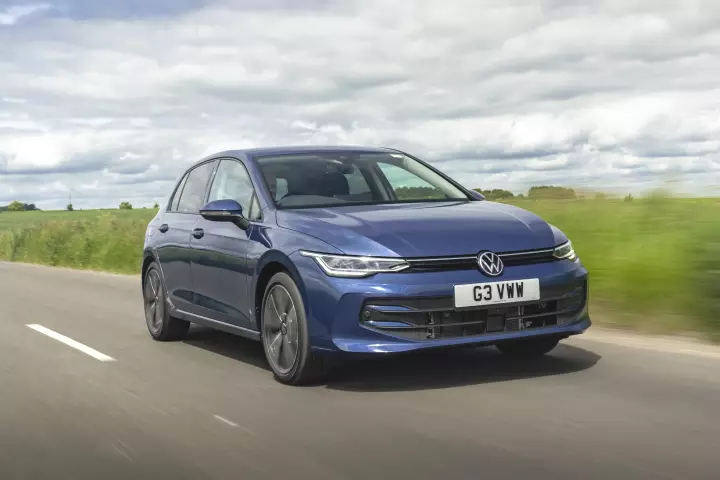
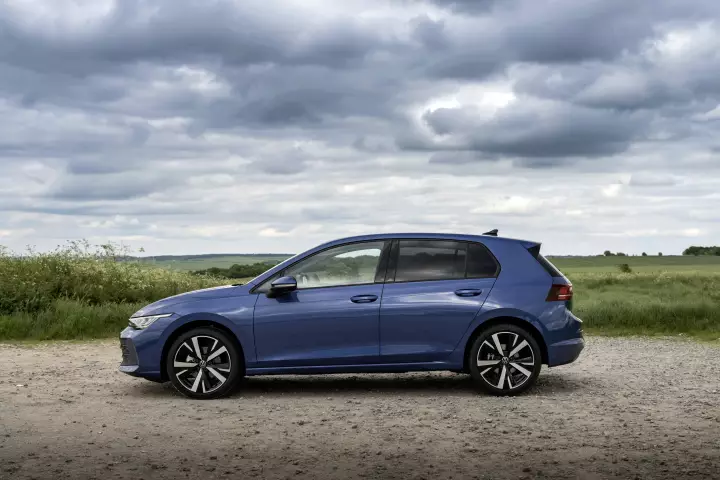
Volkswagen currently offers five main trim options for the standard Golf: Life (base), Match, Style, R-Line, and the Black Edition. The PHEV version is available as the GTE. The R-Line is the one to get if you want your Golf loaded with all the toys, plus the styling upgrades.

As for colour options, there are five metallic choices: Anemone Blue Metallic, Crystal Ice Blue Metallic, Dolphin Grey Metallic, Grenadilla Black Metallic, and Oyster Silver Metallic. There are also two premium options: Kings Red Premium Metallic and Oryx White Premium Mother-of-Pearl. In addition, there are three solid paint options and nine two-tone paint options.

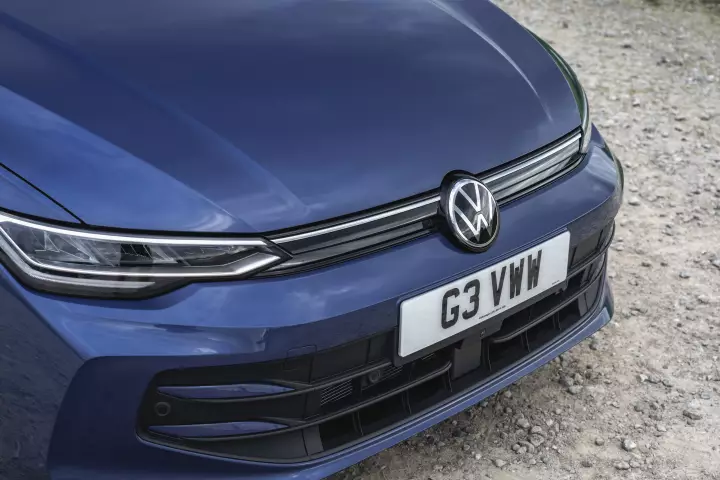
Volkswagen Golf trim and colour

Safety and reliability

The Volkswagen Golf scored 5 stars in the 2019 Euro NCAP test, making it one of the safest cars in its segment. In terms of safety features, the Golf offers 8 airbags, active cruise control, autonomous emergency braking, lane assist, road sign detection, and a host of other driver aids. Volkswagen also offers blind-spot monitoring and driver fatigue detection for the Golf. Generally, the Volkswagen Golf is regarded as a safe and reliable car, and the same has been echoed by our expert AA mechanics.

Volkswagen Golf safety and reliability

MPG, emissions and tax

Most trim and engine options come with a six-speed manual gearbox as standard, with a seven-speed dual-clutch automatic available as an option.

The base 115hp 1.5-litre four-cylinder petrol offers fuel economy of around 50mpg and produces CO₂ emissions of 123g/km. The same engine with an automatic gearbox and mild hybrid system further improves fuel economy, making it a compelling choice. On average, most engine options available with the Golf offer around 50mpg, making it a fuel-efficient little hatchback.

If you prefer more performance, engine options such as the 150hp 1.5-litre eTSI might be more suitable. But if your commute and usage involve a lot of miles and motorway driving, the 115 or 150hp diesels with 60mpg look ideal.

Lastly, the plug-in hybrid makes sense if you do a lot of city driving and can regularly plug in the car. Official fuel economy figures for the PHEV are high, but real-world figures may fall short, especially when the battery is depleted.

All MK8 Golfs attract annual VED at a flat rate, which is between £180 and £190 per year. This remains the same for all petrol, hybrid, and diesel cars.

Volkswagen Golf MPG, emissions and tax
Browse 4,458 in stock