
 Updated 03/11/2026
Read Time 5 mins

Roll back the clock a few decades and there weren’t all that many choices when it came to car gearboxes. Manuals were the go-to choice for most drivers and automatics were largely the preserve of executive or long-distance models.
The same can’t be said for the modern day, however, with automatics rising in popularity and manuals starting to become the choice of the enthusiast. But which one is right for you? Well, here at AA Cars we’ve delved into the world of gearboxes to search out all the key information to find out which one is the right fit for you.
| Gearbox type | Pros | Cons | Best suited to |
|---|---|---|---|
| Automatic | Easy to drive, particularly in traffic; no clutch pedal; smooth gear changes; reduces driver workload; generally well suited to stop-start urban driving; modern automatics can be very efficient | Can be more expensive to buy; repairs can be costly if the gearbox develops a fault; some drivers may find them less engaging; can feel less predictable on older systems | Commuters, city drivers and anyone wanting an easy driving experience |
| Manual | Usually cheaper to buy; gives the driver greater control over gear selection; can be engaging to drive; generally straightforward mechanically; often cheaper to repair than some automatic systems | Requires more driver input; clutch can wear out; tiring in heavy traffic; hill starts can be more difficult for inexperienced drivers; gear changes can be less smooth | Drivers who enjoy driving and want maximum control or lower purchase costs |
| Semi-automatic | Combines manual-style gear selection with automatic clutch operation; can offer quicker gear changes; no conventional clutch pedal; gives the driver some control over gear selection; can be more engaging than a conventional automatic | Systems vary considerably between manufacturers; gear changes can sometimes feel jerky; repairs can be expensive; can be confusing for drivers used to either a conventional manual or automatic | Drivers who want some control without operating a clutch pedal |
Types of gearbox
There are a few different types of gearbox available - let’s take a look at what they are and how they work.
Automatic
Cars with an automatic gearbox are now more popular than ever. They’re often seen as easier to drive and are more comfortable if you’re consistently dealing with stop-start traffic, as you don’t need to operate a clutch.
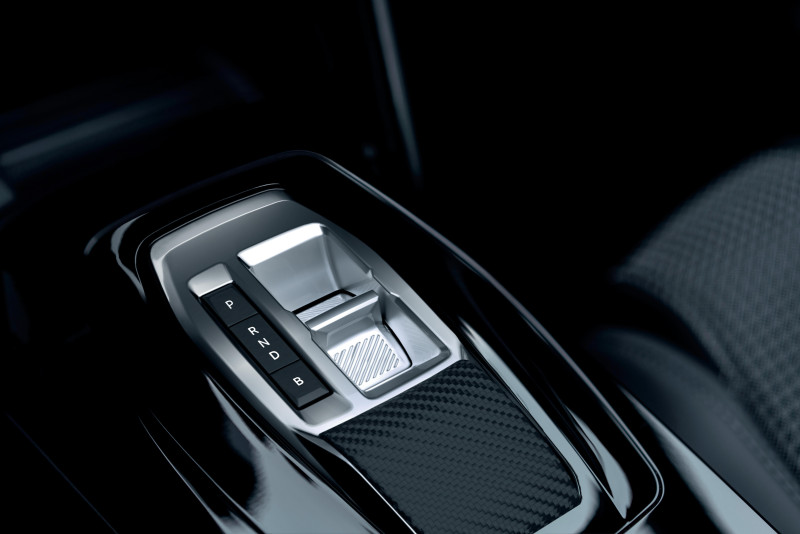
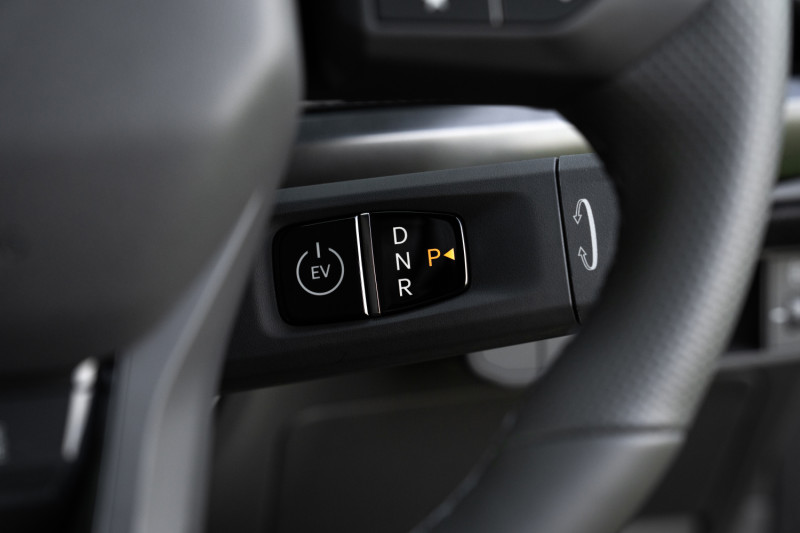
Essentially, an automatic gearbox changes gear for the driver automatically. It means the driver doesn’t need to operate a clutch or engage a gear manually. Instead, an automatic gearbox combines a variety of information, such as the vehicle’s speed and the position of the throttle, to determine the right gear. On most automatic gearboxes, there are three selections - P (Park), N (Neutral) or D (Drive) - and one into that final mode, the gearbox will allow the car to move forward and start choosing the right gear for the scenario.
There are different types of automatic gearbox, too, which we’ll look into below.
Semi-automatic
While the term ‘automatic’ is used most of all, there are different types of gearboxes that fall under that umbrella.
Torque-converter automatic
A torque converter is one of the simplest forms of automatic gearbox. It uses a torque converter instead of a traditional clutch to transfer power from the engine to the gearbox. This system has been around for a long while, with the earliest torque converter automatics developed in the 1940s.
Dual-clutch automatic (DCT)
Dual-clutch automatics were developed back in the 1930s, but it wasn’t until the early 2000s that DCTs made their way into production vehicles. Essentially, it uses two manual gearboxes working alongside each other within a single housing, and these use two separate clutches to pre-select the next gear. In doing so, it largely eliminates the delay that can sometimes be experienced when shifting gears.
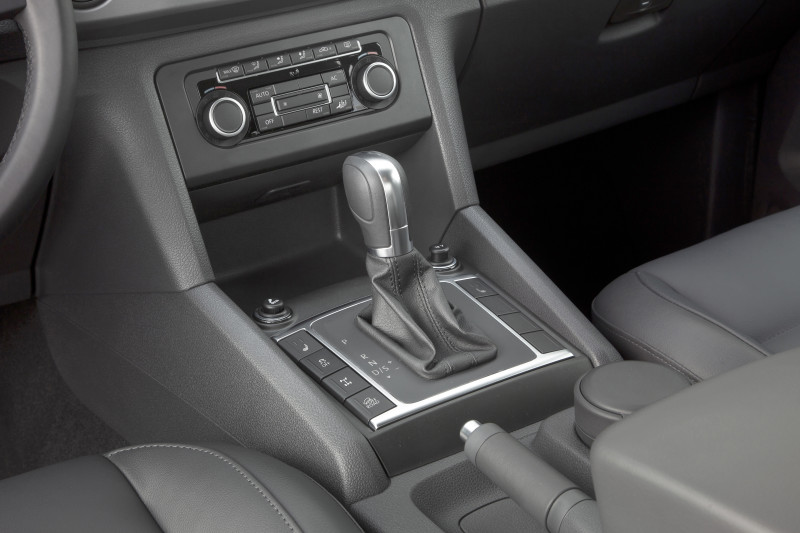
With the next gear always being pre-selected, it allows the gearbox’s on-board computer to anticipate a shift, making it smoother overall.
Continuously Variable Transmission (CVT)
A Continuously Variable Transmission - or CVT - provides an infinite number of ratios instead of a fixed set of gears like the ones you’ll find in a traditional gearbox. Unlike other gearboxes here, a CVT doesn’t actually change gears - it moves through speed ‘ratios’ which are deployed through two pulleys which are connected by a belt. You’ll find CVT gearboxes on many hybrid cars, as they’re best for boosting efficiency and making inner-city driving as easy as possible.
Automated manual (AMT)
An automated manual is the closest you’ll get to a traditional manual without actually having to change gears yourself. Sometimes referred to as semi-automatic or robotised, an automated manual uses a standard manual gearbox which is controlled by electronic systems and actuators which work to control the clutch and gears.
Physically it’s very similar to a conventional manual gearbox, but while on a fully manual setup the driver operates the clutch and gears, on an automated setup it’s done by computers and robotics instead.
Manual
Finally, we have the traditional manual gearbox. In this setup, the driver operates the gearstick and foot-operated clutch to control the gears themselves. Pressing the clutch pedal separates the engine from the gearbox, after which you move the gearstick shifter to the required gear before raising the clutch and reconnecting the gearbox with the engine.
What is a clutch, and why do automatics have clutch packs (even if they don’t have a clutch pedal)?
A clutch is hugely important to a gearbox, but how does it work? Essentially, a clutch works by connecting and disconnecting two rotating shafts - the engine shaft and the gearbox shaft. In a manual car, it’s disengaged when the driver presses the clutch and it allows them to change gears without damaging components or stalling. When they release the pedal, the clutch plate releases, pressing against the engine flywheel, at which point the shafts reconnect and power is sent to the wheels.
Many people, when learning to drive, find out about the ‘biting point’ of the clutch and this refers to the point at which the clutch plate makes light pressure with the flywheel but without connecting completely.
How do different transmission types behave for drivers?
The different gearboxes have their positives and negatives and appeal to different drivers, too. Let’s have a closer look.
Manual
Cars with manual gearboxes are usually the most common and are typically cheaper and easier to repair. Because the driver has to operate the gears and clutch, it gives the person behind the wheel more control over the vehicle, which is why manual gearboxes are often the preferred choice for sports cars. Manual cars are typically cheaper to buy than equivalent automatics, too, which makes them great for drivers on a budget.
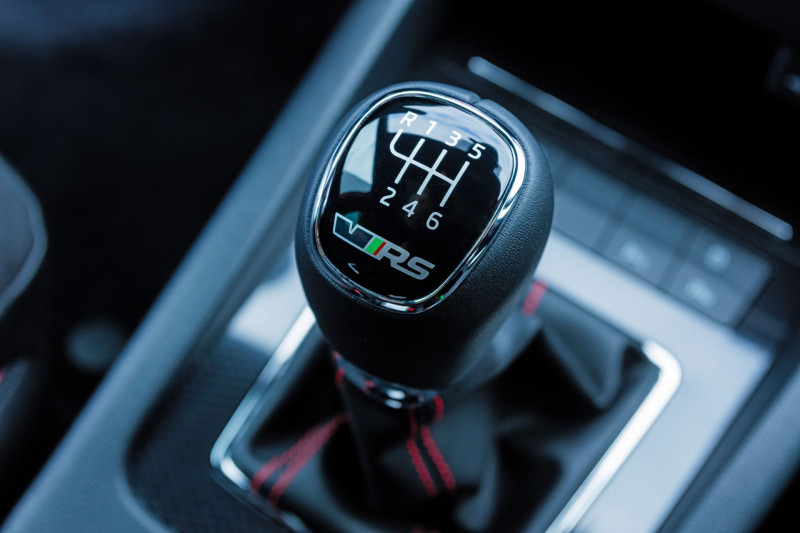
The downside to the manual gearbox is that physical element. Because you’re changing gears yourself, a manual gearbox car can be tiresome to drive in stop-start traffic.
Automatic
Cars with automatic gearboxes used to be far less common than they are today. However, as the technology has become cheaper and easier to manufacture, it has found its way into a greater number of cars. While earlier automatic gearboxes often brought an efficiency penalty over an equivalent manual, the difference isn’t as pronounced on the latest cars and, in some instances, an automatic car will be better on fuel than one with a manual gearbox.
The benefits of an automatic gearbox are that they’re more relaxing to drive. Because the gearbox does all of the shifting itself, there’s less involvement than with a manual car, and this makes it great if you’re often caught in traffic. However, because they’re more complex, an automatic gearbox is more expensive to repair than a manual alternative.
The good news is that you’ll find a broad range of cars - both automatic and manual - available at AA Cars today, so head on over and check them out. You can even fine-tune your cars using our dedicated search panel, filtering them by size, colour, engine and - you guessed it - transmission type.


