Specifications

Fuel types
Petrol, diesel, mild-hybrid, plug-in hybrid
No of seats
5 or 7 (optional third row)
Boot space
650 litres
Dimensions
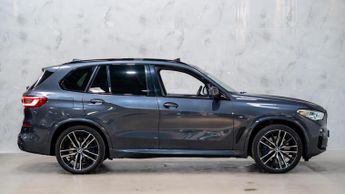
4,922 mm x 2,004 mm x 1,745 mm
Fuel economy
21.1 – 235.4 mpg
Acceleration (0-62mph)
3.9 – 7.5 seconds
Insurance group
40 – 50
Body style
SUV
CO2 emissions
27 – 218 g/km
Browse 452 in stock

AA Mechanic review

When buying a used BMW X5, check the service history, automatic gearbox, tyres, brakes and suspension carefully. These are large, heavy SUVs, so uneven tyre wear, brake vibration or suspension noises can point to expensive faults. Also check the interior for family-use wear, test the infotainment system, and use an online vehicle check, such as an AA Vehicle Check, to look for outstanding finance, mileage issues or insurance write-off history.
Jamie Webb
Jamie Webb

Jamie Webb is a Roadside Patrol at The AA, with hands-on experience developed through motorsport, roadside work and practical vehicle maintenance, along with a growing specialism in hybrid and electric vehicles.

Read bio

4.2/5

Repairs

The BMW X5 is a strong premium SUV, but faults are usually expensive rather than frequent.

Common issues include:

• Air suspension leaks, compressor faults or uneven ride height

• Turbo wear on higher mileage cars

• Sunroof drain leaks causing water ingress

• Tailgate creaks, latch faults or electrical issues

• Brake and tyre wear due to the car’s weight

• Parking sensor, reversing camera or iDrive glitches

• DPF issues on diesel models used mainly for short journeys

Air suspension repairs can be costly, especially if more than one corner is affected. Turbo replacement can also cost more than £1,000, so buyers should check for smoke, loss of power or poor service history.

Maintenance

BMW X5 service schedules vary by engine and model year, but most cars need maintenance every 12 months or around 10,000 miles. Owners should follow the car’s condition-based service display and service book.

Key maintenance to keep on top of includes:

• Oil and filter changes using BMW-approved oil

• Brake fluid replacement every 2 years

• Gearbox fluid servicing when due

• Spark plug replacement on petrol models

• Fuel filter replacement on diesel models

• Suspension and air suspension checks

• Sunroof drain cleaning if fitted

• Regular longer drives to help keep the DPF clear on diesel models

• Software updates for iDrive and driver assistance systems

Tyres, brakes, insurance, road tax and fuel can all be expensive. Many X5s use large run-flat tyres, and diesel models may also need AdBlue top-ups.

Plug-in hybrid X5 models need the same routine servicing, plus high-voltage battery checks. Battery ageing is usually gradual, although some cars may lose usable range as they get older.

Is the BMW X5 a reliable car?

The BMW X5 is a premium SUV with strong performance, a high-quality interior and good everyday practicality. It can be reliable, but it needs proper servicing and early attention to faults.

After 5 to 7 years, wear-and-tear repairs become more common, especially around tyres, brakes, suspension and electronics. A well-maintained X5 can cover high mileage, but buyers should budget for premium running costs.

Browse 452 in stock

AA Cars review

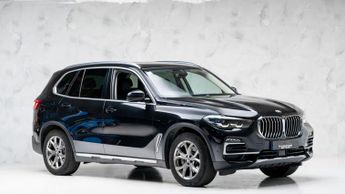
The BMW X5 has long been one of the most exciting large SUVs money can buy. While cars like the Volvo XC90 feel calm and reassuring, the X5 brings a sense of driver involvement that very few rivals can match. It’s polished, premium and packed with performance, yet still manages to offer genuine family practicality. It’s a luxury SUV that refuses to blend in – and that’s exactly why it remains such a compelling choice.
Jack Evans
Jack Evans

Jack is an experienced motoring journalist who has been covering the latest new-car releases for the last 10 years.

Read bio

4.0/5

How much does it cost?

A look on the BMW website reveals that prices for the basic xLine model of the M5 get underway at £75,780 with starting prices for the higher spec M Sport and M Sport Pro beginning at £80,390 and £82,110 respectively. There is also an X5 M Competition model, which takes performance – and cost – to the next level with a price tag starting at £137,130.

If those prices sound a little steep to you, then don’t worry because there are plenty of second-hand bargains to be found on AA Cars. Older versions of the current generation car can be picked up for around £25,000, although five-year-old models with less than 50,000 miles on the clock start closer to the £35,000 mark.

Engine and performance

Overview

As a shining light of German engineering excellence, BMW has long enjoyed a strong reputation for its smooth and varied engines. The current X5 showcases the very latest that the brand has to offer, with the present-day lineup centering around a selection of mild-hybrid petrol and diesel engines, as well as a seriously impressive xDrive45e plug-in hybrid set-up.

Among the most popular options are a choice of two 3.0-litre mild-hybrid six-cylinder diesels, a 3.0-litre petrol straight-six and a monstrous 4.4-litre twin-turbo V8, producing 617 bhp, which is only available in top of the range M Competition cars.

All models come with an eight-speed automatic gearbox and xDrive all-wheel drive as standard.

BMW X5 performance

Out on the road

Regardless of its environment, the X5 is able to deliver a composed, confident driving experience that would not feel out of place in a much smaller model. The car feels exceptionally agile for a car with such bulk, benefiting from precise and well-weighted steering that gives a good level of feedback. Despite its size, BMW has managed to limit the body roll that often blights big SUVs and the vehicle feels tightly gripped to the road, even when things get bendy.

With the X5 having such a sporty focus, it is perhaps unsurprising that performance across the engine range is kept strong, with even the most industrial-feeling diesel units offering quick acceleration and overtaking ability that many more prestige models would be pleased with. While comfort isn’t the main focus for the X5, if you do want to add some refinement then the xDrive45e plug-in hybrid stands out for its silent electric running at low speeds and seamless transition to petrol power when required.

Elsewhere, BMW has done a good job of keeping wind and road noise suppressed, meaning that, for all the exciting driving, the car is still able to settle down and offer a good level of relaxation and comfort on the motorway.

BMW X5 on the road

Ride and handling

The X5 is one of a small handful of family SUVs that actually manage to pull off a sporty performance, without sacrificing the practicality which appeals to family buyers in the first place. The car handles more like a sports saloon than a big, tall Chelsea tractor, feeling composed and sturdy both in the bends and along the straights.

Despite this, ride quality does suffer when compared to the likes of the Volvo XC90, with the BMW’s firmer suspension less forgiving – especially when faced with potholes and other imperfections in the road. In an attempt to soften the edges, BMW has given the X5 air suspension which does reduce some of the harshness, while remaining undeniably more taut than the silky-smooth Volvo.

BMW X5 ride and handling

Interior and features

Interiors

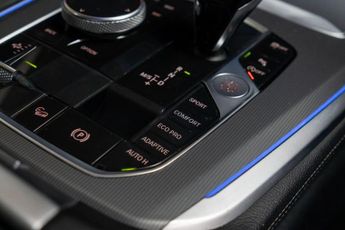
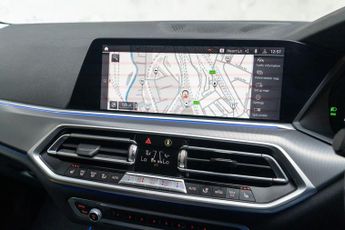
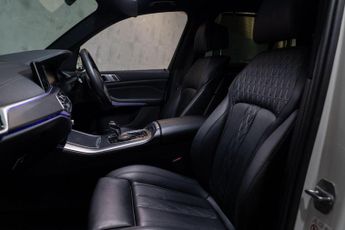
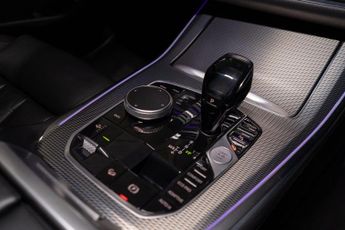
The interior of the X5 feels luxurious and driver-focused, with soft-touch materials, leather surfaces and high-quality trim pieces dominating the cabin space. Up front, drivers benefit from BMW’s latest Curved Display system, which teams a 12.3-inch digital instrument cluster with a 14.9-inch central touchscreen. While the system is sharp and packed with features, negotiating the endless menus can prove fiddly when you’re on the move.

Elsewhere, seating is excellent, with wide, supportive chairs in the front and generous legroom in the rear. The high driving position is also superb, offering a clear and commanding view of the road, as is the choice of ambient lighting which allows drivers to set the cabin to exactly their own tastes and moods.

For larger families, a third row of seats can be added, although legroom in these spaces is very much at a premium and you wouldn’t want to be relying on them too often.

BMW X5 interior

Boot space and practicality

As with any big family SUV, the X5 needs to offer practicality as well as thrills. That is certainly the case in the boot, where the car boasts 650 litres of space in five-seat mode, rising to 1,870 litres with the second row of seats folded down. While plug-in hybrid variants do lose a small amount of space due to battery placement, all models are more than comfortable accommodating the usual bikes, buggies, suitcases and shopping bags that are associated with everyday family life.

The car has also been given a handy split tailgate, to make loading even easier, and internally there is generous storage, with deep door bins, large cupholders and useful spaces around the centre console.

BMW X5 boot space and practicality

Features

Even entry-level X5s come well equipped, with features such as heated leather seats, BMW Live Cockpit Professional, wireless Apple CarPlay and Android Auto, parking sensors, a reversing camera and three-zone climate control.

While the list may be extensive, there are still plenty of other goodies to be found only by moving up the range, with higher trims and options including a Bowers & Wilkins Diamond surround sound system, a panoramic sky lounge glass roof, soft-close doors, semi-autonomous driving modes and a head-up display.

BMW’s options list is among the longest of any carmaker, and while this may sound tempting, be aware that costs can escalate rapidly.

BMW X5 feature

Trim and colour options

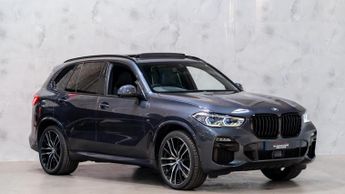
The BMW X5 is available in several trims, including xLine, M Sport, M Sport Pro and M Competition. The M Sport line is among the most popular with buyers drawn to its sporty performance and good level of tech, without getting towards the top of the price list.

Colour choices include Alpine White, Carbon Black, Sophisto Grey, Tanzanite Blue, Mineral White and several BMW Individual shades.

BMW X5 trim and colour

Safety and reliability

The BMW X5 scored five stars with Euro NCAP and has an impressive list of standard safety features. These include autonomous emergency braking, lane-keeping assist, blind-spot monitoring, traffic-jam assist and adaptive cruise control.

When it comes to reliability, the X5 generally performs well, with BMW ironing out issues with some of its more complex systems over recent years. Despite this, there are a few common issues to keep an eye out for including oil leaks, transmission and cooling system failures, and issues with the self-leveling suspension.

BMW X5 safety and reliability

MPG, emissions and tax

Official economy figures for the X5 range from approximately 21.1 mpg to 42.2 mpg for diesel and mild-hybrid diesel options, with the xDrive45e plug-in hybrid model capable of 235.4 mpg under test conditions. While technically possible, in the real world this would require regular charges and only using electric power. Drivers can actually expect to achieve around 45 mpg in the real world. CO2 emissions range from 27 g/km on the plug-in hybrid to above 200 g/km on petrol models.

With prices starting at the premium end of the market, buyers can expect to pay higher insurance and tax costs, especially when you add in the government’s luxury car tax.

BMW X5 MPG, emissions and tax
Browse 452 in stock