
 Updated 03/09/2026
Read Time 7 mins
Updated 03/09/2026
Read Time 7 mins

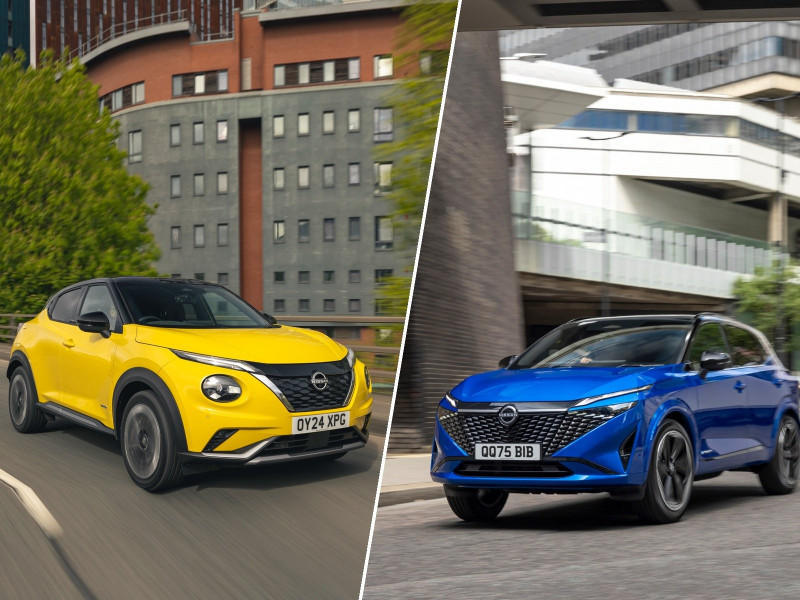
The Juke helped shape the compact crossover market with its distinctive looks and youthful appeal. The Qashqai is widely credited with establishing the mainstream family crossover class, and it still feels like the more family-focused of the 2.
So, which Nissan crossover best aligns with your lifestyle? This guide compares the Nissan Juke and Nissan Qashqai across design, space, technology, safety, running costs and driving experience to help you choose with confidence.
Nissan Juke vs Qashqai at a glance
| Category | Nissan Juke | Nissan Qashqai |
|---|---|---|
| Best suited to | Urban drivers, young professionals and style-conscious buyers | Families, longer-distance drivers and buyers who need more space |
| Body style | Compact crossover with bold styling | Mid-size family crossover with a more mature look |
| Boot space | Around 422 litres, expanding to 1,305 litres with the rear seats folded | Around 504 litres, expanding to 1,447 litres with the rear seats folded |
| Engine focus | 1.0-litre petrol or hybrid power, depending on version | Mild-hybrid petrol or e-POWER hybrid, depending on version |
| Driving feel | Nimble, compact and easy to manoeuvre in town | More refined and composed, especially on longer journeys |
| Overall character | Distinctive, agile and efficient | Practical, comfortable and family-focused |
Design and styling
The Nissan Juke is instantly recognisable. Its bold, unconventional design has carried through into its second generation, with a coupe-like silhouette, high waistline and dramatic front end with split-level lighting.
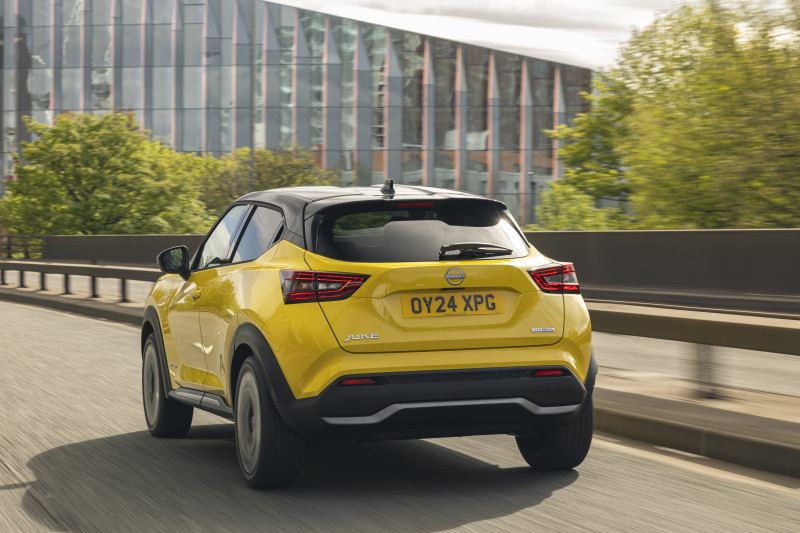
The Juke’s compact proportions and sculpted surfaces are aimed at drivers who want their car to make a statement. It feels more dynamic and youthful than the Qashqai, and it stands out in a crowded car park.
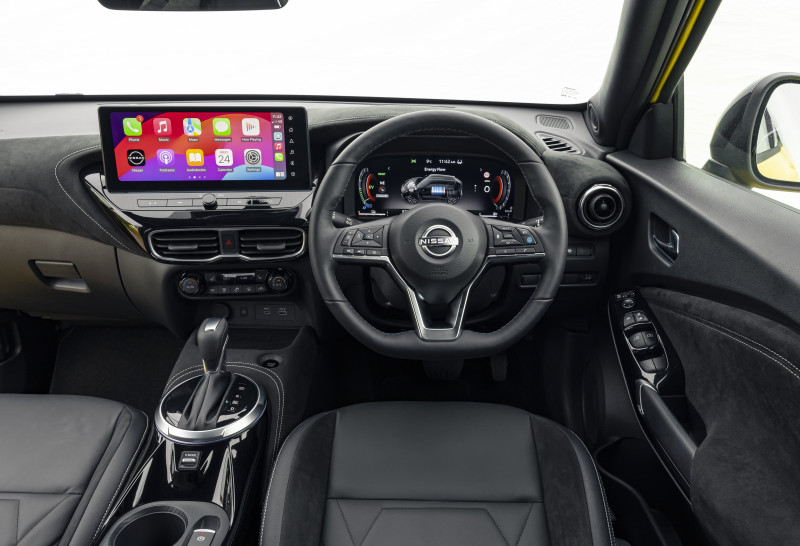
Inside, the Juke continues the same playful theme. Rounded air vents, a centre console inspired by a motorbike fuel tank and colour customisation options help give it a more personal feel. Despite its quirky design, the cabin uses quality materials and integrates modern technology neatly.
The Nissan Qashqai takes a more mature approach. Its sharp lines, V-Motion grille, sleek LED headlamps and well-proportioned body give it broader appeal, particularly for families and professionals who want something stylish but understated.
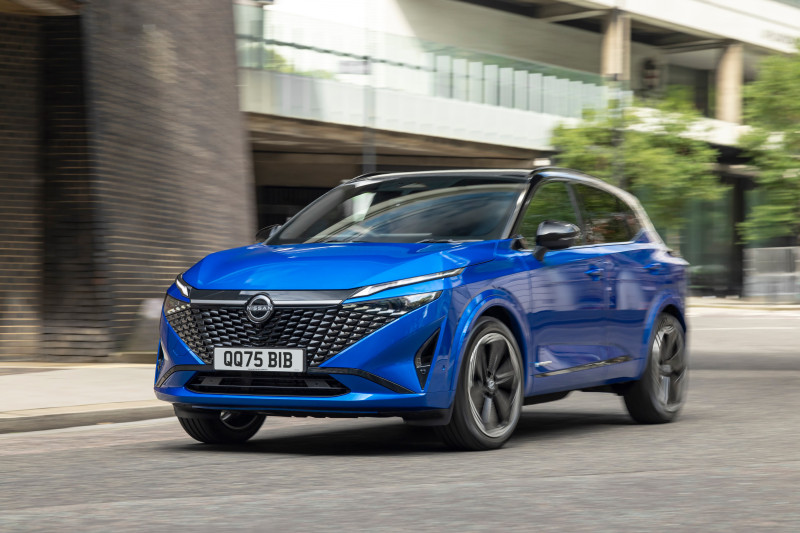
Inside, the Qashqai feels more spacious and more grown-up. Soft-touch materials, ambient lighting and a clear focus on comfort make it practical for daily use while still feeling upmarket enough for longer journeys.
Performance and driving experience
The Nissan Juke’s engine options centre around efficiency. The latest generation is mainly offered with a turbocharged 1.0-litre 3-cylinder petrol engine, producing around 114bhp, with either a 6-speed manual or 7-speed dual-clutch automatic gearbox.
There’s also a hybrid version, which uses a 1.6-litre petrol engine with an electric motor for improved efficiency and a total output of 143bhp. The Juke’s light weight and compact size make it especially nimble in city driving, with responsive steering and a tight turning circle.
The Qashqai is larger and heavier, so it offers a broader and more powerful engine range. Current options include a 1.3-litre turbocharged mild-hybrid petrol engine in 138bhp or 156bhp forms, plus the e-POWER hybrid with 190bhp.
On the road, the Qashqai feels confident and composed. It is better suited to longer motorway journeys, where its smoother ride, extra refinement and additional power make overtaking and carrying heavier loads easier.
If you regularly cover longer distances, the Qashqai is the stronger option. If most of your driving is urban or suburban, the Juke’s smaller size and easier manoeuvrability may suit you better.
Interior comfort and space
The Juke’s compact footprint means it’s best suited to singles, couples or small families. The front seats are supportive and offer a sporty driving position, while the cabin feels more upmarket than you might expect for a compact crossover.
Rear space has improved compared with the previous Juke, but legroom and headroom remain snug for taller passengers, especially on longer trips. For young families it works well, but if you regularly carry adult-sized teenagers, the larger Qashqai will make more sense.
Boot space is strong for a car of this size, at around 422 litres. Fold the rear seats and this expands to up to 1,305 litres, giving useful flexibility for shopping, sports kit or flat-pack furniture when you do not need to carry rear passengers.
The Qashqai is designed as a family crossover, so it has the advantage here. Front and rear passengers get more legroom and headroom, and the wide-opening rear doors make it easier to fit child seats or help younger passengers in and out.
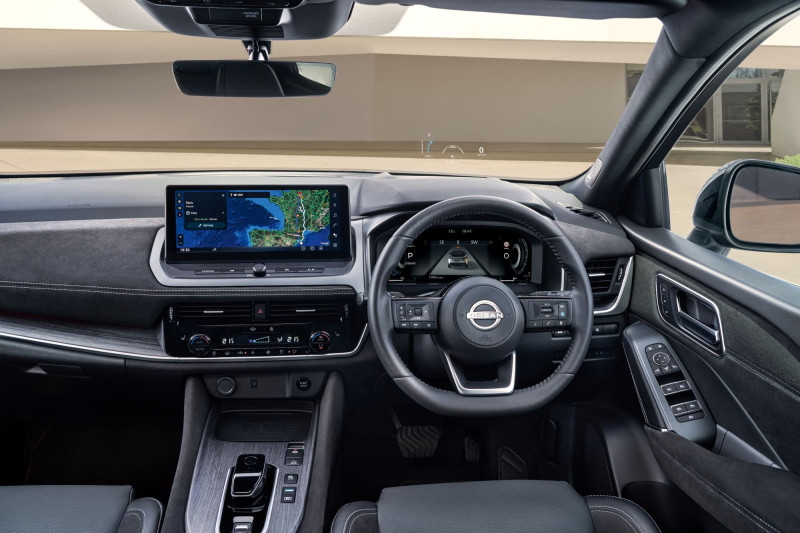
The boot offers around 504 litres of space, increasing to 1,447 litres with the rear seats folded. That extra capacity makes the Qashqai the more practical choice for holidays, prams, family luggage and regular longer journeys.
Technology and connectivity
The infotainment systems in these 2 cars are broadly similar, but the Qashqai generally leads on the latest features and screen technology.
The Juke’s infotainment system includes an 8-inch touchscreen with Apple CarPlay, Android Auto, DAB radio, Bluetooth and an optional Bose sound system. The digital driver display is clear and customisable, and higher trims add wireless charging and connected services through Nissan’s app.
The Qashqai raises the bar with a larger 9-inch touchscreen, high-definition graphics and enhanced connectivity. Depending on trim, it can also include built-in navigation, wireless smartphone integration, multiple USB ports and a Bose audio system.
Higher-spec Qashqai models can also offer a 12.3-inch digital driver display and a head-up display, which brings key driving information into the driver’s line of sight. Both models provide useful connected services, but the Qashqai has the broader technology suite.
Safety features
Safety is a priority for Nissan, and both models come well equipped. The Juke has automatic emergency braking, lane departure warning, traffic sign recognition and rear parking sensors as standard. Higher specifications add blind spot monitoring, rear cross traffic alert and adaptive cruise control.
The Qashqai builds on this with extra driver assistance features on higher trims. These can include ProPILOT with Navi-Link, a 360-degree camera system, intelligent park assist and more advanced collision avoidance technology.
Isofix mounts are present in both cars, but the Qashqai’s larger body and wider safety equipment make it particularly family-friendly. As with any used car, check the exact specification of the model you are viewing, as equipment can vary by trim, age and options.
Practicality and running costs
The Juke’s compact size makes it easy to park and manoeuvre in tight urban spaces. Its efficient engines also help keep day-to-day running costs under control.
The 1.0-litre petrol engine is capable of around 48mpg on the WLTP cycle, while the hybrid version improves on this, achieving upwards of 56mpg in mixed driving. Insurance premiums and servicing costs are generally affordable, making the Juke a strong option for first-time buyers or anyone who wants stylish but economical transport.
The Qashqai remains competitive for running costs despite being the larger car. Its mild-hybrid and hybrid powertrains are designed to balance performance and efficiency, with the 1.3-litre petrol able to return up to 44mpg and the e-POWER hybrid achieving similar or better figures with lower emissions.
Insurance and maintenance costs are likely to be higher than the Juke, reflecting the Qashqai’s size and equipment levels. For many buyers, that extra cost is justified by the additional space, comfort and family practicality.
Driving dynamics
The Juke feels agile and easy to place on the road. Its compact dimensions, responsive steering and relatively light weight make it well suited to city traffic, tight car parks and twisty country lanes.
The suspension is on the firmer side, but it remains comfortable enough for everyday driving. The cabin is also well insulated from wind and road noise for the class.
The Qashqai is tuned for greater comfort and stability. Its longer wheelbase and more sophisticated suspension give it a smoother ride, particularly on motorways and rougher roads. It feels composed at higher speeds, with less body roll than some rivals.
All-wheel drive versions add extra grip in poor weather or for light off-road use, which may appeal if you travel further afield or live somewhere rural.
Cost and value for money
The Juke is positioned as the entry point to Nissan’s crossover range. It offers competitive pricing, strong standard equipment and a distinctive design, which helps it stand out as a used buy.
Even lower-spec models can include modern infotainment, safety technology and alloy wheels, while higher trims add features such as heated seats, keyless entry and premium audio. Strong popularity also helps its long-term appeal.
The Qashqai costs more, but you get a larger, more comfortable and more practical car. Entry-level models are well equipped, while higher trims bring near-premium features and a more advanced technology package.
Running costs are higher than the Juke’s, but the Qashqai’s extra space, refinement and family usability make it a strong value choice if you need a car that can handle more demanding everyday use.
Nissan Juke or Qashqai: Which should you choose?
Both the Nissan Juke and Nissan Qashqai are popular choices in the crossover market. That is no surprise, as Nissan has long been regarded as a crossover expert, and both cars have a strong reputation for durability and everyday usability.
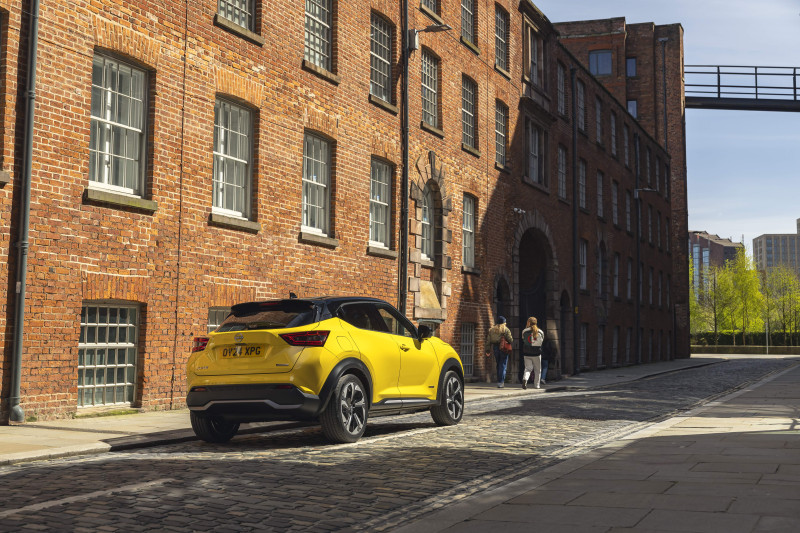
Choose the Nissan Juke if you want a compact crossover with bold styling, low running costs and easy urban manners. It is best suited to city drivers, young professionals and style-conscious buyers who value individuality and agility.
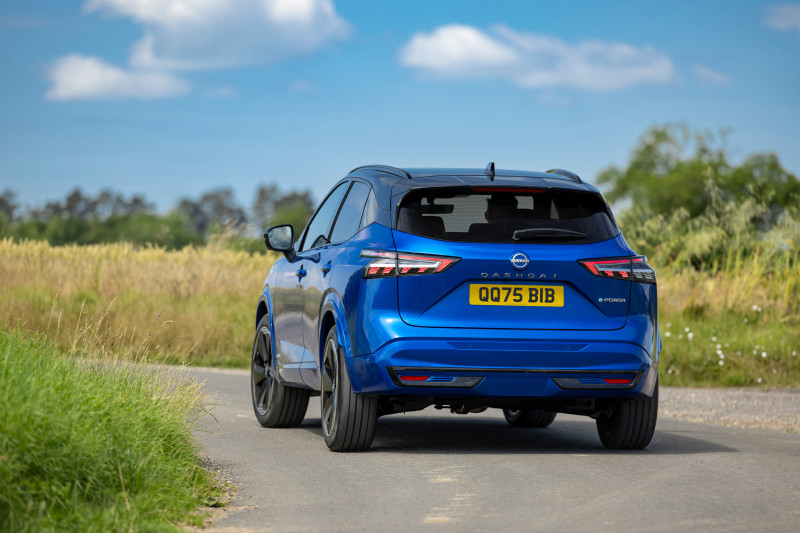
Choose the Nissan Qashqai if you need more space, regularly travel with family or friends, or value comfort, advanced technology and a refined driving experience. Its blend of practicality, efficiency and premium features makes it a strong pick for families.
In simple terms, the Juke is the more distinctive and manageable small SUV. The Qashqai is the more complete family SUV. Test drive both if you can, and think carefully about how much space you really need day to day.


