
 Updated 03/09/2026
Read Time 8 mins
Updated 03/09/2026
Read Time 8 mins

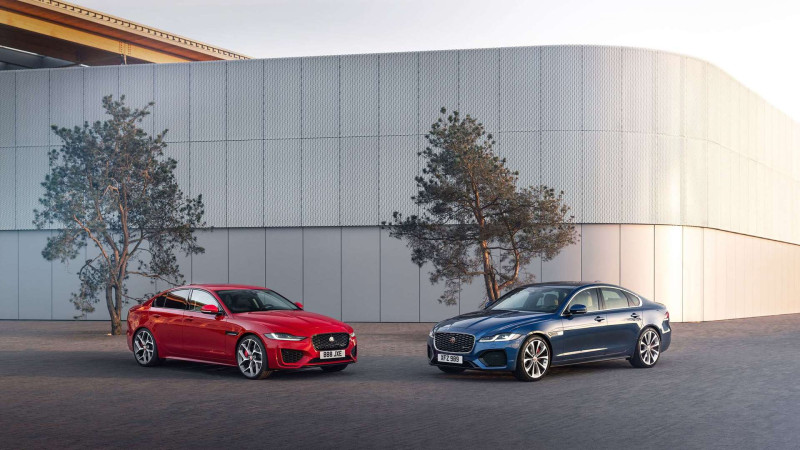
Until 2023, buyers could choose between the compact executive Jaguar XE and the larger executive Jaguar XF. The XE was aimed at drivers who wanted something agile and driver-focused, while the XF offered more space, more comfort and a more mature long-distance feel.
This comparison looks at the Jaguar XE and XF across design, driving experience, interior comfort, technology, safety, practicality and value, helping you decide which used Jaguar saloon best suits your needs.
Jaguar XE vs XF at a glance
| Area | Jaguar XE | Jaguar XF |
|---|---|---|
| Best suited to | Drivers who want a compact, agile premium saloon | Drivers who want more space, comfort and executive refinement |
| Driving character | Sharper, more responsive and easier to place on tighter roads | Smoother, more composed and better suited to longer journeys |
| Interior space | Comfortable up front, but rear legroom is tighter | Roomier rear seats and a larger boot |
| Boot space | Around 410 litres | Around 540 litres, with Sportbrake estate versions adding more flexibility |
| Engine choice | 2.0-litre petrol and diesel Ingenium engines, with older V6 petrol versions available | 2.0-litre petrol and diesel Ingenium engines, plus older V6 diesel and V6 petrol options |
| Overall appeal | A compact used Jaguar saloon with strong driver appeal | A larger used Jaguar saloon with greater comfort and practicality |
Design and styling
From 2015 onwards, the Jaguar XE sat as the entry point into the brand’s saloon range. It was designed to appeal to drivers who wanted sportiness, prestige and engineering depth in a car that could rival the BMW 3 Series, Mercedes-Benz C-Class and Audi A4.
Its compact dimensions are matched by a sleek, athletic shape, with a sculpted bonnet, sharp LED headlights and the signature Jaguar grille. The XE’s low stance and short overhangs hint at its sporting intent, giving it a more compact and focused look than the XF.
Inside, the XE is driver-focused. The cabin uses minimalist lines, premium materials and subtle luxury touches, including a sporty three-spoke steering wheel. Aluminium accents and soft-touch surfaces create a modern feel that has aged well.
The XF takes a more mature and executive approach. It is larger and more imposing, with a longer wheelbase, pronounced shoulder lines and a stately front end that gives it real presence. Its design feels more refined than overtly sporty, which suits its role as the bigger Jaguar saloon.
The XF’s interior is more spacious and uses generous amounts of leather, wood veneers and ambient lighting on higher trims. It gives the car a stronger sense of occasion. There is also the XF Sportbrake estate, which adds extra luggage space for drivers who want more flexibility.
Performance and driving experience
Both the XE and XF were offered with a wide range of Ingenium petrol and diesel engines. The XE’s 2.0-litre Ingenium petrol engines commonly include the P200, P250 and P300 versions, producing around 200 PS, 250 PS and 300 PS respectively. Diesel choices include the D165 and D200, with earlier XE models also offered in 163, 180 and 240bhp diesel forms.
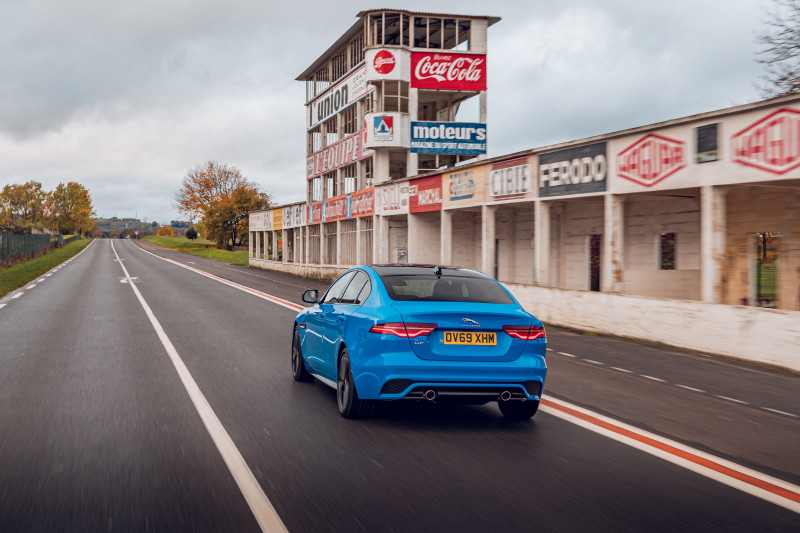
Older XE models also included a 3.0-litre V6 supercharged petrol engine in the XE S, with outputs of around 340bhp or 380bhp depending on version. That gives the used XE range more variety than many buyers might expect.
The Jaguar XF shares many of the XE’s Ingenium engines, including the P250 petrol, P300 petrol and D200 diesel. Older XF models also offered a 3.0-litre V6 diesel with up to around 300 PS and a 3.0-litre V6 supercharged petrol engine in the XF S.
Gearbox choice depends on age and specification. Earlier cars could be found with a six-speed manual gearbox, but most used examples use Jaguar’s smooth eight-speed automatic transmission. Rear-wheel drive is standard on many versions, while all-wheel drive is available on selected models for extra grip.
The XE feels at its best when you want agility. Its lightweight aluminium-intensive chassis, compact size and responsive steering make it particularly adept in urban environments and on winding country roads. It is the more alert and driver-focused car of the two.
The XF is set up for a different kind of confidence. Its longer wheelbase and refined suspension help it deliver a smoother, more composed ride, especially on motorways and long journeys. Adaptive dynamics, where fitted, allow the XF to sharpen up for more spirited driving, while still keeping the calmer character that suits the car.
Interior comfort and space
The XE’s compact footprint gives it a snug cabin that works well for the driver and front passenger. The seats are supportive, the dashboard is easy to read and the materials help it feel like a proper premium saloon.
Rear legroom is tighter, especially for taller passengers on longer journeys. Boot capacity is around 410 litres, which is suitable for daily use, commuting and weekend trips, but less useful for larger family loads.
The XF is stronger if space matters. Rear passengers get more legroom and headroom, making it a better option if you regularly carry adults, colleagues or family. The boot is also larger at around 540 litres, and the rear seats fold for added versatility.
If you need even more luggage space, the XF Sportbrake estate is worth considering. It keeps the comfort and refinement of the saloon but adds the flexibility that some families and long-distance drivers will appreciate.
Technology and connectivity
Jaguar’s on-board technology evolved across both models, so the exact setup will depend on the age and trim level of the used car you are viewing.
The XE features Jaguar’s Touch Pro infotainment system on many models, with a high-resolution touchscreen, navigation, Bluetooth, DAB radio and smartphone integration through Apple CarPlay and Android Auto. A customisable digital driver display is available on many versions, while higher trims may add a Meridian sound system, wireless charging and extra connectivity features.
The XF builds on this with a larger touchscreen interface on some versions, enhanced graphics and, from later model years, Jaguar’s Pivi Pro system. This brings faster responses, improved voice control and over-the-air updates on compatible cars.
Higher-spec XF models may also include multi-device Bluetooth pairing, premium audio, ambient lighting, multi-zone climate control and a head-up display. As with any used premium car, check the exact equipment on the model you are considering rather than relying on trim names alone.
Safety and driver assistance
Safety has always been important to Jaguar, and both the XE and XF were available with a wide range of driver assistance features.
The XE includes equipment such as autonomous emergency braking, lane-keeping assist, traffic sign recognition and multiple airbags on many versions. ISOFIX child seat anchors are also fitted, helping the XE work for smaller families as well as solo drivers and couples.
Depending on specification, used XE models may also include blind spot monitoring, rear cross-traffic alert and adaptive cruise control. The XF adds further driver assistance options on higher trims, including a 360-degree camera system, adaptive cruise control with stop and go, and park assist technologies.
When buying used, check the individual advert, service records and specification sheet carefully. Equipment can vary by model year, trim, option pack and previous owner choices.
Practicality and running costs
The XE’s smaller size makes it easier to park and manoeuvre than the XF, which is useful if most of your driving is around town. Its efficient petrol and diesel engines can also help keep fuel costs sensible, especially if you choose one of the diesel models and cover longer distances.
Insurance and road tax are generally likely to be more favourable than the larger XF, although costs will depend on the exact engine, trim, age and your personal circumstances. As with any used Jaguar, it is worth checking service history carefully and budgeting for premium-brand maintenance.
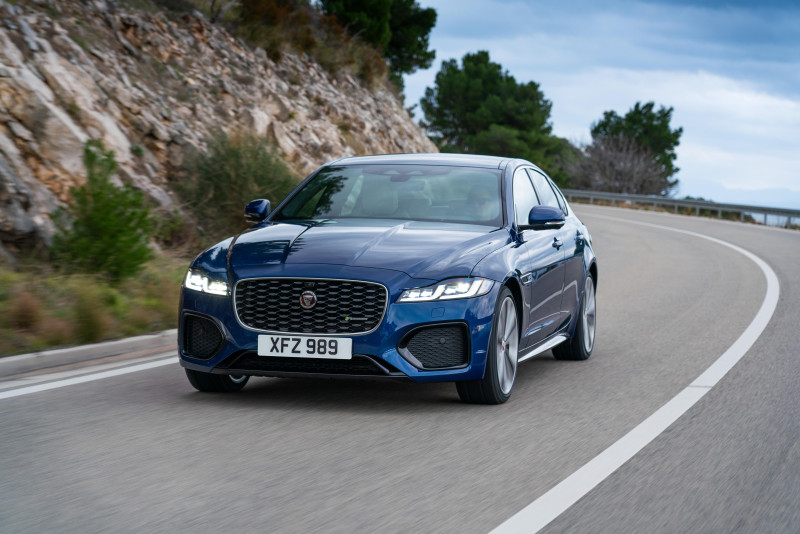
The XF is larger, heavier and more expensive when new, so running costs are typically higher. The trade-off is that you get more space, more comfort and stronger long-distance ability. Diesel and mild-hybrid options can be efficient for a car of this size, but maintenance, insurance and tyres may cost more than they would on the XE.
Both cars can make strong used buys if you choose carefully. Look for a full service history, evidence of timely maintenance and a clear record of any advisory work that has been completed.
Driving dynamics
On the road, the XE is the more compact and responsive car. Its sharp steering, well-tuned suspension and shorter wheelbase help it feel confident in traffic and enjoyable on tighter roads. The ride is firm but comfortable, and refinement is good for its class.
The XF feels more settled at speed. Its larger footprint gives it a planted feel on motorways, while the suspension helps smooth out rough surfaces. With all-wheel drive fitted, selected versions also bring added confidence in poor weather.
Choose the XE if you want the more agile Jaguar. Choose the XF if you spend more time on longer journeys and want the extra comfort, space and refinement.
Cost and value for money
Price will be an important part of the decision. The XE is generally the more accessible used buy, with lower purchase costs and a more compact size that can help with day-to-day ownership. It offers strong value if you want a premium saloon with a sporting feel.
The XF costs more to buy and run, but it gives you more car for the money. You get a bigger cabin, larger boot, more executive comfort and a stronger long-distance character. For many drivers, those benefits will justify the extra cost.
The best value will depend on the specific car, not just the model. Mileage, condition, engine, trim level, service history and optional equipment all matter. A carefully chosen XF may be better value than a poorly maintained XE, and the reverse can also be true.
Jaguar XE or XF: Which should you choose?
Both the Jaguar XE and XF are strong contenders in the used premium saloon market, but they excel in different areas.
Choose the Jaguar XE if you want a compact executive saloon with sharp handling, a driver-focused cabin and lower running costs. It is ideal for young professionals, urban commuters and anyone who wants a premium saloon that still feels agile.
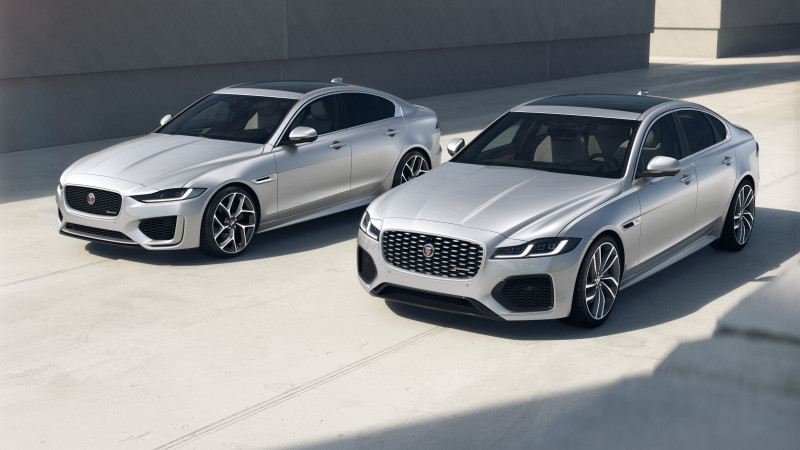
Choose the Jaguar XF if you need more space, regularly travel with family or colleagues, or place greater value on long-distance comfort. It feels more mature, more refined and more versatile, especially if you consider the XF Sportbrake estate.
By weighing up your priorities, including driving dynamics, comfort, technology and practicality, you can choose the Jaguar saloon that best complements your lifestyle.
Find your next used Jaguar with AA Cars
Ready to compare used examples? AA Cars can help you find used Jaguar XE and Jaguar XF models from AA trusted dealers across the UK. Many cars listed through AA Cars include free breakdown cover, giving you extra confidence when you buy.
Before you decide, use The AA’s used car checklist to help review the car’s history, condition and paperwork. For extra reassurance, you can also arrange an independent AA vehicle inspection before you buy.
- Browse used Jaguar XE cars on AA Cars
- Browse used Jaguar XF cars on AA Cars
- Book an AA vehicle inspection


