
 Updated 03/09/2026
Read Time 5 mins
Updated 03/09/2026
Read Time 5 mins

Both brands are part of the wider Hyundai Motor Group, alongside premium brand Genesis. That shared ownership means many Hyundai and Kia models use related platforms, electric motors, batteries, petrol engines and hybrid systems. The all-electric E-GMP platform, for example, underpins several Hyundai Group electric vehicles.
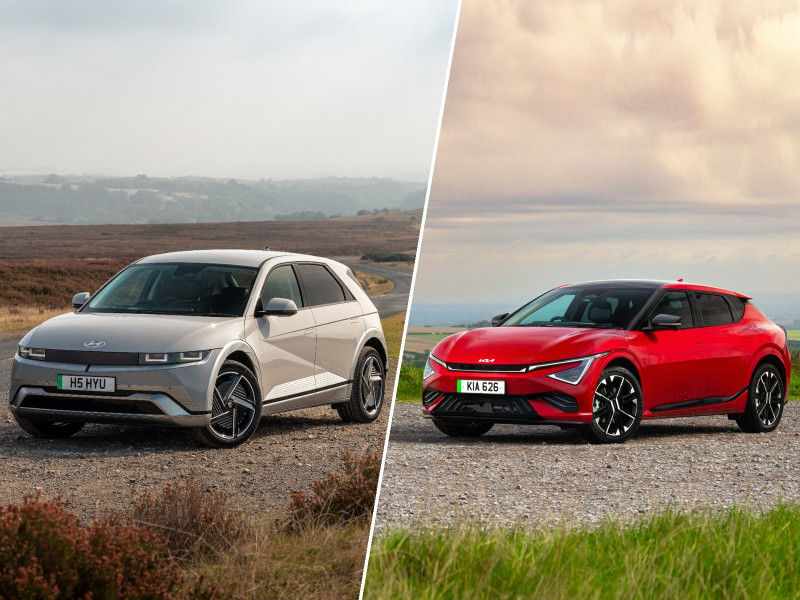
That does not mean the cars feel the same. Hyundai usually leans towards a more refined, composed character, while Kia often feels a little sportier and more design-led. Both brands go bold with styling, and both make good use of the latest technology.
So, Hyundai vs Kia, which brand makes the better cars? The answer depends on what you need from your next car. We’ve compared design, practicality, technology, performance, safety and value to help you choose with confidence.
Hyundai vs Kia: quick comparison
| Area | Hyundai | Kia |
|---|---|---|
| Design | Often cleaner and more refined, with bold standouts such as the Ioniq 5 and Ioniq 6. | Usually sportier and more daring, with models such as the EV6, EV9 and Sportage. |
| Driving feel | Typically composed, comfortable and stable. | Often a touch firmer and more engaging to drive. |
| Practicality | Strong choice of city cars, hatchbacks, SUVs, hybrids and EVs. | Strong SUV and EV range, with many models offering generous boot and passenger space. |
| Technology | Clean interfaces, large displays and connected features on many newer models. | Shared tech with a more style-led approach to screens, graphics and cabin design. |
| Warranty | Five-year unlimited-mileage warranty on many UK models. | Seven-year or 100,000-mile warranty on many UK models. |
| Best for | Drivers who value comfort, refinement and straightforward usability. | Drivers who want bold design, strong value and a slightly sportier edge. |
Design and styling
If you strip away the exterior lines and interior styling, many Hyundai and Kia models are closely related underneath. They can share batteries, electric motors, suspension parts, petrol engines and hybrid systems. The key difference is how each brand presents those ingredients.
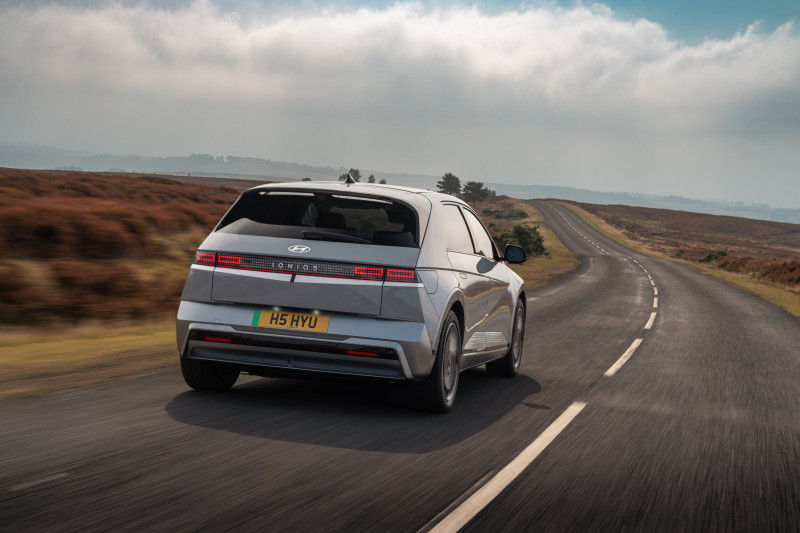
Hyundai tends to favour softer, slightly more refined designs. Models such as the Tucson, Kona and i10 have become popular because they feel modern without being too challenging. That said, Hyundai is not a restrained brand. The Ioniq 5 and Ioniq 6 are clear examples of how far Hyundai is prepared to push its styling, with retro-futuristic details and shapes that are hard to categorise.
Kia’s range often feels bolder. The brand usually has a sportier overall look, aimed at drivers who want their car to stand out. The Kia EV6 and EV9 have helped reshape how people see Kia, while the latest Sportage shows how confident the brand has become with its SUV design.
Inside, the difference is similar. Hyundai usually keeps things practical and clean, while Kia often adds more visual drama, contrast stitching and distinctive materials. Neither approach is better for everyone. It comes down to whether you prefer Hyundai’s more measured finish or Kia’s sharper sense of style.
Performance and driving dynamics
Neither Hyundai nor Kia traditionally built its reputation around high performance, but that has changed in recent years. Hyundai’s N models brought more focus to driver engagement, starting with the i30 N and continuing into electric performance cars such as the Ioniq 5 N.
Kia has also added more performance focus to its electric line-up, including the EV6 GT. In everyday models, Kia is often seen as the slightly sportier brand. A Kia Sportage, for example, generally feels a touch firmer and more engaging than a Hyundai Tucson in comparable trims.
Hyundai’s strength is refinement. Its cars often prioritise composed stability, passenger comfort and easy everyday driving. That makes models such as the Tucson, Kona, Santa Fe and Ioniq range appealing if you want a calm, confident car for family journeys or commuting.
Overall, Kia may suit you better if outright performance and sharper responses matter most. Hyundai may be the better fit if you prefer comfort, quietness and an easy-going drive. In both cases, the latest hybrid and electric models offer smooth performance and strong efficiency.
Practicality and everyday use
Both Hyundai and Kia offer broad model ranges, from compact city cars to large family SUVs. At the smaller end, Hyundai has models such as the i10 and i20, which work well for shorter journeys, urban use and newer drivers. Kia offers the Picanto, along with compact electrified options such as the EV3 for buyers who want to move away from petrol.
For families, both brands offer SUVs in petrol, hybrid, plug-in hybrid and electric forms. Hyundai’s Tucson and Santa Fe give buyers practical cabins and family-friendly comfort, while Kia’s Sportage, Sorento and EV9 put a strong focus on space, equipment and flexible seating.
In pure cargo space terms, many Kia models edge ahead in some segments, especially larger SUVs. Hyundai still performs well, with practical layouts, folding rear seats and good passenger comfort across most of its range.
The best choice will depend on the model rather than the badge. If you are choosing between a Tucson and a Sportage, or between an Ioniq 5 and an EV6, look closely at boot space, rear-seat comfort, charging options and the way the cabin works for your daily routine.
Value for money
Value is one of the biggest strengths for both Hyundai and Kia. Historically, both brands offered lower prices than many mainstream and premium rivals while still including plenty of equipment. That remains part of their appeal today.
Comparable Hyundai and Kia models are usually close on price, but standard equipment can vary by trim and model year. You’ll often find features such as LED lighting, digital displays, smartphone connectivity and active safety systems on many versions.
Warranty cover is a clear part of the value argument. Hyundai offers a five-year unlimited-mileage warranty on many UK models, while Kia offers a seven-year or 100,000-mile warranty on many UK models. For used car buyers, remaining warranty can be a useful point to check, especially if the car is still within its cover period and has been maintained correctly.
Running costs, servicing and depreciation will vary by model, engine and age. As a general rule, both brands are competitive against mainstream rivals. If value for money is your priority, compare the exact specification, mileage, service history and warranty position of the cars you are considering.
Technology and infotainment
Hyundai and Kia share much of their in-car technology and connectivity. Across newer models, digital driver displays, smartphone mirroring and advanced infotainment systems are common.
Hyundai often focuses on clean interfaces with large displays, simple menus and well-integrated connectivity. The Ioniq models show this clearly, with wide screens, voice recognition and a minimalist layout.
Kia uses much of the same technology but often gives it a more style-led presentation. Its curved displays, where fitted, feel premium and place key driving and media information close to the driver. Kia also tends to use more dramatic graphics and bolder cabin layouts.
Both brands still include physical buttons for some key functions in many models, which can make them easier to use than cars that put almost everything through a touchscreen. If you prefer a very minimalist cabin, some Hyundai and Kia interiors may feel more traditional. If you value easy access to heating, media and driver assistance controls, that can be a strength.
Safety and reliability
Safety is a priority for both Hyundai and Kia. Many models from both brands perform well in Euro NCAP testing, and newer cars often include features such as autonomous emergency braking, lane assist, blind-spot monitoring and speed-limit assistance, depending on model and trim.
Reliability is another reason both brands have become so popular with UK buyers. Hyundai and Kia are now known for building dependable, well-equipped cars, and their long warranties help give buyers extra reassurance.
As with any used car, condition matters more than the badge. Check the service history, MOT history, tyre condition, brake wear and whether any software updates or recalls have been completed. A well-maintained Hyundai or Kia with a clear history is likely to be a stronger buy than a poorly maintained example with a higher specification.
.jpg)
Hyundai or Kia: which should you choose?
Hyundai and Kia are closely related, but they do not feel identical. Hyundai is often the better choice if you want refinement, passenger comfort and easy-to-use technology. It suits drivers who prefer a calm, composed car that feels practical and well thought out.
Kia is often the sharper choice if you want bold design, strong value and a slightly sportier feel. Its models tend to stand out more visually, and many buyers will like the brand’s confident styling and long warranty.
Both brands excel in practicality, safety, technology and value. There is no clear overall winner because the right answer will usually depend on the specific cars you compare. A Hyundai Tucson and Kia Sportage, for example, are close rivals but will appeal for different reasons. The same applies to electric models such as the Hyundai Ioniq 5 and Kia EV6.
The best advice is to shortlist the exact models that suit your budget, then compare how they feel on the road. Test drive both if you can. The right car will be the one that fits your life, not just the one with the badge you prefer.
Find your next Hyundai or Kia with AA Cars
Ready to compare used Hyundai and Kia models? AA Cars can help you search trusted dealer stock across the UK, compare prices and narrow down the cars that fit your budget.


