
 Updated 03/09/2026
Read Time 6 mins
Updated 03/09/2026
Read Time 6 mins

They also have more in common than many rivals. Kia and Hyundai are related through the Hyundai Motor Group, so the Sportage and Tucson share key componentry. Even so, they have different designs, specifications and driving characteristics, and each will suit a slightly different kind of driver.
So, which one is right for you? Here, we compare the Kia Sportage and Hyundai Tucson on design, interior comfort, technology, driving experience, running costs, safety and everyday practicality.
Kia Sportage vs Hyundai Tucson at a glance
| Area | Kia Sportage | Hyundai Tucson |
|---|---|---|
| Best for | Drivers who want a practical, well-equipped family SUV with a slightly sharper feel | Drivers who want a bold-looking, comfortable SUV with a more relaxed character |
| Design | Distinctive front end, large grille and sharp lighting details | Bolder bodywork, strong creases and stand-out light design |
| Interior | Sweeping dashboard layout with twin-screen display on many versions | More conventional layout, updated cabin on facelifted models |
| Driving feel | A touch sharper and more controlled through bends | Softer, quieter and more laid-back |
| Boot space | 587 litres on the original figures provided | 620 litres on the original figures provided |
| Powertrains | Mild hybrid, full hybrid and plug-in hybrid petrol options, with earlier diesel versions also available | Mild hybrid, full hybrid and plug-in hybrid petrol options |
Design and styling
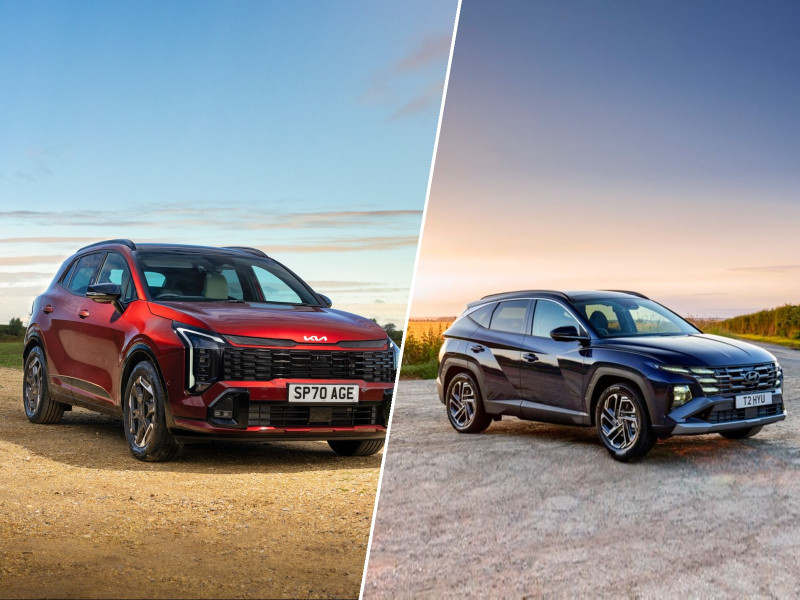
There’s no mistaking the Kia Sportage and Hyundai Tucson for anything else in the family SUV segment. While many SUVs can look rather similar, this Korean pair stand apart and feel distinctive.
The Tucson is arguably the bolder of the 2. It uses sharp creases across the bodywork, wing-shaped LED daytime running lights within the grille and distinctive rear light clusters. Even small details, such as the Hyundai badge being set behind the glass on the tailgate, help it feel different from more conventional SUVs.
The Sportage is a little more muted by comparison, but it still has plenty of presence. Its large grille stretches across the front of the car, framed by blocky LED headlights and angled daytime running lights. It has a distinctive look of its own, without feeling quite as dramatic as the Tucson.
Both cars received updates around 2024 and 2025. Hyundai focused heavily on the Tucson’s cabin, while Kia made changes to the Sportage’s exterior and interior. As a used buy, it’s worth checking the model year and specification carefully, as equipment and cabin layout can vary.
Interior quality and comfort
The different approaches continue inside. One glance at the dashboards and you would hardly think the Sportage and Tucson were closely related.
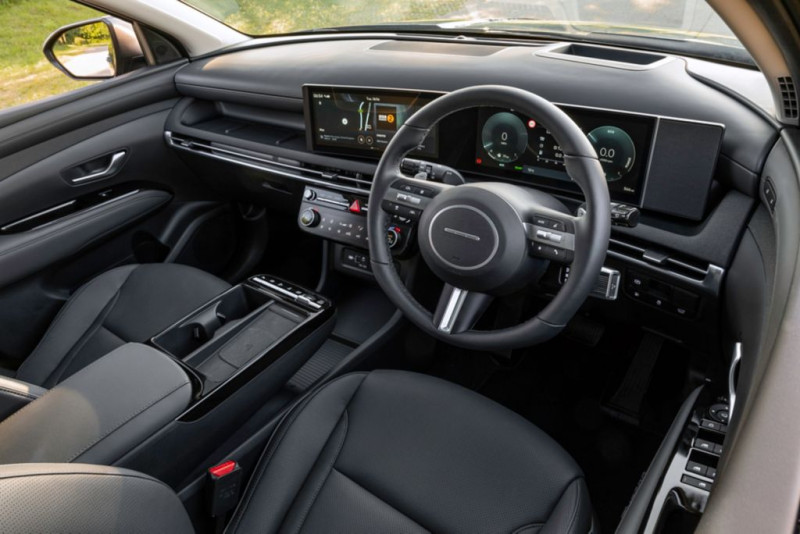
The Tucson has a more conventional dashboard design, with a central touchscreen, separate heating controls and a higher centre console with more physical buttons. Facelifted versions gained a cleaner, more modern layout that feels closer to Hyundai’s newer electric models.
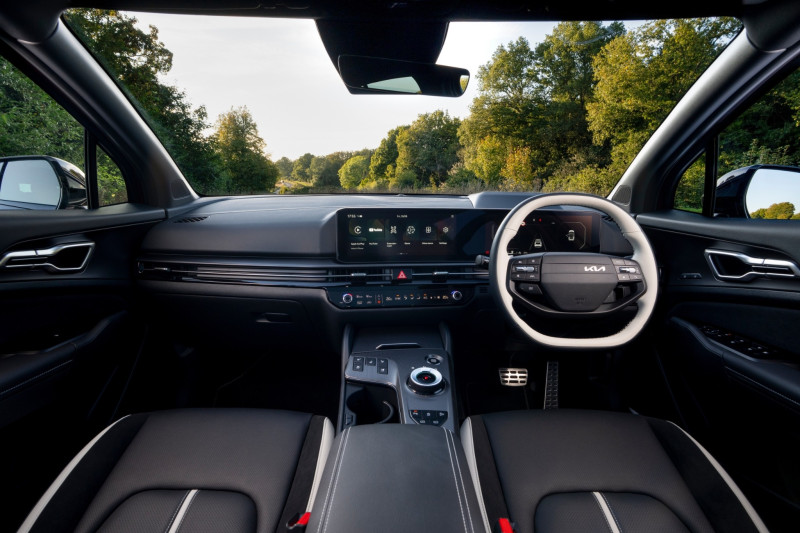
The Sportage has a more sweeping design, with a pair of screens mounted within one wide display across the dashboard on many versions. It gives the cabin a more modern look, while still keeping useful shortcut controls for everyday functions.
Interior quality is good in both cars. More basic models use harder plastics in places, particularly lower down the cabin, while higher trims add more tactile surfaces and extra equipment. Both feel solid and well put together, which matters in a family SUV that needs to deal with daily use.
You sit a little lower in the Tucson, which gives it a slightly sportier feel. The Sportage gives you a higher view out and a lower bonnet line, which helps visibility. Rear-seat space is excellent in both, although the Tucson has slightly more shoulder room. Boot space is strong too, with the original article listing 587 litres in the Kia and 620 litres in the Hyundai. Hybrid models may have slightly less space, depending on the version.
Technology and infotainment
If you like physical controls for key functions, both SUVs do a better job than many newer rivals. Major features such as heating and ventilation are operated through physical knobs in the Tucson or a simple touch panel in the Sportage. Both cars also have proper buttons on the steering wheel and centre console.
That doesn’t mean technology has been overlooked. Both models have large, clear touchscreens with intuitive software, and Apple CarPlay and Android Auto are standard. The graphics and menu layouts can feel a little basic compared with some newer rivals, but facelifted cars brought refreshed infotainment systems with more modern menu designs.
For buyers who care about audio quality, both cars offer upgraded sound systems on higher trims. The Hyundai uses a Krell system, while Kia uses Harman Kardon on selected versions.
Driving experience
Neither the Kia nor the Hyundai has been designed to deliver a sporty, engaging driving experience above all else. They are at their best as comfortable, fuss-free family SUVs, but they do drive slightly differently.
The Sportage feels a touch sharper behind the wheel. It is more precise and slightly keener to turn into corners, with a firmer suspension tune that gives it better control when driving more quickly along a flowing road. Impressively, it still remains comfortable over lumps and bumps.
The Tucson is the softer and more laid-back option. It feels quieter inside on the move, with less road and wind noise reaching passengers. The softer suspension is not quite as controlled as the Kia’s in earlier versions, although facelifted cars improved in this area.
Both cars use closely related engine options, including a 1.6-litre mild-hybrid petrol, a 1.6-litre full hybrid and a 1.6-litre plug-in hybrid. The current-generation Sportage was also available with diesel power for a short time. In day-to-day driving, the differences between the Tucson and Sportage are small. Most buyers will find both quiet, refined and easy to drive.
Running costs and efficiency
Running costs are a key consideration for any family SUV buyer, and the Kia Sportage and Hyundai Tucson are competitive in this area.
The mild-hybrid petrol engines are the simplest option and suit drivers who want lower purchase costs and straightforward ownership. The original article notes that they can deliver around 40mpg on paper, with real-world use likely to be in the mid-30s mpg. They are also the versions most likely to appeal if you want a manual gearbox.
The full-hybrid models are strong all-rounders. They combine useful performance with better efficiency than the standard petrol versions, and they make sense if you do plenty of urban driving but cannot charge at home.
The plug-in hybrid models are best suited to drivers who can charge regularly. If you can plug in at home or at work, they can complete many shorter journeys using electric power, helping reduce petrol use. If you rarely charge, a full hybrid may be the more sensible choice.
Safety and reliability
As family SUVs, the Sportage and Tucson put a strong focus on safety. Both models include driver assistance systems such as autonomous emergency braking, lane-follow assist and intelligent speed-limit assist, along with a full set of airbags.
Both also have strong reputations for reliability, helped by long manufacturer warranties. Kia’s warranty lasts for 7 years or 100,000 miles from new, while Hyundai’s lasts for 5 years with no mileage limit in many cases. When buying used, always check the service history and warranty conditions, as cover can depend on age, mileage and maintenance.
It’s also worth checking the specification carefully. Safety, parking and driver assistance features can vary by trim and model year, especially between pre-facelift and facelifted cars.
Kia Sportage or Hyundai Tucson: Which is best?
The Kia Sportage and Hyundai Tucson are closely related, but they go about the job of being stylish, well-packaged and easy-to-live-with family SUVs in slightly different ways.
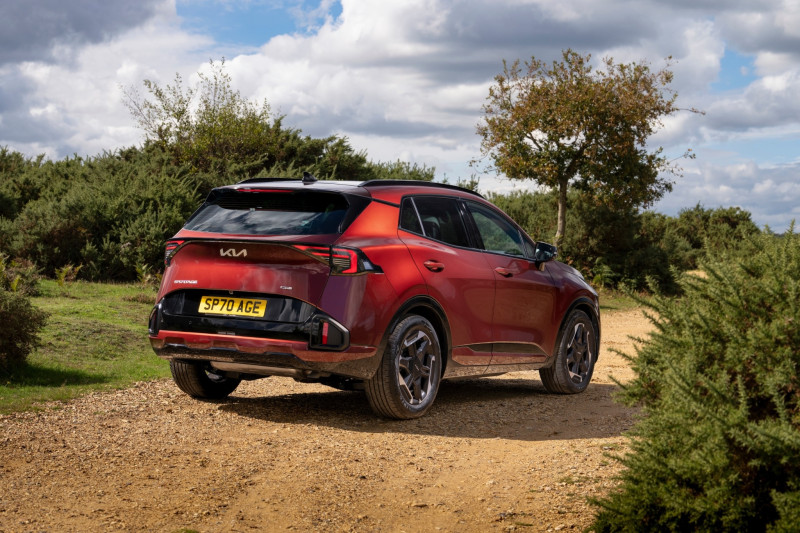
The Kia Sportage is a strong all-rounder. It looks distinctive, feels solidly built, offers plenty of space and has a slightly sharper driving character. It’s a good choice if you want a family SUV that feels comfortable day to day but still has a bit of precision on the road.
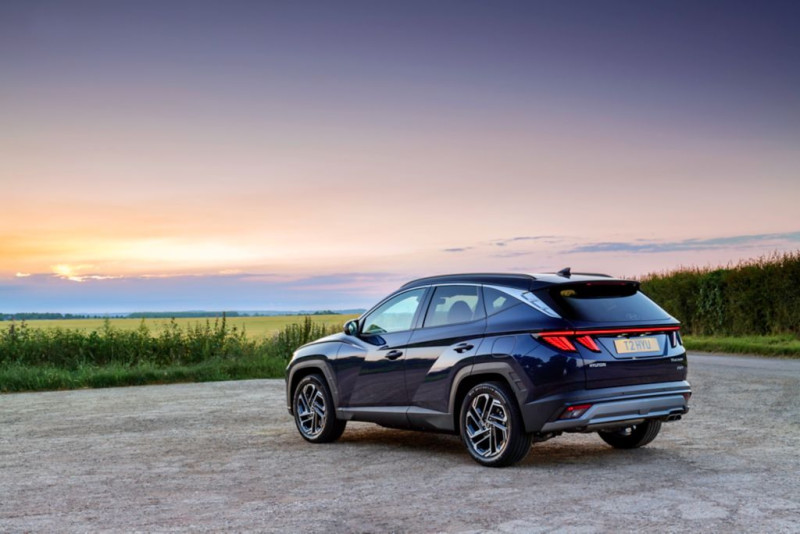
The Hyundai Tucson is the more design-led option. It has a bolder look, a relaxed driving feel and a refined cabin, particularly on facelifted models. It’s a strong choice if you want comfort, space and a quieter, more laid-back drive.
Most buyers would be happy with either. Choose the Sportage if you prefer a sharper feel and Kia’s longer warranty. Choose the Tucson if you like its stand-out design, slightly softer ride and extra boot space.
Find your next family SUV with AA Cars
Ready to compare used family SUVs? Start with AA Cars and browse vehicles from AA trusted dealers across the UK. Vehicles listed on AA Cars come with free breakdown cover, helping you search with more confidence.
- Browse used Kia Sportage cars on AA Cars
- Browse used Hyundai Tucson cars on AA Cars
- Book anAA vehicle inspection before you buy
- Read our Kia Sportage review


