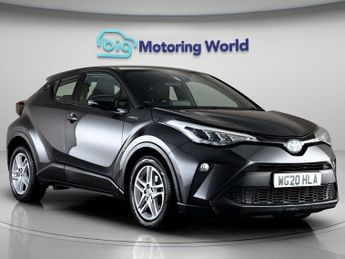
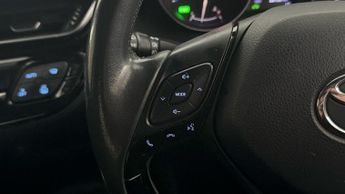
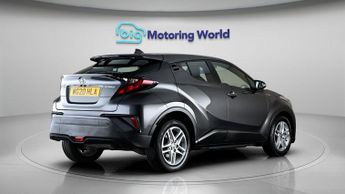
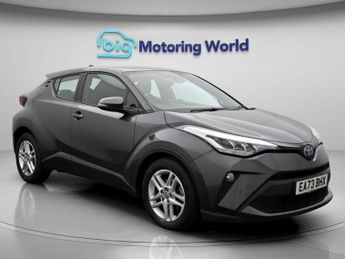
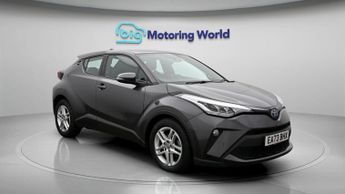
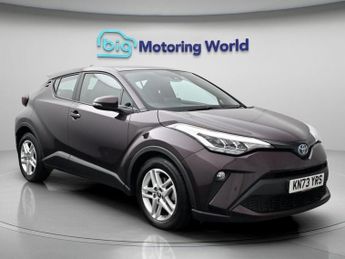
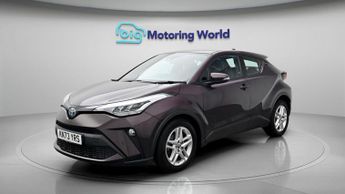
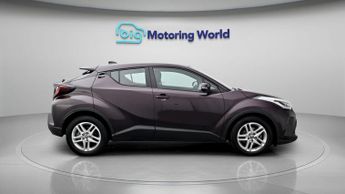
Specifications

Fuel types
Hybrid, plug-in hybrid
No of seats
5
Boot space
310-388 litres
Dimensions
4,362 mm x 1,832 mm x 1,564 mm
Fuel economy
57 - 353.1mpg
Acceleration (0-62mph)
7.0 - 9.9 seconds
Insurance group
20-29
Body style
Crossover
CO2 emissions
19-111 g/km
Browse 609 in stock

AA Mechanic review

The Toyota C-HR suits drivers who want a reliable, efficient hybrid with distinctive styling. Before buying one, review the service record, check the MOT history, and make sure the hybrid system starts and runs smoothly. The petrol engine and electric motor should work together without hesitation, and the CVT gearbox should feel consistent, even if it becomes louder under hard acceleration. Also check rear visibility, boot space and rear passenger room, as these are the main compromises.
Reece Proctor
Reece Proctor

Reece Proctor is a Roadside Patrol at The AA, with practical experience in both workshop and roadside roles, and specialist expertise in hybrid and electric vehicles.

Read bio

4.0/5

Repairs

The Toyota C-HR has a very good reliability record, helped by Toyota’s long experience with hybrid technology. Serious faults are uncommon, but there are still a few checks worth making on used cars.

Common points to look for include:

  • Weak 12-volt batteries, especially if the car has been left unused
  • Slow or lagging touchscreen units on some earlier models
  • General brake, tyre and suspension wear on higher mileage cars
  • Hybrid system warning lights, which should always be investigated
  • Noisy CVT operation under load, which is normal to a point but should not feel rough or erratic

The main hybrid battery is usually dependable. Most issues are more likely to involve routine wear or the smaller 12-volt battery rather than the hybrid system itself.

Maintenance

The C-HR is straightforward to maintain, with low running costs and predictable service needs. Most models should be serviced every 12 months or around 10,000 miles, depending on age and usage.

Key maintenance includes:

  • Oil and filter changes at the correct interval
  • Brake fluid replacement every 2 years
  • Air filter and spark plug replacement when due
  • Cabin filter replacement at the recommended interval
  • Coolant replacement at the correct age or mileage
  • 12-volt battery checks
  • Brake inspections, as hybrid braking can mean the friction brakes are used less often
  • Infotainment software checks if the screen feels slow

Fuel economy is one of the C-HR’s biggest strengths, especially in town. Tyres, brakes and routine servicing are generally manageable compared with many compact SUVs.

Is the Toyota C-HR a reliable car?

The Toyota C-HR is a dependable hybrid crossover with low running costs, a solid cabin and an easy driving style. It works best for commuting, urban driving and drivers who value efficiency over outright performance or maximum practicality.

It is not the roomiest car in its class, but as a reliable, economical and well-built used car, the C-HR is a sensible choice if the history is clean and everything works as it should.

Browse 609 in stock

AA Cars review

It takes a lot to stand out in the busy crossover segment, but the Toyota C-HR manages that feat. With its eye-catching design, it’s certainly more interesting to look at and while its boot may be small, it does come with lots of standard equipment and a great safety record.
Jack Evans
Jack Evans

Jack is an experienced motoring journalist who has been covering the latest new-car releases for the last 10 years.

Read bio

4.1/5

How much does it cost?

Check out a new Toyota C-HR and you’ll see that prices start at £30,145 for a base-specification car in Icon trim. This really is quite a stripped-back specification and does without many of the niceties you’ll find across the rest of the C-HR range. Popular Excel grade, for instance, comes in at £37,900 but gets features like a 12.3-inch infotainment - against the Excel’s eight-inch version - and a panoramic sunroof.

There’s plenty of scope for savings when shopping for a used Toyota C-HR, mind you. Check out the AA Cars website and you’ll find a range-topping GR Sport plug-in hybrid model with just 3,025 miles on the clock for £37,495 - some way less than the £42,855 you’ll pay for a new one.

Engine and performance

Overview

There’s hybridisation at play across all of the C-HR’s engine options. Things kick off with a ‘self-charging’ hybrid formed around a 1.8-litre petrol engine and with up to 60.1mpg, it’s a very efficient option. Drivers after a bit more power, however, can go for the 2.0-litre hybrid variant instead, which gets close to 200bhp over the 1.8’s near-140bhp. All versions can run on electric power at very slow speeds, such as when parking or crawling in traffic, and this system is good for drivers who aren’t able to easily charge up via the plug.

However, if you can charge up easily, then the plug-in hybrid could be a good option. This uses a 2.0-litre petrol engine but is linked to a larger battery and more powerful electric motor than in the ‘self-charging’ hybrids, so you get an electric-only range of up to 41 miles, which means you can conduct quite a lot of journeys without needing the assistance of the petrol engine. Use a home 7.4kW electric wallbox and you should be able to fully charge the C-HR’s battery in around two and a half hours, too.

Toyota C-HR performance

Out on the road

Head out to the open road and you’ll find that the C-HR has the kind of easy-going driving style that you’d expect. There’s not too much weight to the steering, but this helps to make around-town driving simpler and, thanks to a variety of sensors and cameras, ensures that this Toyota isn’t tricky to park, either.

Visibility isn’t too bad, though your rearward view isn’t the best thanks to the rather narrow rear screen. The regular self-charging hybrid model is hardly what you’d call punchy in terms of performance and, when you ask more of the engine, it really is quite coarse and vocal. The PHEV is a better option for drivers who need more performance but, again, things do get loud when you need to accelerate hard. That said, because of the plug-in hybrid’s decent electric range, you spend most of your time driving under electric-only power, so you only need to rely on the engine from time to time.

Toyota C-HR on the road

Ride and handling

The C-HR certainly isn’t as dynamic as some other rivals in the class, but it’s an easy enough car to get along with. The steering lacks any real feed back so it’s not all that engrossing to drive, but then this car’s real focus is on efficiency and ease-of-use instead of outright driving dynamics. The plug-in hybrid does feel a little weightier through the bends as a result of its extra bulk over the standard hybrid, but it’s manageable.

Move a little more quickly and you’ll notice some body lean through the corners, but a by-product of this is that the C-HR does deal quite well with larger lumps and bumps in the road. With a wide variety of standard-fit assistance systems, the C-HR certainly feels safe when you’re out and about, though any progress is usually accompanied by bongs and alerts from these various functions, which can be annoying.

Toyota C-HR ride and handling

Interior and features

Interiors

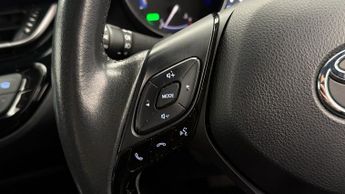
Get into the cabin of the C-HR and you’ll find that it feels just as futuristic as the exterior. There’s a large main screen around which the cabin is focused, but you’ve also got a good sweep of physical controls that will help to make adjustments on the move much easier. Entry-specification cars get an eight-inch screen, while anything but entry-level ‘Icon’ features a larger 12.3-inch setup, which is far more pleasant to use and view. You’ll find plenty of soft-touch materials used in the forward part of the C-HR’s cabin, too, and everything has a nicely robust feeling to it.

Because of the C-HR’s rather sloped roofline and small rear windows, the cabin can feel quite dark and cocoon-like at times, and there aren’t many options to brighten up the interior with trim or upholstery changes. That initially good material quality is slightly let down by scratchier plastics used in the lower areas of the cabin, though in truth, they’re used in sections which might be prone to scuffs and marks, so it’ll prove to be a worthy trade-off for longevity.

Toyota C-HR interior

Boot space and practicality

The C-HR doesn’t do too badly in terms of space for a relatively compact model. Those people sitting up front will have the best spot in the house, as it’s got a decent amount of space and a good view out of the front. Those in the rear might be less impressed, however, as headroom becomes tight and there’s not a lot of legroom on offer, either. A small transmission hump means that whoever is sitting in the middle is likely to feel squashed, too.

Boot space depends on which model you opt for. Go for the standard 1.8-litre hybrid and you’ll get 388 litres, or 364 litres in the 2.0-litre version. At 310 litres, the plug-in hybrid’s boot is the smallest of the lot - though all versions have a luggage area which falls short of key rivals. The Ford Puma, for instance, offers up to 456 litres, which practically dwarfs the space offered in this Toyota.

Toyota C-HR boot space and practicality

Features

There’s plenty of tech on board the C-HR to keep even the most avid of button-pressers happy. Entry ‘Icon’ cars get an eight-inch infotainment system and, while small, this still incorporates Apple CarPlay and Android Auto smartphone mirroring systems. However, we expect most drivers to opt for cars in Design grade and above, as this brings a larger 12.3-inch infotainment system which looks and feels a lot more pleasant.

The GR Sport models take some inspiration from Toyota’s famous performance models of the same name and, as a result, bring a far more dynamic exterior design with larger wheels and a full bodykit. Plus, this grade brings a head-up display, a JBL audio system and cloud-based navigation and traffic software.

Toyota C-HR feature

Trim and colour options

The C-HR is available in five trim levels - Icon, Design, Excel, Orange Edition and GR Sport. Icon cars get an eight-inch infotainment system with Apple CarPlay and Android Auto, while Design-specification models gain a larger 12.3-inch infotainment system and a wireless smartphone charger. Excel, meanwhile, adds in a power-adjustable driver’s seat and 19-inch machined-face alloy wheels. Orange Edition, as you’d expect, gets loads of orange-coloured elements, while GR Sport brings the most equipment possible and a sporty exterior design.

There is a broad range of colours available, too, which can help to make the C-HR feel personal to you.

Toyota C-HR trim and colour

Safety and reliability

With a huge variety of safety systems equipped as standard, the C-HR should prove to be a very safe car indeed. In fact, when crash tested by specialists Euro NCAP in 2024, the C-HR scored the maximum five-star rating, with good scores being recorded for both adult and child protection. All cars get pre-collision detection technology, as well as an emergency drive stop system which can detect if there hasn’t been any driver input for a period of time. If this is the case, it will sound an alert for the driver, but, if no further inputs are detected, it can bring the car to a controlled stop while activating the car’s hazard lights.

Toyota has a great track record for reliability and the C-HR shouldn’t be any different. Its hybrid systems are tried and tested, too, so there shouldn’t be any cause for concern in this area either.

Toyota C-HR safety and reliability

MPG, emissions and tax

With hybrid technology included across the C-HR range, things should prove efficient regardless of which specification you opt for. Fuel efficiency ranges from 57mpg in the standard hybrid to 353.1mpg in the plug-in hybrid, though you’ll need to be travelling on electric power for nearly all of the time in order to get anywhere close to this figure. You’ll also need to make sure that you’ve got somewhere that you can reliably charge, as PHEVs do need to be kept topped-up in order to perform at their most efficient.

Emissions-wise, things are good across the board, too. Even the standard 2.0-litre hybrid only produces 111g/km CO2, but it’s the PHEV you’ll want for the lowest possible emissions, with Toyota claiming just 19g/km CO2 for certain models. As a result, tax shouldn’t be too scary - you’d be looking at £155 per year for most models. Top-spec GR Sport plug-in hybrid models just sneak over the £40,000 mark, so beware - these cars will incur the Expensive Car Supplement on top of that standard range of tax for the first five years after registration.

Toyota C-HR MPG, emissions and tax
Browse 609 in stock