
Specifications
- Fuel types
- Petrol
- No of seats
- 4
- Boot space
- 210 litres
- Dimensions
- 3,876mm x 1,744mm x 1,452mm
- Fuel economy
- 41.5 - 43.5 mpg
- Acceleration (0-62mph)
- 6.1 seconds
- Insurance group
- 26 - 30
- Body style
- Hatchback
- CO2 emissions
- 154 - 147g/km


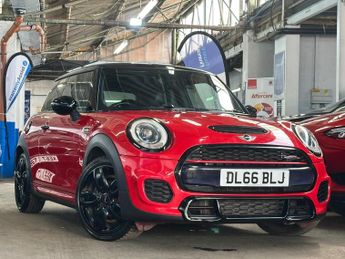
As endearing as affordable petrol hot hatchbacks are, they are slowly starting to fade away. With the likes of the Ford Fiesta ST long gone, Mini is still soldiering on with the JCW, which packs a 231hp turbo petrol engine. At least on paper, it’s got everything that suggests the making of a legitimate hot hatch. However, does it really come together on a spirited drive, and more crucially, is the 2026 Mini JCW the affordable petrol hot hatch to buy today?
AA Cars Rating: 3.9/5
How we test carsThe Mini Cooper has been a well loved car for good reason. A good service history is important, as they can suffer if neglected. It’s always worth asking for invoices alongside the service book. Earlier (pre-2014) models should be checked for timing chain issues, gearbox issues, and rust, particularly underneath around subframes, especially if the car has spent time near the coast.

Reece Proctor is a Roadside Patrol at The AA, with practical experience in both workshop and roadside roles, and specialist expertise in hybrid and electric vehicles.
Read bioAs I mentioned before it is key to keep these engines serviced on their interval marks especially on the earlier models. As well as making sure it has had any noted work to be does such as the suspension and as mentioned earlier the gearbox if needed. This is what a typical service schedule will look like for one of these minis:
These Minis are very cheap to run on the road. Basic maintenance items don’t typically cost very much. Good MPG also means you get around 40-50 MPG with some owners reporting up to 450-500 miles per tank depending on model.
Overall, Mini Cooper models are great all-round cars. They’re known for their sharp handling, relatively low running and insurance costs, and good fuel economy. But earlier models (before 2014) need thorough inspection for various documented issues.
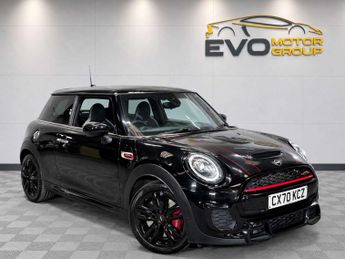
The Mini JCW is a seriously quick hot hatch with its own share of flaws. But it still retains the ability to thoroughly entertain, offering a boisterous driving experience and the handling chops to validate the three words affixed to its name.

Adithya is the Content Editor at AA Cars and a Motoring Journalist, with over 1,000 published articles across numerous publications.
Read bioThe F66 Mini JCW starts from £33,550, commanding a £1,500 premium over the Cooper S. Tick some boxes, including the Level 2 pack that offers LED headlights, comfort access, heated seats, a panoramic roof, heads-up display, etc, and the price goes up to £35,250. There is also a Level 3 pack (including parking assist, interior camera, driving assist plus (adaptive cruise), etc), taking the final price to £37,750.
At that point, the Mini JCW is an expensive hot hatch. But the base model and the Level 2 pack offer reasonable value, considering alternatives are limited to just the Volkswagen Polo GTI. The Mini JCW is also available as a full-electric model, which is priced from £34,905. Meanwhile, used Mini JCW examples can be bought for around £30,000 - £33,000, with the older F56 generation (2014 onwards) Mini JCW available for as low as £10,000.
The F66 Mini JCW is offered with one engine option, the 2.0-litre turbocharged inline-four unit known as the B48. The B48 is a BMW engine and the same unit used in the F56 Mini JCW, but it now makes 380Nm of peak torque along with 231hp. The engine is paired with a 7-speed DCT, with no manual option.
Compared to the Cooper S, the JCW gets the same engine (but with different internals), stiffer dampers, a wider track, additional engine cooling, a JCW exhaust, and other styling refinements.
Fire up the Mini JCW’s four-cylinder turbocharged engine and it bursts into life with a loud rasp (some of which is pumped in synthetic noise). But, not to be mistaken, it does feel special enough. Mini says the JCW can do 0-62mph in 6.1 seconds with a 155mph top speed. There’s no dispute about these numbers, as the performance is genuinely rapid.
Regardless of the drive mode, the Mini JCW is eager to accelerate hard, pinning you to the seat. There’s some torque steer in the first few gears, but the engine pulls relentlessly to it redline. What makes the performance even more noticeable are the 7-speed DCT’s shorter gear ratios.
The DCT is a slick-shifting unit, although it tends to hold on to the first two gears a bit longer than needed. There are countless drive modes and themes to suit your mood. But if you bought it for the JCW experience, you’ll want to shift the gearbox into Sport/manual mode and select the dedicated JCW drive mode.
This opens up some theatre (fake exhaust note, pops, and an engineered jolt when you upshift). Although synthetic, all of this combines to elevate the driving experience without creating a racket outside. And if you’re wondering, yes, you can switch it all off.
Find the right set of roads, and the engine and gearbox come into their own with explosive, hard-hitting performance. The paddles work exceptionally well, but we do wish it downshifted as aggressively as it upshifts. This also makes the omission of a manual transmission more obvious.
Minis are known for offering sharp handling, often at the expense of a stiffly sprung ride. The 2026 Mini JCW more or less carries forward this theme. The ride quality is constantly on the stiffer side, with a sharp rebound action at the rear. Even at high speeds, the stiffness lingers around and the ride never really flattens out. It does tie down a bit at motorway speeds, but the JCW constantly reminds you of its inherent racy persona. It is not jarring in anyway, but there might be days you wish it had a more sophisticated ride quality.
But, in its defence, it’s hyperactive to turn and the Mini JCW is satisfyingly happy to be thrown into a corner. All the Mini specific handling traits are ever so present, a razor-sharp turn in with adjustability, satisfying body control and good front-end feel. Drive it hard, and it feels happy around corners, with a balanced rotation. At the limit, the Mini JCW understeers, but it does so in a manner that is devoid of any aggression. Lift off the throttle or shed some speed, and the nose tucks in and gets on with it. We did find it tricky to get on the throttle early without experiencing understeer. But we suspect it could be down to our test car’s Hankook Ventus S1 Evo3 tyres (also part worn). Plus, the JCW makes use of an electronic differential rather than a proper LSD like some expensive hot hatches.
The steering is not the best when it comes to feel or feedback, but it weighs up rather nicely and conveys what the front tyres are up to. Brake pedal feels good and the bite is strong, but there’s no standout quality to them. Overall, on a tight British B road, the JCW with its small size and high energy dynamic character makes for an absolute riot. Everything falls into place when it’s needed, and the Mini JCW delivers a complete hot hatch experience.
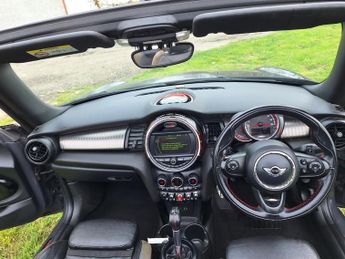
The cabin sticks to a retro modern design theme that we’ve seen with all generations of the Mini. For a reasonably affordable hot hatch, the interior feels classy and distinct from a normal hatchback. The 9.4in round screen is the highlight, as it cleans up the cabin and integrates countless functions into it. Everything retains a quirky feel, with a rotary key-like knob for start/stop and toggle switches for other controls. While there are some premium materials throughout the cabin, you will also find hard, scratchy plastics in the lower dashboard and door areas.
The cabin also eerily feels similar to the Cooper S, with not much differentiation for the JCW. The biggest miss has to the seats, which are carried over from the standard car. Although comfortable, it does without the extendable pull-out under thigh support like the previous generation JCW/Cooper S models.
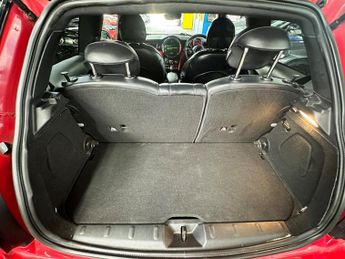
The three-door JCW offers 210 litres of boot space, which is not a promising number in contrast. But this is expected from the Mini and although the boot can be extended with the rear seats down, it is still handicapped when it comes to space. Mini has cleverly designed the cabin in a way that you perceive more space up front. So, occupants up front never feel the need for more space. But move on to the rear, and like any other three-door Mini, space is tight. Yes, you can fit adults in the back seat, but they won’t be happy to be there for long. There are some nifty storage solutions in the cabin, such as a small storage box, a large wireless charger unit and large door pockets.
The biggest highlight and the drawback of the Mini JCW’s cabin is the large, round touch screen. On the bright side, it suits the overall character of the car with graphics, themes and numerous customisation options. But, often, it also feels confusing to navigate due to this. There’s a lot going on with it, as it controls almost everything in the car. Simple functions require you to take your eyes off the road and click endlessly to get to where you want to be. It is definitely a unit that polarises opinion. But from an ergonomic point of view, it’s clearly lacking.
The old-school pop-up heads-up display feels like an afterthought as it also hinders some view. A simple instrument pod like the F56 would’ve been a better option. Also, it’s really hard to access a tachometer with actual numbers on, and it also only displays in the central touchscreen. Similarly, side indicator icons only show up the central touchscreen. This means you have to take your eyes off to make sure the indicator is on. Other feature highlights include the heated steering/seats, and the park assist (Level 3) which has really clever and clear interactive 360-degree views.
The current JCW is only available as a single trim option. However, you can opt for Level 2 and Level 3 options which add in many features, although at a cost. In terms of colour options, you get Chilli Red as no cost option while Sunny Side Yellow, Legend Grey, Ocean Wave Green, Blazing Blue, Icy Sunshine Blue, Indigo Sunset Blue, Nanuq White, Melting Silver III, Midnight Black II, and the iconic British Racing Green IV are a £550 option.
The Mini Cooper has a five-star safety score from Euro NCAP, with 83% for adult and 82% score for child occupants. Historically, reliability has been something of an issue for Mini. However, since the F56 generation, Mini Cooper models are known for being reliable with no major issues like in the past.
For a performance-focused hot hatch with 231hp, the Mini JCW is impressive when it comes to fuel consumption. Mini claims 41.5 - 43.5 mpg, and on our test, even with spirited driving, we were achieving figures close to that. Since the JCW’s CO₂ emissions are above 150g/km, it falls into a higher first-year tax band (approximately £500 to £1,400 depending on trim). However, as the JCW is priced below £40,000, it is not subject to the Expensive Car Supplement.
 Barking
AA finance available

Romford
Radlett
Connect with us


