Specifications

Fuel types
Petrol, Mild-hybrid petrol
No of seats
5
Boot space
352 litres
Dimensions
4,040 mm x 1,775 mm x 1,450 mm
Fuel economy
53.2 mpg
Acceleration (0-62mph)
8.7 – 13.1 seconds
Insurance group
8 – 14
Body style
Supermini hatchback
CO2 emissions
115 – 127 g/km
Browse 541 in stock

AA Cars review

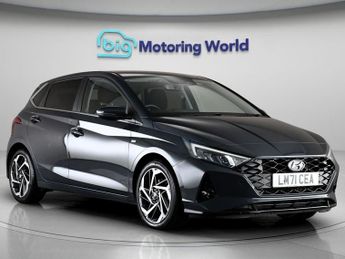
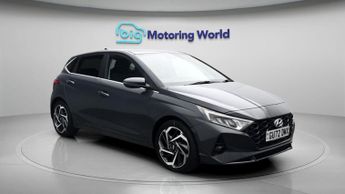
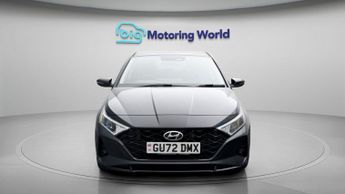
The Hyundai i20 is one of those cars that surprises you the longer you spend with it. It feels sensible and well-rounded from the moment you set off, but as the miles tick by, you appreciate just how thoughtfully engineered it is. The cabin is roomy, the technology is genuinely impressive, and the car strikes an excellent balance between efficiency and everyday usability. It may never be the flashiest car in the class, but its mix of value, comfort, and durability gives it real family-friendly appeal.
Jack Evans
Jack Evans

Jack is an experienced motoring journalist who has been covering the latest new-car releases for the last 10 years.

Read bio

4.0/5

How much does it cost?

Despite moving to give the latest i20 a more premium feel, the car remains firmly at the affordable end of the supermini segment. Prices for the entry-level Element model get underway at just under £20,000, while still offering a generous level of technology. Moving up the lineup, the range-topping, and sportier, N Line S model begins at £24,750, with mid-range trim levels priced in between the two. On the used market, second-hand stock is in no short supply, with the model offering excellent value for buyers. Early examples of the current generation car can be picked up for less than £9,000, while three-year-old, low-mileage models generally fall between £12,000 and £15,000. If you are on a tight budget, then there are also plenty of first and second generation cars still on the used market, with prices starting as low as £800.

Engine and performance

Overview

Despite its burgeoning reputation for building some of the very best electric cars that money can buy, Hyundai has opted to keep things simple when it comes to the i20. All models are powered by a single 1.0-litre, three-cylinder T-GDi petrol engine, which is available with different power outputs, depending on which spec you go for. The entry-level setup produces a plucky 89 bhp and is aimed at city commuting, school runs and short day-to-day trips. While perfectly smooth it perhaps lacks a little punch when you get out on the open road, although the additional turbo means this is not as bad as it could be.

Meanwhile, if you want a model with a little more grunt, you can opt for a 99 bhp version, which comes as standard on the N Line S. This setup offers stronger acceleration and is noticeably more comfortable overtaking than its less powerful sibling. Both choices can have mild hybrid capabilities for improved efficiency and can be teamed with either a six-speed manual gearbox or a seven-speed dual-clutch automatic, both of which are smooth and offer comfortable shifts.

Hyundai I20 performance

Out on the road

Regardless of which engine setup you choose, the i20 remains a friendly and easy-to-drive option. It particularly excels around town, where its light steering and good visibility make it feel nimble and easy to maneuver. Whether you are squeezing through tight streets or navigating busy junctions, things remain stress free and relaxing for the most part. If this sounds like your usual driving experience, then it is worth noting that the 89 bhp engine in particular is perfectly suited to this kind of driving. Once you leave town and head for the motorways, however, the more powerful 99 bhp version comes into its own. While the basic unit is comfortable enough handling motorway speeds, it does take a little while to get there and the engine from the N Line S is by far the better choice. Whichever option you do go for, the Hyundai does suffer from a bit of wind and engine noise at motorway speeds, although it is significantly better in this regard than the brand’s smaller i10.

Hyundai I20 on the road

Ride and handling

First and foremost, the i20 has been set up for comfort, and on that front the car delivers well. In urban environments the car soaks up bumps and potholes reasonably well, making it one of the more comfortable cars in this class, while the light steering is beneficial to good manoeuvrability at low speeds. Where this is less positive though, is when the road gets a bit bendy and you want to have fun. While the i20 is very comfortable, sensible and predictable, it does lack the sportier and more engaging feeling you get from a Vauxhall Corsa.

The steering lacks the feedback that driving enthusiasts will want and the car does lean into the bends a little more than you might expect. Even the N Line versions, which do have slightly firmer suspension, stop short of feeling genuinely sporty. Having said all that, the vast majority of drivers don’t care about sporty handling and would much rather a small hatchback that is comfortable as opposed to engaging. Overall, the i20 delivers a relaxed drive which will please the vast majority of customers. Interior and features

Hyundai I20 ride and handling

Interior and features

Interiors

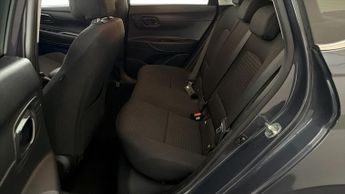
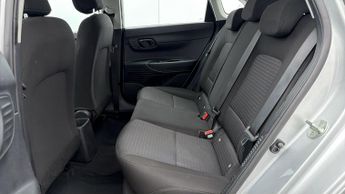
Inside the i20, you do begin to see how Hyundai manages to keep the cost of the car so low. While the materials used are durable, they do look and feel very much at the budget end of things. Wherever you look, there are a lot of cheap, scratchy plastics, although the key touchpoints – namely the steering wheel, gear lever and buttons – do feel slightly more upmarket than the rest of the cabin. Up front, the dash is dominated by a choice of eight or 10.25-inch touchscreen infotainment systems, both of which work well and offer a good level of tech. Front passengers enjoy generous head and legroom, while the rear seats provide some of the best space in the supermini class. There is more than enough room for adults to sit in comfort regardless of which seat they are occupying – something which certainly cannot be said for all cars in this class.

Hyundai I20 interior

Boot space and practicality

If the i20 lags behind its competitors on interior quality, it certainly makes up for it when it comes to practicality. The car boasts one of the largest boot spaces of any car in its segment at 352 litres, rising to over 1,100 litres with the rear seats folded down. The space itself is wide, easy to access and more than capable of meeting the demands of most day-to-day needs. While the car is far from the biggest vehicle on the market, Hyundai does make the most of the space it has with passengers treated to large door bins, a well-sized glovebox and handy storage areas around the centre console. The i20 may be compact on the outside, but it still manages to offer impressive practicality thanks to its clever and well-thought-out design

Hyundai I20 boot space and practicality

Features

When it comes to tech, Hyundai has come on leaps and bounds over recent years and the bargain basement approach seen in some of its old cars now feels a world away. Even the most basic i20 gets a digital instrument display; 8-inch touchscreen infotainment; Apple CarPlay and Android Auto; automatic headlights and cruise control. Moving up the range, higher spec cars can also be kitted out with a larger 10.25-inch infotainment system; integrated satellite navigation; Bluelink connectivity; keyless entry; push-button start; heated seats and steering wheel; parking sensors and upgraded cameras.

Hyundai I20 feature

Trim and colour options

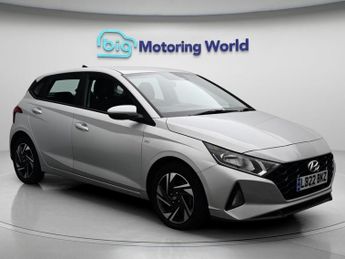
The i20 is available in Element, Black Line, Tech Line and N Line S trim levels, with the mid-level Black Line striking a strong balance of comfort, equipment, and value. Popular colour options include Atlas White, Aurora Grey, Dragon Red, Phantom Black, Brass, Aqua Turquoise, Lucid Lime, and Meta Blue.

Hyundai I20 trim and colour

Safety and reliability

The i20 comes with an impressive collection of standard safety features including autonomous emergency braking; lane keep assist; driver attention warning; speed-limit recognition and high beam assist. Higher trim labels also add blind-spot monitoring; rear cross-traffic alerts and improved camera systems, contributing to an impressive four-star rating from Euro NCAP. When it comes to reliability, Hyundai consistently ranks among the very best brands, with the brand also offering a standard five-year unlimited-mileage warranty for extra peace of mind.

Hyundai I20 safety and reliability

MPG, emissions and tax

When it comes to fuel efficiency, the Hyundai performs well, with the manual versions of the car achieving up to 53.2 mpg. This dips slightly to 52.3 mpg on automatic models but the numbers are still respectable when compared to the i20’s competitors. Meanwhile, CO₂ emissions range from 115 to 127 g/km, which contribute to competitive tax rates and manageable company-car costs.

Hyundai I20 MPG, emissions and tax
Browse 541 in stock