Specifications

Fuel types
Petrol, diesel
No of seats
5
Boot space
303 litres
Dimensions
3,968 mm x 1,978 mm x 1,495 mm
Fuel economy
40 – 74 mpg
Acceleration (0-62mph)
6.3 - 15.0 seconds
Insurance group
2, 6, 7, 8, 9, 10, 12, 30
Body style
Hatchback
CO2 emissions
97 - 133 g/km
Browse 3,020 in stock

AA Mechanic review

When buying a used Ford Fiesta, check for a full-service history, smooth gearbox operation and no warning lights. Earlier 1.0 EcoBoost models need careful checks for cooling system issues and correct servicing. On a test drive, listen for suspension knocks, check for uneven tyre wear, and make sure automatic models change gear smoothly. It’s also worth using an online vehicle check, such as an AA Vehicle Check, to look for outstanding finance, mileage issues or insurance write-off history.
Reece Proctor
Reece Proctor

Reece Proctor is a Roadside Patrol at The AA, with practical experience in both workshop and roadside roles, and specialist expertise in hybrid and electric vehicles.

Read bio

4.5/5

Repairs

The Ford Fiesta is a reliable, affordable and enjoyable small car, but a few common issues are worth checking on used examples.

Common issues include:

• Cooling system problems on some earlier 1.0 EcoBoost models

• Cambelt wear if replacement intervals have been missed

• Automatic gearbox hesitation or jolting on some older models

• Suspension wear, especially on cars driven on rough roads

• Uneven tyre wear caused by alignment or suspension issues

• Brake and tyre wear on higher mileage cars

• Minor infotainment glitches, sensor warnings or electrical faults

The 1.0 EcoBoost engine can be a good choice when it has been serviced properly with the correct oil. Buyers should avoid cars with poor history, coolant loss, overheating signs or evidence of skipped cambelt maintenance.

Maintenance

Most Ford Fiesta models need servicing every 12 months or around 10,000 miles, depending on age, engine and service schedule.

Key maintenance to keep on top of includes:

• Oil and filter changes using oil that meets Ford’s specification

• Brake fluid replacement every 2 years

• Air filter and spark plug replacement when due

• Cabin filter replacement at the recommended interval

• Cambelt replacement at the correct age or mileage

• Coolant system checks on EcoBoost models

• Brake, tyre and suspension inspections

• Software updates if the infotainment system becomes slow or glitchy

Running costs are one of the Fiesta’s biggest strengths. Parts are widely available, fuel economy is strong, and insurance is usually reasonable compared with many small cars.

Is the Ford Fiesta a reliable car?

The Ford Fiesta is one of the best used small cars for drivers who want low running costs, sharp handling and easy ownership. It’s comfortable around town, enjoyable on country roads and simple for garages to maintain. After 5 to 7 years, most issues are likely to be routine wear, such as brakes, tyres, suspension parts, cambelt maintenance or minor electrical faults.

Browse 3,020 in stock

AA Cars review

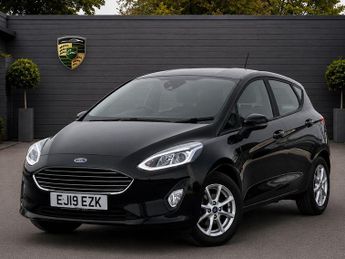
The Ford Fiesta is one of the most engaging small cars there is to drive, with a super-sharp chassis, rewarding steering and a compliant ride. It’s huge fun, yet at the same time remains practical, affordable and inexpensive to run.
Jack Evans
Jack Evans

Jack is an experienced motoring journalist who has been covering the latest new-car releases for the last 10 years.

Read bio

4.4/5

How much does it cost?

You can no longer buy a new Ford Fiesta, with the most recent models being registered in late 2023. But there’s a vast range of used Fiestas available via AA Cars today, with 2017 model-year cars starting from as little as £4,500, rising to £20,000 for the very late ST versions. For a budget of around £10,000 you should be able to get a well-equipped Titanium or ST-Line with low-ish mileage from 2020 or 2021.

Engine and performance

Overview

The seventh-generation Ford Fiesta offered a mixture of engine choices targeted at different drivers. Most featured fuel-efficient petrol engines that were both frugal and lively, the mainstay being the popular 1.0-litre EcoBoost three-cylinder turbo, available with either a six-speed manual or seven-speed Powershift automatic transmission.Diesel options were also offered, using Ford’s 1.5-litre TDCi engine and appealing to those seeking lower running costs – the 85bhp unit is quite lively and does up to 74mpg.

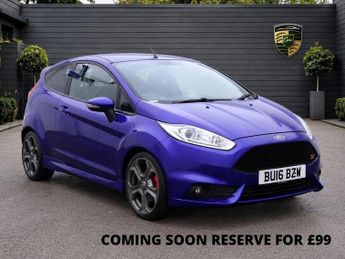
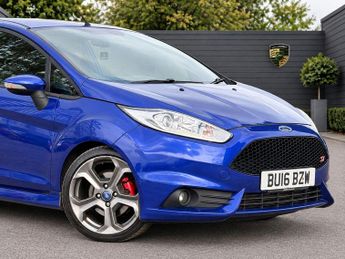
ST models used a 200hp 1.5-litre turbo petrol engine, which offered great performance allied to that superb chassis. In 2020, a mild hybrid model was introduced using the 1.0-litre EcoBoost petrol engine paired with a 48-volt mild hybrid system. This set-up improved both efficiency and performance with CO₂ emissions of 114 g/km and a combined fuel efficiency figure of 54mpg.

Ford Fiesta performance

Out on the road

It’s the engaging and dynamic handing of the Fiesta that truly stands out, but it’s also a great all-rounder, equally at home picking its way through town as it is on twisty open roads. Even entry-level models strike a great balance between functionality and enjoyment, with light controls and excellent manoeuvrability making urban driving effortless.

The driving position is excellent and the cabin controls are ergonomically laid out, meaning it’s easy to get comfortable, and while the entry-level engines won’t hurry you along the road, the Fiesta is still a rewarding drive. Opt for one of the more potent variants and you’ll enjoy the ride and power delivery of a larger car in a supermini-sized package.

Ford Fiesta on the road

Ride and handling

The Ford Fiesta has always been praised for its engaging ride and handling and the most recent generation was the best of the lot, setting a class benchmark for chassis responsiveness, steering and ride. It’s a hugely enjoyable car to hustle along, even in entry-level Style specification, the steering in particular feeling rewarding. The suspension has a measured approach to both comfort and sportiness, absorbing bumps and rutted road surfaces well, while at the same time maintaining composure through twistier sections of road.

It’s just as impressive around town, where its light controls and manoeuvrability, allied to good all-round visibility, make it an admirable urban companion. It’s a great all-rounder, clearly engineered to be a jack-of-all-trades, and very good at it, too. The Fiesta ST is a proper hot hatch. It has firmer suspension, sharper steering and a fruity exhaust note that encourage you to press on. It’s a fantastic car to drive.

Ford Fiesta ride and handling

Interior and features

Interiors

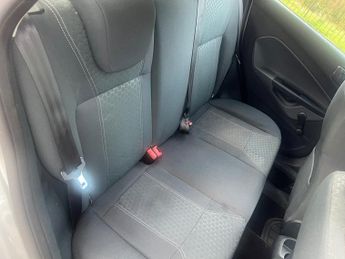
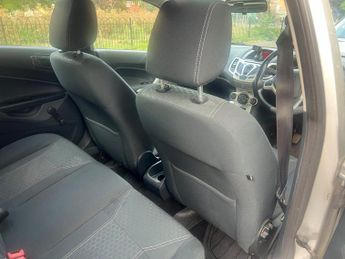
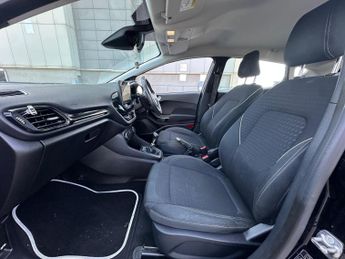
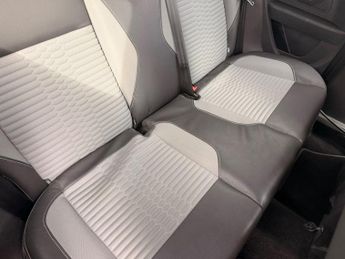
The Fiesta’s cabin is well laid-out ergonomically while the tall body exploits the space on offer from the platform. While taller passengers may find headroom slightly limited in the rear, most adults can sit comfortably in both the front and rear seats. It’s technically a five-seater, but three-up in the back will be a little cosy.

Legroom is adequate for a supermini, but not as good as some rivals such as the VW Polo. Nevertheless, access is good and the seat base is high, which makes fitting child seats fairly easy. All models also have Isofix attachments. Controls are logically laid-out, with a clear dashboard and driver information display, while the driving position is excellent, with good visibility.

Ford Fiesta interior

Boot space and practicality

With boot space between 291 and 303 litres depending on model, the Fiesta isn’t the most generous car in its class when it comes to luggage capacity. But the plus side is that the luggage area is flat and square, which makes loading easy.

Drop the rear seats and things improve considerably, so if you need to pick up a large piece of furniture, you probably can do – you’ll have up to 1,093 litres of space and a load bay 1320mm long, 795mm high and 976mm wide. In the cabin, there are a few handy storage spaces and cubbies and deep door bins. It’s functional, but no better than average in terms of all-round practicality.

Ford Fiesta boot space and practicality

Features

The Fiesta dates back to 2017, so some of its tech may feel a little old-fashioned by now, but Ford’s SYNC system was always a little ahead of the curve. The SYNC infotainment system is in most models (other than the entry-level Style) and offers touchscreen controls, Bluetooth connectivity, smartphone integration, and voice command.

Higher trims add features like navigation, Apple CarPlay, Android Auto, and advanced driver assistance systems such as lane-keeping assist and adaptive cruise control. The Fiesta also offers options like a rear-view camera, parking sensors, and a premium sound system – it’s no class leader, but it has all of the things you really need.

Ford Fiesta feature

Trim and colour options

The seventh-generation Fiesta was available in several trim levels, with Zetec and Titanium being the most popular. The Style was the entry-level and was very basic. Zetec is the popular mid-range trim with alloy wheels, air-con, and Ford SYNC infotainment. Titanium offers more luxury, climate control, cruise control and upgraded SYNC, while the Titanium X adds features like keyless entry, rear-view camera, and premium sound. Younger buyers may prefer the ST-Line, with sportier styling and sports suspension.

At the top of the tree are the luxury Vignale with leather trim and advanced tech, the crossover-inspired Active, with higher ride height and rugged styling and the high-performance ST hot hatch. A total of 14 colours were offered. Some special shades like Ruby Red, Chrome Copper and Orange Spice were only offered on specific editions. Popular colours for resale include Frozen White, Magnetic (a dark grey), Moondust Silver and Shadow Black.

Ford Fiesta trim and colour

Safety and reliability

Tested by Euro NCAP back in 2018, the Ford Fiesta achieved a full five-star rating, making it one of the best-performing superminis. Ratings were 87 per cent for adult occupant safety, 84 per cent score for child occupant safety, 64 per cent for pedestrian protection and 60 per cent for safety assist. Reliability of early models is a bit shaky though. The 1.0 EcoBoost is a ‘wet belt’ engine, which means that the timing belt runs through oil. Over time, the belt can degrade and shed rubber particles, blocking the oil ways, so listen for a rattle at start up and an oil pressure warning light.

Ford originally claimed a 10-year/150,000-mile lifespan, but many garages recommend changing the belt every four years or 40,000–60,000 miles. From 2018 onwards, the main timing belt was replaced with a chain and these models are more reliable as a result, though the oil pump is still belt driven and the best practice is to change the belt every four years or 40,000 miles.

Ford Fiesta safety and reliability

MPG, emissions and tax

Fuel economy for the Fiesta ranges from around 40-45mpg in 1.0-litre EcoBoost petrol models to 54mpg for the mild-hybrid model. The diesel TDCi, albeit quite rare, should return up to 74mpg. CO₂ emissions range from 97g/km for the 1.5 TDCi to 133 g/km for the more potent EcoBoost models, while the mild hybrid has CO₂ emissions of 114 g/km. Annual road tax is £195 for all models, based on current rates.

Ford Fiesta MPG, emissions and tax
Browse 3,020 in stock