Specifications

Fuel types
Petrol, diesel, plug-in hybrid
No of seats
5
Boot space
570 litres (460 litres plug-in hybrid)
Dimensions
4,755mm x 1,920mm x 1,660mm
Fuel economy
36.2 - 100.9 mpg
Acceleration (0-62mph)
4.3 - 7.4 seconds
Insurance group
32 - 42
Body style
SUV
CO2 emissions
64-178g/km
Browse 651 in stock

AA Mechanic review

When buying a used BMW X3, look closely at the service history, tyres, brakes, suspension and any signs of oil or coolant leaks. The G01 model from 2017 to 2024 is the one many used buyers will be looking at, and it’s a clear step forward over earlier versions. A pre-purchase inspection is a smart move, especially on higher mileage cars or plug-in hybrid models.
Alex Gur
Alex Gur

Alexander Gur is a Roadside Patrol at The AA, with more than 20 years of hands-on experience across garage and roadside roles, as well as a strong personal interest in performance cars.

Read bio

4.5/5

Repairs

The BMW X3 is generally one of BMW’s more dependable SUVs, but mileage and missed maintenance can still bring bigger bills.

Things worth checking include:

• Oil leaks from the oil filter housing or valve cover gasket

• Coolant leaks from the water pump, thermostat or pipework

• Suspension wear, especially bushes and joints

• Uneven tyre wear, often linked to alignment or worn components

• Parking sensor or camera faults caused by dirt, water damage or failed sensors

• Software glitches with infotainment or driver assistance systems

• Battery-related electrical issues on older cars

• Extra checks on plug-in hybrid models for charging and high-voltage system warnings

The M40i with the B58 engine is a strong choice if you want performance and reliability. The 30d and 40d diesels balance power and efficiency well, while the 30i petrol is a sensible everyday option.

Maintenance

BMW X3 models use condition-based servicing, but annual oil changes are still sensible if you want the car to last well.

Useful maintenance includes:

• Oil and filter changes every 12 months or around 10,000 miles

• Brake fluid replacement every 2 years

• Air and microfilter replacement when due

• Spark plugs on petrol models at the correct interval

• Coolant system checks from around 60,000 miles

• Water pump, thermostat and related cooling parts checked around 60,000 to 80,000 miles

• Gearbox, differential and transfer case fluid servicing where required

• Software updates for iDrive, sensors and driver assistance systems

Staggered tyres can be costly, especially on higher-spec models, and out-of-warranty repairs are another cost buyers should plan for. Plug-in hybrid models also need battery and charging checks as part of the inspection.

Is the BMW X3 a reliable car?

A well-maintained G01 X3 can cover high mileage without major trouble. Many examples are capable of more than 150,000 miles if serviced properly.

As the car gets older, rubber seals, plastic cooling parts, suspension bushes and batteries are the areas most likely to need attention. The best examples usually have clean history, smooth gearbox operation, no warning lights and no signs of oil or coolant leaks.

Browse 651 in stock

AA Cars review

The BMW X3 is back and feeling more premium than ever, thanks to its silky-smooth engines and clever in-car technology. Though some of the X3’s materials let the side down, this is still an upmarket SUV which looks great and feels good to drive, too.
Jack Evans
Jack Evans

Jack is an experienced motoring journalist who has been covering the latest new-car releases for the last 10 years.

Read bio

4.3/5

How much does it cost?

The X3 might be more loaded with equipment than ever, but it’s got a price tag to reflect that. New, the current X3 is priced from £53,305 for a standard 20 model in entry-level xLine trim, rising to £54,540 for popular 20d diesel versions and £58,340 for the plug-in hybrid. Opt for the range-topping M50 performance model and you’re looking at £73,715 before options.

The latest X3 is still relatively new, but some models have started to filter into the used market. Demand for these models is high, too, but there are some slight savings to be found - on AA Cars, there are examples of the xDrive 30e plug-in hybrid finished in popular M Sport specification for £57,995 with delivery miles on the clock, representing a small saving on the £60,140 you’d pay for a new version.

Engine and performance

Overview

BMW has covered all of the major fuel types with the X3. Things kick off with the standard 20 model, which uses a turbocharged 2.0-litre petrol four-cylinder and brings a respectable blend of performance and efficiency. It gets all-wheel drive as standard via BMW’s xDrive system, too. Then there’s the 20d version - which has always been popular for the X3 - and this uses a 2.0-litre turbocharged four-cylinder diesel engine which, again, drives all four wheels via an automatic gearbox.

An efficient addition to the X3 range is the plug-in hybrid 30e, which can manage an impressive electric-only range of up to 54 miles on a single charge. It has the lowest CO2 emissions of any X3 model, too.

At the top sits the M50 model, which uses a 3.0-litre turbocharged straight-six petrol. It’s the most potent X3 available, too, and as well as bringing a range of suspension tweaks can manage 0-60mph in just 4.3 seconds.

BMW X3 performance

Out on the road

BMW has always been known for bringing a certain level of dynamism to its cars, regardless of the body type, and that’s evident with the X3. All versions feel sharp to drive, with good road-holding abilities. You can sit a little lower than you might in rival SUVs, though there’s still that commanding view of the road ahead which buyers in this market are looking for.

Visibility is good overall, too, though the rear screen could be a little larger. That said, all cars come equipped with a good range of sensors to help when parking and positioning this car. BMW has also given the X3 some handy quick-fire buttons to disable certain assistance systems should you need to - you can turn off the speed limit detection system, for instance, by long-pressing the ‘set’ button on the steering wheel.

BMW X3 on the road

Ride and handling

All versions of the X3 have a sporty edge to them, whether it’s the diesel or the plug-in hybrid. There’s some nice weight to the steering, which inspires confidence when cornering, though watch out for models with larger wheels as they tend to have a firmer ride. All engine options provide a decent slug of power as and when you need it, too, while the automatic gearbox equipped on all models suffers very little lag - you get that acceleration as and when you need it.

The range-topping M50 is certainly one of the sharpest X3s to date, too, and feels genuinely sporty in all situations. The 3.0-litre straight-six engine is also very smooth and responsive, though its exhaust note is a little lacklustre. You can spice things up with a piped-in engine sound which is boosted by on-board computers, but it can drone on and quickly become wearing.

BMW X3 ride and handling

Interior and features

Interiors

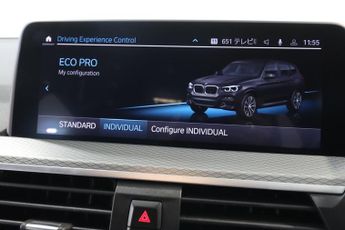
The latest X3 is more technology-focused than ever. It’s clear to see this path with the car’s huge windscreen infotainment system, which bends around the cabin and covers both the main infotainment and driver’s display within one large screen. Fortunately, it’s easy and responsive to operate, though there are a dizzying number of menus available to browse when you need to.

It’s just a shame that some of the interior plastics don’t feel up to the usual BMW standard. There are some scratchier plastics lower down the cabin, while the illuminated section around the central cubby feels a little cheap and easy to scratch.

BMW X3 interior

Boot space and practicality

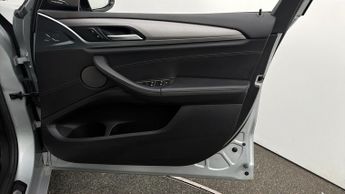
The X3 has always been about practicality and given that it’s larger than ever, this latest version certainly delivers in this area. There’s a large central cubby underneath the main screen where you’ll find wireless charging functions, while the side pockets for driver and passenger are well-sized and can accommodate a large water bottle. It’s a similar story in the back, too, where you’ll find handy seatback pockets and door bins. BMW also offers clever smartphone holders for the seatbacks, so rear-seat passengers can watch their devices hands-free.

When it comes to boot space, the X3 offers a respectable 570 litres as standard, increasing to 1,700 when you fold down the rear seats. Beware, however, as plug-in hybrid models suffer from a smaller boot as a result of the battery placement - these versions get 460 litres as a result.

BMW X3 boot space and practicality

Features

There’s plenty for the avid button- or screen-presser to enjoy aboard the X3. There’s a massive 14.9-inch infotainment display on all versions, bringing a wealth of features including media and navigation, as well as both Apple CarPlay and Android Auto smartphone mirroring systems. Certain functions of the X3 can be operated remotely via a smartphone app, too, so you can, for instance, lock and unlock the doors from your phone. When it comes to the main screen, there are an overwhelming number of menus and settings to choose but fortunately, you can browse them either by using the touchscreen or a handy rotary controller, the latter of which is much easier and more intuitive to use once you’re on the move.

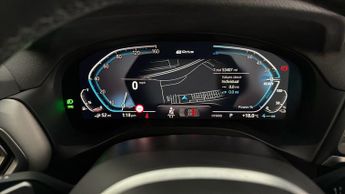
Then you’ve got the 12.3-inch driver display which, like the main screen, is sharp and easy to read. It can be used to display all types of information, too, from trip data to satellite navigation readouts.

BMW X3 feature

Trim and colour options

BMW has slimmed down its range of trim options available for its latest cars, so the X3 is only available in either xLine or M Sport specifications, leaving out the range-topping M50 model which falls under its ‘M Performance’ category.

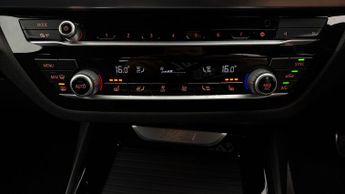
All cars get an automatic tailgate, the aforementioned infotainment display and driver’s screen, as well as automatic air conditioning and LED headlights. For a sportier look, M Sport is the one to go for as it brings larger alloy wheels and a racier design overall, thanks to resculpted bumpers and grilles. There’s also a great range of exterior colours to choose from, though many carry an additional cost.

BMW X3 trim and colour

Safety and reliability

The X3 uses some tried-and-tested engine choices, so we have little reason to worry about reliability in this area. While interior plastics leave a little to be desired, BMW has a good reputation for in-car build quality, so it’s more than likely that the X3 will stand up to the test of time.

All versions get lots of standard safety assistance equipment, too, such as lane departure warning, speed limit warning and lane change alert.

BMW X3 safety and reliability

MPG, emissions and tax

With four engines to choose from, there should be an option for all drivers looking at the X3. For most, the 20d diesel will be the go-to choice as it’ll return 49mpg during mixed driving, while CO2 emissions of 155g/km aren’t bad in the slightest. The petrol 20 can still manage around 40mpg, but we’d expect the real-world figure to be slightly less. Emissions of between 156 and 163 - depending on specification - aren’t bad, but still can’t match the diesel.

However, it’s the plug-in hybrid which really does well in terms of emissions, given that it emits between 64 and 69g/km CO2, depending on specification. The ability to run for up to 54 miles on electric power is handy, too, though you’ll need to be topping up frequently to get the best from this powertrain. Those low CO2 figures will make the PHEV popular with business drivers, too.

It’ll come as no surprise that the M50 is the thirstiest of the bunch and though BMW claims up to 36.7mpg, you might struggle to get near this, particularly if you’re doing lots of town driving. CO2 emissions of 178g/km aren’t bad considering the performance nature of this engine, however.

All models in the X3 range cost over £40,000, too, so they’ll incur the Expensive Car Supplement for the first five years on the road, on top of the standard rate of tax, which is £195 per year.

BMW X3 MPG, emissions and tax
Browse 651 in stock