
 Updated 03/09/2026
Read Time 6 mins
Updated 03/09/2026
Read Time 6 mins

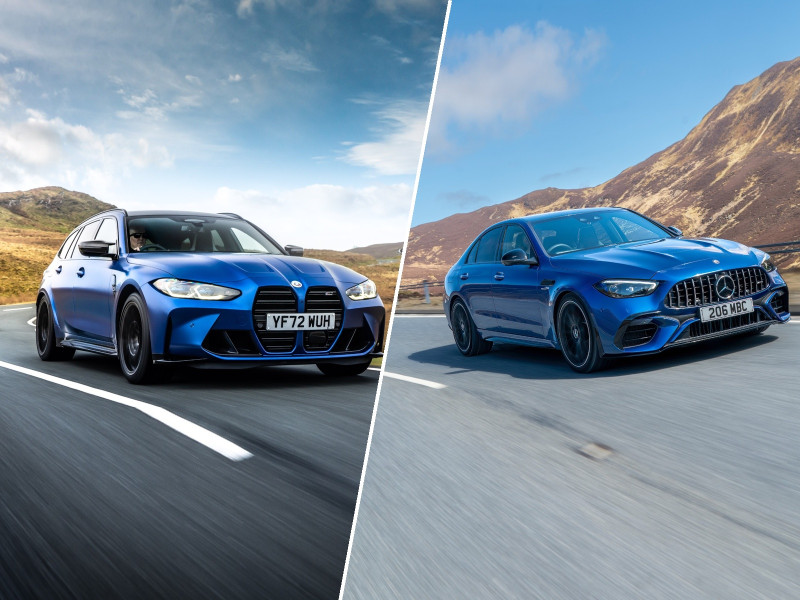
Both also appeal to slightly different drivers. BMW has long been associated with sharper handling and a stronger connection to the road. Mercedes-Benz is usually linked with comfort, refinement and a more relaxed sense of luxury. That does not mean one brand is simply sporty and the other is simply comfortable, but those traits still shape how many buyers compare them. If you’re choosing between a used BMW and a used Mercedes-Benz, the right answer depends on what you value most. This guide compares their brand character, driving feel, performance, interiors, technology, ownership appeal and used car suitability, so you can decide which one fits the way you drive.
BMW vs Mercedes-Benz at a glance
| Area | BMW | Mercedes-Benz |
|---|---|---|
| Best known for | Driver involvement, sharp handling and sporting character | Comfort, refinement, technology and a sense of occasion |
| Typical driving feel | More agile and connected, especially in saloons, coupés and M models | More composed and relaxed, with AMG models adding serious performance |
| Interior character | Driver-focused, clean and sporty | Luxury-led, polished and comfort-focused |
| Technology | iDrive, digital displays, head-up displays and driver assistance features | MBUX, large displays, voice control and advanced comfort technology |
| Best for | Drivers who enjoy the act of driving | Drivers who prioritise comfort, prestige and refinement |
Brand values: BMW driver appeal vs Mercedes-Benz refinement
BMW’s longstanding “Ultimate Driving Machine” positioning reflects its focus on driving dynamics, performance and connection to the road. For decades, BMW prioritised rear-wheel drive layouts, precise steering and driver-focused cabins, aiming to make even everyday journeys feel more engaging.
The range has changed over time. BMW now sells more SUVs, electric cars and front-wheel-drive models than it once did, but the brand still puts driver appeal close to the centre of its identity. Models such as the 2 Series, 3 Series, 4 Series and the M performance range continue to shape that reputation.
Mercedes-Benz has built its name around luxury, refinement and effortless performance. Its “The Best or Nothing” message reflects a focus on comfort, technology and prestige. Performance is still a key part of the Mercedes-Benz story, particularly through Mercedes-AMG, but the brand has traditionally been more about smooth progress and a polished driving experience.
Driving dynamics: which feels better on the road?
BMWs are often praised for agility and responsiveness. A well-balanced chassis, sharp steering and lively acceleration have become BMW bywords, particularly in saloons and coupés. Even lower-powered models often feel tuned to make the driver feel involved.
That character is strongest in BMW M cars, but the influence carries through the wider range. A 3 Series, for example, is usually bought not only for its badge and practicality, but also because it feels composed and rewarding on a good road.
Mercedes-Benz takes a more relaxed approach. Its cars are engineered for composure and stability, with an emphasis on comfort at higher speeds. That makes many Mercedes-Benz models well suited to long motorway journeys, where quiet cabins, settled suspension and supportive seats matter more than razor-sharp responses.
AMG models add the excitement. They bring formidable power and sharper handling, although they often feel heavier and more muscular compared with equivalent BMW M models. Neither brand is short on performance, but BMW usually feels more focused, while Mercedes-Benz feels more composed.
Performance and powertrains
Historically, both BMW and Mercedes-Benz have produced some of the world’s most respected engines. Their four-cylinder petrol engines have generally focused on smoothness and reliability, while larger straight-six BMW engines and V6 Mercedes-Benz engines have delivered stronger performance. Both brands have also offered V8s, V12s and a wide range of diesel engines over the years.
Today, efficiency plays a much bigger role. Petrol, diesel, mild hybrid, plug-in hybrid and electric options can all be found across the used market, depending on the model and age. Mercedes-Benz moved strongly into electric cars through its EQ range, while BMW offers electric models such as the i4 and iX, along with plug-in hybrid versions of many familiar models.
For used car buyers, the best powertrain depends on your mileage and charging access. A diesel may still make sense for regular long-distance driving, while a petrol model can suit lower-mileage use. A plug-in hybrid can be efficient if you can charge it regularly, but it may not deliver its best running costs if used mainly without charging.
Interior design and comfort
Mercedes-Benz has a strong reputation for luxurious cabin design. Many of its interiors focus on comfort, rich materials and a sense of occasion. Larger models, especially cars such as the E-Class and S-Class, have often set a high standard for ride comfort, quietness and seat technology.
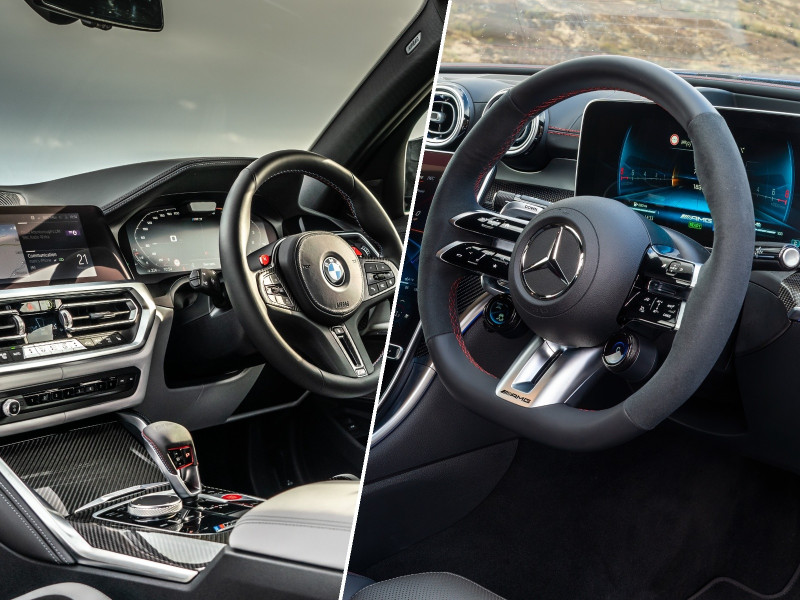
BMW interiors are also premium, but they tend to put the driver first. The dashboard and controls are usually angled towards the driver, and the design is often cleaner, sportier and more functional. Recent BMW models have narrowed the gap on luxury, particularly in larger SUVs and executive models such as the X5 and 7 Series.
The difference comes down to atmosphere. A Mercedes-Benz cabin often feels more comfort-led and polished. A BMW cabin usually feels more focused and purposeful. Both can feel special, but they do it in different ways.
Technology and infotainment
Both brands have helped shape modern in-car technology. Mercedes-Benz is known for systems such as MBUX, which uses large displays, voice control and clear graphics to create a high-tech feel. Higher-spec Mercedes-Benz models can also include advanced driver assistance systems and comfort features.
BMW’s iDrive system has long been one of the benchmark infotainment setups. It has evolved from rotary-controller menus into a more digital, screen-led system with connected services, voice control and driver assistance features. Many used BMWs also offer head-up displays, digital instruments and advanced parking aids, depending on age and specification.
As with any used premium car, specification matters. Two cars of the same model and age can feel very different if one has a higher trim level or more optional equipment. Always check the exact car you’re viewing rather than assuming every feature is standard.
Ownership experience and brand perception
Owning a BMW or Mercedes-Benz is about more than the badge, although the badge matters. Both brands carry significant prestige, strong customer loyalty and a long heritage in performance, luxury and engineering.
BMW is often seen as the choice for drivers who prioritise sporty handling and involvement. Mercedes-Benz tends to appeal to buyers who want comfort, innovation and a more relaxed premium feel. In reality, both brands now cover a huge spread of cars, so a compact Mercedes-Benz A-Class will feel very different from an S-Class, just as a BMW 1 Series will feel very different from a BMW 5 Series or X5.
Servicing, tyres, insurance and repairs can cost more than they would on a mainstream car, especially on higher-performance models or large SUVs. Before buying, check the service history, MOT record, tyre condition and any warning lights. It is also worth comparing insurance quotes and expected servicing costs for the exact model you’re considering.
Motorsport heritage and performance image
BMW’s motorsport history is extensive, with success in touring cars, endurance racing and Formula One. That heritage feeds into the appeal of M cars, which are often seen as some of the most driver-focused performance cars in their class.
Mercedes-Benz also has a rich motorsport story, including major success in Formula One through the Mercedes-AMG Petronas team. AMG road cars use that performance image to add power, sound and drama to the wider Mercedes-Benz line-up.
For most used car buyers, motorsport heritage will not be the deciding factor. But it does influence how each brand feels. BMW leans into precision and control. Mercedes-AMG leans into power, presence and pace.
Which brand delivers the ultimate driving experience?
The answer depends on what you want from a car. If your heart beats faster for sharp handling, driver engagement and a sense of connection from behind the wheel, BMW is likely to deliver more of what you’re looking for. It suits drivers who see driving as more than getting from A to B.
Mercedes-Benz is not far behind dynamically, and in many cases it offers more comfort, refinement and occasion. If you want a car that feels calm, luxurious and technologically advanced, Mercedes-Benz may be the stronger fit.
Both brands excel at what they do, which is why both have such loyal followings. The smartest move is to test drive comparable models on the same kinds of roads you use most. A 20-minute drive can tell you more than any badge comparison.
BMW or Mercedes-Benz: Which should you buy used?
Choose BMW if you want a premium car that feels sharper, more responsive and more focused on the driver. A used BMW can be a strong choice if you enjoy driving and want a car that feels engaging on country roads as well as settled on the motorway.
Choose Mercedes-Benz if you want comfort, refinement and a more relaxed premium feel. A used Mercedes-Benz can make a lot of sense if you do longer journeys, carry passengers regularly or want a cabin that feels more luxury-led.
There is no wrong answer if you choose carefully. Focus on the exact model, condition, service history, specification and how the car feels on a test drive. Whether you choose the dynamic character of BMW or the refined luxury of Mercedes-Benz, the right car should feel right for your driving, your budget and your daily routine.


