Specifications

Fuel types
Electric
No of seats
5
Boot space
313 litres
Dimensions
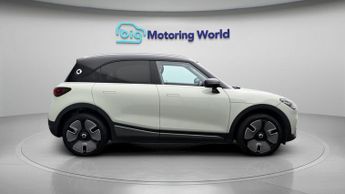
4,270mm x 1,822mm x 1,636mm
Fuel economy
up to 193 - 273 miles (WLTP, electric)
Acceleration (0-62mph)
3.9 - 6.7 seconds
Insurance group
29 - 38
Body style
SUV
CO2 emissions
0 g/km (electric)
Browse 8 in stock

AA Cars review

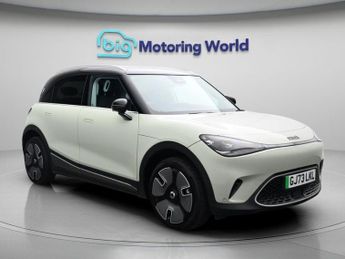
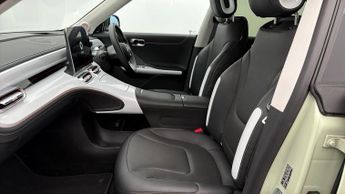
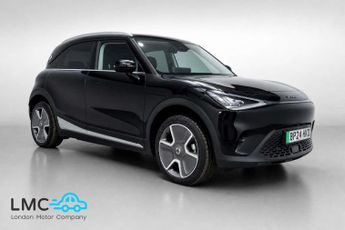
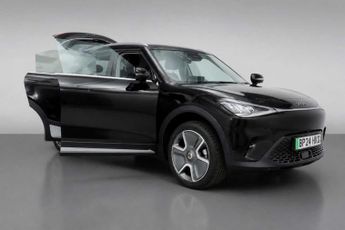
There is a lot of Tesla influence in the Smart #1, with a similarly sparse interior and minimalist approach to interior design. The cabin is well put together and spacious, but it lacks a bit of character. The same can be said for the exterior styling, which will divide opinion. That said, the range and overall EV efficiencies are good and it’s a very comfortable place to while away the miles.
Jack Evans
Jack Evans

Jack is an experienced motoring journalist who has been covering the latest new-car releases for the last 10 years.

Read bio

3.7/5

How much does it cost?

Smart’s smallest SUV starts at £29,960 for the entry-level Pure trim line, with prices increasing to £32,960 for the Pro model, jumping to £36,960 for Pro+ and Premium trim lines, and topping out at £43,960 for the high-performance Brabus edition. Seeing that the model hasn’t sold in particularly huge numbers in the UK, used car deals are few and far between, with the cheapest on AA Cars today hovering around the £20,000 mark for a very low mileage Pro model.

Engine and performance

Overview

Much of the Smart #1 range features the same basic Geely Group electric platform that is found in other shared products, such as the Volvo EX30. However, UK-spec Pure models use a 200kW (272hp and 343Nm of torque) rear-mounted electric motor paired with a 49kWh LFP battery pack, delivering a 0–62mph acceleration time of 6.7 seconds and a maximum WLTP range of 193 miles.

The battery pack increases to 66kWh in Pro+ trim levels and above, with the same 200kW (272hp) motor producing an identical 343Nm of torque, but maximum WLTP range increases up to 273 miles on these vehicles. Finally, the Brabus edition uses the larger 66kWh battery but pairs it with twin electric motors (one for each axle), producing 315kW (428hp) and 543Nm of torque. This allows it to tackle the 0–62mph sprint in just 3.9 seconds while offering a WLTP range of 248 miles.

Smart 1 performance

Out on the road

The Smart #1 is generally a very comfortable and refined electric vehicle, offering a laid-back drive that’s easy to thread through city traffic but still delivers enough refinement on much longer journeys. Electric range is middling and the efficiency isn’t quite up there with the likes of Kia and Hyundai, which can deliver up to 375 miles on a single charge in the Kia EV3, for example. The upright driving position makes for a commanding view of the road ahead and there’s good visibility out of the front and rear, making it very easy to park, especially when you consider the park assist tech on offer.

However, the most potent Brabus edition is at odds with the vehicle’s generally laid-back demeanour and the ferocious 428hp maximum power on tap is often enough to overwhelm the wheels for a surprisingly hot driving experience. In a family-orientated hatchback like this, it feels like the entry-level Pure and Pro+ trims will provide more than enough power for most.

Smart 1 on the road

Ride and handling

Overall, the ride is very good in the Smart #1, with the set-up leaning more towards comfort than performance. It soaks up bumps well and the cabin is isolated from noise and harshness, which is particularly good when ferrying kids and passengers around. The damping is good, meaning it can tackle faster corners without rolling around like a wayward jelly, but the steering is beyond vague. It is engineered for ease of use and quick swivelling when parking, rather than sports car-esque feedback. This isn’t improved upon much in the Brabus model, which again, feels like it has a gargantuan amount of power without the finesse and refinement of a proper, dedicated sports SUV.

On top of this, one of the Smart #1’s biggest issues lies with the braking, which is devoid of any feel at the best of times but becomes irritating when you factor in the regenerative braking system, where Smart has attempted to blend mechanical braking with its energy-saving system. Results are patchy, with the regen often feeling jerky and proving difficult to neatly blend with any mechanical inputs. This really comes to the fore when driving it around town at slower speeds.

Smart 1 ride and handling

Interior and features

Interiors

Smart doesn’t scrimp on the technology with the #1 and even the most basic models receive a 12.8-inch touchscreen that takes up most of the middle of the dashboard. There’s also a 9.2-inch driver display that resides just behind the steering wheel, although this is relatively slim and can be hard to see when the wheel is adjusted to its more upright positions.

Climb up the model range and the more expensive versions receive a 10-inch head-up display, which beams important driver information onto the screen ahead. A lot of core functionality is buried within menus on the touchscreen, which can be difficult to access when driving. There is a voice assistant, but its helpfulness is very hit and miss, as it fails to understand commands and can’t actually take care of much core functionality.

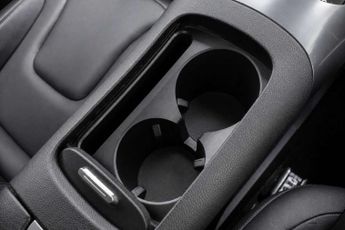
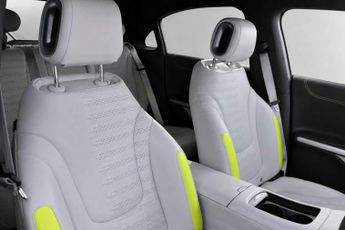
What’s more, Smart has brought its AI assistant to life in the form of a hyperactive digital fox that moves around the screen. Occasionally, it starts juggling a football or wandering around the screen. The kids love it, but it feels a bit like a gimmick and can be distracting. Aside from that, the interior is otherwise very well appointed, with plenty of premium materials used throughout. It’s also bright and airy inside, making the #1 feel a lot roomier than it really is.

Smart 1 interior

Boot space and practicality

There is plenty of room in the front of the cabin for taller drivers and occupants, while the rear bench does a convincing job of seating three abreast. The rearmost seats fold in a 60/40 manner, which isn’t quite as practical as some rivals but it does free up more space to store awkwardly shaped items in the boot. The rear bench also slides back and forth, while the seatbacks recline, making it easier to maximise boot space. This is important, because the boot isn’t exactly cavernous. With everything set up to seat adults in the front and big kids in the rear, you are really looking at 273 litres of space, increasing to 313 litres with the rear bench slid fully forwards.

Smart 1 boot space and practicality

Features

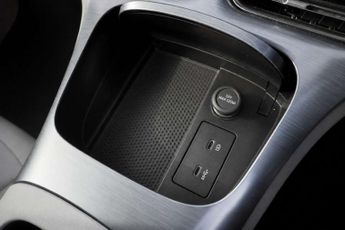
As previously mentioned, all cars receive a large central touchscreen and a digital driver’s display, with niceties like front and rear parking sensors, blind spot detection and Apple CarPlay and Android Auto coming as standard. Over-the-air software updates keep the infotainment system up to date without the need to visit a dealership. The most basic Pure models are offered in very limited colours (silver, white and black), while they are fitted with 18-inch alloys. Spend a little more and you get 19-inch alloys with Pro+ and Premium, as well as a 360-degree camera for easy parking, Smart Pilot Assist adaptive cruise control and a wireless phone charger. The top-spec Premium and Brabus models receive extras such as the aforementioned 10-inch head-up display and a Beats sound system.

Smart 1 feature

Trim and colour options

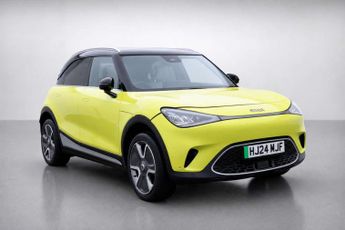
Trim options start at Pure and move through to Pro, Pro+, Premium and the hot Brabus edition. The most basic Pure cars are limited in paint options, but things improve once you step up a rung. Pure customers can only specify their vehicles in a Meteorite Black interior hue, while anything above this model line receives the option of lighter tones. There are some exclusive paint finishes that are only available on Premium and above, while the Brabus model gets its own racier schemes.

Smart 1 trim and colour

Safety and reliability

Euro NCAP tested the Smart #1 in 2022 and it achieved the full five stars, scoring 96% for adult occupant safety, 89% for child occupant safety and 88% for safety assist systems. The Smart #1 is still a relatively new car, so reliability data is limited, but reports of major issues plaguing this, as well as the Volvo EX30 and other Geely Group vehicles, are scarce.

Smart 1 safety and reliability

MPG, emissions and tax

Electric vehicles don’t emit anything in the way of CO₂ emissions from their tailpipes and miles per gallon isn’t really a worry. Maximum electric range is, and here you will get between 193 miles and 273 miles according to the official WLTP test cycle. Charging takes around 30 minutes to top up from 10–80% via a DC fast charger, with maximum charging speeds of 130kW for the 66kWh battery and around 150kW peak capability quoted. Consumption is rated at approximately 29kWh/100 miles for the most efficient models. Annual road tax is £195 per year for electric vehicles registered from April 2025 onwards. There is currently no confirmed 3p-per-mile road charge scheduled for April 2028.

Smart 1 MPG, emissions and tax
Browse 8 in stock