Specifications

Fuel types
Electric
No of seats
5
Boot space
388 litres
Dimensions
4,087mm x 1,787mm x 1,562mm
Fuel economy
130 - 239 mile range WLTP (EV)
Acceleration (0-62mph)
9.5 - 11.4 seconds
Insurance group
14 - 25
Body style
Hatchback
CO2 emissions
0 g/km (electric)
Browse 86 in stock

AA Cars review

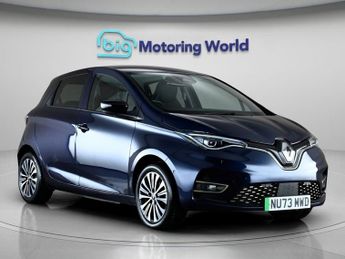
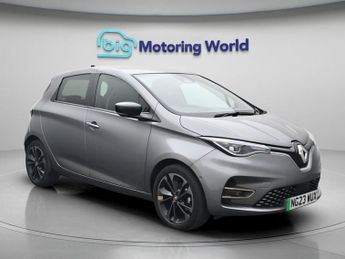
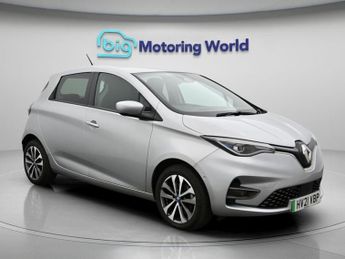
The Renault Zoe was somewhat of a pioneer when it first launched in 2013, sitting alongside the Nissan Leaf as one of the first reasonably-priced electric cars aimed at the masses. As technology has moved on, the Zoe has been left behind a bit by the competition and was discontinued later. However, used cars can be found at bargain prices and it still makes for a cost-effective daily electric car today.
Jack Evans
Jack Evans

Jack is an experienced motoring journalist who has been covering the latest new-car releases for the last 10 years.

Read bio

3.6/5

How much does it cost?

The most recent models with the larger battery packs cost around £24,000 when bought new, but seeing as Renault discontinued the Zoe in favour of the Renault 5 and 4 E-Tech, it’s now down to the used market.

A quick scan of low mileage used models on The AA suggests that it is possible to pick up 2020, 52kWh versions for less than £10,000. If you are willing to go for an older, high mileage example, these can cost as little as £3,000.

Engine and performance

Overview

Early Renault Zoe models were fitted with a 22kWh battery pack and as a result, only boasted an official WLTP range of 130-miles when new. But due to the relatively poor efficiencies of early EVs, you can expect that figure to be a lot less – even worse in high mileage examples where battery capacity will be diminished slightly.

These battery packs were mated to an 88bhp electric motor that drove the front wheels. Acceleration from a standstill remains peppy to this day, but power soon fizzles out beyond 30mph.

In 2017, Renault released a mid-life refresh, adding a 41kWh battery to the line-up. This helped boost electric range to up to 250-miles in later cars. Again, you can expect much less in poor weather.

What’s more, these middle-aged cars were offered in a variety of motor outputs, ranging from the 88bhp (badged Q90), through to the 92bhp R90 or 107bhp R110 variants.

Finally, the most recent cars, which were produced from 2019 until 2024, featured an even larger 52kWh battery pack and an R135 electric motor that is capable of developing 134bhp.

These more recent cars offered the most useable, real-world range and the fastest charging, with a 50kW CCS port employed for the first time.

Renault Zoe performance

Out on the road

The Renault Zoe was never really known for its driving credentials but it remains fun in the way that only EVs can deliver. Later cars can sprint from 0-30mph in 3.6 seconds, for example, and the more powerful motors ensure it can overtake on faster roads with ease.

Earlier models suffered from a lack of sound deadening and general refinement, which made them noisy at motorway speeds. But this was largely improved with the final refresh.

The steering is light, the suspension is soft and the handling is predictable. It’s no sports car, but given its compact dimensions, it’s fun to drive in the right environment.

Renault Zoe on the road

Ride and handling

Driving the Renault Zoe is best described as “smooth”, seeing as it gets up to speed quickly and without the palaver of gear changes to deal with. Simply press the accelerator and it will breeze up to speed limits with minimal fuss.

The steering is very light, which makes it great for navigating busy car parks and tight city streets, but there’s little in the way of feedback on country roads and faster routes.

It’s a similar story with the suspension, which appears to have been tuned to soak up rough road surfaces, rather than offer any sort of real enjoyment. But it nails the brief when it comes to ease of use and comfort, only coming unstuck at higher speeds and on poor road surfaces.

Plus, great visibility out of the front, as well as parking cameras and blind spot warnings in later cars, make it very easy to park.

Later models also fare much better at motorway speeds, thanks to the more powerful electric motor, but there’s still a lot of wind noise, even after the refresh that introduced improved insulation.

Renault Zoe ride and handling

Interior and features

Interiors

Understandably, those early Renault Zoe models look particularly dated compared to anything that has been released in the last couple of years.

They feature a small but basic touchscreen infotainment system with a clunky native navigational system, while physical controls for air conditioning are placed just beneath this.

The driver benefits from a digital display in these earlier cars but again, the resolution isn’t brilliant compared to modern rivals.

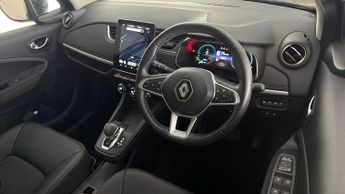
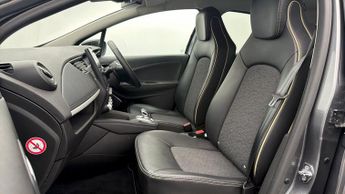
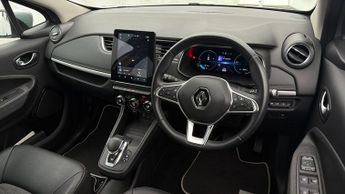
Interiors of 2019 cars and onward are much better, as they borrowed almost wholesale from the Renault Clio of the same era, boasting a refreshed gear selector, button layout and a 9.3-inch portrait-orientated touchscreen infotainment system with a much slicker user interface.

All Zoe models have been blighted by a fixed height driving position, which many drivers have found uncomfortable, but there’s a lot more adjustability in the steering columns in later versions.

What’s more, the overall ambience in the newer cars feels a lot more premium, with soft touch fabrics and less scratchy plastics used to cover the majority of the interior.

Renault Zoe interior

Boot space and practicality

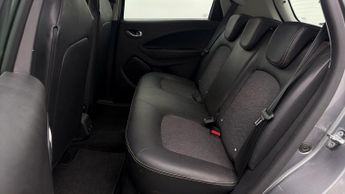
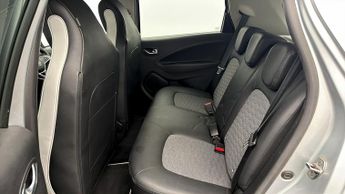
Despite delivering five seats, four fully-grown humans will find it difficult to squeeze into a Zoe, regardless of the year. Rear passengers suffer from a lack of head and legroom, while the small rear windows can make it feel quite claustrophobic.

Boot space is reasonable, though, with 388-litres on offer when the rear seats are intact, bettering the Mini Electric and the Honda e, which was also retired by its maker.

Those rear seats do fold, but not completely flat. Nevertheless, this frees up a total of 1,225 litres of load space, which is handy for the occasional mammoth shopping trip.

Renault does offer a good amount of storage inside the cabin though, with door bins large enough to fit smaller water bottles, cupholders for front passengers and an open cubby hole located above the dashboard.

Most cars offer USB ports for charging devices on the move, although these now feel dated considering almost every tech company has made the switch to USB-C by now.

Renault Zoe boot space and practicality

Features

Renault has always offered a variety of trim levels on Zoe, which determine how many features and niceties the car comes fitted with. For example, earlier entry-level Expression Nav cars came fitted with a 7-inch touchscreen and basic navigation, as well as cruise control and climate control.

More expensive earlier cars (Dynamique Nav and Signature Nav) offered things like automatic lights and wipers, keyless entry, a DAB radio and parking sensors.

It’s also worth looking out for those top spec cars that came with the much-improved Bose premium sound system.

Later vehicles then introduced the new 9.3-inch touchscreen inside, as well as a revised 10-inch digital drive display that sits behind the steering wheel.

Renault Zoe feature

Trim and colour options

Earlier Renault Zoe models came in the choice of three trim levels, including Expression Nav, Dynamique Nav and Signature Nav, with each level adding more technology inside and premium touches to the exterior.

As of 2019 onwards, the trim levels changed to Play, Iconic and GT-Line, which were priced from £18,670 to £21,620.

The former came with 15-inch steel wheels and the lower-powered R110 80kW motor, while the latter boosted performance with a R135 100 kW motor and added 16-inch diamond cut alloy wheels, alongside other exterior flourishes and interior gadgetry.

New colour finishes were also carried over from elsewhere in the Renault portfolio, including three new metallic paint finishes – Celadon Blue, Flame Red and Quartz White, with a total of nine colours to choose from.

Renault Zoe trim and colour

Safety and reliability

Safety is a tale of two halves, with the original 2013 car receiving the full five star rating from Euro NCAP, thanks to an 89% adult occupant, 80% child occupant and 85% safety assist score.

These early cars still performed badly for pedestrian protection, but things got a lot worse with cars made from 2019 onwards. Not only did Euro NCAP’s testing become more stringent at the time, but Renault downgraded its side airbags and lacked the active safety systems required to achieve top marks.

As a result, it scored zero stars, with 43% adult occupant rating and 52% child occupant safety score. The onboard safety assist systems scored just 14% overall.

While faring better when it comes to reliability, the Renault Zoe certainly isn’t a class leader. In the 2024 WhatCar? Reliability Survey, it placed 11th out of 18 cars in the electric car class.

Renault Zoe safety and reliability

MPG, emissions and tax

The standard Vehicle Excise Duty (VED) rate for an electric vehicle in the UK is now £195 per year. However, if the electric, zero or low emission car was registered between 1 March 2001 and 31 March 2017, you pay £20 a year.

The maximum electric range of the Renault Zoe really depends on the year, with earlier cars managing 130-miles according to the official WLTP rating, while later cars increased to 239-miles.

Renault Zoe MPG, emissions and tax
Browse 86 in stock