Specifications

Fuel types
Petrol, diesel
No of seats
5
Boot space
472 litres
Dimensions
4,489 mm x 1,836 mm x 1,613 mm
Fuel economy
41.5 - 50.4 mpg
Acceleration (0-62mph)
9.5 -11.7 seconds
Insurance group
14, 15, 16, 17, 18, 19, 20, 21, 22, 23, 24, 25
Body style
SUV
CO2 emissions
131 – 144 g/km
Browse 328 in stock

AA Cars review

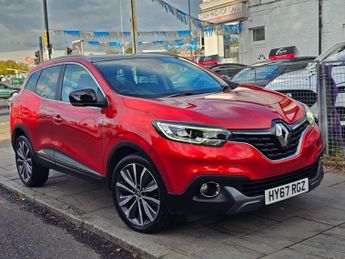
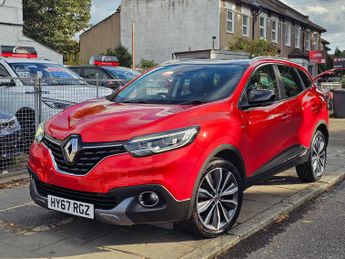
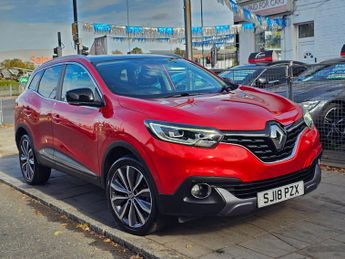
The Renault Kadjar might not have been as successful here in the UK as its sister, the best-selling Nissan Qashqai, but it was a popular choice among families wanting a practical SUV with low running costs, a spacious interior, and an easy-going driving experience. Used examples offer tremendous value for money for families on a budget.
Jack Evans
Jack Evans

Jack is an experienced motoring journalist who has been covering the latest new-car releases for the last 10 years.

Read bio

3.8/5

How much does it cost?

The Renault Kadjar was priced around £26,000 to £29,000 just before it was discontinued in 2022 and replaced by the Austral, but now it's looking like seriously good value for money. The earliest cars can be had from around £4,000 on AA Cars, while the last-of-the-line cars from 2022 are priced from around £18,000. The facelift cars from late-2018 come in from £8,000, which may be the better buys if you prefer the tweaked looks and improved interior.

Engine and performance

Overview

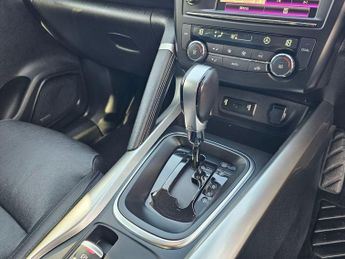
The Renault Kadjar dates back to simpler times, so it only came with petrol and diesel engines – there were never any hybrids offered. Earlier models came with 1.2- and 1.6-litre petrols, which were later replaced by a pair of 1.3-litre turbocharged units with 138 or 158bhp. These were very popular and delivered smooth power on the motorway and were punchy around town. For diesel, the Kadjar originally came in 1.5-litre 'dCi' and 1.6-litre forms, with a 1.7 replacing the 1.6 later on in the Kadjar's life. Most models came with a slick-shifting six-speed manual gearbox and were front-wheel drive; it was only the 1.7-litre diesel that had four-wheel drive, but it also had a sluggish CVT automatic gearbox.

Renault Kadjar performance

Out on the road

The Renault Kadjar was based on the top-selling Nissan Qashqai, which should give you an idea of how it drives. It's very much positioned towards the comfort end of the family SUV spectrum, which is what most buyers want. For those who mostly travel on motorways the diesels can be the better option, thanks to their better fuel efficiency and smoother cruising abilities. But don't discount the petrols as they are pretty refined too, and are more eager to perform around town. While the Kadjar is by no means a mud-plugging SUV, the four-wheel drive diesel offers some useful traction on slippery surfaces thanks to its 50:50 differential lock.

Renault Kadjar on the road

Ride and handling

In many ways the Kadjar offered an ideal driving experience for its intended audience. While the car did come with a fancy system called 'Understeer Logic Control' that aimed to improve the handling on twisty roads, the Kadjar is more of a cruiser compared to a SEAT Ateca or Ford Kuga, for example. For many families, though, that's all they desire, and the Kadjar deals very well with potholes and speed humps. It's also a pretty quiet car on motorways, for example, insulating passengers from road noise. The steering is light and accurate, making the Kadjar feel easy and stress-free when parking in a tight supermarket car park, and this is boosted by the car having great visibility out the front and back windows.

Renault Kadjar ride and handling

Interior and features

Interiors

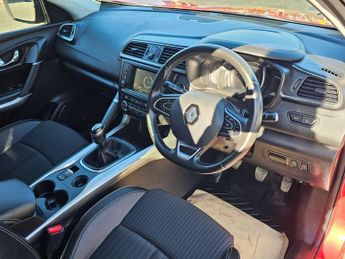
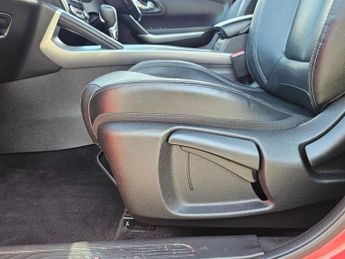
It's on the inside where the Kadjar looks really different from its Nissan sister, as Renault injected some flair into the interior's design. But the dashboard is still pretty functional and looks less interesting than a Peugeot 3008's, but the controls are all well laid out and the fascia and doors are covered in tactile soft plastics. The Kadjar's interior had a small makeover in 2018, bringing in expensive-feeling rotary knobs for the climate control system, replacing the fiddly buttons found on earlier cars. The facelift also brought a flusher-fitting infotainment screen. When it comes to that infotainment system, it does feel very much of its time with slightly dated graphics. But most models came with sat-nav and it all works perfectly fine, while later models gained Apple CarPlay and Android Auto connectivity.

Renault Kadjar interior

Boot space and practicality

The Renault Kadjar had one of the larger boots available in the family SUV class when it was in production. At 472 litres, it trailed rivals like the Kia Sportage and Hyundai Tucson on paper, but, in the real world, offers more than enough space for families today. Higher trim levels get a neat moveable boot floor eradicating a cumbersome load lip and giving some handy extra storage underneath. The back seats fold in a conventional 60/40 fashion, but handily they lie completely flat. Room up front is very good, but six-foot passengers sitting in the back will find headroom a little tight – even more so on cars fitted with a panoramic sunroof.

Renault Kadjar boot space and practicality

Features

When the Renault Kadjar launched in 2015 it came in a wide trim range, comprising Expression+, Dynamique Nav, Dynamique S Nav, Signature Nav, Signature S Nav, and GT Line. Dynamique S Nav is the pick of the range here as it came with climate control, keyless entry, a seven-inch touchscreen with sat-nav, parking sensors, part-leather seats, 19-inch alloys, and handy levers to drop the rear seats. Post-2018 facelift cars had a simplified range of Play, Iconic, S Edition, and GT Line, with the Iconic and S Edition cars offering the best value for money in having broadly the same equipment as the earlier Dynamique S Nav.

Meanwhile, in the car's last year of production, Renault slimmed the range down even further to just Equilibre and Techno, with the former offering all that most buyers needed. Equilibre had all-round parking sensors, Apple CarPlay and Android Auto, dual-zone climate control, and keyless entry.

Renault Kadjar feature

Trim and colour options

As already explained, the Kadjar initially came with a very wide range of trim specifications. The Dynamique S Nav was the pick of the early cars with its standard-fit climate control, keyless entry, a seven-inch touchscreen with sat-nav, parking sensors, and part-leather seats. There was less choice post-2018, but the best and most popular models were the Iconic, S Edition and Equilibre models. Similarly, the Kadjar was offered in a wide range of colours, with metallic red, blue and white being the popular options when the car was new.

Renault Kadjar trim and colour

Safety and reliability

The Kadjar was tested by Euro NCAP when the car first launched in 2015. At the time it received a full five-star rating, with a high 89 per cent rating for adult protection, and an 81 per cent score for child occupant protection. Meanwhile, for pedestrian protection and safety assist systems, the Kadjar got scores of 74 per cent and 71 per cent respectively.

Renault Kadjar safety and reliability

MPG, emissions and tax

If you're chasing the best efficiency, the 1.5 dCi diesel is the champ thanks to it returning up to 57mpg. It also emitted the least CO2 with 128g/km. As you'd expect, the petrols are less efficient than the diesels. But, even with claimed figures of around 46mpg, they're still pretty frugal for a petrol-powered family SUV. When it comes to VED, £195 a year is the flat rate, which puts the Kadjar on par with its rivals.

Renault Kadjar MPG, emissions and tax
Browse 328 in stock