Specifications

Fuel types
Petrol, Electric
No of seats
4–5
Boot space
211–278 litres
Dimensions
3,874 mm x 1,727 mm x 1,430 mm
Fuel economy
38–156 mpg
Acceleration (0-62mph)
3.9–9.1 seconds
Insurance group
12–41
Body style
Hatchback
CO2 emissions
32 – 159 g/km
Browse 2,548 in stock

AA Mechanic review

When buying a used MINI Cooper, start with the service history and an online vehicle check for mileage discrepancies, insurance write-off history or outstanding finance. Older 2007 to 2014 cars need careful checks for timing chain noise, oil use and signs of poor maintenance. On a test drive, listen for suspension knocks, check the clutch, make sure the steering feels tight, and test the infotainment, windows and central locking.
Allen Childs
Allen Childs

Allen Childs is a Regional Manager at The AA, with extensive experience in roadside assistance, vehicle repair, recovery operations, team development and operational leadership.

Read bio

4.0/5

Repairs

The MINI Cooper is fun to drive and generally reliable when it’s been maintained properly, but some older models are sensitive to missed servicing.

Common issues include:

• Timing chain stretch on some 2007 to 2014 petrol models

• Rattling on cold start, sometimes known as the “death rattle”

• Oil consumption on some older engines

• Carbon build-up on direct injection old engines with high mileage

• Noisy alternators on higher mileage cars

• Suspension wear, including bushes, drop links and rear wishbones

• Clutch wear on manual cars

• Cooling system issues on older models

Newer 2014-onwards cars are generally more reliable and are the safer used buy. Avoid older cars with engine noise, poor history or evidence of skipped oil changes.

Maintenance

MINI service schedules vary by age, engine and condition-based servicing, but annual oil changes or servicing every 8,000 to 10,000 miles is sensible for long-term reliability.

Key maintenance to keep on top of includes:

• Regular oil and filter changes

• Brake fluid replacement every 2 years

• Spark plug replacement every 3 to 4 years, or sooner on Cooper S and JCW models

• Cabin filter replacement every 2 years

• Engine air filter replacement when due

• Suspension and steering checks

• Coolant level and leak checks, especially on older cars

• Tyre and alignment checks, as the sporty setup can increase wear

Is the MINI Cooper a reliable car?

The MINI Cooper is an iconic small car with sharp handling, a premium feel and plenty of character. It’s not the cheapest small car to maintain, but it can last well with regular servicing. After 5 to 7 years, the main issues are usually suspension wear, tyres, brakes, cooling system faults and minor electrical problems. A well-maintained MINI Cooper with strong service history should be a good used buy, but cheap older examples with poor history are best avoided.

Browse 2,548 in stock

AA Cars review

The Mini Cooper remains one of the most fun small cars on the market, combining classic styling cues with modern technology and impressive driving dynamics. The addition of the electric Cooper SE makes the range more future-proof, appealing to urban drivers looking for zero-emission motoring without sacrificing the brand’s signature driving character. While rear seat space and boot capacity aren’t class-leading, the Mini excels in style, quality, and sheer enjoyment behind the wheel.
Jack Evans
Jack Evans

Jack is an experienced motoring journalist who has been covering the latest new-car releases for the last 10 years.

Read bio

4.0/5

How much does it cost?

Despite its iconic status, the Mini Cooper is actually priced fairly competitively within the premium small car space. The most basic petrol hatchback models get underway at around £25,000, with the cheapest electric models kicking off at just under £27,000. For those looking to splash the cash a bit more, opting for one of the higher-spec Cooper S models pushes the price towards £30,000–£35,000, while the range-topping high-performance John Cooper Works variant starts at approximately £38,000. On the used market, the current generation Mini Cooper can be found on AA Cars for as little as £14,000, with plenty of more expensive options to choose from if you want to get your hands on something a little more high spec. If you are on a budget, but still want a piece of that famous Mini experience, then older cars dating back to the Noughties can be snapped up for under £1,000.

Engine and performance

Overview

The current Mini Cooper is offered with a mix of petrol and electric options, although, unlike many of its rivals, there are no hybrid variants currently on sale. The most basic cars are powered by a 1.5-litre three-cylinder petrol engine that produces 134 bhp and can do 0–60 mph in a perfectly respectable 8.1 seconds. Moving up the range, higher-spec cars add the option of a 2.0-litre four-cylinder turbocharged unit, which churns out 178 bhp and reduces the sprint time to 6.7 seconds.

At the top of the range, the John Cooper Works model offers the best performance, with a 2.0-litre turbo engine producing 301 bhp and completing 0–60 mph in a 5.9 seconds. Electric powertrains are limited to a choice of two setups. The standard Mini Cooper E is given a 135 kW electric motor, which produces 184 bhp, as well as a 40.7 kWh battery. Meanwhile, the more upmarket SE model gets a 54.2 kWh battery and a 160 kW electric motor, producing 218 bhp.

MINI Cooper performance

Out on the road

One of the big things which made the original Mini such a major success all those years ago were its sharp and engaging driving dynamics, that felt more like a go-kart than a family car. Now, six decades on, that driver experience remains at the core of what the Cooper has to offer. In urban environments, the car feels light and agile, making it perfect for squeezing into small spaces and darting in and out of busy inner-city traffic. Elsewhere, the motorway may not seem like the natural home of a Mini but the latest car more than holds its own when out of its comfort zone. By-and-large, the car remains stable and confident, with its torquey powertrains offering good overtaking capabilities. Despite this, the car’s pocket-sized stature does result in a few drawbacks, with crosswinds having a noticeable impact on performance.

MINI Cooper on the road

Ride and handling

With driving enjoyment at the heart of the Mini, the Cooper does suffer slightly from a firmer ride than some of its rivals, especially on sportier John Cooper Works models, which do take their toll on your spine over time. The reward for this is that when the road gets bendy, the Mini is in a class of its own. The car offers excellent control with minimal body roll, as well as precise and accurate cornering. The steering offers excellent feedback and overall the Mini handles far better than the majority of its largely comfort-orientated rivals. This is true across the Mini range, although the extra weight in electric variants does have a small impact when it comes to cornering.

MINI Cooper ride and handling

Interior and features

Interiors

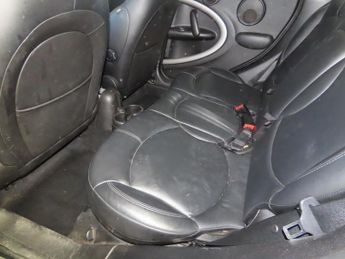
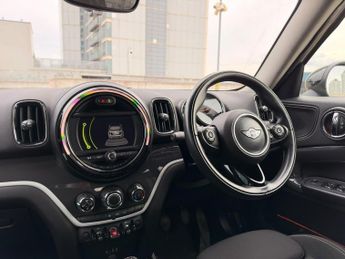
Ever since BMW launched the modern Mini back in 2001, the car has been famed for its fashionable, retro-inspired interiors. The latest car continues that trend, with the cabin punching well above its weight when it comes to style. Classic touches include a funky circular central infotainment display, which dominates the dashboard. Premium materials are used throughout the car with customisable ambient lighting offering another chance to personalise the car to your own tastes. Depending on trim, the Mini also features leather upholstery and heated seats, although these are not available on more basic models. Compared to the last Mini, the current generation offers improved comfort for all passengers, while the low-set driving position offers surprisingly good visibility out onto the road. Despite this, there are still one or two issues inside the Cooper – most of which stem from a general lack of space. While front passengers do enjoy generous head and legroom, the back of the car remains fairly cramped, even for a car of this size.

MINI Cooper interior

Boot space and practicality

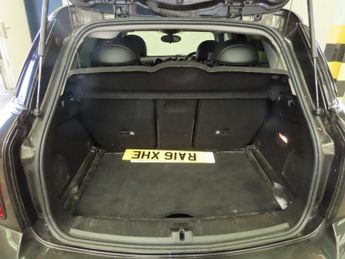
Throughout its history, the Mini Cooper has put driving pleasure and performance above outright practicality and that remains true with this latest car. The three-door hatchback offers just 211 litres of boot space, and although this does rise to 278 litres in the five-door, the capacity remains limited across the range. Things are even more of a squeeze in the electric versions of the car, which provide just 160 litres of space as a result of their additional battery packs.

While the rear seats can be folded flat to create a larger load area, the Mini still falls short of the VW Polo and Audi A1 when it comes to getting things in the back. To try and combat this, the car has been given a number of clever storage solutions in the cabin itself, which include deep door bins and a large central cubby. Despite this, the car still struggles from a practicality point of view, with rear headroom a particular issue, especially in the convertible variant.

MINI Cooper boot space and practicality

Features

In order to compete with many of its tech-focussed competitors, Mini has kitted the Cooper out with a good range of standard equipment throughout the lineup. Even the most basic cars get LED headlights, cruise control, Apple CarPlay, Android Auto, keyless start, and a multifunction steering wheel. Moving up the range, higher trim levels get a number of more premium touches including an improved audio system, wireless charging, adaptive cruise control, and advanced driver assistance features. Electric variants also get EV-specific functions like regenerative braking adjustment, an eco driving mode, and navigation that calculates charging stops for longer journeys.

MINI Cooper feature

Trim and colour options

The latest Mini is available in a number of different trims including Cooper, Cooper S, and John Cooper Works, while the electric car can be bought in Cooper E or SE variants. While all cars offer a good level of tech and comfort, we’d recommend the mid-range Cooper S as the model which offers the best all-round package and value for money. Popular colours include Chili Red, British Racing Green, Island Blue, and Moonwalk Grey. Buyers can also select roofs and mirror caps that are finished in contrasting colours.

MINI Cooper trim and colour

Safety and reliability

Both the petrol and the electric Mini Coopers have a five-star safety score from Euro NCAP, with the specialist body impressed by the cars’ high level of standard safety features. These include autonomous emergency braking, lane departure warning, front and rear parking sensors, and stability control. Higher trims add adaptive cruise control, blind-spot monitoring, and a 360-degree camera system. Historically, reliability has been something of an issue for Mini owners but recent years seem to have put that right. Owners report generally solid build quality and dependable components, though maintenance costs remain slightly higher than many of its rivals.

MINI Cooper safety and reliability

MPG, emissions and tax

Petrol editions of the Cooper can expect to return between 45–52 mpg, while the slightly sportier Cooper S is slightly lower at between 36–40 mpg in combined driving. The E and SE electric versions have a quoted range of 190 and 250 miles respectively, although it is worth noting that cars rarely match their official figures in real-world conditions.

Aside from the zero-emissions electric models, CO₂ emissions range from 120 g/km in standard models up to 150 g/km in the John Cooper Works variant. When it comes to tax, the Mini Cooper broadly mirrors the rest of the premium supermini segment with petrol models falling into mid-range VED brackets. As with all cars priced above £40,000, some higher-spec Minis are subject to the government’s Expensive Car Supplement, which adds an additional £390 per year for five years from the second year of registration.

MINI Cooper MPG, emissions and tax
Browse 2,548 in stock