Specifications

Fuel types
Petrol, diesel, electric
No of seats
5
Boot space
454 litres
Dimensions
4,825 mm x 2,187 mm x 1,973 mm
Fuel economy
20.5-25.7mpg
Acceleration (0-62mph)
4.1-6.4 seconds
Insurance group
50
Body style
SUV
CO2 emissions
290-338g/km
Browse 55 in stock

AA Mechanic review

When buying a used Mercedes-Benz G-Class, check the bodywork, chassis and underside carefully. These cars are built for off-road use, so look for corrosion, damaged suspension parts, worn brakes and signs of hard use, especially with older models. Service history from Mercedes-Benz matters more than price. A well-maintained G-Class can be very rewarding to own, but a neglected one can become expensive quickly.
Jamie Webb
Jamie Webb

Jamie Webb is a Roadside Patrol at The AA, with hands-on experience developed through motorsport, roadside work and practical vehicle maintenance, along with a growing specialism in hybrid and electric vehicles.

Read bio

4.5/5

Repairs

The Mercedes-Benz G-Class is a strong, well-built luxury SUV, but it’s heavy, complex and costly to repair. Most issues on used examples come from wear, age or off-road use rather than serious engine failure.

Common issues include:

• Suspension wear, including bushes, ball joints and shock absorbers with age

• Drivetrain leaks from the gearbox, transfer case or differentials with high miles

• Prop shaft vibration on higher mileage or poorly maintained cars

• Corrosion on really older examples, especially underneath and around the chassis

• Window regulator and door lock actuator faults

• Minor battery drains and occasional electrical faults

• Suspension and drivetrain repairs can range from a few hundred pounds to several thousand, depending on the fault. Corrosion should be dealt with early, as body and chassis repairs can become expensive if left untreated.

Maintenance

Mercedes-Benz G-Class models use scheduled A and B servicing, with service timing shown by the car’s maintenance system. In general, owners should expect annual servicing and should follow the schedule closely, especially on higher mileage cars.

Key maintenance to keep on top of includes:

• Regular oil and filter changes

• Brake fluid changes every 2 years

• Cabin filter replacement as part of major servicing

• Regular suspension and underside checks

• Gearbox, transfer case and differential oil changes around 40,000 to 60,000 miles

• Tyres, brakes, servicing, insurance and fuel are all expensive compared with most SUVs. AMG models cost even more to run, with larger brakes, wider tyres and higher fuel use.

Is the Mercedes G Class a reliable car?

The Mercedes-Benz G-Class is durable at its core, with a strong ladder-frame construction and tough drivetrain. It holds up well when it’s serviced properly and inspected regularly.

After 5 to 7 years, it’s more likely to need attention for suspension wear, drivetrain seals, brakes, tyres and electrical systems. A cared-for G-Class can still feel special and dependable at high mileage, but buyers should budget carefully as it is not a cheap SUV to maintain.

Browse 55 in stock

AA Cars review

The Mercedes G-Class is an icon of the road and if you’re lucky enough to buy one of these premium off-roaders, you’ll be treated to a high-end driving experience which is packed with prestige.
Jack Evans
Jack Evans

Jack is an experienced motoring journalist who has been covering the latest new-car releases for the last 10 years.

Read bio

4.0/5

How much does it cost?

The Mercedes G-Class sits within the upper echelons of SUVs, which is why it commands such a high price tag. For a new G-Class, prices start from £141,065 for the standard diesel-powered model, £154,870 for the electric version and £189,375 for the range-topping AMG performance model.

Switch to the used market and the G-Class does still command a premium, though it’s quite a bit less than a brand-new version. You can find a range-topping AMG G63 model on AA Cars today for £169,995 with 3,000 miles on the clock, while previous-generation cars can be had for just under £50,000, though they get older tech and a less refined driving experience overall.

Engine and performance

Overview

You’ve got three main powertrain pillars with the G-Class - petrol, diesel and electric. Things kick off with the G500, which uses a straight-six petrol engine linked to a nine-speed automatic gearbox. It’s got some light mild-hybrid technology, but fuel efficiency still isn’t the best at 25mpg. Next in the petrol range is the top-whack G63 model, which is an AMG-tuned variant with a 4.0-litre twin-turbocharged V8 engine. It’s the most potent of the lot, but as a result, this will only return around 19mpg, though it’ll also sprint from 0-60mph in 4.2 seconds. Diesel is taken care of in the G450d, which uses a 3.0-litre unit, again linked to a nine-speed automatic gearbox. It’s the least fuel-hungry of the lot and should return just over 31mpg combined.

Then there’s the electric G580. It has an enormous 116kWh battery which, Mercedes claims, will help this model to deliver up to 280 miles from a charge. It is, in electric terms, quite inefficient, however, mainly due to the car’s 3,500kg kerbweight.

Mercedes G Class performance

Out on the road

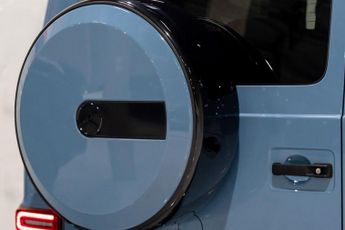
Make no mistake, the Mercedes G-Class is a big car and it’s quite the climb to get up and behind the wheel. However, once you’re there, you’ve got a high and commanding view of the road ahead over the blocky, squared-off bonnet. Parking the G-Class isn’t quite as tricky as you might think, as thanks to the car’s square design, it’s easy to judge where the corners are. However, since the car’s boot is side-hinged, you need to be mindful when reverse parking that you can still open the door wide enough to access the load area.

The latest generation of G-Class made great strides in terms of outright refinement and it’s a far easier car to drive than the model which came before it, too. Petrol-powered cars offer good levels of performance and the diesel feels very refined when you’re motoring along at greater speeds. Electric power suits the G-Class down the ground; it’s got loads of performance but, because of its silent running, makes the whole driving experience feel even more refined.

Mercedes G Class on the road

Ride and handling

As touched upon, Mercedes completely redesigned the G-Class for its latest generation and these changes included re-worked suspension and chassis setups, too. As a result, the latest G-Class steers and turns far more like a traditional SUV than the rather rugged off-roader it was before. That said, with multiple locking differentials, a low-range gearbox and plenty of clever assistance features, the new G-Class will still tackle the muddy stuff with the best of them - and the same goes for the EV, too.

Of course, with such a large, heavy car, it’s to be expected that there’s some lean through the bends. The AMG-tuned G63 is the most focused of the bunch in this respect and with big, powerful brakes, you can still bring the car to a stop quite effectively. The nine-speed gearbox used across the G-Class range is smooth-shifting, too, though you can also take control yourself via steering wheel-mounted paddles.

Mercedes G Class ride and handling

Interior and features

Interiors

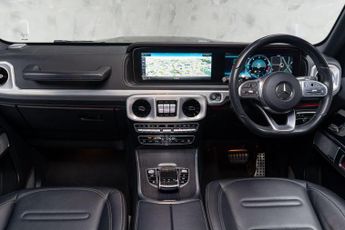
While the exterior of the G-Class might still look pretty old-school, the inside is a far more modern affair. It’ll be recognisable to anyone who has spent a decent amount of time in any current Mercedes models, too, as with its big screen, well-damped buttons and large driver display, it’s very similar to the cabin you’ll find in the latest E- and S-Class cars. That said, there are still some more rugged touches, such as the large grab handles in the middle of the driver and passenger seats that are there to help when you’re off-roading.

Material quality is good overall, though certain models do get a lot of gloss black plastic which attracts fingerprints and dust. Some areas do feel a little bit squeaky under a firm press, too - the area around the main screen springs to mind - but this is counteracted by plenty of solid buttons. It's handy to have dedicated controls for the differentials and suspension located bang in the middle of the dashboard, too, so they’re always within easy reach when you’re heading off-road.

Mercedes G Class interior

Boot space and practicality

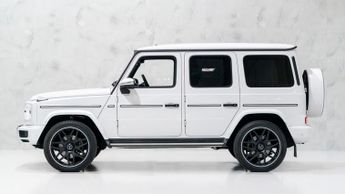
The G-Class is a very large car but, in some areas, it’s not quite as practical as you might think. For starters, it takes quite an effort to get inside so for smaller children or those with mobility issues, it’s going to be a struggle. Room in the back seats isn’t as plentiful as you might think, either. Headroom is good thanks to the car’s boxy shape, but legroom is quite tight and the rear seats themselves are quite upright overall.

Open that side-hinged boot door and you’ve got a boot of 454 litres to play with which, again, isn’t that large considering the overall size of the car. However, load it to the roof and that space expands to 667 litres, though it restricts rearward visibility. You can fold the rear seats down, but they don’t go completely flat - there’s quite a noticeable ‘step’ when they’re folded away, so it’s trickier to load larger items inside.

Mercedes G Class boot space and practicality

Features

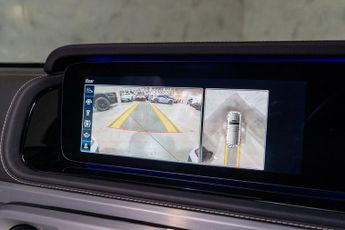
There’s plenty of standard equipment on board the G-Class, with all cars benefitting from a high level of technology. It’s all put together nicely, too, and even the doors have a reassuringly solid feel to them, though you’ll have to get used to slamming them shut - it’s something that Mercedes wanted to retain as a feature carried over from previous generations. Once you’re inside, there’s a large 12.3-inch infotainment system and a driver display of the same size, but they’re housed underneath one section of glass to give the appearance of a full wraparound screen.

All cars get keyless entry as standard, too, and a neat feature for those that like to bring refreshments on the go - a heated and cooled cupholder. All cars get wireless smartphone charging as standard, too, as well as a premium Burmester sound system.

Mercedes G Class feature

Trim and colour options

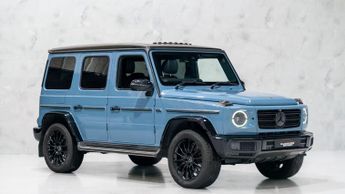
Currently, standard G-Class models are only available in AMG Line Premium Plus specification, which brings a high level of standard equipment throughout. Those twin screens as included on all grades, are the multiple off-road features such as lockable differentials and a low-range gearbox for better ability across difficult terrain. The AMG G63 model, meanwhile, also has Carbon Edition, Manufaktur Edition and Magno Edition grades to choose from, which bring tweaks to the exterior and interior trim. Magno Edition, for instance, gets a factory-applied satin paint scheme and extra carbon fibre throughout.

You’ve got a huge number of exterior colours to choose from, too, ranging from classic greens and blues to more eye-catching yellows.

Mercedes G Class trim and colour

Safety and reliability

As a large SUV, the Mercedes G-Class certainly has outright size on its side in terms of safety, but it incorporates many other safety-focused features beyond that. All cars get active lane keep assist as standard, as well as traffic sign recognition. The Mercedes-Benz emergency call system - which automatically dials the authorities if the car detects a collision - is included on each car, too.

The G-Class is seen to be a reliable vehicle overall, mainly down to its high level of engineering and tried-and-tested engines. The technology inside has also been used on multiple Mercedes models, so they’re unlikely to go wrong. However, if any repairs do crop up, they’re likely to be expensive to sort.

Mercedes G Class safety and reliability

MPG, emissions and tax

Whichever model of G-Class you opt for, it’s going to prove expensive to run. The only car which flies in the face of this is the electric model - take advantage of cheap home electricity rates through an EV-friendly energy tariff and you could power it for a fraction of what it’d take to fuel up a petrol or diesel version. That said, you’ll need somewhere to reliably charge if you’re looking into this option.

As mentioned, nearly all combustion engine versions will struggle to break 40mpg and emissions are high across the board, too. With all cars sitting within band 50 for insurance, premiums are likely to be high as well. Given that all Mercedes G-Class cars will cost over £40,000 when new, you’ll need to pay the additional Expensive Car Supplement for the first five years of registration - it’s an extra £425 per year.

Mercedes G Class MPG, emissions and tax
Browse 55 in stock