Specifications

Fuel types
Electric
No of seats
7
Boot space
495-1,710 litres
Dimensions
4,684mm x 1,834mm x 1,654mm
Fuel economy
265-324 mile range WLTP (EV)
Acceleration (0-62mph)
8.9 - 8.0 seconds
Insurance group
43-50
Body style
SUV
CO2 emissions
0 g/km (electric)
Browse 154 in stock

AA Cars review

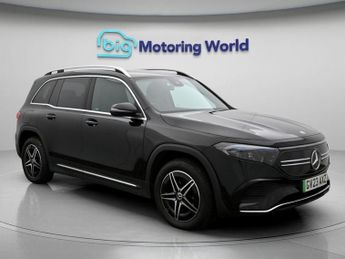
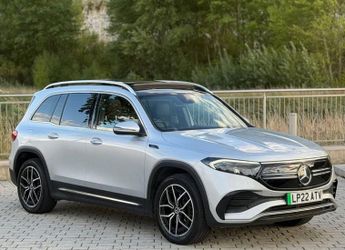
Once deemed a popular option in the seven-seat SUV market, the Mercedes-Benz EQB has now been matched by larger electric models from the likes of Kia, Hyundai and Volvo. While the EQB can still hold its head high, it is expensive to buy new and feels like a vehicle that the German marque is slowly phasing out in favour of improved battery technology and new dedicated electric architecture.
Jack Evans
Jack Evans

Jack is an experienced motoring journalist who has been covering the latest new-car releases for the last 10 years.

Read bio

3.5/5

How much does it cost?

The current line-up starts at £52,800 for the Sport Executive EQB 250+, which offers between 293 and 324 miles of electric range (WLTP). Prices rise to £55,310 for the EQB 300 4MATIC in AMG Line Executive trim.

The most expensive model is the EQB 300 4MATIC in AMG Line Premium Plus trim, which sees the all-electric range drop to between 265 and 271 miles (WLTP), while the price rises to £60,910.

Thankfully, there are plenty of excellent used examples available on AA Cars, with very low mileage examples coming in at under £30,000. Like many other electric rivals, residual values aren’t a strong point.

Engine and performance

Overview

The EQB is now offered in two powertrains: a single-motor EQB 250+ with a 66.5kWh usable battery. It develops 190hp and 385Nm of torque that drives the front wheels and can manage the 0-62mph sprint in 8.9 seconds. Top speed is pegged at 99mph.

There is a slightly more powerful all-wheel-drive 4MATIC model that sends power to all four wheels via twin electric motors. It uses the same battery pack but power increases to 228hp and 390Nm of torque. This reduces the 0-62mph sprint to 8.0 seconds, although the top speed remains unchanged.

The EQB 350 4MATIC can’t be bought new, but earlier UK models delivered the highest power output, with 288hp and 520Nm of torque on tap. It sees acceleration times drop to 6.2 seconds from rest to 62mph.

It’s not exactly the most potent electric vehicle around, but there’s enough torque to ensure the EQB gets up to speed briskly, even when fully loaded with kit.

However, Mercedes-Benz only offers 400V architecture on the EQB, which means DC fast-charging peaks at 100kW. The company claims it can charge from 10-80% in around 32 minutes from a 100kW DC outlet, which lags some way behind the latest 800V competition.

Mercedes EQB performance

Out on the road

It is difficult to get away from the fact that the EQB is essentially a big, heavy box on wheels and, as a result, it doesn’t exactly handle with the poise and grace of a sports car.

There’s enough low-down torque to propel the mammoth SUV off the line in surprisingly brisk fashion, but you won’t want to be pinning the throttle for too long, as it feels large and unwieldy when tackling corners at speed.

Take it easy and the EQB transforms into a quiet, comfortable cruiser with enough room inside for even larger families. The cabin is hushed, while the suspension does a great job of isolating those inside from rutted road surfaces.

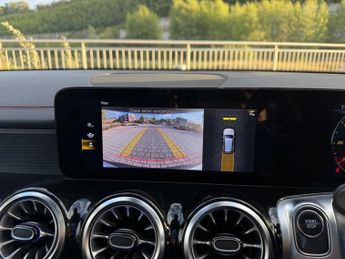
It’s also very easy to drive, with simple controls, light steering and a plethora of driver aids making it straightforward to navigate through busy traffic and park.

Mercedes EQB on the road

Ride and handling

Like the rest of Mercedes’ EQ range, ride quality is a strong point and even when optioned with the larger 20-inch wheels, the EQB manages to steamroller potholes and imperfections.

The cabin is a pleasant place to rack up the motorway miles, with only a whiff of wind noise around the chunkier pillars.

When driven sensibly, the EQB really shines as a comfortable family wagon, but it’s not going to be exciting when the roads get interesting. There is very little feel through the brake pedal and the sheer mass of the EV rears its ugly head through faster bends.

Mercedes does offer some excellent regenerative braking technology that essentially slows the vehicle by simply lifting off the accelerator pedal.

The amount of regenerative braking can be adjusted manually or left in an ‘Auto’ mode, where it uses sensors to detect a car slowing ahead and automatically applies more braking force.

Mercedes EQB ride and handling

Interior and features

Interiors

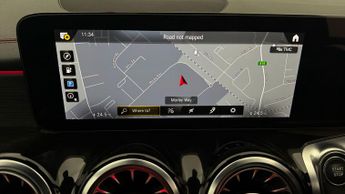
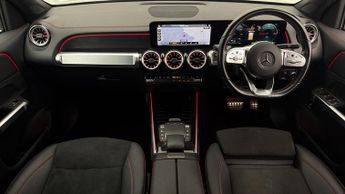
A mid-life facelift in 2023 introduced updated lighting signatures and the latest Mercedes-Benz MBUX infotainment system, which includes improved voice control integration.

The screens are sharp, simple to use and plentiful, although they aren’t quite as expansive and impressive as those found in the Mercedes-Benz EQE saloon, for example.

What’s more, the updated steering wheel swapped physical buttons for haptic-touch counterparts that are very easy to accidentally brush when driving, inadvertently changing a radio station or adapting the cruise control, for example.

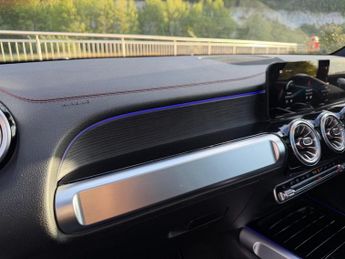
The remainder of the cabin is finished to a high level, with dash fascias that are festooned in the Mercedes three-pointed star, aluminium-effect air outlets and contrast stitching on most of the fabric surfaces.

However, where Mercedes-Benz used to be the last word in premium seven-seat electric SUVs, there’s now fierce competition from Kia and Hyundai, which both offer larger vehicles with clean and well-finished cabins, although these are generally pricier.

Mercedes EQB interior

Boot space and practicality

The upright, squared-off design might not be the most chic or desirable on the market, but it does a great job of maximising interior space. There’s plenty of leg and headroom throughout the cabin for taller occupants, although the second row is a little tight for three adults to sit abreast.

An additional third row, consisting of two seats, is located where the boot space would typically reside, but these have been mounted slightly higher than the second row. It makes headroom a little tight for larger occupants, but means children can still see out comfortably.

Boot capacity stands at 495 litres with five seats in place and 465 litres in seven-seat configuration. With all rear seats folded, capacity rises to a maximum of 1,710 litres.

Mercedes EQB boot space and practicality

Features

Mercedes-Benz has slimmed down the number of trim levels and options available on the EQB in a bid to simplify its range. To begin with, there’s a choice of two powertrains: EQB 250+ and EQB 300 4MATIC.

The front-wheel-drive 250+ is available in Sport Executive trim, which sees 18-inch alloy wheels, LED headlamps and twin 10.25-inch displays running the MBUX infotainment system come as standard.

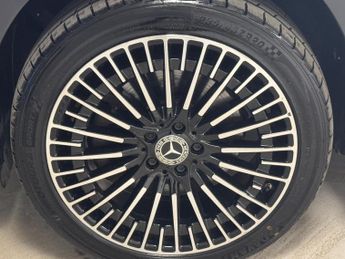
An AMG Line Executive level, which is available for both powertrains, adds 19-inch wheels and AMG body styling, alongside aluminium sports pedals and other cosmetic upgrades. There’s also an Urban Edition, which sees the roof rails painted in a contrast colour and unique alloy wheel designs introduced.

The most expensive AMG Line Premium and Premium Plus models come bestowed with additional comfort and assistance features, including a powered tailgate, heated steering wheel, head-up display and a Burmester sound system.

Mercedes EQB feature

Trim and colour options

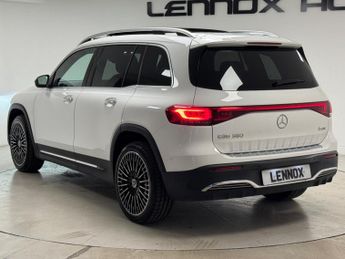
Mercedes-Benz offers a range of colours across the EQB model spectrum, although metallic finishes are generally optional extras. It can be specified in white, red, Spectral Blue Metallic and various shades of grey and black.

Inside, there is a mix of man-made leather and microfibre upholstery depending on the trim level, as well as the choice of open-pore wood trims in higher specifications.

The various model lines adapt the exterior look slightly, with the AMG Line vehicles appearing the sportiest thanks to revised bumpers and larger alloy wheels.

Mercedes EQB trim and colour

Safety and reliability

As with much of the Mercedes-Benz electric line-up, Euro NCAP awarded the EQB a full five-star safety rating when it was tested in 2021, with particularly strong scores for adult occupant protection.

The EQB benefits from a comprehensive suite of driver assistance systems, including autonomous emergency braking, blind-spot monitoring and adaptive cruise control as standard on most UK models.

The German marque has a patchy reputation for customer satisfaction, given the lofty amounts charged by many dealerships for repairs and servicing. The EQB is still relatively young, so long-term reliability data remains limited.

Mercedes EQB safety and reliability

MPG, emissions and tax

Range is one of the factors that lets the EQB down and likely a contributor to the fact that it is being phased out in a number of markets.

The most efficient EQB 250+ models manage up to 324 miles (WLTP) on a single charge, while the dual-motor 300 4MATIC returns between 265 and 271 miles depending on specification.

It also features a 400V electrical architecture, which means that it can charge at a maximum rate of 100kW DC.

There is nothing in the way of tailpipe emissions, which means it falls into the zero-emissions bracket for Benefit-in-Kind taxation. However, as of April 2025, electric vehicles are subject to the standard VED rate, currently £190 per year, after the first year.

Mercedes EQB MPG, emissions and tax
Browse 154 in stock