Specifications

Fuel types
Petrol, diesel, mild-hybrid, plug-in hybrid
No of seats
5
Boot space
647 litres
Dimensions
4,946mm x 2,047mm x 1,820mm
Fuel economy
24-388.6 mpg
Acceleration (0-62mph)
3.7-7.3 seconds
Insurance group
44-50
Body style
SUV
CO2 emissions
16-267g/km
Browse 856 in stock

AA Mechanic review

When buying a used Range Rover Sport, choose on condition and history rather than price alone. Look for full-service records, no warning lights, smooth gearbox operation, and no signs of oil leaks, coolant leaks, air suspension faults or timing chain noise. A pre-purchase inspection, such as an AA vehicle inspection, is worth considering before you buy a used Range Rover Sport.
Alex Gur
Alex Gur

Alexander Gur is a Roadside Patrol at The AA, with more than 20 years of hands-on experience across garage and roadside roles, as well as a strong personal interest in performance cars.

Read bio

4.5/5

Repairs

Older or higher mileage Range Rover Sport models need a careful check, especially if servicing has been missed.

Common areas to look at include:

• Air suspension leaks, compressor faults or uneven ride height

• Coolant leaks from pipework, pumps or related components

• Oil leaks from seals or gaskets

• Timing chain rattle, especially on poorly maintained engines

• Diesel particulate filter issues on diesel models used mainly for short trips

• Brake and tyre wear due to the car’s weight

• Electrical or infotainment glitches, often linked to software or a weak 12-volt battery

• Damage or wear caused by off-road use

The 3.0-litre diesel suits the car well, with strong torque and good long-distance ability. Petrol models feel more powerful and refined, while the SVR has much higher fuel, tyre and brake costs.

Maintenance

Regular maintenance is vital on a Range Rover Sport. Oil changes every 7,500 to 10,000 miles are a sensible approach, especially on older cars. Transfer box and differential fluids should not be ignored either, as drivetrain repairs can be costly.

Typical maintenance to stay ahead of includes:

• Oil and filter changes every 12 months

• Air and fuel filter replacement at the correct interval

• Brake fluid changes when due

• Transfer box and rear differential oil replacement

• Gearbox oil and filter servicing, every 50,000 to 75,000 miles on higher mileage cars

• Timing belt or chain maintenance, depending on engine

• Regular checks for oil and coolant leaks

• Brake, tyre and suspension inspections at every service

• Software updates for infotainment, sensors and driver assistance systems

Running costs are high. Insurance, tyres, brakes and servicing are the main items buyers often underestimate. Plug-in hybrid versions also need checks on the high-voltage system and charging performance.

Is the Land Rover Range Rover Sport a reliable car?

A well-maintained Range Rover Sport can cover high mileage and still feel strong. Problems are more likely when servicing has been skipped, particularly after many years. The best examples have full history, no leaks, no warning lights, smooth gearbox changes and level suspension.

Browse 856 in stock

AA Cars review

With its high-end finish and sumptuous cabin, the Range Rover Sport remains one of the go-to premium SUVs on the market today. A new plug-in hybrid version has added some much-needed efficiency into the mix, too.
Jack Evans
Jack Evans

Jack is an experienced motoring journalist who has been covering the latest new-car releases for the last 10 years.

Read bio

4.0/5

How much does it cost?

As a premium SUV, it’ll come as little surprise that the Range Rover Sport commands quite a premium. Prices start at £76,350 for a standard ‘S’ model, but you can go as high as £165,045 for a range-topping SV version in striking Carbon Black trim. Of course, there’s a wealth of optional extras to choose from, but these quickly crank the Sport’s price up further.

Switch to the used market and while prices remain high, there are some savings to be made - though values have remained strong given the recent cyber attack which has resulted in longer-than-usual lead times for new cars. For example, on AA Cars, you can currently get a hybrid P460e model in high-end Autobiography trim for £97,500 with 11,252 miles on the clock - a decent saving over the £104,830 you’d pay for a brand-new model.

Engine and performance

Overview

All of the engines available with the Range Rover Sport have been designed to provide refined performance. Things kick off with diesel mild-hybrids, which get a small amount of electrification to help with emissions and overall efficiency. You’ve got D300 and D350 diesels, which both use a 3.0-litre straight-six unit and are linked to an eight-speed automatic gearbox. They’re popular options due to their combination of performance and efficiency.

A new addition is the P550e and P460e plug-in hybrids, which use a 3.0-litre straight-six petrol and a compact electric motor and battery. You can get up to 72 miles of electric-only range from these models, in fact, and emissions are super-low, too.

At the top of the range are the V8s. There’s the P550 and its 4.4-litre twin-turbocharged V8 with 523bhp, or there’s the range-topping SV model, which uses the same engine but gets an impressive 626bhp.

Land Rover Range Rover Sport performance

Out on the road

It’s a quiet and refined experience behind the wheel of the Range Rover Sport. With its well-judged suspension and isolated road and wind noise, the Sport is the kind of car that you’d be happy to spend many a mile driving. All of the engine options afford the Sport with a decent amount of performance and while there is something satisfying about the burble of a V8 engine, we’d argue that, for most people, the diesel-powered models will likely be the most attractive.

You do sit nice and high in the Range Rover Sport, too, so you get a commanding view of the road ahead. However, you don’t feel too ‘on top’ of the car, so there’s none of that ‘floating’ feeling that you sometimes get from larger SUVs.

Land Rover Range Rover Sport on the road

Ride and handling

Is it just Sport by name, though? Not quite. It’s easily the most dynamic of all the Range Rover models, with good road-holding ability and well-controlled body roll. The range-topping SV model gets clever cross-linked suspension, too, which allows it to remain flat even when cornering at greater speeds. It really is a feat of engineering and one well worth experiencing.

All versions of the Range Rover Sport ride on air suspension as standard and this system does a great job of ironing out the road ahead. Remember, too, that despite its more road-going focus, the Sport still gets plenty of off-road technology with different modes designed to help this car tackle a variety of conditions.

Land Rover Range Rover Sport ride and handling

Interior and features

Interiors

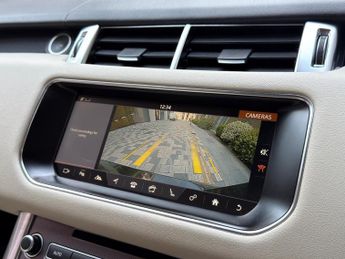
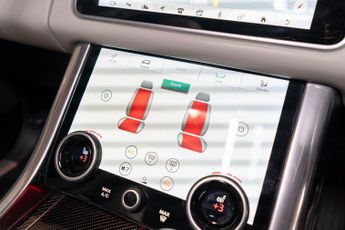
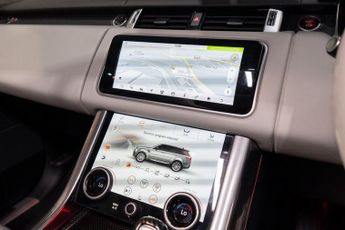
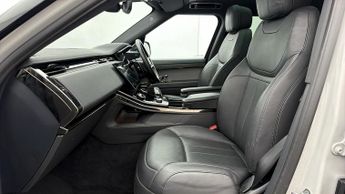
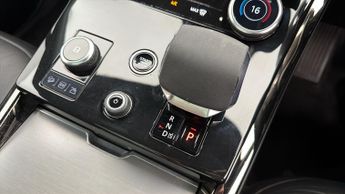
Step inside the cabin of the Range Rover Sport and you’ll be met by lots of high-end materials and a good level of fit-and-finish. The front seats are supremely comfortable and offer plenty of adjustability, too, so both driver and passenger can get into the right position straight away. The forward part of the cabin is focused around JLR’s ‘Pivi Pro’ infotainment system, but it’s nicely integrated into the dashboard and doesn’t feel too ‘stuck on’.

There’s plenty of technology on offer throughout the cabin, too, with a good swathe of charge points available to top up devices. We also like the dual cupholders integrated into the fold-down rear armrest, so back-seat passengers can keep their drinks secure when you’re on the move.

Land Rover Range Rover Sport interior

Boot space and practicality

The Range Rover Sport is a large car, so it’ll not come as much of a surprise that it offers lots of space both inside and out. Within the cabin, you’ll find large door bins ideal for those loose items, while a dual-opening glovebox is another handy feature. Seat-back pockets are a useful addition in the back area of the car, too.

You’ve got a handy 647 litres of boot space, accessed via a powered tailgate which is standard on all models. Thankfully, there’s no space penalty when opting for the plug-in hybrid model, as it gets the same-sized boot as other ‘regular’ versions, too. Drop the rear seats and you can increase overall boot capacity to 1,491 litres, too.

Land Rover Range Rover Sport boot space and practicality

Features

All versions of the Range Rover Sport come well-equipped as standard, so you’re unlikely to feel short-changed in terms of equipment regardless of the specification. Entry-level ‘S’ models get features such as a heated steering wheel and dual-zone climate control, as well as a 13.1-inch infotainment system with both Apple CarPlay and Android Auto included as standard.

Step up to SE for upgraded headlights - among other features - and Dynamic SE for a full ‘Dynamic’ bodykit which gives this model a sportier flavour overall. Autobiography is the highest grade outside of SV performance models and receives an upgraded Meridian sound system and 22-way adjustable, heated and ventilated seats, among other features. SV models then focus more on performance and get a range of mechanical upgrades to suspension, brakes and drivetrain.

Land Rover Range Rover Sport feature

Trim and colour options

The Range Rover Sport is available with a good range of specifications and, as is fitting with its premium approach, can be personalised in a range of ways, too. Entry-level S cars bring a lot of equipment for a ‘base specification’ model, mind you, with 20-inch wheels, LED headlights and full leather upholstery included as standard.

SE cars upgrade this with high-performance Pixel LED headlights and 21-inch wheels, while Dynamic SE cars get 21-inch alloy wheels and the full ‘Dynamic Exterior Pack’ for a more purposeful look. Autobiography, meanwhile, gets all of the toys you could really want, including 22-inch wheels, digital LED headlights and front seats which even include a massage function. These cars also get ventilated power recline rear seats, so even those sitting in the back can get a five-star experience.

SV performance models benefit from a full exterior design pack upgrade, as well as upgraded brakes, clever ‘6D Dynamics’ for cross-connected suspension and illuminated metal treadplates with ‘SV’ logos applied.

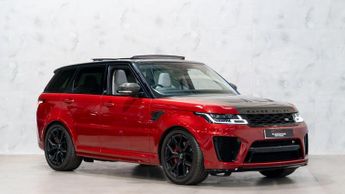
There are loads of exterior colours to choose from, too, including classic greens and vibrant reds. Plus, there’s the option to have the roof finished in either black or the same colour as the body.

Land Rover Range Rover Sport trim and colour

Safety and reliability

The Range Rover Sport is equipped with a broad number of safety assistance systems to help keep things as secure as possible. It’s why you’ll find Emergency Braking standard on all models, as well as lane keep assist, blind spot assist and traffic sign recognition. There’s also a driver monitoring and response system, which can spot signs of fatigue in the driver and can issue an alert if it worsens.

The Range Rover Sport does have a mixed track record when it comes to reliability, with some issues arising regarding the car’s electrical components, as well as engine problems. It’s not an all-covering issue, mind you, so it’s worth getting your Sport regularly serviced and maintained to keep it at its best.

Land Rover Range Rover Sport safety and reliability

MPG, emissions and tax

The good news with the Range Rover Sport’s engine range is that there’s something for everyone. SV models, with their turbocharged 4.4-litre V8, will be the thirstiest and most costly to run; JLR claims 24mpg for these models but, in reality, it’s likely to be significantly worse than that. Emissions of 267g/km CO2 aren’t as high as you might expect, mind you.

The 3.0-litre diesel cars strike a good balance between performance and efficiency, too. The D300 has a claimed fuel efficiency of just over 38mph, which is quite respectable for a car of this size. Emissions of 191g/km CO2 aren’t too bad, either.

Then, there’s the plug-in hybrid, which is the most electrified of the bunch. Given that it can travel for up to 72 miles on electric-only power, it’s the model with the greatest scope for low running costs, while CO2 emissions of just 16g/km mean it’ll be the cheapest to tax, too. It’ll no doubt be a big hit with company car owners, too. Bear in mind that all Range Rover Sports will incur the Expensive Car Supplement for the first five years after registration, given that they all cost over £40,000 when new.

Land Rover Range Rover Sport MPG, emissions and tax
Browse 856 in stock