Specifications

Fuel types
Mild-hybrid petrol/diesel, plug-in hybrid, petrol
No of seats
5 - 7
Boot space
818 litres
Dimensions
5,052 mm x 2,209 mm x 1,870 mm (SWB)
Fuel economy
20 - 382.4 mpg
Acceleration (0-62mph)
4.4 - 6.5 seconds
Insurance group
50+
Body style
SUV
CO2 emissions
18 - 250 g/km depending on variant
Browse 495 in stock

AA Cars review

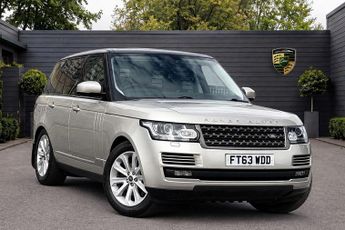
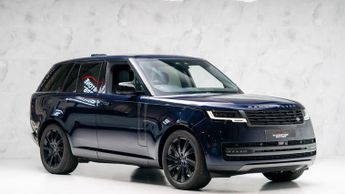
The latest Range Rover represents luxury SUV motoring at its most effortless. It glides along motorways in near-silence, cossets passengers like a high-end lounge, and still offers more off-road ability than almost any rival — even if most owners will never use it. It isn’t cheap to buy or run, and it’s not the easiest car to thread through tight city streets, but as a complete package of comfort, prestige and capability, the Range Rover remains one of the most desirable SUVs in the world.
Jack Evans
Jack Evans

Jack is an experienced motoring journalist who has been covering the latest new-car releases for the last 10 years.

Read bio

4.3/5

How much does it cost?

Prices for the current-generation Range Rover start at £105,675 for the entry-level SE model, with the range-topping SV Black getting underway at £188,025. There are a number of different trim levels in between these with prices increasing gradually as you move up the range, but whatever you go for, be prepared to sign a hefty cheque. According to the configurator on Jaguar Land Rover’s website, the cheapest price for a plug-in hybrid model is £115,915.

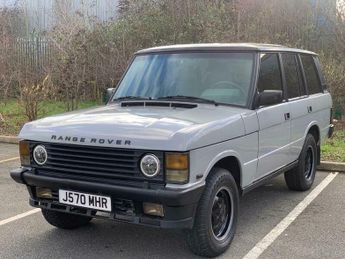
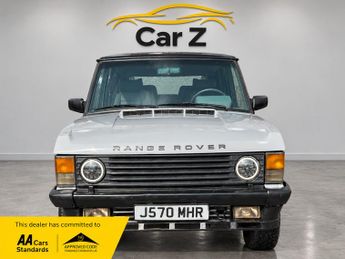
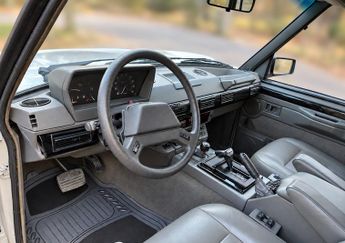
If you are interested in searching the used market for better value, early examples of the current generation Range Rover, from 2022 and 2023, kick off at around the £85,000 mark on AA Cars, rising to over £100,000 for more recent, high-trim cars with low mileage. If you do have your heart set on a Range Rover, but those prices are still beyond you, then don’t get too downbeat, as older generations can be picked up for as little as £4,000, depending on age and condition.

Engine and performance

Overview

As the automotive industry becomes more environmentally-friendly, so too has Land Rover. As such, the brand now offers the Range Rover with a broad choice of engines and powertrains, designed to meet your every need. For those wanting to do their bit for the planet and keep fuel costs lower, there is a choice of mild-hybrid petrol and diesel options, while a full plug-in hybrid also combines strong performance with significantly reduced emissions and a boosted electric-only range.

Elsewhere, there remains a high-performance V8 petrol option at the very top of the range, which offers more of the traditional grunt from Range Rovers of years gone by. There are two diesel options, available as mild-hybrids, which are both smooth with a good level of torque. This makes them ideal for long-distance cruising, along with the mild-hybrid petrol choices, which are even quieter and more refined. The PHEV options combine a 3.0-litre petrol engine with a powerful electric motor and a large battery pack, meaning that the car can travel up to 70 miles on electric power alone. Meanwhile, the sportier V8 is the brute of the group, with a 0–60 mph time of just 4.4 seconds in a car which can have a kerb weight of as much as 2.8 tonnes.

Land Rover Range Rover performance

Out on the road

Ever since it first appeared on British roads in the 1970s, the Range Rover has aimed to put comfort, style and luxury at the heart of its offering. This latest car is no different, with air suspension, active noise cancellation and improved body rigidity contributing to an utterly serene driving experience. While its size is a drawback in town – even with four-wheel steering – once you get the car out onto the motorway it wastes no time in settling into a quiet and composed rhythm.

Wind and tyre noise are kept to an absolute minimum, and all engines offer smooth, speedy and effortless propulsion. The relaxed atmosphere is only helped by the refined 8-speed automatic gearbox, which offers faultless changes every time. If there is a trade-off for all this luxury, it is perhaps a lack of agility on tighter, bendy country roads. It’s not bad by any means, but it does lack the sportiness and accuracy of a BMW X7 or Porsche Cayenne.

Land Rover Range Rover on the road

Ride and handling

This is the Range Rover’s bread and butter. The latest car builds on its predecessors’ status as the most comfortable car around and continues to deliver a ride that few can match – even at such a premium price point. The suspension has very much been set up for comfort, and with air springs to absorb bumps, potholes and rough surfaces with minimal fuss, there is very little which can disrupt the quality of the ride. Even at high speeds, the Range Rover remains stable, secure and smooth.

While there is a small amount of body roll if you’re trying to throw the car aggressively around corners, the adaptive suspension and clever roll-control systems are quick to step in and prevent things from getting out of hand. The car is even brilliant off-road, especially when compared to many of its modern-day rivals, meaning the Range Rover really is a car for all conditions.

Land Rover Range Rover ride and handling

Interior and features

Interiors

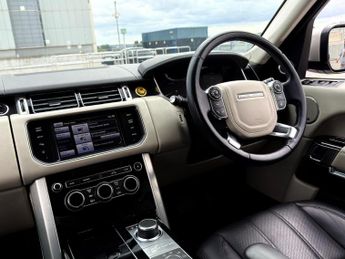
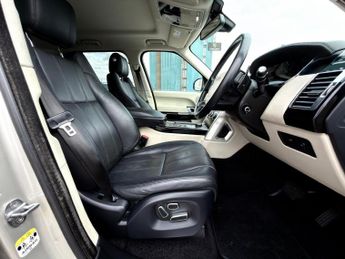
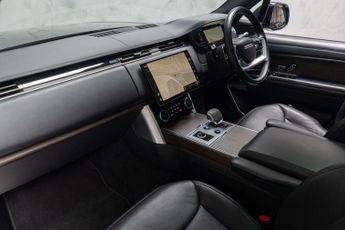
Stepping inside the Range Rover, you can feel the craftsmanship that has gone into perfecting the cabin space. The design is clean and beautifully executed, with high-quality materials used throughout. Everywhere you look there are lashings of leather, real wood veneers, brushed metals and soft-touch surfaces. While this all gives the car an incredibly premium feel, Land Rover also has one eye on environmental factors and offers a choice of sustainable fabric upholstery to provide a modern, eco-conscious alternative.

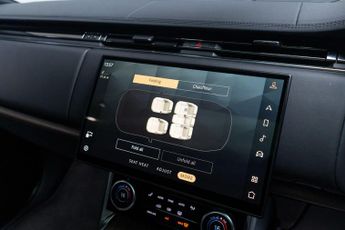
Up front, there is a 13.1-inch central touchscreen, that is clear and responsive, despite being more fiddly than traditional physical controls. There is also a large digital driver display, mounted behind the steering wheel, for displaying extra information. Wherever you are sitting in the car, comfort is exceptional. The front seats offer extensive heating, cooling and massage functions while passengers in the rear enjoy luxury-hotel levels of relaxation and space, with reclining chairs, individual climate zones and optional executive rear seating.

Land Rover Range Rover interior

Boot space and practicality

With up to 818 litres of space behind the second row, the Range Rover offers one of the largest and most usable boots in the class. It also comes with the brand’s signature split tailgate for increased practicality, which can also be used as a makeshift seat or table when parked up.

Despite the car’s height, loading things into the boot is made easier by power-assisted lowering suspension, which can bring the boot down to your level. Inside the cabin itself, the car’s vast size means that practicality is another strength, with large door bins, deep storage compartments and multiple charging points. There are even the options of a centre console fridge and – for bigger families – an additional two seats in the rear.

Land Rover Range Rover boot space and practicality

Features

Unsurprisingly for a car at this price point, standard equipment is generous regardless of which trim level you go for. All models get a digital driver display, large touchscreen, wireless Apple CarPlay and Android Auto, LED headlights, air suspension, a 3D camera system and extensive driver-assistance features. As you move up the range, further luxury touches, including a panoramic roof and Meridian surround-sound audio become available as standard, too.

Land Rover Range Rover feature

Trim and colour options

The Range Rover is available in several trim levels: SE, HSE, Autobiography, SV and SV Black, with all models available in a choice of short or long-wheelbase forms – the latter of which has the option of seven seats. For most drivers, even the basic SE and HSE cars offer incredible levels of style, comfort and tech, but those looking for a sportier edge may want to consider the V8 SV Black. Popular colour choices include Santorini Black, Fuji White, Hakuba Silver, Portofino Blue, Carpathian Grey, Sunset Gold, Charente Grey and Ostuni Pearl White.

Land Rover Range Rover trim and colour

Safety and reliability

If the Range Rover does have a weakness, then reliability is probably it. Jaguar Land Rover has endured a poor reputation in this department for many years, with the Range Rover regularly featuring at the wrong end of owner surveys. Parts and repairs are also expensive, so it’s definitely worth being prepared for the worst. From a safety point of view, the latest car comes equipped with an extensive collection of driver-assistance systems, including autonomous emergency braking, lane-keeping assist, blind-spot monitoring, adaptive cruise control, and a surround-view camera system that helps offset the vehicle’s size.

Land Rover Range Rover safety and reliability

MPG, emissions and tax

Despite Land Rover attempting to make the Range Rover more eco-friendly, it still represents a thirsty choice when it comes to petrol. Some petrol variants can offer as little as 20 mpg, although this does rise to around 35 mpg on mild hybrid diesel cars. While the plug-in hybrid model can technically achieve 382.4 mpg, in the real world that is expected to be closer to 60 mpg. CO₂ emissions range from 18 g/km for PHEV models (PHEV) to around 250 g/km if you go for a V8 petrol engine. Buyers should also be aware that as a premium model, the Range Rover is subject to the government’s Expensive Car Supplement, which costs an extra £425 a year for five years, applied from the second year of registration.

Land Rover Range Rover MPG, emissions and tax
Browse 495 in stock