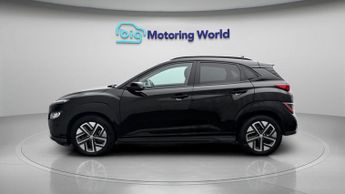
Specifications

Fuel types
Petrol, hybrid and pure electric
No of seats
5
Boot space
466 litres (petrol/hybrid), 466 litres (electric)
Dimensions
4,355mm x 1,825mm x 1,575mm (EV height 1,585mm)
Fuel economy
up to 60.1mpg (hybrid) and up to 319 miles WLTP range (electric 65.4kWh)
Acceleration (0-62mph)
7.8 – 13.0 seconds (0–62mph)
Insurance group
12–29 (model dependent)
Body style
SUV
CO2 emissions
0–141g/km
Browse 678 in stock

AA Cars review

Hyundai no longer sits at the budget end of the spectrum and there are cheaper compact SUVs out there, but the Kona’s blend of generous interior kit, a well-appointed cabin and levels of everyday practicality mean it should be at the top of most shopping lists. Despite offering a broad mix of powertrains, the battery electric vehicle is the smoothest, quietest and most enjoyable to drive. If you can plug in at home, it makes the most sense.
Jack Evans
Jack Evans

Jack is an experienced motoring journalist who has been covering the latest new-car releases for the last 10 years.

Read bio

4.0/5

How much does it cost?

The latest generation Kona starts at around £26,900 for the entry-level Advance 1.0-litre T-GDi petrol models, with prices increasing to around £29,000 for the more powerful 1.6-litre petrol with automatic transmission. Petrol models top out at just over £33,000 in higher N Line S trims, while Hybrid models start at around £30,000 and rise to approximately £35,000 depending on specification. Pure electric models are naturally the most expensive, with UK prices starting from around £34,995 for the 48.4kWh Advance model and reaching beyond £39,000 for 65.4kWh N Line S variants. Despite being relatively new, there are used examples appearing on the market, with early 2023 petrol and electric models typically starting from around £19,000–£21,000 depending on mileage and condition.

Engine and performance

Overview

There is a good choice of pure petrol, self‑charging hybrid and pure electric on offer, which means there should be a Kona to suit all requirements and lifestyles. That said, only the pure electric version feels like it has the most usable power, given that the 65.4kWh battery model’s 150kW (220hp) motor produces 255Nm of torque and is punchy enough to deliver a 0–62mph dash of just 7.8 seconds. The 1.0‑litre T‑GDi petrol engine, with its 120hp and 172Nm of torque, feels very underpowered when the vehicle is fully loaded, while stepping up to the 1.6‑litre petrol unit with 138hp and 265Nm of torque improves things slightly — and you can specify it with an automatic gearbox if needed.

Finally, there’s a self‑charging hybrid option that pairs the same 1.6‑litre naturally aspirated petrol engine with a small electric motor and battery, producing a combined output of 141hp with 265Nm of torque. However, because this is a conventional hybrid, you can’t plug it in to charge; the electric motor merely helps to boost acceleration and improve efficiency, with Hyundai quoting up to 60.1mpg on the WLTP combined cycle.

Hyundai KONA performance

Out on the road

As previously mentioned, the Hyundai Kona is about as far removed from a sports car as you can get, with the 1.0-litre turbocharged petrol engine feeling particularly strained when the vehicle is fully loaded. Although the manual gearbox is slick and pleasant to use. The hybrid helps smooth things out around town, although the extra boost from the electric motor is modest once up to motorway speeds and the automatic transmission can feel hesitant at times. The pick of the bunch is the pure electric model because it is simply easy to drive, offers strong mid-range acceleration and delivers its power in the smoothest manner.

Hyundai KONA on the road

Ride and handling

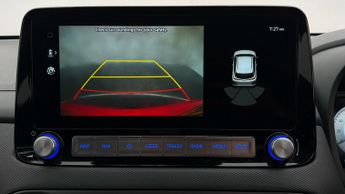
Hyundai has traditionally favoured a comfortable and practical driving experience over outright excitement and the Kona follows that same pattern. The steering is light and responsive, making it very easy to navigate busy streets and car parks, while the brakes are strong and progressive. Visibility is good all around, and Hyundai includes parking sensors and a reversing camera across most trims. The petrol engines can get noisy at higher revs, particularly the 1.0-litre turbo, but otherwise the Kona remains composed and comfortable on the uneven surfaces common on UK roads. Suspension is tuned towards comfort, absorbing bumps well without upsetting passenger comfort. Interior and features

Hyundai KONA ride and handling

Interior and features

Interiors

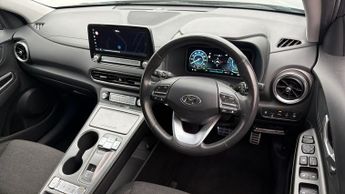
Step inside the Kona and some of the interior plastics feel a touch hard, but they are durable and logically arranged, with large, intuitive buttons for primary functions. Controls are responsive and tactile, while the latest touchscreens are fast and smooth to operate. Seats are comfortable across the range, becoming increasingly supportive and upholstered in higher-quality materials as you move up the trims. The overall build feels robust, if not particularly luxurious, with a cabin designed for everyday practicality rather than flair.

Hyundai KONA interior

Boot space and practicality

The Kona’s boot offers 466 litres of space with the rear seats upright, which is competitive for a compact SUV and better than some rivals such as the Vauxhall Mokka and Kia Niro. Folding the rear seats increases capacity to approximately 1,300 litres. Rear seat passengers benefit from adjustable backrests and sliding seats to balance comfort and cargo space. USB-C charging ports are positioned throughout the cabin for convenience.

Hyundai KONA boot space and practicality

Features

Even the entry-level Advance trim comes with a 12.3-inch central touchscreen offering Apple CarPlay and Android Auto, built-in navigation, parking sensors, and a reversing camera. Higher trims such as N Line and N Line S add heated seats, heated steering wheel, and a powered tailgate, while Ultimate trims offer Alcantara seat trim, premium Bose audio, and additional driver aids. Electric models come with reclining front seats that can fold almost flat, useful for charging stops or brief rests.

Hyundai KONA feature

Trim and colour options

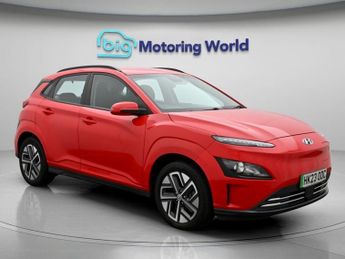
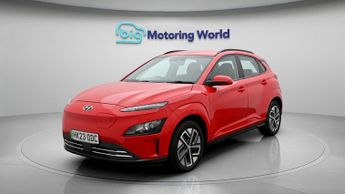
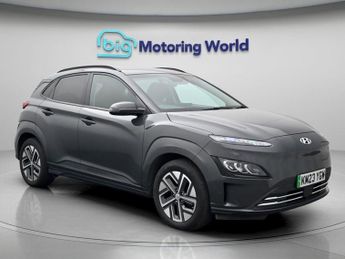
Exterior colours include relatively muted shades such as Mirage Green, Cyber Grey, and Ultimate Red. Top-spec Ultimate and N Line S trims allow two-tone roof options. Accessories include tow bars, puddle lights, and brushed aluminium side skirts. Interior materials improve up the range with leather and Alcantara available at the top end.

Hyundai KONA trim and colour

Safety and reliability

Euro NCAP tested the second-generation Kona in 2023, awarding it 4 stars overall, with 80% adult and 83% child occupant protection. The assessment highlighted some risks for vulnerable road users around the A-pillars and front bonnet edges. All Konas come with multiple airbags and advanced driver assistance systems, including lane keep assist, forward collision avoidance, and driver attention warning. Previous Kona generations have scored highly in reliability surveys, including CarBuyer and Driver Power, suggesting Hyundai’s build quality is robust.

Hyundai KONA safety and reliability

MPG, emissions and tax

MPG and emissions vary by powertrain. The pure electric Kona produces zero tailpipe emissions, with a WLTP range of 319 miles for the 65.4kWh battery and 258 miles for the smaller 48.4kWh battery. Petrol options emit 131g/km CO2 (1.0-litre T-GDi) returning 48.7mpg, and 141g/km (1.6-litre petrol) returning 45.5mpg. The self-charging hybrid emits 106g/km with a WLTP combined 60.1mpg. Road tax for 2025-registered vehicles is £110 for EVs and £195 for petrol and hybrid Kona models.

Hyundai KONA MPG, emissions and tax
Browse 678 in stock