Specifications

Fuel types
Petrol, diesel, plug-in hybrid (PHEV)
No of seats
5 or 7
Boot space
1,213 litres
Dimensions
4,500mm x 1,855mm x 1,836mm
Fuel economy
41.8 - 549 mpg
Acceleration (0-62mph)
10.5 seconds
Insurance group
10 - 18
Body style
Van
CO2 emissions
11 - 155 g/km
Browse 270 in stock

AA Cars review

The Ford Tourneo Connect remains one of the most practical family vehicles on sale. The addition of a plug-in hybrid option makes it far more future-proof, offering genuine electric driving without sacrificing versatility. It may not be glamorous, but it’s extremely good at what it does.
Jack Evans
Jack Evans

Jack is an experienced motoring journalist who has been covering the latest new-car releases for the last 10 years.

Read bio

4.0/5

How much does it cost?

A look at Ford’s most recent pricing sheet, effective from December 2025, shows the Tourneo Connect getting underway at just over £35,000 for the most basic petrol cars, with diesel models starting slightly higher at around £36,500. These numbers rise further for higher-spec cars, which cannot be bought as a traditional petrol, with diesel prices starting at £38,360. Elsewhere, plug-in hybrid models start at around £38,000 or £40,000, depending on spec. Buyers who want more space can also go for the Grand Tourneo Connect, which is priced slightly higher again. For those who want to find extra value, plenty of used Tourneo Connect stock can be found on AA Cars. Second-hand versions of the current generation car can be found from around the £15,000 mark, rising to more than £30,000 for the most expensive versions, which tend to have been adapted for wheelchair users. Meanwhile, previous incarnations of the Tourneo Connect can be picked up for as little as £5,000, meaning there should be a version to fit most budgets.

Engine and performance

Overview

Ford offers the Tourneo Connect in a choice of petrol, diesel and plug-in hybrid set-ups. Buyers who want a traditional petrol-powered vehicle have to settle for a 1.5-litre EcoBoost unit that produces 113 bhp, while diesel versions get a slightly larger 2.0-litre EcoBlue that throws out 120 bhp. Elsewhere, PHEV cars are given the same 1.5-litre unit as the standard petrol vehicle, although it has been tuned to produce nearly 150 bhp. The engine has been paired with a small electric motor and a 19.6kWh battery for extra fuel efficiency, meaning the car can do up to 68 miles on EV power alone – a seriously impressive figure for a car of this size. While performance may not be what you’d call brisk, with a dash from 0–62 mph taking between 10.5 and 13.0 seconds, the modern EcoBoost engines are at least more reliable than those from a few years back. This is something worth noting if looking on the used market, with engines built before 2019 having a pretty lousy reputation for going wrong.

Ford Tourneo performance

Out on the road

Regardless of which powertrain you go for, the Tourneo Connect benefits from Ford’s ability to make vehicles that are good to drive. With its van-like appearance, you might expect the car to feel a touch industrial when you get out on the road, but nothing could be further from the truth. Around town, it feels smooth, relaxed and easy to drive, with light steering and excellent visibility making it easy to manoeuvre in urban environments. On faster roads, the Ford feels laid back and composed. While the acceleration may not be as effortless as you might see in some SUVs, once you reach motorway speeds, things settle down and it becomes a comfortable long-distance cruiser, with minimal wind and engine noise. This goes a step further in the very impressive PHEV, which is able to seamlessly transition between electric and petrol power for maximum efficiency. That version also offers an almost silent running experience, which only enhances its credentials as a refined and relaxing option.

Ford Tourneo on the road

Ride and handling

The Tourneo Connect has been set up to offer a relaxed and comfortable ride, with the soft suspension tuned to deal with heavy loads and poor road surfaces. Many modern SUVs ride on big alloy wheels, resulting in a harsh ride when the road gets bumpy, but in the Ford, speed bumps, potholes and broken tarmac are absorbed with ease. While PHEV models do carry a few extra kilos due to the additional battery pack, the weight is well distributed to protect the ride quality. Elsewhere, the handling is decent enough without being too exciting. The steering lacks a touch of engagement but is still light and accurate, and any body roll which you might expect on twisty roads is kept well under control.

Ford Tourneo ride and handling

Interior and features

Interiors

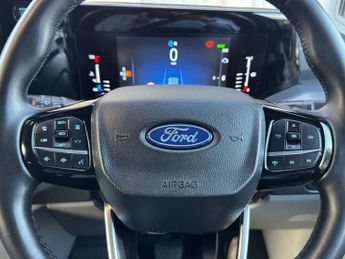
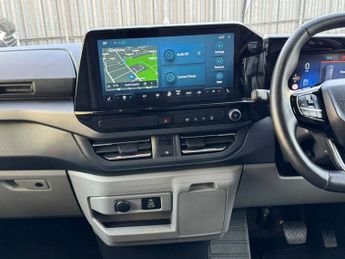
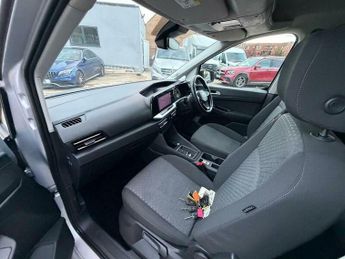
The Tourneo Connect has an overall ethos of putting functionality first and that is clear to see when you step inside the cabin. Whilst you would struggle to call the interior ‘plush’, it still has everything that you are likely to need. Up front, the dashboard layout is straightforward and intuitive, with a good mix of physical controls alongside a 10-inch touchscreen, which is simple and user-friendly. Higher trims add a few more soft-touch materials, more digital displays and upgraded upholstery, but whichever option you go for, everything feels very solid and well put together.

Ford Tourneo interior

Boot space and practicality

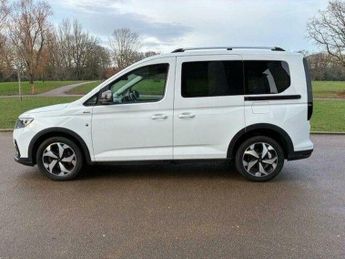
This is where the Tourneo Connect really comes into its own, with the model offering outright practicality that an SUV could only dream of. The car is available in five- or seven-seat configurations, with rear seats able to be folded away, slid back or even removed altogether, allowing buyers to set the car up to their own individual needs. Access is also made easy through sliding rear doors and a large rear door, which opens fully to the boot. In five-seat mode, the vehicle offers 1,213 litres of boot space, rising to 2,556 litres with the rear seats folded, but buyers who want even more space can go for the Grand Tourneo Connect, which raises those figures to 1,720 litres and 3,105 litres respectively. Inside the cabin itself, there are plenty of storage compartments as well as generous head and legroom, regardless of where you are seated, making the Tourneo Connect the perfect vehicle for everyday use.

Ford Tourneo boot space and practicality

Features

Ford has done its best to kit out the Tourneo Connect to a good standard, with even entry-level cars getting Apple CarPlay, Android Auto, cruise control and rear parking sensors. Moving up the trim levels sees further touches added including adaptive cruise control, heated seats, a digital instrument cluster, keyless entry and a panoramic roof. While the infotainment system may seem a little outdated compared to some modern systems, it is at least clear, well laid out and easy to use – very much in keeping with the overall vibe of the Tourneo Connect.

Ford Tourneo feature

Trim and colour options

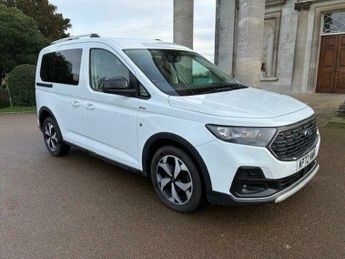
The Tourneo Connect is offered in Titanium and Active trims, with the lower level being the only way to buy the car with a traditional petrol powertrain. While both options offer a good level of tech, Active models add a few subtle SUV-inspired styling cues and a more rugged appearance. The car can be bought as standard in Frozen White, while Lava Red, Maple Red, Comet Grey, Graphite Grey, Ink Black, Midnight Blue, Boundless Blue, Frost Silver and Dusky Silver can be selected at an extra cost.

Ford Tourneo trim and colour

Safety and reliability

Ford has kitted out the Tourneo Connect with a raft of safety features, including autonomous emergency braking, lane-keeping assist, traffic sign recognition and driver attention monitoring. It also scored a full five-star rating from Euro NCAP after impressing the judges with its safety for both adult and child occupants. When it comes to reliability, Ford has had something of a mixed record in recent years but the partnership with VW Group here looks to have put that right, with owners not flagging any major areas of concern. The PHEV system is proven across other models, and the high-voltage battery is covered by a lengthy manufacturer warranty for added peace of mind.

Ford Tourneo safety and reliability

MPG, emissions and tax

Ford says that the petrol version of the car will do between 41.8 and 44.1 mpg, which rises to 50.4 to 57.7 mpg in the diesel. In official test conditions, the PHEV returned an astonishing 549 mpg, although this depends on using electric power only and stopping regularly to charge. CO₂ emissions for the PHEV are significantly lower than the petrol and diesel models, resulting in much lower Benefit-in-Kind rates, making it the best option in the line-up for company car drivers.

Ford Tourneo MPG, emissions and tax
Browse 270 in stock