Specifications

Fuel types
Petrol, diesel, petrol plug-in hybrid, diesel plug-in hybrid
No of seats
5, 7
Boot space
295 litres (all seven seats up), 780 litres (five seats)
Dimensions
5,072 mm x 1,970 mm x 1,734 mm
Fuel economy
23 – 40 mpg
Acceleration (0-62mph)
4.1 - 7.1 seconds
Insurance group
35 - 50
Body style
SUV
CO2 emissions
88 - 282g/km
Browse 579 in stock

AA Cars review

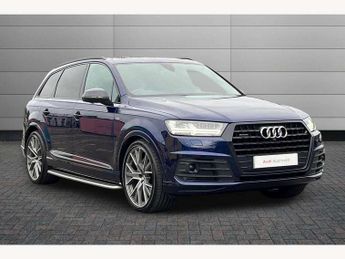
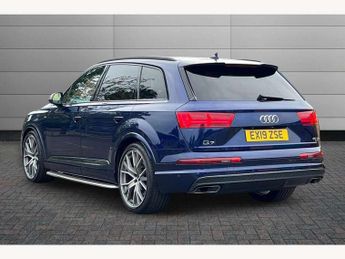
The Audi Q7 is a hugely impressive and desirable SUV. It's spacious, comfortable to drive, has a superbly appointed interior, plus has the cache of the Audi badge.
Jack Evans
Jack Evans

Jack is an experienced motoring journalist who has been covering the latest new-car releases for the last 10 years.

Read bio

4.0/5

How much does it cost?

Sitting at the higher end of Audi's SUV range, you wouldn't expect the Q7 to be cheap. And it isn't – new prices start from around £71,500 for the entry-level V6 diesel and rise to £116,000 for the sporty V8-powered SQ7. Used prices are far more affordable, and in particular the oldest V6 diesel versions. Prices for early 2015-16 cars on platforms like AA Cars start from less than £15,000, while SQ7s start from around £25,000. If you prefer the more modern looks and interior of the 2019 facelift cars, you need to budget around £30,000. Pretty chunky depreciation means one-year-old cars with 10,000 miles on the clock hover around the £50,000 mark – a decent drop on brand new prices.

Engine and performance

Overview

Over the years Audi has offered a wide array of engines in the second-generation Q7, but the core of the range has always been the 3.0-litre V6 diesels. They are by far and away the most popular examples when bought new and on the used market, with the V6 originally coming in 215bhp and 268bhp forms. The post-2019 cars saw the V6 getting a power hike to 228bhp in the '45 TDI' and 285bhp in the '50 TDI'. Despite diesel being the backbone of the line-up, Audi still offered a silky smooth and potent 3.0-litre V6 petrol called ‘55 TFSI’ with around 340bhp on tap.

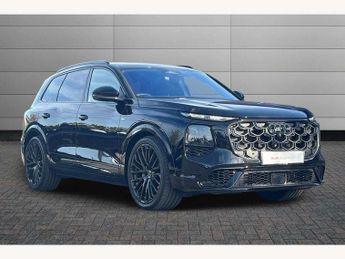
The performance-minded SQ7 originally came with a 4.0-litre twin-turbo V8 diesel, but this was swapped for a 4.0-litre V8 petrol in 2020, and the SQ7 has kept this engine to the present day. The Q7 also comes with plug-in hybrid power for those after potentially greater fuel efficiency. Originally called Q7 e-tron, this utilised the 3.0-litre V6 diesel engine and mated it with an electric motor to give 34 miles of pure EV range. The comprehensive 2019 update saw the diesel dropped in favour of a 3.0-litre V6 petrol, and it gained the 'TFSI e' badge. It had a lower 27-mile EV-range, though. In 2025, Audi updated the TFSI e again and fitted it with a larger battery to give up to 52 miles of pure-electric running.

Audi Q7 performance

Out on the road

In everyday driving, the Q7 feels a lot smaller than it looks – to use a cliche, it feels like it 'shrinks around the driver'. One reason for this is the excellent all-round visibility, the raised driving position, and the engine and gearboxes that are perfectly in sync with each other. The V6 diesels will be more than enough for most buyers, offering strong fuel economy and having more than enough power, while the petrol 55 TFSI swaps some of the diesels' grunt for silkiness. The PHEVs (plug-in hybrids) are excellent for town work as they silently glide around on electric power. In contrast, the V8s on offer in the SQ7 models offer ballistic acceleration for such a large car. They feel tighter on the road too, and get meatier steering to deal with the increased power levels.

Audi Q7 on the road

Ride and handling

The Audi Q7 feels a very polished, well engineered car, and nowhere is this more on show in the ride and handling department. Even cars with standard suspension deal with the worst British roads very well, but most cars are fitted with air suspension. This irons out bumps even better, and gives a pillowy soft ride quality that's as good as cars from the class above. The Q7 gives a safe, unflustered drive, but it's not what you'd call involving. Rivals like the Range Rover Sport offer a more engaging driving experience, but what the Q7 lacks here it makes up for in refinement. Interior and Features

Audi Q7 ride and handling

Interior and features

Interiors

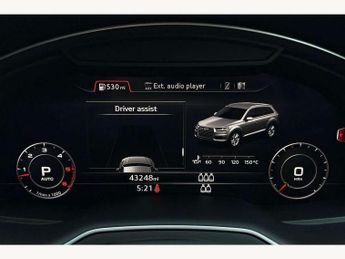
The Q7’s interior was one of its key selling points when it arrived in 2015, and it still feels top-notch today. The materials are all high quality, everything feels extremely well put together, and the design is clean and uncluttered. Earlier cars had more physical buttons and dials for controls like the air conditioning, while post-2019 cars had a more minimalist, touchscreen-heavy design. The second-generation Q7 was one of the first Audis to get the firm's groundbreaking 'Virtual Cockpit'. It's a digital screen in front of the driver and it's a cinch to use. In fact, all the tech onboard is simple and nicely designed, and there's Apple CarPlay and Android Auto phone connectivity; later models were upgraded to wireless connectivity.

Audi Q7 interior

Boot space and practicality

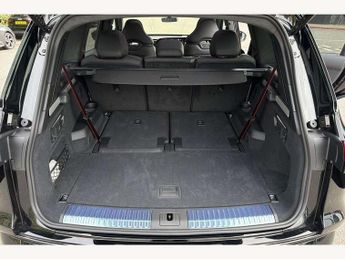
While some SUVs claim to be seven-seaters, seats five and six are usually for children only. But the Audi Q7 is one of the more practical of the type, and can carry adults in its rear-most row. With all the seats in place, boot room is not far off that of a supermini's at 295 litres. Folding the third-row gives 780 litres, and with both rows folded there's over 1,900 litres. But this is the case for seven-seater versions of the Q7 – the plug-in hybrids are five-seater-only, and due to the placement of the hybrid system, boot room stands at 563 litres. The Q7 is pretty flexible when it comes to loading people. The rear doors open wide, and the second row seats can slide and recline. Also, there are Isofix points across the back row.

Audi Q7 boot space and practicality

Features

The Q7's trim levels have changed over the 10 years it has been on sale, but they're all very familiar. There's SE, Sport, S line, Black Edition and Vorsprung depending on the year. Like with most Audis, S line is the most popular when it comes to buying used as this trim has traditionally been one of the top sellers. These cars get leather upholstery, heated seats, two- or three-zone climate control, an electric tailgate, Virtual Cockpit, navigation and advanced driver assists.

Audi Q7 feature

Trim and colour options

S line models tend to be the most popular models when purchased new, and as such, are the most numerous on used car platforms like AA Cars. These models are desirable because of their sportier body styling and equipment such as leather upholstery, climate control, Virtual Cockpit, sat-nav, and an electric tailgate. Black Edition cars are just as common, as they take the S line's basic level of specification and add some extra sporty touches such as black exterior trim. SE, Sport and Vorsprung are slightly less common, with the SE and Sport cars riding more softly with their standard suspension, and Vorsprungs coming fully loaded with advanced lighting, larger 22-inch wheels, upmarket Bang & Olufsen stereo system, and sports seats trimmed in softer leather. Many Q7s come in traditional Audi colours of silver and black, but the car has been available in brighter, more unusual shades during its 10-year life. Some of the more recent stand-out colours include Chili Red and Sakhir Gold.

Audi Q7 trim and colour

Safety and reliability

The Q7 was awarded a five-star rating from Euro NCAP in 2015, with strong adult and child protection scores. The judging criteria has changed since then, though, but that five-star rating still applies. It comes packed with airbags, and advanced safety kit such as blind-spot monitoring and adaptive cruise control. The car doesn't usually feature in reliability surveys because it sells in smaller numbers, but the Q7uses many components that are shared across other Audis. But the brand hasn't had the best reputation in recent years, with owners complaining about both electrical and mechanical gremlins.

Audi Q7 safety and reliability

MPG, emissions and tax

Running costs are on par with nearly all other premium large SUVs. The diesels will be the most efficient for most customers, with both 3.0-litre V6 units capable of returning in the mid-30s fuel consumption in everyday use. The petrols are the least efficient, unsurprisingly, with both the V6 and V8 likely to struggle to climb out of the 20s-mpg bracket. On paper the plug-in hybrids are the cleanest and most frugal. They emit the lowest CO2, but the high figures Audi claims for fuel economy (in excess of 88mpg in the most recent TFSI e model) will only be achievable if you're predominantly running in electric mode, and you regularly charge up the car. CO2 varies hugely from model to model, so VED depends on engine and registration year. Nearly all second-generation Q7s attracted the Expensive Car Supplement introduced in 2017, and the newest examples will be liable for VED of £620 for the first six years of the car's life.

Audi Q7 MPG, emissions and tax
Browse 579 in stock