
 Updated 21/07/2026
Read Time 5 mins
Updated 21/07/2026
Read Time 5 mins

One of those abbreviations is CCS, which stands for Combined Charging System. It refers both to the physical charging connector you use to top up an electric vehicle's battery and the wider rapid charging standard that underpins much of the public charging network in the UK and Europe.
Understanding what CCS is and how it works will help EV owners make more informed decisions about the way they charge their vehicles. Simply opting for the fastest and most powerful outlet is not always the most convenient or cost effective way to live with battery packs and electric motors.
What does CCS mean?
CCS stands for Combined Charging System. At its most basic, it means one charging outlet combines both AC and DC charging into a single connector and vehicle inlet.
AC stands for alternating current and is the type of electricity used by the National Grid. Most things you power around the home use AC. Electric vehicles can also be charged in this manner, as onboard converters can take this lower power and convert it to the direct current (DC) required to power larger battery packs.
Charging an EV via a three-pin plug at home will take hours, or even days. This is where the Combined Charging System comes in. The port on the vehicle allows for both AC and much faster DC inputs, so an electric vehicle can accept slower AC charging and faster DC charging through one integrated system.
It simplifies the set-up and does away with the need for physical adaptors in many everyday situations. As a result, CCS has become the dominant rapid charging standard across the UK and most of Europe, supported by almost all major manufacturers.
AC and DC charging explained
| Charging type | What it means | Typical use |
|---|---|---|
| AC charging | Alternating current is supplied to the car and converted by the onboard charger before being stored in the battery. | Home charging, workplace charging and many destination chargers. |
| DC charging | Direct current is supplied to the battery, bypassing the onboard charger. | Rapid and ultra-rapid public charging, often used during longer journeys. |
| CCS charging | A combined inlet that can handle AC charging and high-power DC charging. | One system for slower day-to-day charging and faster public charging. |
How does CCS work?
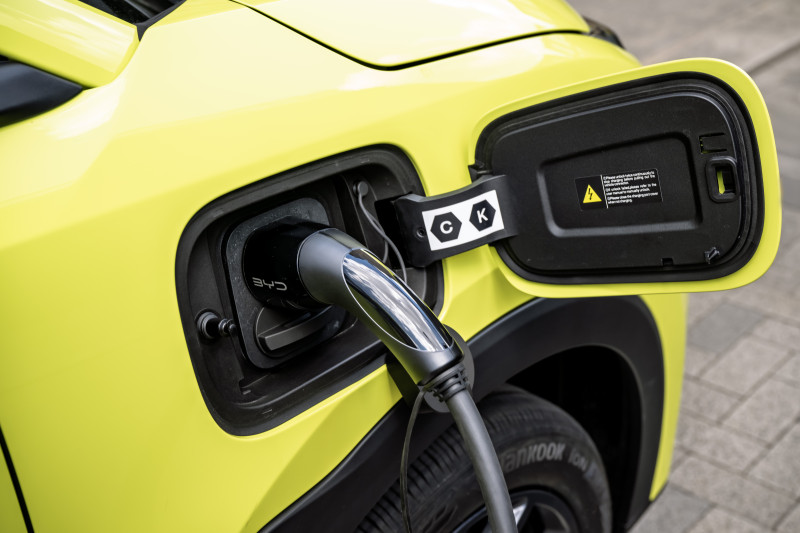
The CCS system builds on an existing AC charging connector by adding additional pins designed specifically for high-power DC charging. That is why the outlets feel so chunky when you first pick one up.
For everyday charging at home or work, the upper section of the CCS inlet is used to accept AC electricity. This power is converted inside the vehicle by the onboard charger before being stored in the battery.
When connecting to a rapid or ultra-rapid public charger, the lower DC pins are engaged. In this case, electricity is supplied directly to the battery, bypassing the onboard charger entirely. This direct supply is what allows CCS chargers to deliver much higher power and dramatically reduce charging times.
Throughout the process, the vehicle and charger communicate continuously via software to manage power delivery, battery temperature and safety systems. It is why it usually takes a few seconds for a charging session to start, as the vehicle "talks" to the charging outlet to get everything primed and ready.
How to use a CCS charger
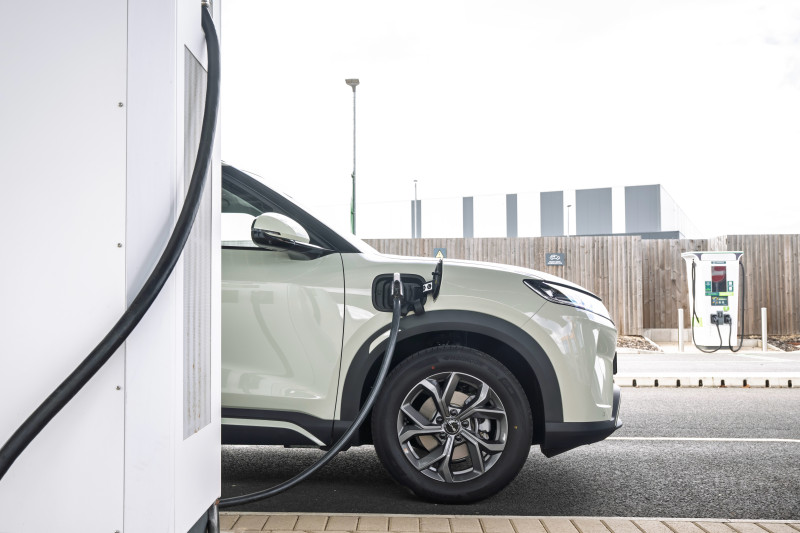
- Park close enough to the chargepoint so the tethered CCS cable can comfortably reach your car.
- Check the connector is compatible with your vehicle. Rapid and ultra-rapid CCS chargers usually have the cable attached to the charger.
- Plug the CCS connector into your car and follow the chargepoint instructions on the screen or in the provider's app.
- Allow a few seconds for the vehicle and charger to communicate before charging begins.
- End the charging session before unplugging, then return the connector to the charging unit.
Is CCS the only charging standard now?
In the UK and across Europe, CCS Type 2 has become the default standard for electric vehicle rapid charging. It has effectively replaced older rapid charging formats as the preferred option for both car manufacturers and charging network operators.
That said, you might still see some charging outlets offering a CHAdeMO connector, which was the standard adopted by several Japanese cars in the early days of EVs. Older Nissan Leaf and Mitsubishi models helped make CHAdeMO familiar across the UK and Europe, but this connector is now mostly being phased out on newer rapid chargers.
Most new electric vehicles sold in the UK are equipped with a CCS port as standard. As a result, most new rapid and ultra-rapid public chargers now offer CCS connectors.
This widespread adoption has created a higher level of consistency across the charging network, making it easier for drivers to find compatible chargers when embarking on longer trips.
CCS vs other EV charging connectors
| Connector or standard | Where you are likely to see it | What drivers should know |
|---|---|---|
| CCS Type 2 | UK and Europe. | The main rapid and ultra-rapid charging connector for most newer electric cars. |
| Type 2 AC | Home, workplace and destination charging. | Common for slower AC charging. A CCS inlet uses this upper Type 2 section for AC charging. |
| CHAdeMO | Some older rapid chargers and older EVs. | Still available in places, but less common on newer vehicles and newer rapid charging sites. |
| CCS Type 1 | North America. | A different regional standard and not the usual UK or European connector. |
| GB/T | China. | A Chinese charging standard, not the standard used for UK public charging. |
Why does CCS charging matter?
Combined charging offers the convenience and practicality of two charging standards in one. It reduces the need to rely on converters or for manufacturers to install multiple charging inlets on new vehicles.
More importantly, CCS enables much faster charging than older or lower-powered AC charging options. As vehicles and batteries have evolved, CCS has scaled effectively to meet growing demand for shorter charging stops.
Early CCS rapid chargers typically delivered around 50 kW of power, which was already far quicker than AC charging. Today, ultra-rapid CCS chargers commonly provide 150 kW, 250 kW or more at modern locations.
The actual speed experienced by a driver depends on several factors, including the maximum charging capability of the car, the charger's output, battery temperature and the battery's current state of charge.
CCS charging speeds: what affects them?
- The maximum DC charging rate your electric car can accept.
- The power output of the public charger.
- Battery temperature and whether the car can pre-condition the battery before arrival.
- The battery's state of charge, as charging is usually fastest at lower percentages and slows as the battery fills.
- Whether the charger is sharing power with another vehicle or restricted by local grid conditions.
As a guide, The AA explains that rapid chargepoints can charge compatible batteries to 80% in around 30 minutes or less, while fast 7 kW to 22 kW chargers may take between 1 and 5 hours depending on the battery and charger. A normal plug should generally be treated as a slower, last-resort option.
CCS charging at home, work and on the road
| Where you charge | Typical connector or charger | Best for |
|---|---|---|
| Home | A dedicated home chargepoint, commonly around 7 kW, or a slower three-pin plug as a last resort. | Regular overnight charging and keeping day-to-day costs predictable. |
| Workplace or destination | AC charging, often Type 2. | Adding charge while the car is parked for several hours. |
| Public rapid charger | CCS DC rapid charging, often 50 kW or above. | Longer journeys and shorter charging stops. |
| Public ultra-rapid charger | High-power CCS DC charging, often 150 kW or more. | Fast top-ups in compatible EVs, especially when time matters. |
CCS vs the rest: what UK drivers need to know
If you are driving in the UK and Europe, you should not usually have to worry about compatibility in a newer EV, as the vast majority of electric vehicles now run CCS Type 2 and the public rapid charging network largely supports it.
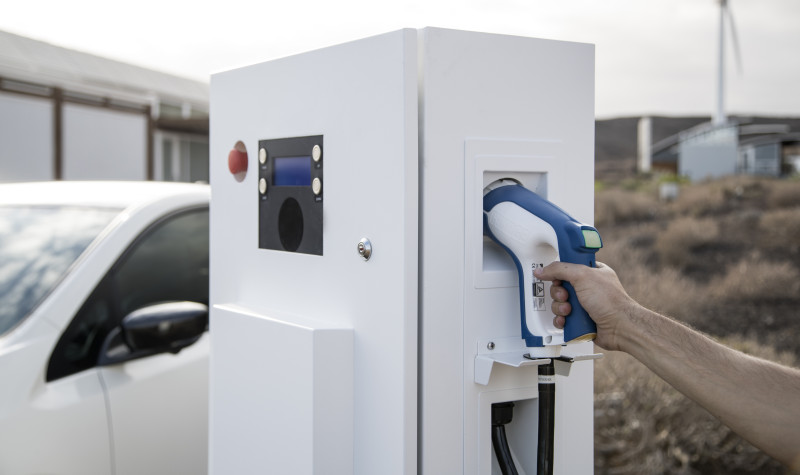
The flexibility of CCS also means owners will typically be provided with the correct cables to plug into untethered AC outlets, although cables and adaptors can sometimes be cost options. Rapid and ultra-rapid CCS chargers usually have tethered cables already attached.
With lower-powered AC charging, 7 kW domestic charging and the higher-powered public network all available through a compatible charging set-up, CCS helps make it possible to charge wherever is most convenient.
That said, connector standards vary by region. North America uses different charging standards, Japan still has CHAdeMO in many places, and China has its own GB/T standard. Drivers taking an EV abroad should check local charging compatibility before they travel.
Do the fastest-charging EVs use CCS?
Many of the fastest-charging electric cars sold in the UK and Europe use CCS. Some manufacturers have fitted their vehicles with higher-voltage electrical architectures, which can allow for much higher charging speeds when paired with a powerful enough public charger.
Premium electric vehicles and newer long-range EVs increasingly advertise rapid or ultra-rapid charging capability. However, the headline charging speed is only part of the story. The charger, battery temperature, state of charge and the car's own charging curve all affect how quickly energy is added.
For buyers comparing used electric cars, the practical question is not only "what is the peak charging speed?" but also "how quickly will this car charge on the journeys I actually make?" A lower peak rate may still be perfectly suitable if most charging happens at home or at work.
Quick checks when buying a used EV with CCS
- Check the car has a CCS inlet if rapid public charging is important to you.
- Confirm the car's maximum DC charging rate, not just its battery size.
- Look at real-world charging needs: home charging, workplace charging, motorway journeys and typical weekly mileage.
- Check which charging cable is included with the car, especially for untethered AC chargepoints.
- Use AA Cars listings and advice to compare electric, hybrid and plug-in hybrid options with confidence.
Find your next electric car from a trusted dealer with AA Cars
FAQs
What does CCS stand for?
CCS stands for Combined Charging System. It combines AC and DC charging capability in one vehicle inlet.
Is CCS the same as Type 2?
Not exactly. In the UK and Europe, CCS Type 2 uses the familiar Type 2 AC connector section and adds two larger DC pins for rapid charging.
Can I use CCS at home?
You normally use the upper AC part of the CCS inlet for home charging. The full CCS DC section is mainly used at rapid and ultra-rapid public chargepoints.
Is CCS faster than a home charger?
CCS DC rapid charging is usually much faster than a home charger, but it can cost more and is not always necessary for everyday driving.
Will every CCS car charge at the same speed?
No. Charging speed depends on the car, charger output, battery temperature and the battery's state of charge.
Do I need a cable for CCS charging?
Public rapid and ultra-rapid CCS chargers usually have a tethered cable attached. For untethered AC chargepoints, you may need to use your own Type 2 cable.


