
 Updated 03/09/2026
Read Time 5 mins
Updated 03/09/2026
Read Time 5 mins

One of the biggest advantages of making the switch to an electric car is the ability to charge it up at home. It's more convenient than going to a filling station in a petrol or diesel car, as you can start the day with a full battery. That's not to mention that home charging is significantly cheaper than using public charging points.
But if you're considering switching to an electric car and are a little confused about how to charge it at home, this guide is for you. Here, we explain all you need to know about equipment, installation, charging speeds, and how to reduce your energy bills.
What is home charging?
It's a little more complicated than plugging in your car to the household mains supply with a three-pin plug. While most EVs can come with a three-pin plug, this form of charging (sometimes called 'granny charging) isn't recommended as it's not only extremely slow but can potentially cause a fire. A proper AC (Alternating Current) home wallbox is the best solution.
Home wallboxes
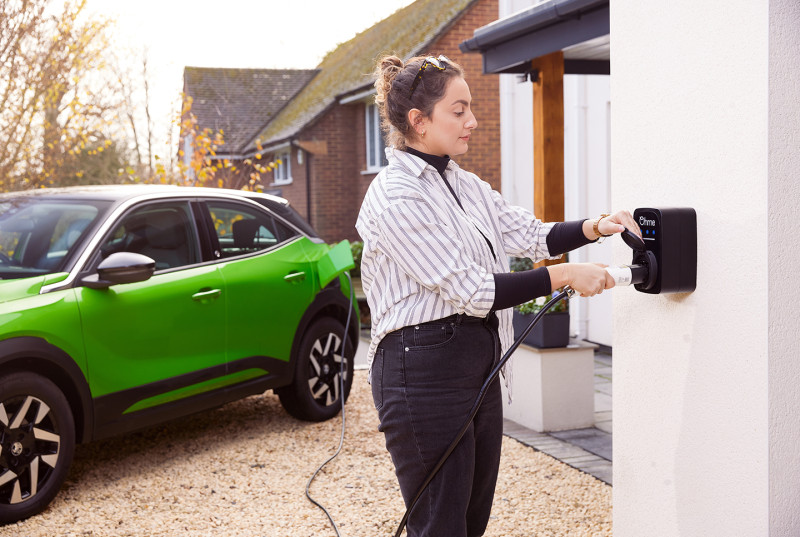
A home wallbox operates at much faster speeds than a domestic three-pin socket. Most home chargers are rated at 7.4kW, enough to give around 30 miles of range for every hour the car is plugged in. For the average EV, that means a home wallbox will charge the car to at least 80 per cent – and more often to 100 per cent – overnight.
Below are typical charging times with a standard 7.4kW home wallbox
| Battery size | 0-100% charge time |
|---|---|
| 40kW | 5-6 hours |
| 60kW | 8-10 hours |
| 77kW-plus | 11-15 hours |
Things to consider before installing a wallbox
But there are some things you need to consider before installation. One of these is you ideally need off-street parking – it may sound obvious, but you need something like a driveway or a private parking space. Here the charger is safe as it's attached to your house, and, more importantly, you won't be draping charging cables over the pavement in front of your house. Doing this isn't illegal, but could potentially land you in hot water with the local council, especially if someone trips and is injured. Some councils across the UK are currently trialing special charging gullies outside peoples' houses to allow them to charge their EVs safely, though.
Another thing to consider is that if you rent your property you must get written permission from the landlord or freeholder, while properties in conservation areas may require additional planning checks.
What are the benefits of home charging?
There are several, with the most obvious being:
- Cheaper running costs – home tariffs are nearly always far cheaper than public charging.
- Convenience – charging overnight while you sleep means you can walk out to a fully topped-up car in the morning.
- Better for the car – slow steady charging is far better for battery health and prolongs the battery’s life.
How much does it cost to install a home charger?
How much a home wallbox will cost depends on several factors such as the charger model, the layout of your property, the standard of your domestic electrics, and so on. However, typical installation costs range from £800 to £1,200 with more complex installations starting at around £1,500. The higher end typically feature higher-powered 11kW and 22kW set-ups as these require a three-phase electrical supply.
The installation cost includes the physical wallbox unit, attaching it to your property, running the cabling to the consumer unit, and safety testing.
You can save money by applying for a £350 government grant, but it only applies if you rent your home or live in a flat with off-street parking.
How much does it cost to charge an EV at home?
Much like with a conventional petrol car, how much you pay depends on how you drive, how far you drive, and how efficient your car is. But, in addition, an EV depends on your electricity tariff and the size of the car's battery.
There's a very simple formula to work out how much you'll be paying for a charge – it's battery size (in kWh) multiplied by the electricity price (per kWh).
At the time of writing, the typical cost for electricity at home in the UK is approximately 27 pence per kWh. Taking a top-selling EV like the Skoda Enyaq 80, which has a 77kWh useable battery, the calculation is 77 x 0.27 = £20.79. So, just under £21 for a full charge.
Of course, this is just an average based on standard variable tariffs paid by Direct Debit. Tariffs vary by region and standing charges.
Off-peak EV tariffs
If you switch to an EV it's a good idea to sign up to an EV-specific tariff.
These tariffs offer cheap overnight electricity, usually between midnight and 7am, and rates can be as low as 5-10p per kWh – that's compared to 25-35p per kWh on standard tariffs. Switching to an off-peak, EV-friendly tariff can cut your charging costs by 60-70 per cent.
The most popular tariffs include Octopus Intelligent Go, Ovo Charge Anytime, and EDF GoElectric.
Most off-peak, EV-friendly tariffs require a compatible ‘Smart Charger’ that can talk to things like the grid, your smart meter, and your smartphone.
What are Smart Chargers?
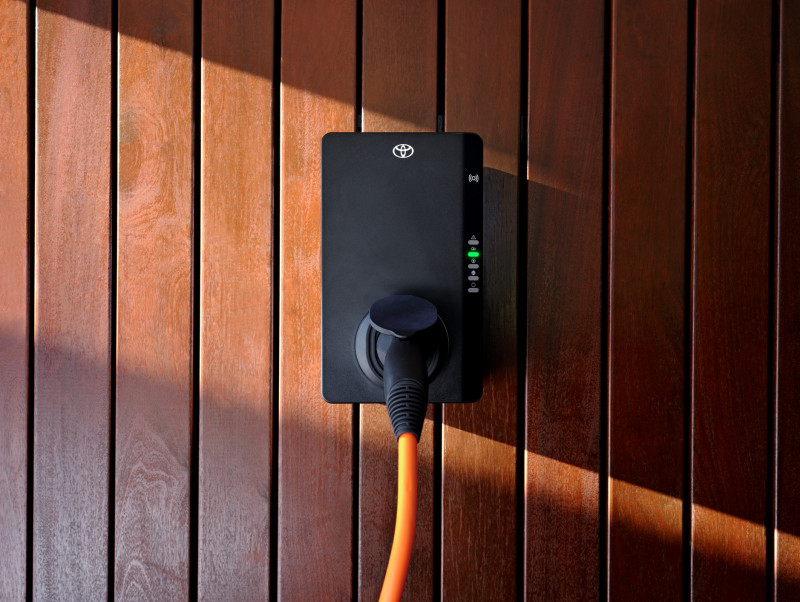
Some home chargers are classed as Smart Chargers. These automatically manage the flow of electricity to your car, and communicate with things like the grid, your smart meter and your smartphone to optimise charging. Because of this the charger can automatically charge at off-peak times, or take into account your preferred settings such as a desired level of battery charge to save you money.
Smart charger brands include Ohme, Pod Point, Hypervolt, Easee, and more.
If you want to embrace the benefits of the electric lifestyle fully, then investing in a home charger is a must. Charging from home brings convenience and the potential to dramatically cut your bills. For the best selection of used electric cars from approved and trusted dealers, check out AA Cars.
FAQs
How much will it cost me to charge an EV?
Charging costs depend on a variety of factors, not least your energy tariff. But as a guide, on a standard energy tariff, a conventional electric family SUV with a 77kW battery will cost you around £21 for a complete charge.
How much does a home charger cost?
A typical installation cost, which includes the home charger, ranges from £800 to £1,000.
Do I need a three-phase supply for a home charger?
No, most home chargers are of the 7.4kW type and do not need special electrics. You will need three-phase if you want an 11kW or 22kW charger, however.
Do I need planning permission for a home charger?
Rarely as most installations fall under the category of “permitted development” and do not require planning permission as a result. However, some properties in conservation areas may require additional planning checks.
Will home charging increase my energy bill?
Yes, as you will be using more household electricity. But not only will your fuel spend go down, if you switch to an EV-friendly tariff you will be enjoying incredibly low running costs.
Find your next electric car from a trusted dealer with AA Cars


