
 Updated 22/07/2026
Read Time 7 mins
Updated 22/07/2026
Read Time 7 mins

Every year, millions of motorists up and down the country ask themselves the same question when applying for another 12 months of car insurance: "How many miles do I drive in a year?"
Despite it being a conundrum we all face on an annual basis, many motorists still struggle to estimate their mileage accurately, with many left wondering why it even matters. While understanding how far you drive in a year may seem like a small detail, it can play a far more significant role than many drivers realise.
Why does knowing it help?
So, why do insurance providers continue to ask for these details? How can annual mileage affect your car? And what can happen if you get it wrong? This guide explains what annual mileage really is, how it is calculated, and why it has such a noticeable impact on your motoring costs.
- For insurance, your annual mileage helps indicate how much time you spend on the road.
- For used cars, mileage helps shape price, buyer confidence and expected future maintenance.
- For running costs, higher mileage usually means more fuel or energy use, more tyre wear and more frequent servicing.
- For EV drivers, annual mileage is becoming more important because the government has announced electric Vehicle Excise Duty, a new mileage charge for electric and plug-in hybrid cars from April 2028.
What is annual mileage?
In simple terms, annual mileage is the total number of miles your car covers in a 12-month period. This is generally estimated once a year when updating your vehicle insurance policy, as it provides a useful indicator of regular use and potential wear and tear.
Whether you are renewing your insurance or shopping for a new or used car, annual mileage will usually be one of the first questions that comes up. Higher annual mileage often suggests frequent long-distance travel, which can have a knock-on effect on the price of your premium. The figure also helps insurers, buyers and sellers try to identify potential reliability issues and future maintenance costs.
The AA explains annual mileage in the same practical way: it is the number of miles you drive in a year, and insurers ask for it when you get or renew a car insurance policy.
Why annual mileage could matter more for EV drivers
Annual mileage could soon take on greater significance for electric vehicle and plug-in hybrid drivers. The government has announced plans to introduce electric Vehicle Excise Duty, a new mileage charge for electric and plug-in hybrid cars from April 2028.
The government consultation says the rate will be 3 pence per mile for fully electric cars, with a reduced rate for plug-in hybrid cars. This means EV drivers may need to be even more aware of how far they drive each year, alongside insurance, servicing and running costs.
How is annual mileage calculated?
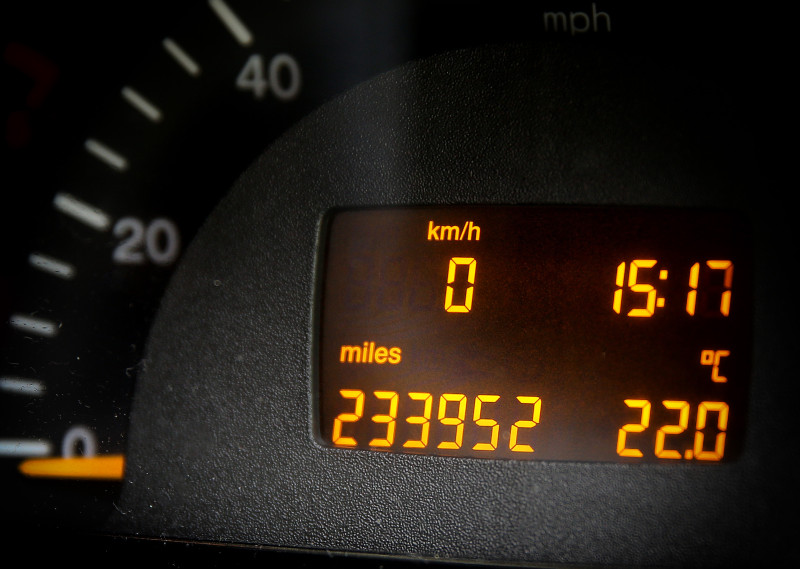
For the most part, annual mileage is calculated by estimating the total number of miles you expect to drive over a 12-month period. The easiest and most accurate way is to compare your current odometer reading with the figure from the same time last year.
This allows you to work out how many miles you covered in the past year, which can then be used as a guide for your upcoming estimate. While this is one of the most reliable ways of working things out, it does rely on you keeping a record of past mileage.
If you do not have this, an official odometer reading will usually have been taken when your car last underwent an MOT. GOV.UK lets you check vehicle MOT history, including recorded mileage, test result and reasons for failure. Failing that, you will need to take a deeper dive into your regular driving habits.
Annual mileage calculation checklist
| Step | What to check | Why it helps |
|---|---|---|
| 1 | Compare odometer readings | Subtract last year's mileage from today's mileage to see how far you drove in the last 12 months. |
| 2 | Check MOT mileage | Use recorded MOT mileage as a useful reference point if you do not keep your own records. |
| 3 | Add regular journeys | Estimate your weekly commute, school runs, errands and regular activities, then multiply by 52. |
| 4 | Factor in longer trips | Add holidays, family visits, business trips and other journeys that do not happen every week. |
| 5 | Allow a realistic margin | Insurers usually ask for an estimate, but it should be in the right ball park. |
Important: Supplying wildly inaccurate annual mileage figures can affect the price of your insurance, and in some circumstances your policy may be at risk if the information is not accurate.
What is a typical annual mileage?
There is no single figure that applies to every driver. In the UK, average annual mileage varies significantly depending on lifestyle, location, working pattern, fuel type and how heavily someone relies on their car.
AA Insurance guidance notes that Department for Transport statistics showed average annual mileage for private cars at 7,600 miles in 2019. Some drivers will cover far less than this, while commuters and people who rely on their cars for work may cover far more.
At the most extreme end of the scale, some commuters and work drivers can cover around 15,000 miles in a year. This can drop to as little as around 3,000 miles for urban residents, retirees, low-mileage households and remote workers.
Low, average and high annual mileage: a simple guide
| Mileage band | Typical annual mileage | What it may suggest |
|---|---|---|
| Low mileage | Under around 6,000 miles a year | Often linked with shorter journeys, remote working, city use or occasional driving. It may help with insurance, but very low use can still create maintenance issues. |
| Typical mileage | Around 7,000 to 8,000 miles a year | Close to commonly referenced UK annual mileage figures for private cars. |
| High mileage | Over around 12,000 to 15,000 miles a year | May suggest regular commuting, business use or frequent long-distance driving. Maintenance history becomes especially important. |
Why do insurers care about your annual mileage?
This is a question which comes up time and time again: why does it even matter? The answer is that insurers use annual mileage as one way to understand risk.
Generally speaking, the more time a car spends on the road, the more exposure it has to traffic, hazardous conditions, everyday motoring challenges and driver error. This is why higher-mileage drivers may pay more for insurance than someone who uses their car less often.
Annual mileage can also point to the amount of wear and tear a vehicle has suffered, and therefore how likely a car is to need maintenance or suffer a breakdown. This is why it is important to give an accurate estimate when filling in your insurance forms. It helps keep the wider system fair, with everyone paying what they should.
If you make a claim and your insurer finds out you have significantly underestimated your mileage, they could decide not to pay out. While there is no hard and fast rule, covering fewer than around 6,000 miles a year may help some drivers access cheaper car insurance, depending on the insurer and the rest of the policy details.
Annual mileage and the used car market
It is not just insurance where annual mileage can play a significant role. It is also one of the most influential factors affecting a car depreciation and eventual resale value.
As a general rule, the more miles a vehicle has covered, the lower its value may fall on the second-hand market. This is largely down to concerns over essential components such as the engine, transmission, suspension, tyres and interior fittings.
From a buyer perspective, this can mean some strong used car bargains, although it is worth being aware that higher maintenance costs are more likely to follow, along with potentially reduced reliability.
From a seller perspective, it is important to be open, honest and transparent when it comes to mileage. Any obvious discrepancies can quickly raise concerns. In today used car market, annual mileage shapes buyer perception and acts as an early price guide on the car.
How annual mileage affects buying and selling
| Area | Why mileage matters | What to do |
|---|---|---|
| Price | Lower mileage can increase asking prices, while higher mileage can make otherwise similar cars cheaper. | Compare mileage against age, condition, service history and market value. |
| Condition | Mileage can indicate use, but it does not tell the whole story. | Check service records, MOT history, tyres, brakes, suspension and the way the car has been maintained. |
| Buyer confidence | Mileage discrepancies can raise concerns quickly. | Use the MOT history and any available vehicle history information to check whether the mileage looks consistent. |
| Future costs | Higher-mileage cars may be closer to major maintenance items. | Budget for servicing, tyres, brakes, suspension parts and other wear items. |
What happens if you estimate your annual mileage incorrectly?
Insurers may only ask for an estimate, but it is important that the figure you give is realistic. A small difference is unlikely to be the same as a wildly inaccurate figure, but deliberately underestimating your mileage can cause problems.
If your annual mileage changes during the policy year because of a new job, a longer commute or regular extra journeys, speak to your insurer. Keeping your details up to date can help avoid issues if you need to make a claim.
How to reduce annual mileage and running costs
Not everyone can reduce their mileage, especially if they rely on their car for work or family commitments. But understanding where your miles come from can help you make more informed choices about fuel, energy, insurance, maintenance and depreciation.
- Combine errands into fewer journeys where possible.
- Use public transport, walking or cycling for short trips where practical.
- Use route planning tools to avoid unnecessary detours.
- Keep tyre pressures correct and maintain your car properly to support fuel economy.
- Review your mileage before renewing insurance, rather than repeating last year estimate automatically.


