
 Updated 03/09/2026
Read Time 6 mins
Updated 03/09/2026
Read Time 6 mins

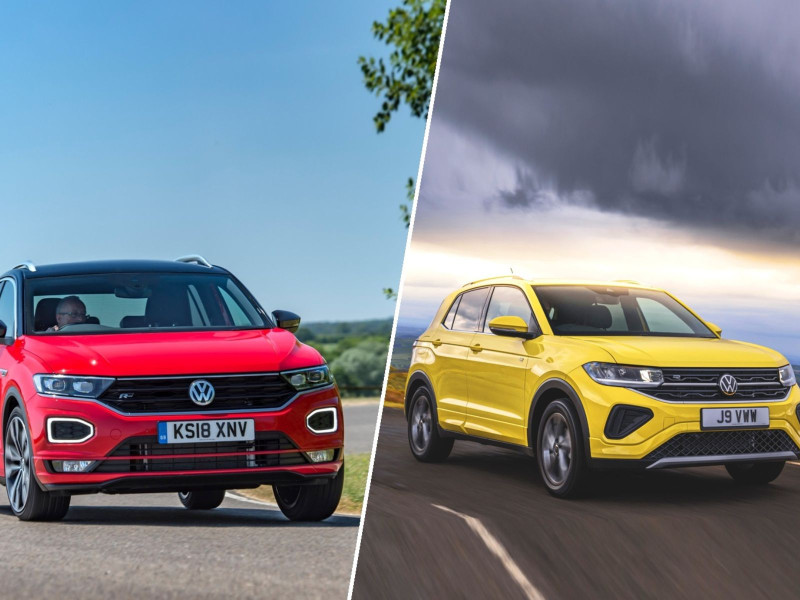
Both wear the Volkswagen badge and share some mechanical components, but they are aimed at different buyers. The T-Cross is the smaller, city-friendly SUV, while the T-Roc adds extra style, more space and a broader engine range.
So, which is best for you when choosing your next Volkswagen SUV? Here, we compare the T-Cross and T-Roc across design, interior space, technology, driving experience, running costs and overall value to help you decide which one best fits your lifestyle.
Volkswagen T-Roc vs T-Cross at a glance
| Area | Volkswagen T-Cross | Volkswagen T-Roc |
|---|---|---|
| Best for | City drivers who want compact dimensions and flexible space | Drivers who want more style, space and motorway refinement |
| Design | Upright, boxy and youthful | Wider, sleeker and more expressive |
| Interior | Simple, functional and easy to use | More premium feel with more soft-touch materials |
| Boot space | 385 to 455 litres, depending on rear seat position | 445 litres |
| Engines | 1.0-litre petrols and 1.5-litre petrol | 1.0-litre and 1.5-litre petrols, 2.0-litre diesels and T-Roc R |
| Driving feel | Light, easy and city-friendly | More settled on longer journeys |
| Running costs | Likely to be lower, especially in basic 1.0-litre models | Likely higher, but with more engine choice |
Design and styling
The Volkswagen Tiguan has long been the German brand’s sensible, family-orientated SUV, but the T-Cross and T-Roc add a more youthful look to VW’s SUV range. Both mix smart design cues with bold colours, and both carry the clean, confident look buyers expect from Volkswagen.
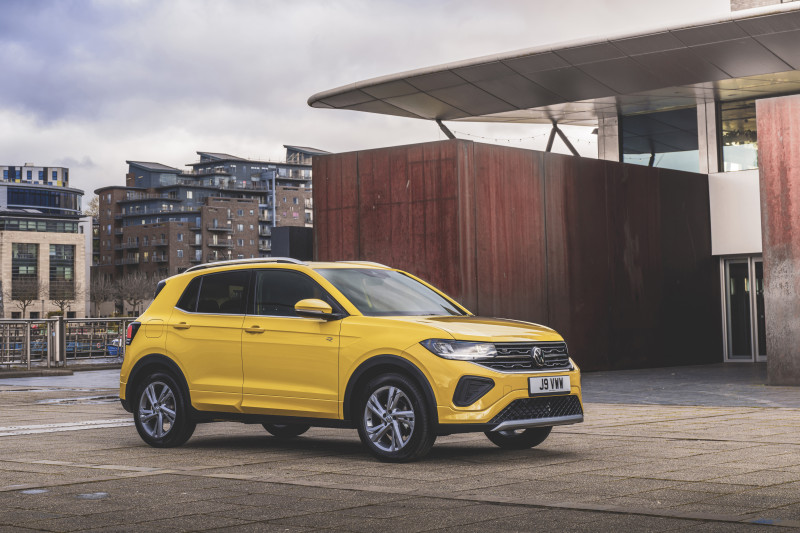
The T-Cross is more upright and boxier. It stays close to its Volkswagen Polo underpinnings, so it remains relatively short and compact, but its extra height gives it a useful SUV feel. The high roofline helps create a spacious and versatile interior, while neat LED headlights, bold colours and stylish alloy wheels give it a more youthful character.
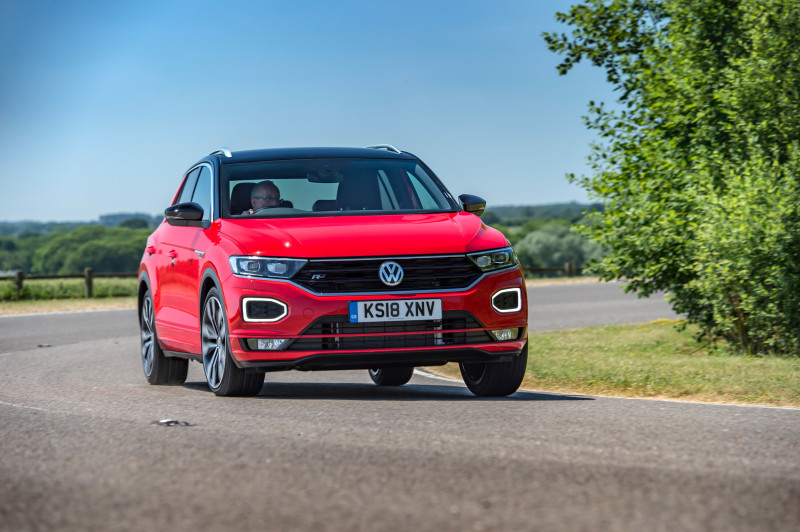
The T-Roc uses a larger platform, shared with cars such as the Golf and Tiguan. It is more style-focused than the T-Cross, with a sleeker, coupe-like roofline and a wider, chunkier stance that gives it more road presence. You can also find T-Roc models in bold colours, often with a contrasting roof and chrome detailing for a more upmarket finish.
If you want a compact SUV that looks smart without taking up much room, the T-Cross makes a lot of sense. If you want something with more visual impact, the T-Roc is the more expressive choice.
Interior quality and comfort
Inside, both the T-Cross and T-Roc feel typically Volkswagen. The controls are well laid out, the quality feels solid, and it’s easy to get comfortable in either car.
The T-Cross has a straightforward dashboard that is functional and easy to use. Base trims can feel a little plain, but some versions come with a dashboard panel that is colour-coded to the car, which helps brighten things up. The seating position is higher than in many small SUVs, giving you a good view out, and rear passengers benefit from strong headroom thanks to the car’s boxy shape.
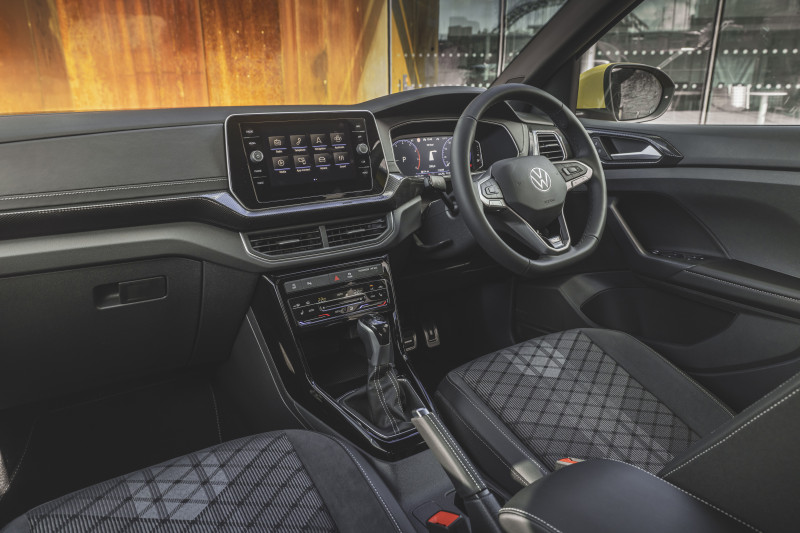
One of the T-Cross’s cleverest features is its sliding rear bench. Boot space stands at 385 litres or 455 litres depending on the position of the seats, so you can prioritise luggage space or rear-seat room depending on the journey.
The T-Roc sits a notch above in terms of interior feel. It has more soft-touch surfaces and a more expensive feel overall, although some versions still offer colour-matched interior trim if you want a brighter cabin.
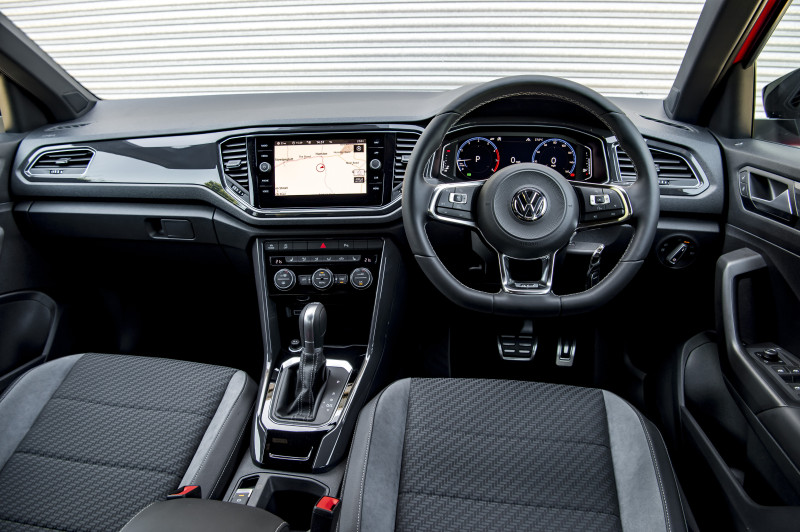
Being the larger car, the T-Roc offers more room in the back, although it does not have the sliding rear seat fitted to the T-Cross. Boot space stands at 445 litres, so it sits between the T-Cross’s 2 boot configurations. Volkswagen has updated both models in recent years, with plusher and more tactile cabin materials improving their appeal.
Technology and infotainment
There is not a huge amount to separate the T-Cross and T-Roc on technology, as both are well equipped for compact Volkswagen SUVs.
Every T-Cross comes with an 8-inch colour touchscreen. It’s simple to use, with logical menus and helpful shortcut buttons. Smartphone integration comes as standard, while higher trim levels add a larger digital driver display.
The T-Roc offers a similar setup, which shows how well equipped the T-Cross is. It also gets an 8-inch touchscreen with smartphone connectivity, an 8-inch digital driver display and all-round parking sensors on many versions.
The bigger difference comes with options. The T-Cross keeps things relatively simple beyond colours and wheels, while the T-Roc is available with a wider range of extras. Depending on model and specification, these can include leather upholstery, an upgraded Beats audio system, adaptive dampers and a panoramic roof.
Driving experience
The T-Cross and T-Roc drive in the way you would expect a Volkswagen SUV to drive: safe, predictable and confidence-inspiring.
The smaller T-Cross feels well suited to town work. Its light steering and controls make it easy to drive, and the ride is comfortable over potholes and speed humps. It is also competent outside the city, remaining quiet and settled on motorways and faster roads.
Power comes from a pair of 1.0-litre, 3-cylinder turbocharged petrol engines with 94bhp and 113bhp. The lower-powered engine comes with a 5-speed manual gearbox, while the more powerful 1.0-litre unit is available with a 6-speed manual or 7-speed DSG automatic. There is also a 148bhp 1.5-litre, 4-cylinder petrol available.
The T-Roc is the stronger all-rounder. It may not have the same compact dimensions as the T-Cross, but it still works well in the city and feels more grown-up on the motorway. It is quieter, more settled and a better cruiser.
The T-Roc also gives you more engine choice. It shares the 1.0-litre and 1.5-litre petrol engines with the T-Cross, but also offers 2.0-litre diesel options. There is even a high-performance T-Roc R with a 296bhp 2.0-litre petrol engine and 4-wheel drive.
Running costs and efficiency
Efficiency is a key strength for both the T-Cross and T-Roc, especially if you choose one of the smaller petrol engines.
The T-Cross originally came with small, efficient 1.0-litre engines. The higher-output 1.0-litre petrol with a manual gearbox returns a claimed 50.5mpg, while the 1.5-litre petrol returns a claimed 47.4mpg, helped by cylinder deactivation technology that can shut down 2 of the 4 cylinders under light loads. Basic T-Cross models sit in insurance group 9, which helps keep running costs low.
The T-Roc is likely to cost more to run overall, but it balances this with a broader engine range that suits more buyers. If you want diesel power, the T-Roc is the only one of these 2 SUVs to offer it. If low running costs matter most, the T-Cross has the edge. If you need extra refinement or stronger motorway performance, the T-Roc may be worth the additional cost.
Which is more practical?
The T-Cross is the smaller car, but it uses its shape intelligently. Its upright roofline, high seating position and sliding rear bench make it more flexible than you might expect from a small SUV. It is a strong choice if you mainly drive in town but still want enough space for everyday family use, shopping or weekend bags.
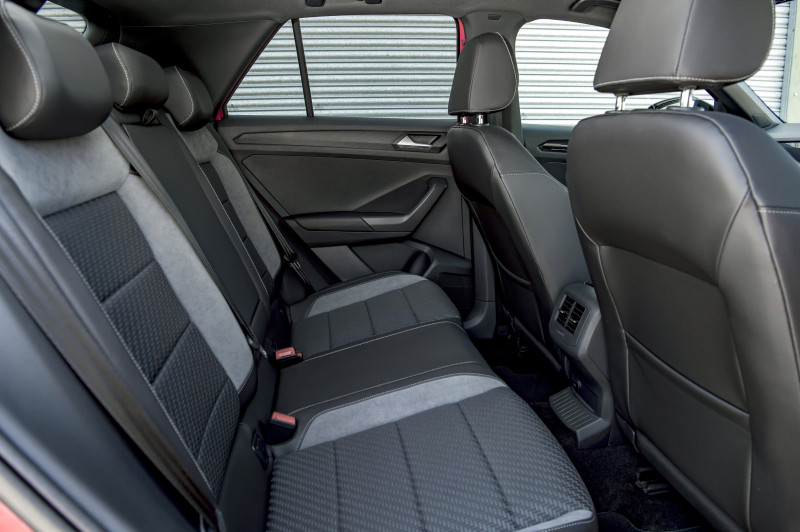
The T-Roc has more rear-seat space and feels more substantial, especially for longer journeys. It does not have the same sliding rear seat trick as the T-Cross, but it offers a more grown-up cabin, a useful 445-litre boot and a stronger sense of refinement.
T-Roc or T-Cross: which should you choose?
The T-Roc has more rear-seat space and feels more substantial, especially for longer journeys. It does not have the same sliding rear seat trick as the T-Cross, but it offers a more grown-up cabin, a useful 445-litre boot and a stronger sense of refinement.
Both Volkswagen SUVs offer strong, compelling packages, and you are unlikely to be disappointed with either of them. The right choice comes down to how you will use the car most often.
Choose the T-Cross if you live in the city, want an easy-going car that is simple to drive and park, or value flexibility from its square dimensions and sliding rear seat. It is practical, efficient and easy to live with.
Choose the T-Roc if you want a more premium-feeling SUV with more style, stronger cruising ability and a wider choice of engines. It is the more expensive car, but it looks and feels more grown-up.
In simple terms, the T-Cross is the clever city SUV, while the T-Roc is the better all-rounder. Both deliver the familiar Volkswagen blend of quality, comfort and everyday usability.
Find your next Volkswagen SUV with AA Cars
If you are comparing used Volkswagen T-Roc and T-Cross models, AA Cars can help you search with confidence. Browse used Volkswagen T-Roc cars, used Volkswagen T-Cross cars or the wider range of used Volkswagen SUVs from AA trusted dealers.
For extra reassurance before you buy, consider an AA Vehicle Inspection. A vehicle inspection can check key areas such as the bodywork, tyres, brakes, steering, suspension, engine bay, lights, controls and a road test, depending on the inspection type.


