
 Updated 19/08/2026
Read Time 4 mins
Updated 19/08/2026
Read Time 4 mins

Knowing how many owners a car has had can help you avoid unexpected issues, spot potential red flags, and make a more informed purchase. It can also help you track down service records, making the process easier and more transparent for buyers and vehicle owners alike.
Quick answer: how to check previous owners
The fastest way to check how many previous owners a car has had is to use a vehicle history check, review the V5C logbook, and compare this information with official DVLA records.
- Use the DVLA vehicle enquiry service to see when the V5C was last issued.
- Compare all records against the car’s registration, VIN and chassis numbers.
- Ask for service records, invoices and garage history to build a clearer ownership timeline.
Why ownership and service history matter
A car with numerous previous owners may have been passed around due to recurring problems. By contrast, a vehicle with a full, verifiable service history or a low level of previous ownership is often better maintained.
If an owner has kept a car for a while, it can also suggest that they have enjoyed owning it. However, if you can see a record of multiple keepers in a very short space of time, there’s a very good chance the car has had an unsolvable fault, has been passed around the motor trade, or has potentially been in the hands of salvage or insurance companies.
Either way, a concentration of owners in a short period is a major red flag.
Service records show that the car has received regular maintenance, reducing the risk of hidden mechanical problems. Together, previous owner information and service history can give you confidence in your purchase and may impact the car’s resale value later on.
Best ways to check how many owners a car has had
There are several ways to check previous ownership details. For the most reliable picture, use more than one source and make sure the information matches across the vehicle history check, V5C logbook and DVLA records.
| Check method | What it tells you | Why it matters |
|---|---|---|
| AA Car Check | Number of previous owners outstanding finance insurance claim history write-off and stolen status. | Gives a broader vehicle history before you view or buy. |
| DVLA vehicle enquiry service | The date when the V5C Registration Document was last issued. | Helps confirm when the car last changed hands. |
| V5C logbook | Number of previous keepers current keeper details and acquisition date. | Helps verify the seller and the official vehicle record. |
| Service records and invoices | Maintenance garage work and possible previous owner details. | Helps confirm whether the car has been regularly maintained. |
1. Use a car history check
There are a number of car check services that can look at a car’s history for you and help with information about the number of previous owners it has had.
For just £14.99, an AA Car Check will give you this information, as well as crucial evidence around outstanding finance, whether the car has ever been subject to an insurance claim, and whether it has ever been written-off or stolen.
This is a useful first step before viewing a used car because it gives you a broader view of the vehicle record, not just the number of previous keepers.
2. Check the DVLA vehicle enquiry service
You can also find out when a car last changed hands via the DVLA’s vehicle enquiry service, which will give the date of when a V5C Registration Document was last issued.
If you are going to view the car, take this information with you and check that the date corresponds with the date on the logbook supplied with the vehicle.
3. Review the V5C logbook
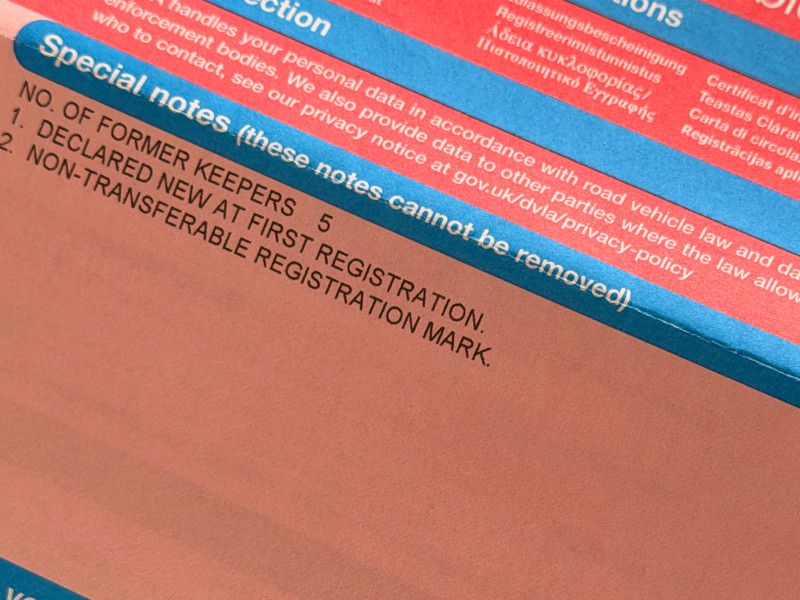
The V5C itself shows the number of previous keepers. If you’re physically viewing a car, ask the vendor to show you this essential document.
The V5C can help you determine that the seller is who they say they are, especially if you’re buying privately. It also shows the date they acquired the car and how many previous keepers it has had.
What to check on the V5C logbook
You can also use the V5C to check that the logbook is genuine and matches the vehicle’s registration and chassis numbers.
| V5C detail to check | What to look for |
|---|---|
| Number of previous keepers | Does it match the seller’s explanation and the car’s age? |
| Date acquired by current keeper | Does it match the date shown through the DVLA enquiry service? |
| Registered keeper details | If buying privately do the seller’s details match the V5C? |
| Registration and VIN/chassis numbers | Do they match the vehicle itself and any service paperwork? |
| Document consistency | Does the logbook look genuine and consistent with the vehicle record? |
Can you contact previous owners?
Historically, you could pay to get information about previous owners from DVLA. This service is no longer available due to data protection regulations.
However, you may still find previous owner details recorded in a car’s service history folder or on previous invoices supplied with the car.
If you obtain this information through the logbook or a service record, approach the previous owner respectfully. Put all requests in writing and ask specific questions about the vehicle’s maintenance or any issues they may have encountered with it.
Not all owners will wish to engage, and privacy should be respected at all times. However, sometimes it can be a huge help, especially if you’re buying an older model.
The previous owner may still have the service book tucked away in a drawer somewhere, or even a spare key they can send on to you.
Questions to ask a previous owner
- How long did you own the car?
- Was the car serviced regularly?
- Do you still have any service records, receipts or invoices?
- Were there any recurring faults or mechanical issues?
- Was the car ever involved in an accident or insurance claim?
- Do you still have a spare key, handbook or missing documentation?
Contacting garages and people who have worked on the car
You can also build a picture of the history of your car in other ways. For example, if the service book is missing but there are invoices from a garage, contact the garage to see if they have a record of work they carried out on the car that they are happy to share.
They may even still know the previous owner and be happy to contact them on your behalf, if you’ve not been able to find their details.
Many garages and manufacturers keep digital records these days. Main dealerships, especially for newer cars, may have a centralised database of service records.
Provide the vehicle’s registration and VIN to request these details, along with proof of ownership, and they should be able to assist.
BMW and Mercedes-Benz have been maintaining online databases of service history for their vehicles since as far back as 2009. Owners can access these records through the manufacturer’s website, or by visiting an authorised dealer with their V5C.
For older vehicles, a full history may be impossible to recover. However, piecing together as much information as possible still adds value to the car and gives you reassurance that it has been adequately maintained.
Red flags when checking previous owners
Previous ownership information is most useful when you interpret it alongside the car’s age, mileage, service history and condition.
- Multiple keepers in a very short space of time.
- A recently issued V5C that does not match the seller’s explanation.
- The seller refusing to show the V5C logbook.
- Missing service records with no clear explanation.
- VIN, chassis number or registration details that do not match the logbook.
- Evidence that the car has been written-off, stolen, or subject to outstanding finance.
Previous owners and service history checklist
| Step | Action | Outcome |
|---|---|---|
| 1 | Run a vehicle history check. | Confirm previous owners and identify major risks. |
| 2 | Check the DVLA vehicle enquiry service. | Confirm when the V5C was last issued. |
| 3 | Inspect the V5C logbook. | Verify the keeper history acquisition date and vehicle identifiers. |
| 4 | Review service history and invoices. | Understand maintenance and repair patterns. |
| 5 | Contact garages or manufacturers where appropriate. | Fill gaps in the service record. |
| 6 | Investigate any red flags before buying. | Avoid common used car buying pitfalls. |
Why these checks are important
Checking the number of previous owners and tracking down a car’s service history are essential steps in the used car buying process.
By using official records, online services and verifying documents carefully, you can avoid many common pitfalls and make a purchase with greater confidence.
Taking the time to research simple data like this can save you a lot of money and hassle in the long run, helping ensure your new car is a sound buy.


