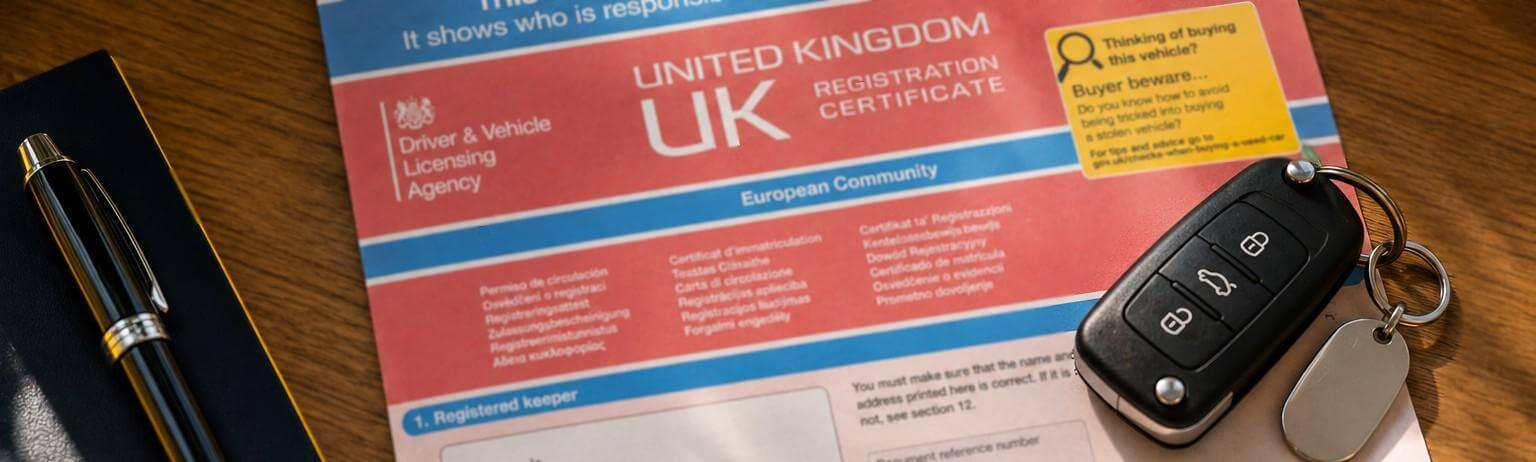
One of the most common questions people have when considering car leasing is who owns the vehicle and who is responsible for it. Many drivers assume that because they drive the car every day, they automatically become the registered keeper. With a leased car, they don’t.
So, who is the registered keeper of a leased car? This guide breaks down everything you need to know so you understand exactly what you’re responsible for, including road tax, parking fines and the V5C logbook.
What is a registered keeper?
The registered keeper of a vehicle is the person or company listed by the DVLA (Driver and Vehicle Licensing Agency) as responsible for it. This information is recorded on the V5C logbook, the official document that holds the vehicle’s registration details.
As the official point of contact, the keeper receives all correspondence from the DVLA and the police. This includes parking fines, traffic offence notices and vehicle tax reminders.
Good to know: Vehicle tax is typically paid by the leasing company or finance company for the lease term.
Registered keeper vs owner vs driver: what’s the difference?
These three roles often overlap when someone buys a car outright. In a lease, they're held by different parties. Here's how they compare:
- The registered keeper is the person or company recorded by the DVLA as responsible for the vehicle.
- The owner is the person or company that legally owns the vehicle outright.
- The driver is the person using the vehicle day to day.
In a standard personal or business lease, the owner and registered keeper of a leased car is the leasing company or finance company. The person taking out the agreement, or the employee assigned to the vehicle in a business lease, is typically the main driver.
Who is the actual registered keeper of the leased car?
As the driver, you have full use of the vehicle for the duration of your lease, but you’re not the registered keeper or the legal owner.
Generally, the leasing company is the registered keeper of the vehicle and retains ownership of the car throughout the agreement.
Can the registered keeper be changed during a lease?
The registered keeper of a leased car cannot be normally changed during the agreement. Under a standard lease, the leasing or finance company remains the registered keeper for the full duration, from the point the vehicle is first registered to the day it’s returned.
This is standard in lease agreements. Because the leasing company owns the vehicle and carries the financial risk, they must stay listed as the keeper throughout.
Who receives the V5C logbook on a leased car?
The V5C logbook is the official document recording the registered keeper's details. Because the leasing company is both the owner and the registered keeper, they hold this document, not the driver of a leased car.
What does the V5C contain?
- The vehicle's registration number and specs (make, model, colour, engine size)
- The name and address of the registered keeper
- The vehicle identification number (VIN)
- The date the vehicle was first registered
What if you need the V5C?
There may be occasions when you need to provide a copy of the V5C logbook, for example, applying for a parking permit or responding to an official query.
In these situations, your leasing company can provide the information you need. Your lease agreement may also include key vehicle details for reference.
Who is responsible for paying fines or penalties?
As the driver or lessee of a leased car, you’re responsible for any fines or charges incurred during your use of the vehicle.
Here’s what happens if you receive a penalty notice:
- Roadside tickets: If you receive a ticket from the police or a parking warden, you’ll usually be handed the fine directly at the roadside to deal with yourself.
- Fines by post: If an offence is caught on camera, such as speeding or a bus lane violation, the ticket is sent by post. Because the leasing company is the registered keeper, this letter is sent directly to them.
- Paying the fine: When the leasing company receives the ticket, they will usually send you an invoice for the exact amount. Some leasing companies might inform the issuing council that you’re the driver, and a new ticket will then be sent directly to your home address for you to pay. The final cost may be higher than this invoice, as standard admin charges are added separately.
- Admin fees: Most leasing companies charge an admin fee, which will be explained in your leasing agreement. In most cases, the admin fee is an additional charge added on top of the invoice total.
Does business leasing work differently?
For the registered keeper, business and personal leases work in a similar way. The leasing company or finance company owns the vehicle and remains listed as the registered keeper.
In a business lease, the company signs the contract and is responsible for managing the agreement.
When a penalty is issued, the leasing company will usually process it on behalf of the business. Depending on company policy, the cost may then be passed on to the employee who was driving the vehicle at the time, or handled internally by the business.
Thinking about leasing a car or van? Explore AA car leasing options and browse our full range of leasing guides.