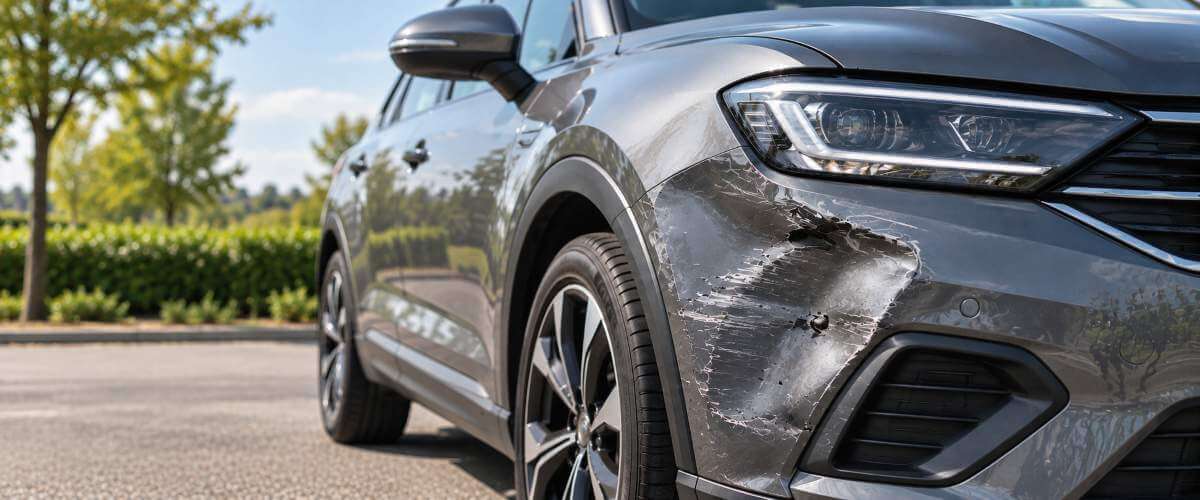
Dealing with a leased car after a crash is completely manageable when you have the right information on your side. Because you don’t own the vehicle, you might not be sure what the accident means for you. The good news is that the process is usually straightforward. This guide walks you through exactly what you need to do.
In this article:
What should you do immediately after crashing a leased car?
The steps you take right after an accident are the same whether you lease or own the car. Safety and gathering evidence are the main priorities. Stay calm and follow these steps:
- Check for injuries: First, check yourself and any passengers for injuries. If anyone is hurt or needs immediate medical attention, call 999 for an ambulance straight away.
- Move to safety: If the vehicles are blocking a busy road and it’s safe to do so, move them to the side of the road. Switch off the engine and turn on your hazard warning lights to warn other drivers.
- Call the police if needed: You must call the police if anyone is injured, if the other driver leaves the scene without stopping, or if the road is completely blocked. If the accident is minor and no one is hurt, you don’t need to call the police, but you should report it online or at a police station within 24 hours.
- Exchange details: You’re legally required to swap information with anyone else involved. Write down their name, phone number, address, vehicle registration number, and the name of their insurance company. Avoid apologising or admitting blame for the accident at the scene, as this can complicate your insurance claim later.
- Take photos: Use your phone to take clear photos of the damage to your leased car and the other vehicles involved. It also helps to take wider photos of the road, any road signs, the weather conditions and the positions of the cars. This evidence can be important for your leasing company and insurer.
- Note witnesses: If anyone witnessed the accident, ask for their name and phone number. Your insurance company may want to contact them later to confirm what happened.
Who should you inform and when?
Your insurer
Report the accident promptly to your insurance provider. Give them an accurate account of what happened and share the evidence you collected at the scene.
If you’re unsure about how your coverage works, read our guide on insuring a lease in the UK.
Your leasing company
Reporting requirements depend on your specific lease agreement and the severity of car damage, so it's a good idea to check your contract for any exact timeframes. As a quick rule of thumb:
- For standard repairs after an accident, you usually don't need to notify your leasing company.
- For a write-off, you will need to reach out to your lease provider.
What happens if your leased car can be repaired?
If the damage to your leased car can be fixed, your leasing company will typically direct you to an approved repair garage. This is important because most lease agreements require repairs to be done through their official network. Using an unapproved garage can cause problems.
Avoid arranging your own repairs without getting your leasing provider’s approval first, even if you think it will be quicker or cheaper. Independent work might not meet the required standards, and you could be charged additional costs when you return the car at the end of your lease.
Your insurer will usually cover the repair costs (minus your excess), but it’s a good idea to confirm the exact process with them since the vehicle is leased.
Good to know: The excess is the amount you pay before your insurer covers the rest. This is a fixed cost you’ll need to factor into the overall repair costs.
What happens if your leased car is written off?
Typically, a car is written off when an insurance company determines that the cost of repairs exceeds the car’s actual value.
When a leased car is written off:
- Since leasing companies require you to have comprehensive insurance, your insurer will pay out an amount based on the car’s market value at the time of the accident.
- The payout goes directly to the leasing company because they own the vehicle.
- If the insurance payout is less than the total amount you still owe on your lease contract, you may have to pay the leasing company the difference out of your own pocket.
This gap between the insurance payout and what you still owe is where GAP insurance becomes relevant. If you have GAP cover, it may pay the difference, so you’re not left out of pocket. It’s worth checking whether you have this, and if not, whether it’s worth taking out before you need it.
Once the insurance company settles the write-off, your lease agreement usually ends.
Takeaway: If your leased car is written off, the lease will end once the insurer pays the leasing company. If the payout doesn’t cover the full amount you still owe on the contract, you’ll have to pay the difference yourself unless you have GAP insurance.
Who pays for damage to a leased car after an accident?
This depends on how the accident happened and the type of insurance you have.
- If it was your fault: Your comprehensive insurance should cover the repair costs, though you’ll need to pay your excess.
- If another driver was at fault: Their insurer should cover the damage. Your own insurance will manage this process.
Most leasing companies require you to have a fully comprehensive insurance policy. A basic third-party policy won’t cover damage to your own vehicle, meaning you would have to pay for all the repairs yourself. Always check your contract to ensure your insurance complies with the leasing company’s requirements.
Can you continue leasing after an accident?
In most cases, yes. An accident does not automatically end your lease agreement. Once the repairs are completed properly, your lease continues as normal. However, the exact process depends on the extent of the car’s damage.
- Minor damage: If reported promptly and repaired, most leave agreements carry on without issue.
- Major damage: If repairs are extensive, some lease companies could pause your agreement while the car is being fixed, but this depends on the provider.
- Write-offs: Usually, the lease will end following the settlement, and you’re free to enter a new agreement.
Returning a leased car with damage
At the end of your lease, the car goes through a return inspection. Any damage beyond fair wear and tear will usually result in additional charges.
If you’ve had an accident during your lease, make sure all repairs are completed properly. Repairs done to a poor standard or damage that was never reported and fixed can still attract charges, even if the accident happened months earlier.