Specifications

Fuel types
Electric
No of seats
5
Boot space
385 litres
Dimensions
Approx. 4,261 mm x 1,809 mm x 1,562 mm
Fuel economy
241 - 369 miles
Acceleration (0-62mph)
5.7 - 8.2 seconds
Insurance group
20 - 30
Body style
Hatchback
CO2 emissions
0g/km
Browse 186 in stock

AA Cars review

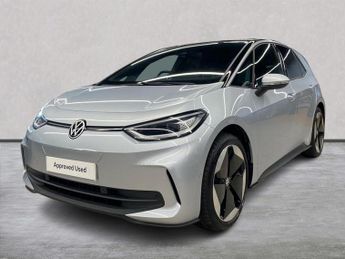
The Volkswagen ID.3 is one of those cars that strikes a careful balance between everyday practicality and forward-thinking technology. It doesn’t shout about its abilities, but instead quietly delivers a refined and reassuring electric driving experience. Thanks to its dedicated EV platform, the cabin is surprisingly roomy, the ride quality is calm and composed, and the overall refinement is excellent.
Jack Evans
Jack Evans

Jack is an experienced motoring journalist who has been covering the latest new-car releases for the last 10 years.

Read bio

4.0/5

How much does it cost?

Prices for the most basic ID.3 get underway at just over £30,000, which places it very much in the heart of the mid-range EV market. Prices do rise as you move through the range – with the GTX Fire & Ice model starting at £48,360 – but the majority of models cost between £30,000 and £40,000. As an added bonus, all but the most expensive trim levels qualify for a £1,500 discount via the government’s Electric Car Grant, which will be applied automatically when buying a car from a Volkswagen franchised dealer. While the grant does not extend to the second-hand market, there are still plenty of used bargains out there if you are on the lookout for extra value.

Prices for pre-owned ID.3s get underway at around £9,000 for high-mileage examples, with cars aged two years old or younger beginning at closer to the £14,000 mark on AA Cars. While this does represent excellent value, it is worth remembering that EVs depreciate faster than their petrol-powered equivalents, meaning resale values will be lower.

Engine and performance

Overview

As a pure electric vehicle, the ID.3 does away with traditional petrol and diesel engines and is instead powered by a rear-mounted electric motor, which has been paired with a lithium-ion battery pack. Buyers can choose between 52, 58 or 79 kWh battery options, which produce between 168 and 201 bhp on standard cars. The sportier GTX Performance model gets a boost of extra power, producing 326 bhp. As with most EVs, the ID.3 offers excellent acceleration as a result of being able to deliver its power instantaneously. Despite the extra weight, even the most basic versions can do 0–60 in a respectable 8.2 seconds which dips to 5.7 seconds if you opt for the GTX Performance model.

Volkswagen ID.3 performance

Out on the road

For what is by no means a light car, the ID.3 feels remarkably agile and light on its feet around town. Aided by the instant responsiveness mentioned earlier, the car is able to dart through gaps in traffic with ease, while its small stature gives it an edge on cramped streets and in busy car parks. In urban environments especially, the ID.3 represents an excellent choice for drivers, who will find it easy to manoeuvre thanks to gentle and light steering.

It is a similar story when you leave town and head to the faster roads, like motorways and dual-carriageways. Regardless of the conditions, the ID.3 largely manages to remain composed and relaxing. It offers good acceleration, which helps when overtaking or joining the motorway, and road and wind noise are kept to a minimum throughout. It may not be the sportiest hatchback in the world but in real-world conditions, its comfortable and easy-to-use approach is perfectly suited to the vast majority of drivers.

Volkswagen ID.3 on the road

Ride and handling

When it comes to the ride of the ID.3, Volkswagen has made a conscious decision to prioritise comfort above all else. As a result, the car has been given exquisitely soft suspension that allows the car to glide over even the most battered of road surfaces without too much discomfort for those inside. When the road gets twisty, however, the car does lack the driver engagement that comes from the likes of the Cupra Born or MG4 XPower.

Having said that, the ID.3 is certainly not a dud. It handles predictably and securely, with body roll kept well under control. While not especially exciting, the car does at least feel planted in the corners, aided by a low centre of gravity, which comes as a result of having a floor-mounted battery. If you are after a comfortable, reassuring and easy-to-drive electric hatchback then the ID.3 is certainly worth considering, even if it may struggle to appeal to driving enthusiasts in the same way.

Volkswagen ID.3 ride and handling

Interior and features

Interiors

Volkswagen regularly ranks highly for the quality of its interiors and the ID.3 is no exception. While the cabin did receive some flak when the car first launched, a number of updates in the years since have transformed it into a stylish, clean and modern space. Up front, the car is dominated by a 12.9-inch central touchscreen, through which pretty much everything is controlled. While the system is excellent and responsive, the decision to do away with physical buttons and instruments can prove fiddly when you’re on the move. Another bugbear is with the touch-sensitive controls, which are very easy to knock accidentally, but overall the interior is excellent.

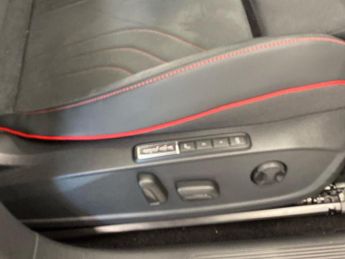
The car makes use of good-quality materials with very few cheap plastics that continue to dog so many of its rivals. All four seats are comfortable and provide strong support, while the raised driving position in the front contributes to excellent visibility. In the rear, passengers enjoy surprising amounts of legroom and even the tallest of passengers should have no issues with headroom.

Volkswagen ID.3 interior

Boot space and practicality

The ID.3 boasts an impressive 385 litres of boot space, which places it ahead of most of its rivals, regardless of powertrain. The capacity rises even further to more than 1,200 litres with the rear seats folded down, creating a very respectable cargo area for such a compact car, although there is no front ‘frunk’ which is seen on a lot of EVs, to store charging cables. Inside the cabin, there are large door bins, a spacious centre console, multiple storage trays and clever modular compartments – all of which mean there is more than enough space to stow everyday items. Elsewhere, families will appreciate the numerous ISOFIX mounting points and easy-access rear doors, which give an extra layer of practicality and versatility.

Volkswagen ID.3 boot space and practicality

Features

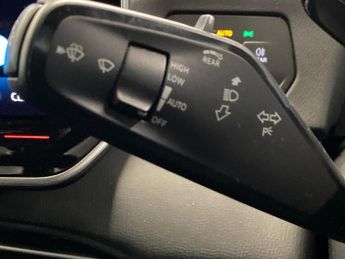
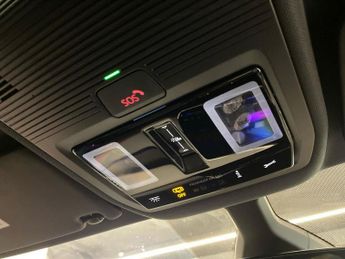
One of the main priorities for EV buyers is a good level of tech and the ID.3 delivers good results on that front. Even entry-level cars get LED headlights, adaptive cruise control, lane-keeping assist, and an infotainment touchscreen with Apple CarPlay and Android Auto. Higher trim levels add even more luxury touches, including enhanced driver-assistance packs, ambient lighting, wireless phone charging, keyless entry, and upgraded sound systems.

Volkswagen ID.3 feature

Trim and colour options

The Volkswagen ID.3 range includes a number of different trim levels, starting at the basic Pure Essential model. Moving up the range, the car is also available in Pure Match, Pro Essential, Pro Match, Pro S Essential, Pro S Match and GTX Performance forms, as well as a limited edition GTX Fire & Ice. Popular colour options include: Glacier White, Moonstone Grey, Blue Dusk, Kings Red, Scale Silver and Dark Olivine Green. Two-tone paint schemes and contrasting roofs are also available on certain trims as part of a wide-ranging personalisation programme.

Volkswagen ID.3 trim and colour

Safety and reliability

Safety is another key strength of the ID.3 and the car has been awarded a full five-star score by Euro NCAP. The judges were impressed by the good level of standard safety equipment, which includes autonomous emergency braking, lane-keeping assist, adaptive cruise control, driver attention warnings, traffic sign recognition, and high-beam assist. Other options, including blind-spot monitoring and rear cross-traffic alerts, are also available on higher trim levels. As with most VWs, the ID.3 enjoys a good reputation for reliability and build-quality, and the battery is protected by an eight-year / 100,000-mile warranty, for additional peace of mind.

Volkswagen ID.3 safety and reliability

MPG, emissions and tax

As a fully electric vehicle, the ID.3 produces zero tailpipe emissions, and running costs are significantly lower than petrol or diesel equivalents – particularly if you are able to charge at home. When it comes to range, the most basic versions of the ID.3 can cover up to 240 miles on a single charge. This extends to 268 and 350 miles on Pro Match and Pro S Match models, and a whopping 369 miles on GTX Performance cars. While these numbers are impressive for a car in this class, it is always worth remembering that figures can vary depending on a number of factors and EVs rarely match their official claimed ranges.

Volkswagen ID.3 MPG, emissions and tax
Browse 186 in stock