Specifications

Fuel types
Petrol, diesel
No of seats
5
Boot space
355 litres
Dimensions
4,059 mm x 1,780 mm x 1,447 mm
Fuel economy
48.7 - 57.6 mpg
Acceleration (0-62mph)
7.6 - 14.7 seconds
Insurance group
2 - 19
Body style
Hatchback
CO2 emissions
99–131g/km
Browse 760 in stock

AA Cars review

The Seat Ibiza is great to drive, and it mixes a stylish design with competent powertrain options. It’s a top used car buy in its segment.
Jack Evans
Jack Evans

Jack is an experienced motoring journalist who has been covering the latest new-car releases for the last 10 years.

Read bio

3.9/5

How much does it cost?

With the arrival of an updated Ibiza for 2026, Seat revised the pricing and trim structure. The range starts at £20,995 for the SE, rising to just over £25,000 for the range-topping FR Sport.

As this generation of Ibiza has been on sale since 2017, there’s plenty to choose from on the used market. On platforms like AA Cars, prices start from as low as £5,000 for the earliest cars with around 100,000 miles on the clock and powered by the now-discontinued non-turbocharged 1.0-litre petrol engine. Turbocharged ‘TSI’ cars are around £1,000 more and well worth it thanks to their zestier performance. The 1.5 turbocharged petrol and the rarer diesel models command higher prices, starting at around the £10,000 mark.

Engine and performance

Overview

Between its launch in 2017 and the time of its first update in 2021, the Ibiza came in a pretty wide engine range for such a small car.

Buyers could choose between a 1.0-litre naturally-aspirated three-cylinder petrol engine, badged 'MPI', with 75bhp, and a 1.0-litre turbocharged three-cylinder 'TSI' in 94bhp and 114bhp forms. Customers could also choose a 148bhp 1.5-litre turbocharged four-cylinder TSI petrol if they wanted more power – this engine, as shared with the larger Volkswagen Golf, allowed the Ibiza to race from zero to 62mph in just 7.4 seconds. The Ibiza also came with diesel power – a 1.6 TDI in 79bhp and 94bhp guises gave impressive fuel economy of up to 57.6mpg.

From 2021 onwards the diesels were removed from the range, and the 2025 update saw the engine line-up slimmed down to just the 94bhp and 114bhp 1.0 TSIs.

Most Ibizas use a five- or six-speed manual gearbox, while some petrols are available with a seven-speed DSG automatic. Many Ibizas available on the used market are of the MPI and 1.0-litre TSI type, with the 1.5 petrol and diesels being harder to find.

SEAT Ibiza performance

Out on the road

The Ibiza has always been weighted towards the more fun end of the supermini spectrum, rivalling the Ford Fiesta for driver engagement. Light, but accurate steering, a firm ride, and zesty engines give the Ibiza an enthusiastic feel.

In the city, the combination of light steering and good visibility make parking in a tight space a doddle, and the smaller petrol engines are very suited to negotiating through urban traffic. It's on faster roads where the Ibiza really shines, with tight body control, and impressive refinement. The petrol engines are certainly smoother and quieter than the diesels, even on the motorway, so you really have to desire the diesels' better claimed fuel economy to choose them. The 1.5-litre petrol offers near sporty hot hatch levels of performance, yet still delivers impressive refinement levels.

SEAT Ibiza on the road

Ride and handling

Key to the Ibiza's fun driving characteristics is its suspension. It's a little firmer than you'd find in an equivalent Renault Clio, Peugeot 208, and its sister, the Skoda Fabia, helping to give the Ibiza good body control on twisty roads. This is especially the case with FR and FR Sport, which have stiffer suspension compared to models lower down in the range. It's never harsh or uncomfortable though – it's just noticeably firmer than many rivals, and those FR models might clatter into potholes just a little more than expected.

The Ibiza just feels a more alert and lively car compared to its rivals, turning into corners more keenly, while the steering is accurate.

SEAT Ibiza ride and handling

Interior and features

Interiors

The earliest of the current fifth-generation cars had a very grown-up appearance, with a smart design. Sadly the quality didn't match the mature look, with most surfaces covered in scratchy and hard plastics. Facelifted models from 2021 introduced upgraded materials, but the Ibiza is still a long way from a Renault Clio and a Volkswagen Polo for interior plushness. That said, the layout is clean and user-friendly, with major controls positioned within easy reach, and the touchscreen systems – which, again, have been upgraded over the years – are logical and easy to use.

SEAT Ibiza interior

Boot space and practicality

The Ibiza is impressively spacious for a supermini. Boot space stands at 355 litres, which is among the best in the class, and the space itself is very practical. The opening is wide and low, and the loading area is usefully square, while a two-stage floor boosts practicality further. The back seats split in a 60:40 fashion (although the short-lived S model had fixed seatbacks that don’t split) and fold down relatively flat.

Legroom is particularly good for such a small car, and trumps many rivals, and there's loads of headroom. You can easily fit a pair of six-footers behind similarly-sized people in the front. The doors open wide, too, which is good for loading child seats, and the Isofix points are easily reachable.

SEAT Ibiza boot space and practicality

Features

Since being on sale from 2017, Seat has offered the Ibiza in a variety of trim levels.

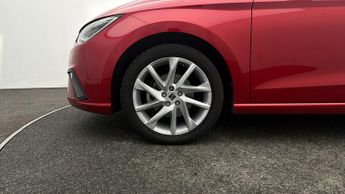
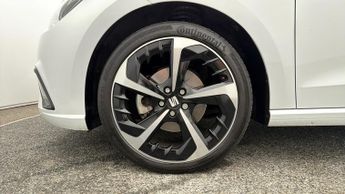
For a short time there was an 'S' model that acted as the entry-point to the range, and featured a five-inch monochrome touchscreen, Bluetooth, air conditioning, a height-adjustable driver's seat, and automatic headlights. Many buyers stepped up to the SE and SE Technology models, though, thanks to their better equipment levels. SE cars get 15-inch alloy wheels, a leather steering wheel and a colour touchscreen, and SE Technology adds a larger eight-inch touchscreen with sat-nav, and ambient lighting. SE Design gets 16-inch wheels, rear privacy glass, a panoramic sunroof and a 300W Beats audio system.

FR models, meanwhile, get sportier styling inside and out, along with stiffer suspension, and the Xcellence and Xcellence Lux trims add climate control, keyless entry, heated seats, wireless phone charging, and a rear-view camera.

From 2025, the range was slimmed down to just SE, SE Technology, FR First Edition, and FR Sport. Basic equipment levels for the SE were improved with larger 16-inch wheels fitted, along with metallic paint, and an 8.25-inch touchscreen with an eight-inch digital driver's display.

There have also been a number of special editions over the years, boasting more equipment. These include the SE Edition, FR Edition, FR Black Edition, and the Anniversary Limited Edition that celebrated 40 years of the Ibiza.

SEAT Ibiza feature

Trim and colour options

The Ibiza has been offered in a wide array of trims since this generation's introduction in 2017. S cars offer quite basic equipment levels compared to the norm in 2026, and many customers even felt the same in 2017. Consequently, many buyers chose SE and SE Technology cars with their colour infotainment systems, alloy wheels, and LED headlights. FR models are just as popular thanks to their sportier styling and equipment levels, such as sports seats and stiffer suspension set-ups. The 1.0-litre petrols are also by far and away the most numerous on the used market, thanks to their great blend of decent performance and excellent running costs.

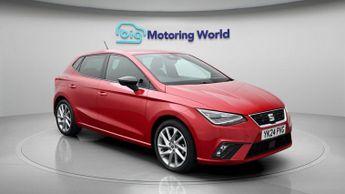
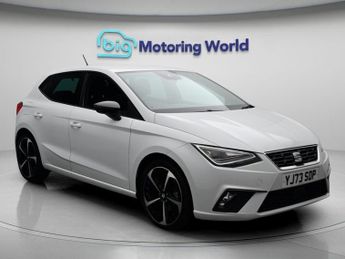
Seat likes to see itself as a brand that leans into its Spanish heritage, giving buyers some flair and fun. Consequently, the colour palette tends to be vibrant with red, orange, and blue shades available. If that's not your thing, the Ibiza also comes in an array of more muted blacks, greys and whites.

SEAT Ibiza trim and colour

Safety and reliability

Independent crash testers Euro NCAP gave the Ibiza a full five-star safety rating when it tested the car in 2017, with a very high score of 95 per cent for adult occupant protection and 77 per cent for child occupant protection. For safety assist systems, though, the Ibiza received a 60 per cent score.

The car was tested again in 2022 after its mid-life facelift. Despite the testing programme being more rigorous, the Ibiza still scored a five-star rating. It received an 83 per cent score for adult protection, 82 per cent for child protection, and 70 per cent for safety assist systems.

As for reliability, the Ibiza's record is a little mixed. Industry surveys say the car is generally reliable, but some owners complain about glitchy infotainment systems and electrical gremlins. Dealer customer service is on the average side, too.

SEAT Ibiza safety and reliability

MPG, emissions and tax

Many buyers opt for the Ibiza when looking for a supermini with low running costs. The 1.0-litre MPI returns around 50mpg in real-world driving, while the turbocharged 1.0 TSI engines can comfortably achieve mid-40s to low-50s on the combined cycle. These are the engines most buyers choose, as while the 1.5 petrol offers gutsier performance, fuel economy slips to high-30s. The diesels are a rarer sight on the used market but offer 50-plus-mpg.

All Ibizas pay the flat rate of £195 per year, while insurance costs vary from model to model. The Ibiza ranges from groups two to 19.

SEAT Ibiza MPG, emissions and tax
Browse 760 in stock