Specifications

Fuel types
Hybrid
No of seats
5
Boot space
304 litres (up to 1,205 litres with seats folded)
Dimensions
4,044 mm (L) x 1,694 mm (W) x 1,526 mm (H)
Fuel economy
62.8 mpg (WLTP combined)
Acceleration (0-62mph)
9.4 seconds
Insurance group
13 - 20
Body style
Hatchback
CO2 emissions
102–108 g/km (WLTP)
Browse 874 in stock

AA Cars review

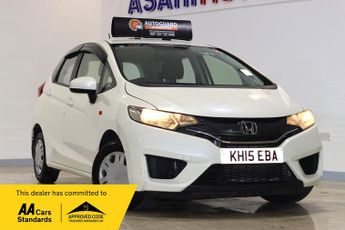
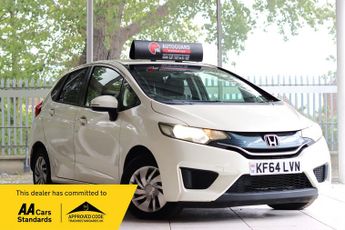
The Honda Jazz remains one of the most versatile and intelligently designed small cars on the market. Its combination of versatility, space, comfort, efficiency, and safety makes it stand out from the pack – even if it lacks sparkle in terms of image or dynamics. It has been designed to a brief – one that it fulfils perfectly.
Jack Evans
Jack Evans

Jack is an experienced motoring journalist who has been covering the latest new-car releases for the last 10 years.

Read bio

4.0/5

How much does it cost?

As a new car, the Honda Jazz starts from around £28,060 for the entry-level Elegance trim, rising to £31,085 for the range-topping Advance Sport. On the used market, early examples of the current Jazz can be found from around £12,000 on AA Cars, which will get you a 2020/21model – a significant saving on new, and with a fine reputation for reliability, a worthy used-car choice. Demand for low-mileage, high-spec cars is strong.

Engine and performance

Overview

There’s only one engine offered in the Honda Jazz and it’s a 1.5-lite hybrid unit known as the e:HEV, which combines a 1.5-litre petrol engine with two electric motors. This self-charging hybrid produces a combined 109 bhp and 253 Nm of torque and is both smooth and responsive, feeding power to the front wheels via an automatic e-CVT gearbox. It does 0–62 mph in 9.4 seconds and has a top speed of 108 mph – figures that won’t set pulses racing, but are more than adequate for everyday driving, while it’s quite responsive in the mid-range so never feels especially slow.

Honda Jazz performance

Out on the road

Pleasant, refined and competent – those are the key pillars when it comes to the Honda Jazz driving experience. It’s neither sharp nor sporty, but it's comfortable, nippy and feels safe. Around town, it excels: the electric motor provides instant torque at low speeds, making it easy to zip through traffic and effortless to manoeuvre. The steering is light and accurate, and visibility is superb. On the open road, the Jazz is composed, with good noise insulation and a supple ride that soaks up rough surfaces with ease.

The hybrid system allows for short bursts of electric-only running, particularly at low speeds, contributing to a serene and relaxed driving experience. Motorway journeys are dispatched with minimal fuss, although the engine can become intrusive during hard acceleration or steep inclines – a common trait among small hybrids. While the Jazz doesn’t deliver the excitement or sharpness of some rivals, it still feels assured and composed.

Honda Jazz on the road

Ride and handling

Underneath the Jazz is a well-engineered chassis that favours comfort and stability – built to a specific brief by Honda, home to some of the finest engineers in the automotive business. The suspension set-up, with MacPherson struts at the front and a torsion beam at the rear, is tuned to absorb bumps and undulations with minimal fuss. Even on rougher roads, the Jazz maintains its composure, rarely transmitting harshness into the cabin. Body roll is well-controlled for a car in this segment, and the Jazz feels secure and stable through bends, but the steering is vague and there’s quite a bit of body roll. The Crosstar variant adds a mild SUV flavour with increased ride height and tougher exterior cladding, but the underlying driving dynamics remain largely unchanged. Interior and Features

Honda Jazz ride and handling

Interior and features

Interiors

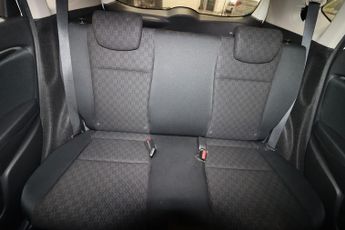
Space is the star attraction of the Jazz’s cabin, as the Honda has far more space than most of its rivals. Legroom and headroom in the front and in the rear are exceptional for this class, comfortably accommodating adults even on longer journeys, while rear seats have two Isofix points. The Jazz’s party piece is its ‘Magic Seat’ system: the rear bench can be folded flat or flipped upwards, providing a range of cargo and storage options that put many larger cars to shame. The dashboard layout is minimalist and user-friendly, with physical climate controls and a clear digital instrument display as standard. Visibility is excellent, thanks to slim A-pillars and a large glass area, while the high seating position gives a commanding view of the road. It also feels solid and durable throughout.

Honda Jazz interior

Boot space and practicality

Practicality has always been a Jazz hallmark, and the latest model continues this tradition. The 304-litre boot may not be class-leading on paper, but the square shape and low loading lip make it highly usable. Fold the rear seats flat and suddenly it becomes a class-leader, and by quite some margin. The load capacity swells to a cavernous 1,205 litres, giving ample space for larger items, bicycles, domestic appliances or other bulky items. The ‘Magic Seat’ system is supremely clever, allowing the rear bench to be split 60:40, folded flat for a level load bay, or flipped up to accommodate tall objects like plants or furniture. In the cabin, door bins, cupholders, and cubbies abound, ensuring there’s plenty of room for odds and ends – and the glovebox is decently sized too.

Honda Jazz boot space and practicality

Features

All Jazz models are generously equipped, with a seven-inch digital driver display, a nine-inch central touchscreen, Apple CarPlay/Android Auto compatibility, DAB radio, Bluetooth, and a rear-view camera. Optional extras are limited but include navigation, upgraded audio, and a range of exterior styling accessories.

Honda Jazz feature

Trim and colour options

There are four trim levels on offer: Elegance, Advance, Advance Sport and Crosstar Advance. The Elegance is equipped with a comprehensive suite of safety technologies, including multiple airbags, autonomous emergency braking, lane-keeping assist, adaptive cruise control, traffic sign recognition, and a driver attention monitor, plus infotainment including Apple CarPlay and Android Auto, air conditioning, LED headlights, alloy wheels, and the black or two-tone fabric upholstery.

Step up to the Advance and you get heated front seats and a premium audio system, plus keyless entry and start. The Advance Sport trim builds on this with unique styling elements, 16-inch alloy wheels, gloss black mirrors and grille, and bespoke interior touches such as orange accent stitching and suede-effect upholstery. The SUV-inspired Crosstar Advance includes everything found in Advance, but adds distinctive cues, a raised ride height, and chunky exterior accents. This trim exclusively offers the Surf Blue colour option and features water-resistant upholstery and roof rails. Colour choices are broad, with options including Platinum White Pearl, Shining Grey, Crystal Black, Premium Sunlight Yellow, Midnight Blue, and Surf Blue (exclusive to Crosstar). Some colours incur a small premium.

Honda Jazz trim and colour

Safety and reliability

The Jazz achieved a full five-star Euro NCAP rating, with impressive scores in each category: adult occupant protection at 80%, child occupant protection at 83%, pedestrian safety at 80%, and safety assist systems at 76%. Standard safety equipment includes multiple airbags, autonomous emergency braking, lane-keeping assist, adaptive cruise control, traffic sign recognition, and a driver attention monitor. Reliability is another Jazz strong suit – Honda consistently ranks highly in ownership surveys, and the hybrid system has proven durable and dependable in real-world use. A three-year, 90,000-mile warranty comes as standard, with the option to extend cover.

Honda Jazz safety and reliability

MPG, emissions and tax

The Jazz’s hybrid powertrain delivers impressive efficiency, with WLTP figures of 61.4 -62.8 mpg depending on trim and wheel size. Real-world economy regularly exceeds 55 mpg, especially in urban or mixed driving. CO₂ emissions are low, ranging from 102 to 108 g/km—among the best in class for a non-plug-in hybrid. VED (or road tax) is £195 a year. Insurance costs are modest, typically ranging from group 13 to 20, making the Jazz affordable to run for drivers of all ages. Servicing intervals are every 12,500 miles or 12 months, with Honda offering fixed-price service plans and extended warranties to help manage ongoing costs.

Honda Jazz MPG, emissions and tax
Browse 874 in stock