Specifications

Fuel types
Petrol, petrol-hybrid, petrol plug-in hybrid
No of seats
5
Boot space
536 litres, 396 litres (PHEV)
Dimensions
4,645mm x 1,882mm x 1,681mm
Fuel economy
42.2 - 313.9mpg
Acceleration (0-62mph)
7.3 - 9.5 seconds
Insurance group
16 - 26
Body style
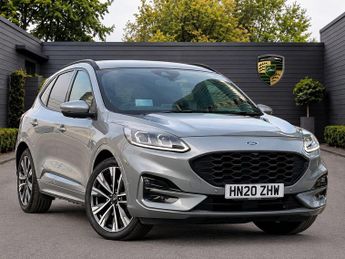
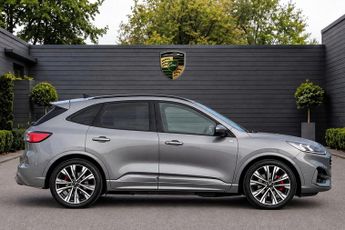
SUV
CO2 emissions
21 - 154g/km
Browse 1,862 in stock

AA Cars review

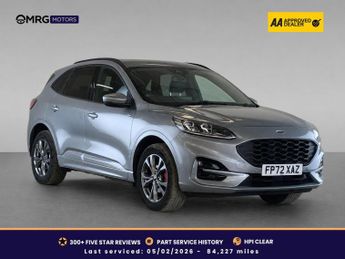
The Ford Kuga, especially the BlueCruise Edition, is well-equipped and one of the nicer handling SUVs in its segment. But it is starting to feel its age, particularly the driving experience with the self-charging hybrid powertrain and the CVT gearbox.
Adithya Gopal
Adithya Gopal

Adithya is the Content Editor at AA Cars and a Motoring Journalist, with over 1,000 published articles across numerous publications.

Read bio

3.8/5

How much does it cost?

Brand-new prices start at £33,335 for the entry-level Titanium with the 1.5-litre EcoBoost petrol engine and six-speed manual gearbox. The ST-Line starts at £37,735 and opens up the full-hybrid and plug-in hybrid powertrains. The Active is available with four-wheel drive from £41,080, while the ST-Line X Black Package and BlueCruise Edition sit at the top of the range. The most expensive Kuga is the BlueCruise Edition full-hybrid 4WD, priced at £44,330.

As this generation of Kuga has been on sale since 2019, there are plenty of used examples to choose from. At the time of writing, older, higher-mileage cars on AA Cars started below £10,000. Examples with more typical mileage started at around £15,000 across a range of powertrains, while approximately £25,000 was enough for some facelifted 2025 models with newer technology.

Engine and performance

Overview

There are four engine/gearbox options for the Kuga:

1.5-litre EcoBoost FWD: 148hp/240Nm + 6-speed manual

2.5-litre FHEV FWD: 178hp self-charging hybrid engine + CVT gearbox

2.5-litre FHEV 4WD: 180hp self-charging hybrid engine + CVT gearbox

2.5-litre PHEV FWD: 240hp plug-in hybrid engine + CVT gearbox

Ford Kuga performance

Out on the road

We drove the Ford Kuga 2.5-litre self-charging hybrid with a 1.1kWh battery and 4WD. Yes, you can get a Kuga with a four-wheel drive, although it is more expensive than the plug-in hybrid version. Being a hybrid, the Kuga can set off and travel short distances at low speeds on electric power. Throttle response is immediate, and the car moves away briskly as soon as you release the brake pedal. This calibration can catch out drivers who are unfamiliar with the car, particularly when parking in a tight space.

The 2.5-litre engine comes on as speed builds. It is audible, although the transition is reasonably smooth. At normal speeds, the Kuga is responsive and feels adequately fast enough. But ask for stronger acceleration, such as when joining a motorway, and the engine becomes harsher. The familiar CVT ‘rubber-band’ effect means the engine speed rises sharply without an equally strong increase in road speed. This is less noticeable around town, but it makes the overall driving experience feel dated.

Refinement is not a particular strength, as the engine becomes fairly vocal under load without delivering a corresponding surge in performance. Ford claims a 0–62mph time of 8.3 seconds, but in-gear acceleration feels slower because the CVT. Despite this, the Kuga is easy to manoeuvre, with a commanding seating position and a low dashboard. All-round visibility is also good, which less experienced drivers will appreciate.

Ford Kuga on the road

Ride and handling

Driver engagement has been a hallmark of Ford for decades, and the Kuga continues that tradition to an extent. In many ways, it feels like a larger Ford Puma. The steering is light and slightly vague at low speeds, but the Kuga feels planted, with controlled body roll. It also feels reasonably agile through corners despite its 1,765kg kerb weight, while the four-wheel-drive system provides plenty of traction in slippery conditions.

On the flip side, the ride is firm rather than plush. It is not stiff enough to become uncomfortable, but the underlying firmness is present at most speeds. The benefit is reassuring stability on the motorway, without the floaty or bouncy sensations that affect some softly sprung SUVs.

The brake pedal is less convincing. There is some initial pedal travel before the brakes begin to bite, creating a slightly spongy first response. The transition between regenerative and friction braking can also make the pedal feel artificial. Stopping power is strong once the brakes engage, although the pedal takes some time to get used to.

Ford Kuga ride and handling

Interior and features

Interiors

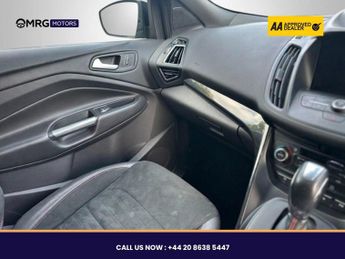
Step inside the Kuga and you are greeted by a conventional cabin. While several rivals offer more futuristic designs, the Ford’s layout is straightforward and comfortable. The 13-inch touchscreen is the main focal point. There are physical rotary controls for the audio system, but the climate controls are integrated into the touchscreen. As a result, some adjustments require you to take your eyes off the road.

Overall, the cabin does not feel particularly upmarket, with hard plastics used in several areas. It is also beginning to look dated beside some newer rivals. However, it feels robust, which remains important in a family SUV.

Ford Kuga interior

Boot space and practicality

The Kuga is a spacious SUV for a family of four. Rear legroom is particularly generous thanks to the sliding and reclining rear bench. The doors open wide, making it easier to fit child seats, and headroom is good. Carrying five adults will be more of a squeeze, as the middle seat feels more like a perch than a fully comfortable seat. Rear passengers also sit with their knees slightly raised, which may be uncomfortable for taller occupants on longer journeys.

Boot space is up to 536 litres, depending on the position of the sliding rear seats. The PHEV only offers 396 litres. With the rear seats folded, capacity increases to 1,517 litres.

Ford Kuga boot space and practicality

Features

Feature highlights include a 360-degree camera, a 10-way electrically adjustable driver’s seat with memory, keyless entry, a heated windscreen, a heated steering wheel, heated seats, a 12.3-inch driver’s display, a panoramic roof, a powered tailgate, a 10-speaker 700W Bang & Olufsen sound system and a 13-inch central touchscreen.

The BlueCruise Edition includes Ford’s hands-free, eyes-on BlueCruise driver-assistance system. When used in an approved Blue Zone, it can manage the car’s speed, following distance and lane position without the driver holding the steering wheel. Ford says BlueCruise is available on more than 95% of the UK’s motorway network. During our test, it maintained the selected speed and lane position effectively. However, you should be watching the road and be ready to resume control.

Ford Kuga feature

Trim and colour options

Ford offers the Kuga in six trims at the time of writing this review: Titanium, ST-Line, Active, ST-Line X, ST-Line X Black Package and the flagship BlueCruise Edition.

In terms of colours, Frozen White is the no-cost colour on Titanium, ST-Line, Active, ST-Line X and ST-Line X Black Package.

Agate Black, Solar Silver, Bursting Green, Desert Island Blue and Magnetic cost £800, although availability varies by trim. Grey Matter also costs £800 and is available on ST-Line, ST-Line X and ST-Line X Black Package.

The BlueCruise Edition comes in exclusive Vapour Blue (as our test car) at no extra cost. It can also be specified in Solar Silver or Magnetic, both priced at £800.

Ford Kuga trim and colour

Safety and reliability

Euro NCAP gave the Kuga its full five-star safety rating when it tested the car in 2019. It received strong scores for adult and child occupant protection, at 92 per cent and 86 per cent respectively. Extra safety kit such as blind-sport warning was optional on earlier cars, and standard on later ones. All of the advanced driver safety systems function as expected.

Ford Kuga safety and reliability

MPG, emissions and tax

The 1.5-litre petrol officially returns 42.2–44.1mpg. Ford quotes 47.1–48.7mpg combined for the four-wheel-drive full hybrid, and during our test the trip computer generally showed similar figures. Around town, the full hybrid can benefit from more frequent electric running, which helps it approach 50mpg in suitable conditions.

The plug-in hybrid offers an official electric range of approximately 41–43 miles, depending on trim. Its official weighted combined economy is 282.5–313.9mpg, although achieving anything close to that requires regular charging and a high proportion of electric driving. Petrol consumption will be considerably higher once the battery is depleted. The PHEV also has the lowest official CO₂ emissions in the range, at 21g/km.

First-year VED depends on the car’s official CO₂ emissions. From the second licence, the standard annual rate is £200. Versions with a list price above £40,000 also attract the £440 Expensive Car Supplement for five years from the second licence, taking the annual total to £640 during that period.

Ford Kuga MPG, emissions and tax
Browse 1,862 in stock