Specifications

Fuel types
Diesel, Plug-in Hybrid
No of seats
5
Boot space
555 litres
Dimensions
4,573–4,753 mm x 1,895–2,098 mm x 1,625 mm
Fuel economy
49 mpg – 250 mpg
Acceleration (0-62mph)
10.4 seconds – 5.4 seconds
Insurance group
21 – 39
Body style
SUV
CO2 emissions
40 – 145 g/km
Browse 65 in stock

AA Cars review

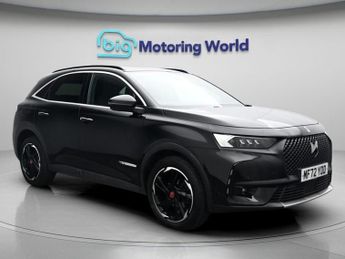
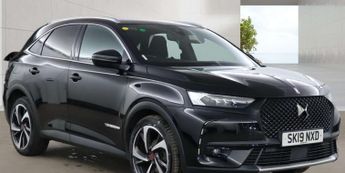
The DS7 is an SUV that makes a strong design statement and offers a comfortable, well-equipped interior. It won’t match German rivals for driving sharpness, and some materials and systems feel inconsistent, but it is still an appealing choice for those who value style and technology over sporty handling.
Jack Evans
Jack Evans

Jack is an experienced motoring journalist who has been covering the latest new-car releases for the last 10 years.

Read bio

3.5/5

How much does it cost?

DS reckons that the DS7 has what it takes to compete at the higher end of the market and has priced it as such too. The cheapest entry-level diesel cars start at just under £35,000, while top of the range plug-in hybrid variants reach an incredibly punchy £62,000. In between there are a number of different specs and trim levels, most of which carry price tags between £40,000 and £50,000. Those prices place the DS7 in direct competition with the German big three, as well as the ever-popular Volvo XC40. On the used market, second-hand examples start at around £10,000, although at that price point you will be looking at an older, higher-mileage example. A search on AA Cars shows that three-year-old cars get underway at around £15,000 so it is certainly worth having a shop around.

Engine and performance

Overview

In an era when more and more carmakers are moving to electric-only power, DS has decided not to make a full EV version of its flagship SUV. Instead the car can be bought with a choice of diesel and hybrid set-ups, all of which remain smooth and efficient. Hybrid cars utilise a 1.6-litre, four-cylinder petrol unit, which is teamed with either a single or dual electric motors and a 14.2kWh battery pack. The most powerful hybrid option – the E-Tense 4x4 360 – produces an impressive 360 bhp and has an electric-only range of 36 miles. Elsewhere, the DS7 can be bought with a 1.5-litre, four-cylinder turbodiesel engine that produces 129 bhp. In this set-up, getting the car from zero to 60 mph takes 10.7 seconds – a disappointingly slow figure compared to some of its big rivals.

DS 7 performance

Out on the road

Whichever powertrain you go for, the DS7 can largely be relied on to deliver a comfortable and competent driving experience. While rarely exciting, the car’s steering and chassis prioritise comfort above pretty much everything else. This does make the car easier to maneuver in urban environments, where it is relatively comfortable in crowded city streets and tight car parks. At motorway speeds, the DS7 accelerates well, especially in plug-in hybrid variants, which utilise both electric and petrol to ensure maximum power delivery; however, the car never gets close to being anything you might call ‘sporty’. Overall, driving the DS7 is comfortable and relaxing but certainly not exciting, there are a few other drawbacks too, including poor rear visibility, which do negatively impact the whole experience somewhat.

DS 7 on the road

Ride and handling

Comfort is very much the order of the day here and that is reflected in how the car rides and handles. The DS7 has been given excellent soft suspension that is composed and very good at absorbing most of the bumps and imperfections that modern day roads throw up. This is made even better on higher spec cars, which get DS’s ‘Active Scan Suspension’, which uses a forward-facing camera to prepare the suspension for upcoming bumps. While this comfort is brilliant, it does often come at the expense of a bit of control. On bendy A-roads the SUV displays a fair bit of body roll and limited steering feedback can make it tricky to get things back on track. Having said that, the majority of DS7 buyers are not going to be spending much time thrashing their car around corners. They will be far more concerned about how the car fares as a cruiser or commuter and on both fronts, it performs perfectly well.

DS 7 ride and handling

Interior and features

Interiors

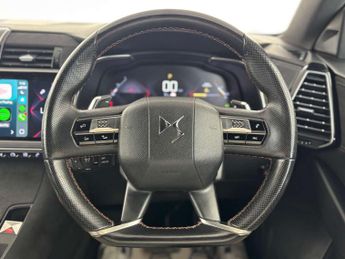
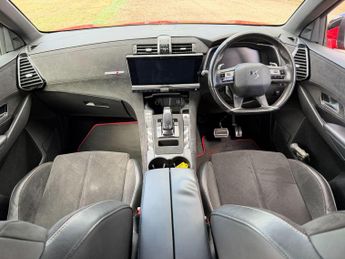
DS has always had a quirky approach to interior design and that is clearly visible in the DS7. While you have to applaud the ethos, in this case the left-field approach has a few different hits and misses. Starting with the good bits, the dials are pleasant to look at and the quilted leather upholstery is particularly smart. However, in places it does just feel like DS have tried a bit too hard with random diamond shapes pretty much everywhere you look, which feel like design for design’s sake. The quality of materials is also something of a mixed bag with soft-touch high-quality touches replaced by cheaper plastic finishes on lower trim levels, betraying the car’s premium ambitions. Elsewhere, the front seats are comfortable, supportive and often heated and ventilated depending on trim level. In the rear, seat space is good, although headroom may prove to be a bit of an issue for taller passengers, especially in models with the optional panoramic sunroof.

DS 7 interior

Boot space and practicality

One area where the DS7 is strong is when it comes to practicality. With a firm view on the family market, DS has given the car a generous 555 litres of boot space, rising to 1,752 litres with the rear seats folded down. These figures trump the majority of its rivals and the space is more than a match for suitcases, sports gear, and anything else you need to throw in the back. The space is the same regardless of powertrain and the boot itself also includes a 12-volt socket for extra practicality. It is a similar story in the cabin itself where there are well-sized door bins, a capacious centre console, and useful cubbies.

DS 7 boot space and practicality

Features

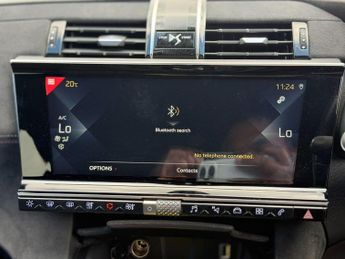
DS prides itself on offering its buyers a good level of standard tech and that approach has once again been adopted in this car. Even entry-level models get a 12.0-inch HD touchscreen for the infotainment system, as well as a 12.3-inch digital instrument panel behind the steering wheel. The touchscreen looks great and is easy to use and customise, even if it could benefit from a few physical buttons here and there. Cars are also fitted with Apple CarPlay, Android Auto, adaptive cruise control and semi-autonomous driving aids. As you move through the range DS begins to add even more luxury touches including a 360-degree camera, upgraded audio systems and wireless charging.

DS 7 feature

Trim and colour options

The DS7 can currently be bought in Pallas and Étoile trim levels, after DS streamlined their offering back in 2024. Both options aim to put luxury and comfort at the heart of what they offer and are available across hybrid and diesel models of the car. Popular colour options include Sapphire Blue, Platinum Grey, Perla Nera Black, Lacquered Grey, Pearl Crystal, and Pearl White.

DS 7 trim and colour

Safety and reliability

The DS7 boasts a good array of safety features, including adaptive cruise control, lane-keeping assist, blind-spot monitoring and autonomous emergency braking across much of the range. In recognition of this, the car received a five-star rating for safety from Euro NCAP. When it comes to reliability, very few major issues have been reported by buyers and parts are readily available when things do go wrong, thanks to DS’s position as part of Stellantis, which is the world’s fourth biggest carmaker.

DS 7 safety and reliability

MPG, emissions and tax

Efficiency is another area where the DS7 does well, with even the least efficient diesel cars offering close to 50 mpg in official test conditions. Meanwhile, plug-in hybrid variants achieved a whopping 250 mpg — although this involved regular charges and only using electric power. In real world conditions, hybrid versions of the DS7 are likely to achieve up to 55 mpg, while diesel drivers can expect figures closer to 50 mpg. According to official figures, hybrid cars produce under 40 g/km of CO2 emissions, although this rises to around 145 g/km in the least efficient diesel models. When it comes to tax, the DS7 broadly mirrors the rest of its rivals, petrol models falling into mid-range VED brackets. As with all cars priced above £40,000, several versions are subject to the government’s Expensive Car Supplement, which adds an additional £390 per year for five years from the second year of registration.

DS 7 MPG, emissions and tax
Browse 65 in stock