Specifications

Fuel types
Mild-hybrid petrol, full-hybrid petrol
No of seats
5
Boot space
472-517 litres
Dimensions
4,343mm x 1,813mm x 1,621mm
Fuel economy
46 - 61.4mpg
Acceleration (0-62mph)
9.4 - 1.0seconds
Insurance group
17, 24, 25, 26
Body style
SUV
CO2 emissions
105-135g/km
Browse 381 in stock

AA Cars review

Dacia's latest Duster is a clever demonstration of the brand offering more comfort, refinement and desirability, and the features many SUV buyers desire, while not forgetting its value-for-money heritage.
Jack Evans
Jack Evans

Jack is an experienced motoring journalist who has been covering the latest new-car releases for the last 10 years.

Read bio

4.0/5

How much does it cost?

Brand new prices start at just under £22,000 for the entry-level Expression with a mild-hybrid petrol engine. Mid-level Journey kicks in at £23,500 and the range tops out at the Extreme where prices start at about £800 more. It's very well priced compared to rivals like the Nissan Qashqai and Volkswagen T-Roc.

As the current car is still relatively new, used prices haven’t slipped as quickly as you might have expected. At the time of writing, the cheapest Duster on AA Cars was a mid-range Journey with a mild-hybrid engine and 8,000 miles on the clock, for £23,000. High demand is keeping prices high it would seem.

Engine and performance

Overview

The Duster has received a significantly modernised engine line-up over the past few years, with the car ditching diesel engines and instead opting for newer petrol engines. In fact, all the engines in the current Duster are electrified to some degree to improve emissions regulations and deliver better fuel economy for customers.

The range starts with the mild-hybrid 140, which uses a 138bhp 1.2-litre three-cylinder turbocharged mild-hybrid petrol. You can four-wheel drive to this version, too, although power slips to 138bhp. Both of these engines come with a manual gearbox.

The current Duster is the first of its type to be available with a full-hybrid system. The full-hybrid has a much larger battery than the mild-hybrid, allowing it to travel around on electric power for short distances. It initially used a 1.6-litre petrol engine and two electric motors, but in 2025 this was upgraded to a larger 1.8-litre engine to give 153bhp – 15bhp more than the old 1.6. The full-hybrid only comes with front-wheel drive and an automatic gearbox.

Dacia Duster performance

Out on the road

The Duster has never been concerned about offering a sporty driving experience, leaving that to rivals like the Seat Ateca. It's far more focused on delivering a comfortable, efficient and stress-free driving experience, and on this front it succeeds.

It has light controls and steering around town, and gives excellent visibility thanks to its high driving position. This soft feeling continues on faster roads, too, making light work of poor surfaces. It feels planted and confidence-inspiring, although you can hear more road and wind noise compared to rivals.

As all engines have some form of electrification, the Duster pretty much glides away from a standstill. The mild-hybrids can sound a bit raucous under heavy acceleration due to their three cylinders, but they are far from being unrefined and uncomfortable.

Dacia Duster on the road

Ride and handling

As already mentioned, the Duster is more interested in delivering a comfortable driving experience than a sporty one, and this includes the ride. The suspension is on the softer side, meaning it soaks up potholes and glides over speed humps with ease.

The tradeoff with this comfortable suspension is that the Duster tends to roll around when cornering, and has softer body control compared to most of its rivals. It never feels wayward, though, but it just requires a more relaxed driving style.

The four-wheel drive versions can give some welcome extra grip when things get slippy. Selectable driving modes and decent ground clearance means the Duster doesn't embarrass itself when the going gets tough. The Duster is far more capable off-road than most family SUVs.

Dacia Duster ride and handling

Interior and features

Interiors

Dacia has given the current Duster a far more interestingly-designed interior than its predecessors. The dashboard is a riot of angles, creases and different contours, all helping to underline the car's rugged persona. The company has also developed a clever ‘YouClip’ system that allows a number of accessories to be attached to various places in the interior.

The Duster has also fully embraced the digital age, with all cars getting a pair of screens – the infotainment touchscreen is particularly easy to use.

Dacia reminds customers that this is still a value offering in the SUV segment though, and you can tell this when you prod and feel around. While Dacia has done a good job at adding some colour to the interior, the dashboard and doors are covered in cheap, scratchy-feeling plastic. It's not a dealbreaker, though, and everything feels robust.

Dacia Duster interior

Boot space and practicality

It's easy to get a comfortable driving position in the Duster thanks to a good level of adjustment in the steering wheel and seat, and you tend to sit a little bit higher than other SUVs, improving visibility.

The Duster scores well on space, and there’s loads of room for the family and its belongings. Headroom is excellent and exceeds most rival SUVs, as is legroom; the rear seats are also very comfortable and supportive. Isofix points are present in the two other rear seats, but they are fiddly to access thanks to being hidden behind zipped covers.

The standard mild-hybrid petrol offers a massive 517 litres of space. The boot opening is wide and the loading area itself is well shaped, even if the boot lip is a little high. The back seats fold in a 60:40 fashion and lie down almost completely flat.

If you go for the full-hybrid model, boot space drops to 472 litres due to the placement of the car's battery system under the boot floor.

Dacia Duster boot space and practicality

Features

In typical Dacia style, it's easy to get your head around the Duster's trim structure. The entry-level Expression comes with the pair of screens, a rear parking camera with sensors, 17-inch alloy wheels, lane-keep assist, and tyre pressure monitoring.

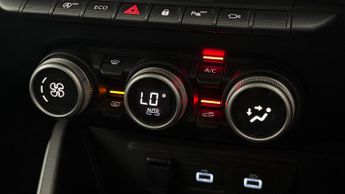
Most buyers opt for the mid-level Journey as this gets some styling and technology upgrades. Coming as standard on this trim are 18-inch alloys, sat-nav, a multi-view camera, and automatic air conditioning. Top-spec Extreme adds heated front seats and steering wheel, roof bars, and more premium-feeling upholstery.

Dacia Duster feature

Trim and colour options

The Journey and Extreme models are the most sought after on the used market, and were the most popular when the car was new. These trims offer the best balance of standard equipment and value for money; Journey has all the basics covered, plus gets sat-nav, larger 18-inch wheels, and automatic air conditioning. Extreme gives some extra luxuries like heated front seats and steering wheel, plus a few extra practical touches like modular roof rails. Expression and earlier Essential (which now no longer forms part of the UK line-up) trims are more keenly priced, but do without some features that buyers expect from a family SUV.

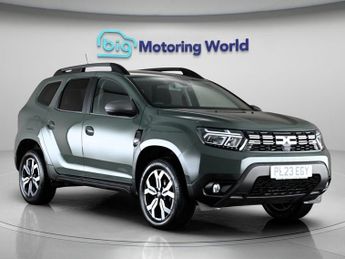
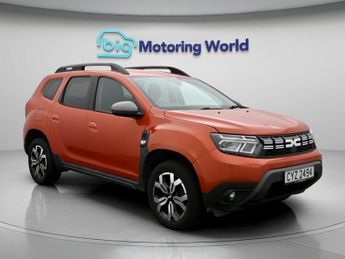
There's quite a large colour palette to choose from – there are sensible whites and greys, to more daring colours like Terracotta orange and Dusty Khaki green. These bolder shades are perfectly in keeping with the Duster's rugged character.

Dacia Duster trim and colour

Safety and reliability

It's quite unusual for a car to receive anything less than four or five stars in crash tests these days, but the Duster was given a three-star score by independent crash safety testers Euro NCAP when it tested it in 2024.

While child occupant protection was good at 84 per cent, the Duster was let down with scores of 70 per cent and 60 per cent for adult occupant protection and vulnerable road user protection, respectively. Worse, the Duster was given a 57 per cent rating of safety assist systems.

Dacia has prioritised value for money with the Duster, preferring to offer a simple and affordable product. The car still has autonomous emergency braking systems, lane-departure warning, and intelligent speed limiters, though.

Dacia has a mixed reputation for reliability. Traditionally it has impressed owners with ruggedly-built cars, but in recent years it has fallen down industry reliability tables.

Dacia Duster safety and reliability

MPG, emissions and tax

The Duster has extremely impressive running costs thanks to its electrified petrol engines.

Even the thirstiest Duster delivers combined fuel consumption of 46.3mpg, and this is for the four-wheel drive version. The two-wheel drive version is more frugal at 52.3mpg, but the star of the show is the full-hybrid as it can return a hugely impressive 61.4mpg. Those figures are easily achievable, too, so the Duster is a great choice for those who are watching the pennies. The Duster is also pretty clean with the hybrid leading the way with CO2 emissions of 105g/km.

The Duster falls beneath the Expensive Car Supplement threshold of £40,000, so all cars attract the same £195 flat rate for road tax (VED).

Dacia Duster MPG, emissions and tax
Browse 381 in stock