
 Updated 03/09/2026
Read Time 5 mins
Updated 03/09/2026
Read Time 5 mins

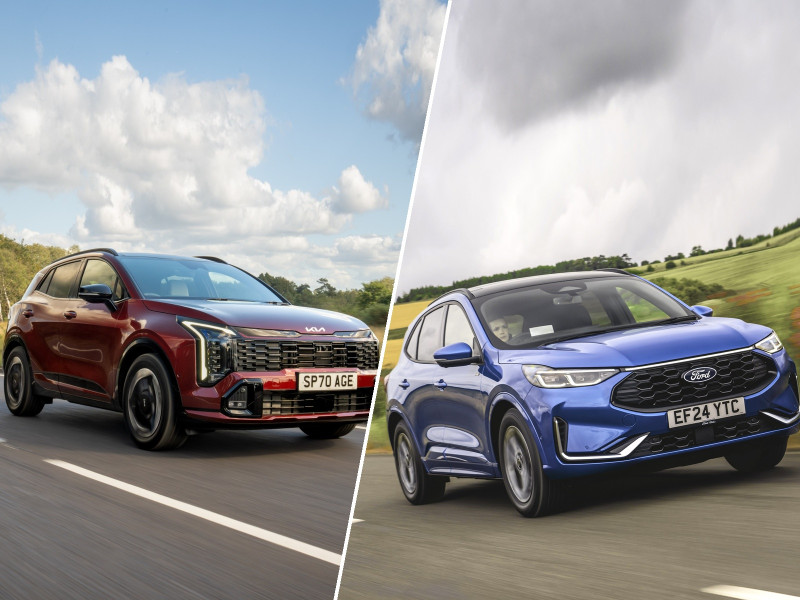
They do the job of being a hardworking family SUV slightly differently. The Kia Sportage leans into comfort, equipment and practicality, while the Ford Kuga brings a sharper driving feel and a more dynamic character from behind the wheel.
While Ford may be the more familiar badge for many UK drivers, Kia has moved forward quickly in recent years, producing cars that feel well-equipped, comfortable and easy to live with. So, if you’re looking for a used family SUV, should you choose the Kia Sportage or the Ford Kuga? Here’s how they compare.
Kia Sportage vs Ford Kuga at a glance
| Area | Kia Sportage | Ford Kuga |
|---|---|---|
| Best suited to | Families who want comfort, equipment and a larger boot | Drivers who want a family SUV with sharper handling |
| Boot space | Around 520 litres | 412 litres as standard, with more space available by sliding the rear seats forward |
| Driving feel | Softer and more comfort-focused | Sportier, with well-weighted steering and confident body control |
| Hybrid options | Mild hybrid, full hybrid and plug-in hybrid | Petrol, full hybrid and plug-in hybrid |
| Key strength | Practicality and standard equipment | Driver appeal and flexible family usability |
Design and styling
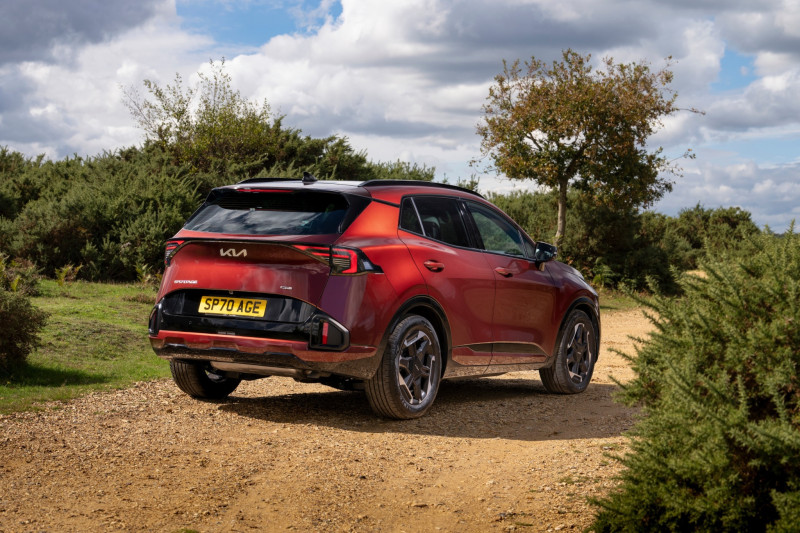
The latest Kia Sportage is a long way from the rounded, more understated versions that came before it. Its styling has sharpened up considerably, with an ultra-large grille, distinctive LED headlights and a prominent daytime running light arrangement. Out on the road, the Sportage has real presence, which helps it stand apart from more conventional family SUVs.
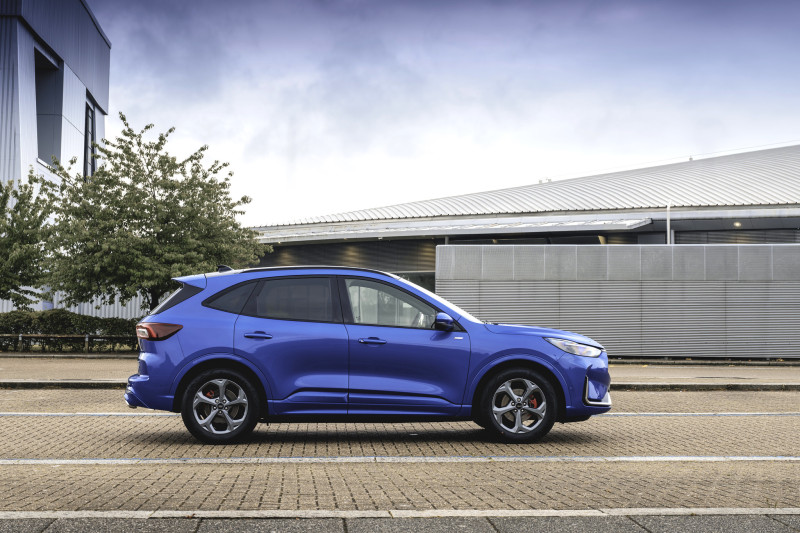
The Ford Kuga takes a different approach. It’s a more angular SUV, with a streamlined roofline, large open grille and a sportier stance from most angles. Like the Sportage, it has a distinctive headlight setup, while the broad trim section above the main grille gives it a more upmarket look.
Which one looks better will come down to taste. The Sportage feels bold and modern, while the Kuga looks more athletic and road-focused.
Interior quality and comfort
Family SUVs need to cope with a lot of daily use. Both the Sportage and Kuga combine higher-quality materials in the areas you touch most often with tougher plastics lower down, helping the cabin stand up to family life.
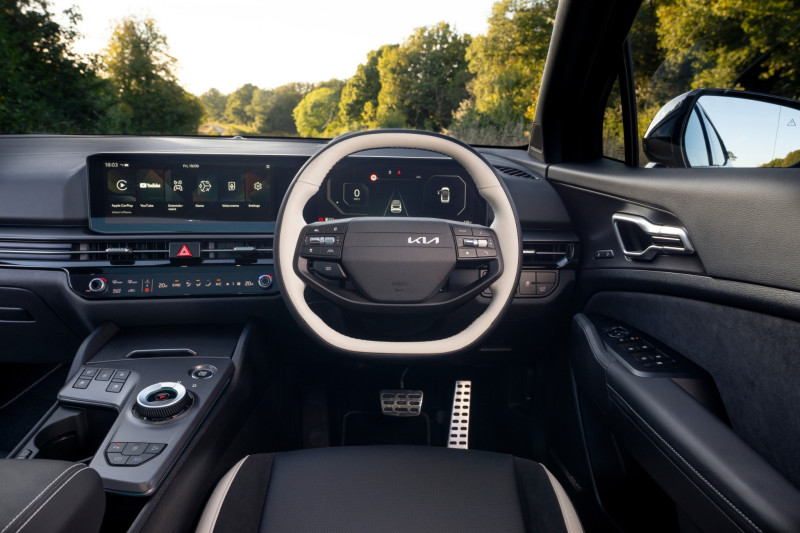
Inside the Sportage, the layout is logical and easy to get used to. It’s good to see a range of physical controls for key infotainment and cabin functions, as they make the car simpler to use while driving. You also get an elevated view of the road ahead, with plenty of seat adjustment to help you settle into a comfortable position.
Boot space is one of the Sportage’s clear strengths. At around 520 litres, it has a practical load area for shopping, pushchairs, school bags or weekends away.
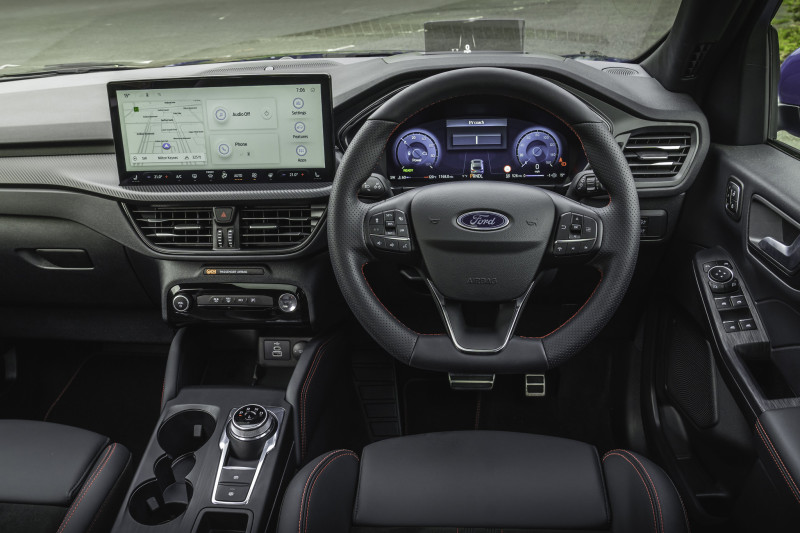
The Kuga feels sportier inside. It’s well-made throughout, and although a recent update has made it more screen-heavy, the overall setup is still intuitive. Entry-level cars come with cloth upholstery, which gives the cabin a warmer feel, while higher-spec cars add leather upholstery for a more premium look.
Boot space is not quite as generous as the Sportage’s. The Kuga offers 412 litres as standard, although sliding the rear seats forward can free up extra space. The trade-off is rear-seat legroom, so families who regularly carry passengers will need to balance luggage room against comfort.
Technology and infotainment
The Kuga has recently gained a wider infotainment setup. All cars now get a 13-inch touchscreen with features including Apple CarPlay and Android Auto, helping you mirror key smartphone apps on the main display. There’s also a 12.3-inch driver display, which can show a range of driving information, and a multi-function steering wheel for quick access to media and cruise control.
The Sportage also comes with a large infotainment system and offers Apple CarPlay and Android Auto. Where the Kia stands out is usability. The physical shortcut buttons make it easier to get to important functions without relying entirely on the touchscreen.
Both cars are well-equipped for everyday family use, but the Sportage’s more intuitive mix of screen and physical controls gives it an advantage for drivers who prefer a simpler cabin layout.
Driving experience
Behind the wheel, the Kia Sportage and Ford Kuga show their different characters clearly. Both give you the elevated driving position that SUV buyers value, with good visibility and a better view over surrounding traffic.
The Kuga is the sportier of the two. Its steering is well-weighted, and it feels confident when turning into bends. There’s good road-holding and limited body roll, which helps the Ford feel secure on faster roads. Sportier versions can feel slightly firmer, so it’s worth checking this on a test drive if comfort matters most to you.
The Sportage is the softer and more comfort-focused option. Its lighter steering makes it easy to place in town, and it deals with everyday roads in a more relaxed way. That comfort-first setup suits the Sportage’s role as a family SUV, especially if most of your driving is commuting, school runs or longer motorway trips.
Both cars have good visibility, helped by large wing mirrors, and both come with front and rear parking sensors as standard, which makes parking easier.
Running costs and efficiency
Both SUVs should be relatively cost-effective for the size and practicality they offer, especially if you choose the right engine for the way you drive.
The Sportage is available with a 1.6-litre mild hybrid, a 1.6-litre full hybrid and a 1.6-litre plug-in hybrid. The mild-hybrid model can return up to around 40mpg, while the full hybrid can lift this into the high-40s or early 50s. That makes it a strong option if you want hybrid efficiency but cannot charge at home.
If home charging is available, the Sportage plug-in hybrid can offer around 40 miles of electric-only driving, which may suit shorter daily journeys.
The Kuga is available with a standard 1.5-litre turbocharged petrol engine, as well as full-hybrid and plug-in hybrid options. The petrol model can return up to 42.2mpg when paired with a 6-speed manual gearbox. The full hybrid uses a 2.5-litre petrol engine and can achieve 52.3mpg, while the plug-in hybrid can return up to 313.9mpg on the official combined cycle when charged regularly. Its electric-only range is up to 42.9 miles.
As with any plug-in hybrid, the best running costs depend on how often you charge. If you can charge at home and many of your journeys are short, a plug-in hybrid Kuga or Sportage could reduce petrol use. If you cannot charge regularly, the full hybrid versions may make more sense.
Safety and reliability
Both cars are designed with family use in mind and include a good level of safety equipment. The Sportage includes features such as autonomous emergency braking and intelligent speed-limit assist. The Kuga is also well-equipped, with technology including blind spot warning, pre-collision assist with autonomous emergency braking and cross traffic alert with active braking.
Reliability is one of the areas where the Sportage has a strong appeal. Kia has a reputation for building dependable cars, and its 7-year or 100,000-mile warranty is a useful benefit for new buyers. Because the warranty can transfer between owners, a used Sportage may still have cover remaining, depending on its age, mileage and service history.
The Kuga has also been a familiar sight on UK roads for many years, and its current generation has had time to establish itself. As with any used SUV, condition and history matter. Check for a full service history, signs of careful ownership and whether recalls or software updates have been completed where relevant.
Kia Sportage or Ford Kuga: which is best?
Both the Sportage and Kuga make fine family SUVs. The Ford offers the sharper driving experience, with steering and handling that will appeal to drivers who still want their family car to feel engaging. The Kia counters with a more comfortable ride, a larger boot and a cabin layout that feels easy to live with.
The Kia Sportage is a strong choice if you want a family SUV that packs in plenty of equipment, offers good practicality and has a reassuring reputation for reliability. It’s especially appealing if comfort and space matter more than sporty handling.
The Ford Kuga is the better fit if you want a family SUV that keeps the driver involved. It loses out to the Sportage on standard boot space, but it feels more agile and rewarding from behind the wheel.
The right choice depends on how you use your car. If you need space, comfort and a straightforward family SUV, start with the Sportage. If you want an SUV that’s practical but still enjoyable to drive, the Kuga deserves a close look.
Find your next family SUV with AA Cars
Ready to compare used family SUVs? AA Cars can help you search cars from trusted dealers, with 12 months’ free breakdown cover included on eligible used cars.
- Browse used Kia Sportage cars on AA Cars
- Browse used Ford Kuga cars on AA Cars
- Book an AA vehicle inspection for extra peace of mind
- 2026 Kia Sportage road test review


