
 Updated 03/09/2026
Read Time 7 mins
Updated 03/09/2026
Read Time 7 mins

If you don’t need the family-focused layout of an SUV, two of the most popular alternatives in the UK are the classic saloon and the versatile hatchback. Both have strong advantages, and both still make a lot of sense as used cars.
So, hatchback vs saloon: which one is right for you? This guide explains the key differences, where each body style works best and what to think about before you start searching.
What is the difference between a hatchback and a saloon?
The main difference between a hatchback and a saloon is the way the rear of the car is designed.
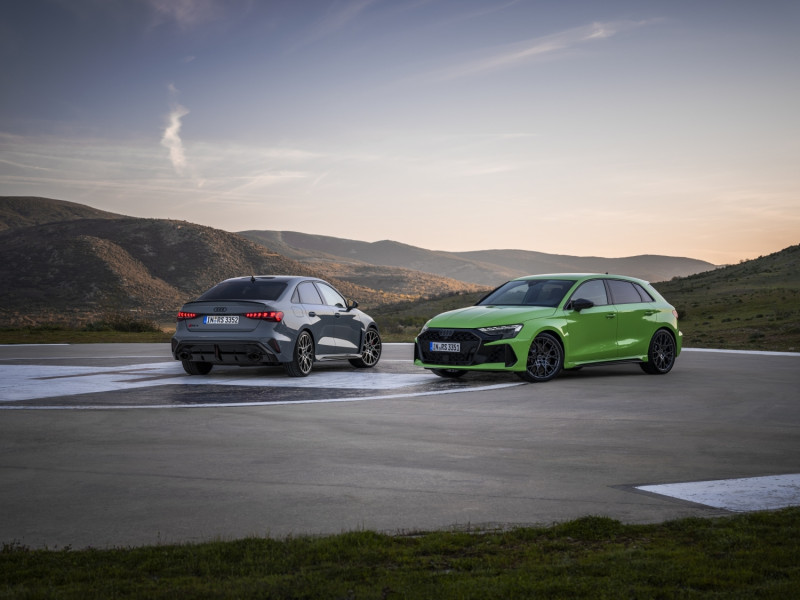
A saloon uses a traditional 3-box layout: the engine at the front (unless it’s electric), the passenger compartment in the middle and a separate boot at the rear. The boot is divided from the cabin and accessed through a traditional boot lid.
A hatchback uses a 2-box layout. The boot is integrated into the main cabin space and accessed through a large rear door, or “hatch”, which includes the rear window. Luggage is usually hidden by a parcel shelf.
This difference affects much more than styling. It influences practicality, visibility, refinement, security, handling and how easy the car is to live with.
Quick comparison: hatchback vs saloon
| Area | Hatchback | Saloon |
|---|---|---|
| Best for | Everyday flexibility, families, city driving and carrying awkward loads | Longer journeys, refinement, boot security and a more traditional executive look |
| Boot access | Large rear hatch with wide access to the load area | Separate boot with a narrower opening |
| Passenger space | Varies by model, but larger hatchbacks can be very roomy | Often strong rear legroom, especially in longer models |
| Driving feel | Often shorter, lighter and easier to manoeuvre | Often lower, longer and more stable at speed |
| Security | Boot area may be visible through the rear window | Separate boot keeps luggage out of sight |
| Typical examples | Volkswagen Golf, Vauxhall Astra, Skoda Octavia, Honda Civic, MG4, Renault Mégane | BMW 3 Series, Mercedes-Benz C-Class, Audi A4, Peugeot 508, BYD Seal, Alfa Romeo Giulia |
Saloon cars: What are the benefits?
Saloon cars are often seen as the more traditional and prestigious choice. Their long bonnet, defined passenger area and separate boot can give them a balanced shape that many drivers prefer. Models such as the BMW 3 Series, Mercedes-Benz C-Class, Audi A4, Peugeot 508, BYD Seal and Alfa Romeo Giulia show how varied the saloon market can be.
Many saloons are engineered for comfort. They often have a longer wheelbase than hatchbacks, which can help rear-seat legroom and ride quality. On a motorway or dual carriageway, a good saloon can feel settled, quiet and composed.
The separate boot is another advantage. Your luggage is tucked away in a locked compartment, which keeps it out of sight. It also means loose items in the boot are less likely to enter the cabin in a sudden stop or collision.
Saloons can also feel sharp to drive. The rear bulkhead behind the back seats can make the bodyshell stiffer, which can help handling and refinement. This is one reason why many performance saloons have such strong driver appeal.
Saloon cars: what are the drawbacks?
The biggest compromise with a saloon is load flexibility. The separate boot can be useful, but the opening is usually narrower than a hatchback’s. That can make it harder to load bulky or awkward-shaped items, such as flat-pack furniture, a bike, a large pushchair or a domestic appliance.
Some saloons have folding rear seats, but not all do, especially on older used models. Even when the seats do fold, the opening between the boot and cabin can still limit what you can carry.
Saloons are also often longer than equivalent hatchbacks. That can make them less easy to manoeuvre in tight city streets or compact car parks. Rear visibility may be more restricted too, as it can be difficult to judge exactly where the back of the car ends.
Hatchbacks: what are the benefits?
Hatchbacks are popular because they are practical, adaptable and easy to use. Before the SUV boom, they were among the most common family cars in Britain, and they still have a strong following.
The large rear hatch and folding rear seats are central to a hatchback’s appeal. You can access the boot and rear cabin through one wide opening, making it much easier to load awkward items. For families, dog owners, drivers with active lifestyles and anyone who occasionally needs to carry work equipment, that flexibility matters.
Hatchbacks also come in a wide range of sizes. A Fiat 500 is a hatchback, but so are larger models such as the Volkswagen Golf, Vauxhall Astra, Skoda Octavia, Honda Civic, MG4, and Renault Mégane. That means you can choose anything from a compact city car to a spacious family hatchback.
Because many hatchbacks are shorter than saloons, they can be easier to park and easier to drive in town. The upright rear end also makes the back of the car easier to judge, which can help with everyday manoeuvring.
Hatchbacks: what are the drawbacks?
The main drawback is that the boot is part of the cabin. Although a parcel shelf usually hides luggage, the load area can be more visible than it would be in a saloon. It’s still sensible to remove valuables from view whenever you park.
Hatchbacks can also feel less refined than saloons. Because the cabin and boot are connected, road noise from the rear of the car can be more noticeable, especially in older or smaller models.
Image is another factor. Hatchbacks are often viewed as more practical and less prestigious, while many saloons have a more executive feel. That will not matter to every buyer, but it can influence the decision if design and presence are high on your list.
Which is easier to live with day to day?
For most drivers, a hatchback is the easier body style to live with. The ability to fold the rear seats flat and load through a wide hatch gives it a clear advantage if you regularly carry bulky or awkward items.
A hatchback also suits families who need to load a pushchair, school bags or sports kit, as well as dog owners who want simple access to the rear. If carrying a dog is a priority, it may also be worth comparing hatchbacks with estates, as some estate cars offer even more usable load space.
That said, a saloon can still be perfectly practical if your luggage is usually made up of shopping bags, suitcases or work bags. The separate boot gives privacy, keeps items away from passengers and can make the cabin feel calmer on longer trips.
For passengers, many saloons offer excellent rear-seat space thanks to their longer bodies. But modern family hatchbacks have improved a lot, so it’s always worth sitting in the back and checking comfort before you decide.
Which is better to drive?
Body style can make a difference to the way a car drives, but the model itself matters just as much.
Saloons tend to have longer, lower profiles, which can make them feel stable at motorway speeds. That’s one reason they suit long-distance journeys so well. Their extra length and weight can make them feel less agile in tight city traffic, but many saloons make up for that with a smoother ride and quieter cabin.
Hatchbacks usually have a shorter wheelbase and lower weight, which can make them feel more responsive. They’re often nimble around town and easy to position on narrower roads.
There are exceptions on both sides. Some hatchbacks are built to be refined motorway cars, while performance saloons from BMW M and Mercedes-AMG show how focused a saloon can be. As a general rule, choose a hatchback if everyday agility matters most. Choose a saloon if high-speed stability, comfort and a more planted feel are higher priorities.
Are any cars sold as both hatchbacks and saloons?
Yes. Several models have been sold in both hatchback and saloon forms, giving buyers a useful way to compare body styles without changing brand or model family.
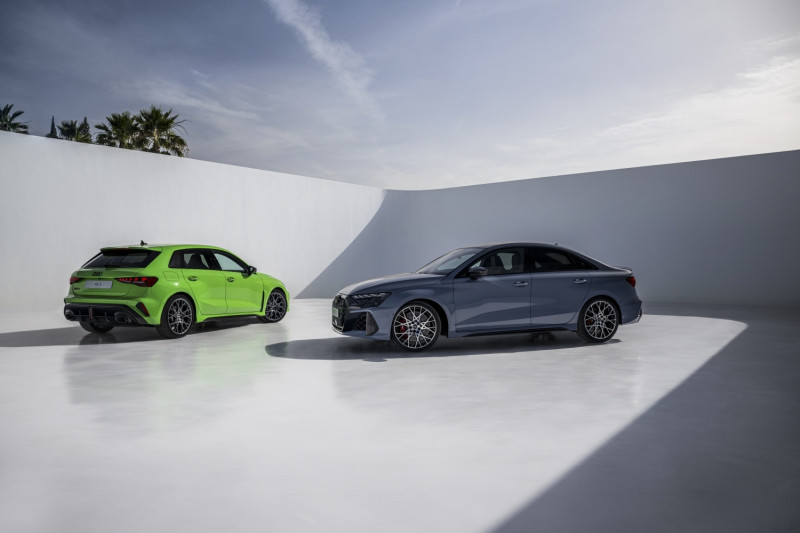
The Audi A3 is a good example. It has been offered as a Sportback hatchback and as a saloon, so buyers can choose between flexible loading and a more traditional boot. The Mercedes-Benz A-Class has also been available as both a hatchback and a saloon, offering a similar choice in the premium compact class.
The Mazda 3 is another example, with hatchback and saloon versions giving drivers the option of a versatile rear hatch or a more formal shape. Comparing these cars side by side can be a good way to see which layout suits your lifestyle.
Hatchback vs saloon: which should you buy?
The best choice depends on how you use your car.
Choose a hatchback if you want the most flexible everyday car. It will usually be easier to load, easier to park and better suited to families, city driving and drivers who carry different types of luggage.
Choose a saloon if you value refinement, boot security, long-distance comfort and a more traditional executive shape. A saloon can feel more settled on the motorway and more polished inside, especially in premium models.
Neither body style is automatically better. The right answer comes down to your driving, your passengers and what you need to carry. Before buying, think about your weekly routine, test drive both body styles where possible and check whether the boot works for the items you carry most often.
Buying a used hatchback or saloon with AA Cars
AA Cars can help you compare used hatchbacks and saloons from trusted dealers across the UK. When you find a car you like, check the vehicle details carefully, review the service history and make sure the body style gives you the space and flexibility you need.
- Search used hatchback cars on AA Cars
- Search used saloon cars on AA Cars


