
 Updated 03/09/2026
Read Time 6 mins
Updated 03/09/2026
Read Time 6 mins

While the Fiesta caters to those seeking an agile, compact supermini, the Focus offers a more spacious and versatile alternative, with added refinement and technology. Both are now especially relevant on the used market, where their popularity means there is usually plenty of choice. So, should you choose a Ford Fiesta or Ford Focus? Here, we compare design, practicality, driving experience, running costs and value to help you decide which hatchback best suits your needs.
Ford Fiesta vs Ford Focus at a glance
| Area | Ford Fiesta | Ford Focus |
|---|---|---|
| Best suited to | City driving, first-time buyers and those who want low running costs | Families, longer journeys and drivers who want more space |
| Size | Compact supermini | Larger family hatchback |
| Driving feel | Agile, light and fun around town | More stable, refined and comfortable at speed |
| Interior space | Good in the front, tighter in the back | Roomier for rear passengers and luggage |
| Used car appeal | Affordable, popular and easy to live with | Strong value where prices overlap with the Fiesta |
Design and styling
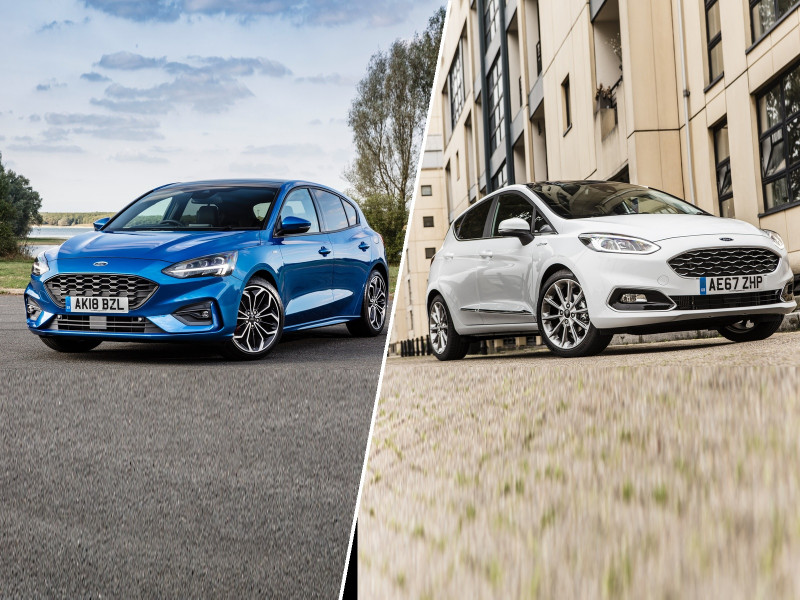
The Ford Fiesta is renowned for its compact dimensions and youthful styling. Its sleek lines, bold grille and dynamic stance have helped make it a favourite among younger drivers and urban commuters.
Although no longer available new, the Fiesta’s design still feels modern and sporty, with sharp headlights and a sculpted body that gives it a fun, energetic presence on the road. Inside, it offers a driver-focused cockpit with intuitive controls and a simple layout. It feels inviting despite its modest size.
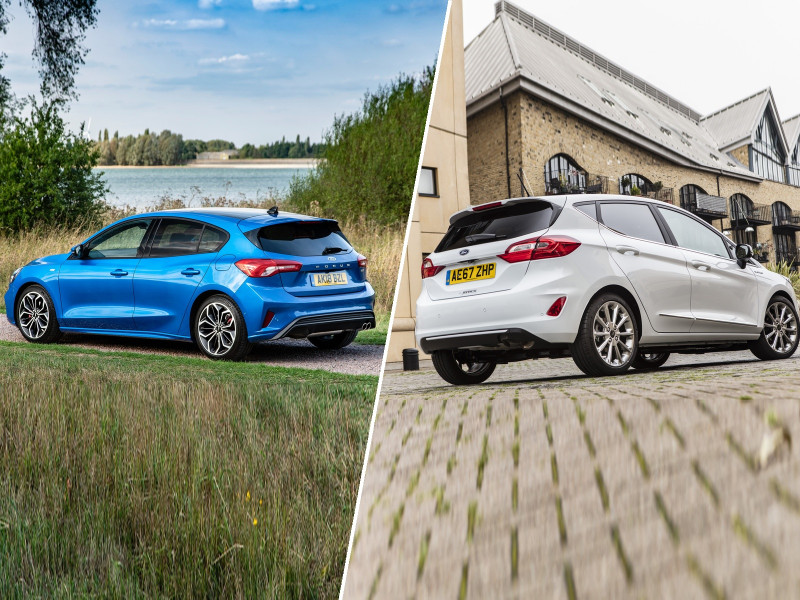
The Focus takes a more mature approach. It is larger than the Fiesta, with a longer wheelbase, a more refined front end and a shape that points towards its greater practicality. The cabin is more spacious and upmarket, with thoughtful ergonomics and a more grown-up feel.
If you want a small hatchback that looks neat and easy to place on the road, the Fiesta has the edge. If you prefer a car that feels more substantial without becoming difficult to manage, the Focus is the better fit.
Performance and driving experience
Both the Fiesta and Focus are available with a range of efficient petrol and diesel engines. The Fiesta’s engine line-up includes the 1.0-litre EcoBoost petrol, available in several power outputs, along with economical diesel options on some used models.
Its lightweight construction and responsive chassis make it exceptionally nimble. It is ideal for city driving, narrow streets and tight parking spaces. The Fiesta’s steering is direct, and its compact proportions make everyday manoeuvres feel easy.
The Focus shares some of the Fiesta’s engines, including the 1.0-litre EcoBoost, but it also offers more powerful options, including 1.5-litre and 2.0-litre petrol and diesel engines. That broader engine range gives buyers more flexibility, especially if they regularly drive longer distances or carry passengers and luggage.
On the road, the Focus delivers a balanced blend of comfort and agility. Its advanced suspension and wider track contribute to confident handling, making it equally at home on winding country roads and motorways. For many years, that mix of comfort, control and driver enjoyment made the Focus a benchmark in the compact family hatchback class.
Interior comfort and space
The Fiesta’s compact size means space is at a premium. Front-seat passengers are well catered for, with supportive seats and plenty of adjustment to help drivers get comfortable. Rear legroom is more limited, especially for taller passengers, so the back seats are better suited to children or occasional adult use.
Boot space is practical enough for daily use, shopping and weekend trips, but the Fiesta is less suited to larger families or anyone who regularly carries bulky luggage.
The Focus is much more generous. Rear passengers get noticeably more legroom and headroom, making it a better option for families or drivers who often carry friends, colleagues or child seats. The larger boot and folding rear seats also make it easier to deal with pushchairs, sports kit or holiday luggage.
For occasional passengers and urban use, the Fiesta works well. For everyday family life, the Focus is the more practical choice.
Technology and connectivity
The age and trim level of any used Fiesta or Focus will determine the exact technology fitted, but both models are widely available with Ford’s SYNC infotainment system. Depending on the version, this can include touchscreen controls, Bluetooth, DAB radio and smartphone integration through Apple CarPlay and Android Auto.
The Fiesta features user-friendly technology, with higher trims adding extras such as upgraded audio systems, ambient lighting and more advanced driver assistance features.
The Focus builds on this with a larger, more modern feel in many versions. Higher-spec models are more likely to include a bigger touchscreen, improved graphics and more sophisticated connectivity. Features such as adaptive cruise control, lane-keeping assist and parking sensors are also more widely available on the Focus, especially in higher trims.
Safety and driver assistance
Safety is a core strength for both cars. The Fiesta comes with multiple airbags, electronic stability control and ISOFIX child seat mounts. Newer models and higher trims can also include features such as autonomous emergency braking, lane-keeping assist and traffic sign recognition.
The Focus adds the benefit of a larger body and, on upper variants, a broader range of driver aids. Depending on age and specification, used Focus models may offer blind spot monitoring, rear cross-traffic alert, parking assistance and camera systems.
As with any used car, check the exact specification before you buy. Two cars of the same model and age can have very different equipment levels depending on trim and optional extras.
Practicality and running costs
The Fiesta’s smaller footprint makes it ideal for urban drivers. It is easy to manoeuvre, economical to run and generally affordable to insure, which is why it remains such a popular choice for first-time buyers and drivers who want simple, low-cost motoring.
Fuel economy is strong across the range, especially with lower-powered EcoBoost and diesel variants. Maintenance and road tax are also usually affordable, provided the car has been serviced properly.
The Focus is larger and can be more powerful, so running costs may be higher. However, the difference is not always substantial, particularly when comparing sensible engine choices. It remains cost-effective thanks to efficient engines and practical servicing schedules.
Both models sold in large numbers, so there is plenty of choice on the used car market. That wide availability is useful for buyers, as it makes it easier to compare mileage, condition, trim and service history. It also means the price gap between the Fiesta and Focus can be smaller used than it was when both cars were available new.
Driving dynamics
The Fiesta excels in urban environments. Its compact wheelbase, light controls and punchy engines make it fun in traffic and enjoyable on twisty roads. It feels alert and easy to place, which helps make even everyday journeys feel a little more engaging.
The Focus is more stable and has a more compliant ride, as you would expect from a car in the class above. Its larger size gives it a more settled feel at speed, with better refinement and reduced road noise on longer journeys.
The Focus still has excellent steering and handling, so it remains a good car to drive on faster, more open roads. If you enjoy driving but need more comfort and space, the Focus may suit you better than the smaller Fiesta.
Cost and value for money
As you would expect, the Fiesta is usually the more affordable option. It offered competitive pricing and generous standard equipment when new, and that translates into strong value as a used car.
Residual values remain solid, and the lack of new Fiesta models has helped keep demand strong on the used market. For budget-conscious buyers who want a compact, easy-to-run hatchback, it still makes a lot of sense.
The Focus commands a higher price when comparing similar ages and specifications, but the gap is often not as large as buyers expect. In some parts of the used market, the Fiesta and Focus can be close enough in price that the bigger car becomes especially tempting.
If you need the smaller dimensions and lower running costs of the Fiesta, it remains the obvious choice. If you can spend a little more and want extra comfort, technology and practicality, the Focus can offer excellent value.
Used Ford Fiesta or used Ford Focus: which should I buy?
Both the Ford Fiesta and Ford Focus are really good cars, and each excels in its own right.
The Fiesta is best for young professionals, city dwellers, first-time drivers, anyone seeking a fun-to-drive second car, and those who value compact agility and affordability. It is easy to park, cheap to run and enjoyable to drive.
The Focus is the better fit for families, frequent long-distance travellers and anyone prioritising space, comfort and technology. It gives you more room, greater refinement and a more relaxed drive without losing the enjoyable handling Ford hatchbacks are known for.
Neither is a bad buy, but condition and history matter. Look for a full and comprehensive service history, especially on cars fitted with Ford’s 1.0-litre EcoBoost engine, where timely cambelt maintenance is important. Before committing, check the paperwork carefully, compare similar cars and make sure the model you choose matches how you drive.
Find your next Ford hatchback with AA Cars
- Browse used Ford Fiesta cars on AA Cars: Browse used Ford Fiesta cars on AA Cars
- Browse used Ford Focus cars on AA Cars:Browse used Ford Focus cars on AA Cars
For extra confidence before you buy, you can book an AA vehicle inspection: Book an AA vehicle inspection


