
 Updated 03/09/2026
Read Time 6 mins
Updated 03/09/2026
Read Time 6 mins

The A1 is the smaller, more city-friendly choice. It gives you the Audi badge and a high-quality cabin in a compact supermini package. The A3 feels more grown-up, with extra space, a broader engine range and a more refined drive, especially if you regularly travel with passengers or luggage. If you’re choosing between the Audi A1 and Audi A3 in 2026, the right answer depends on how you’ll use the car, how much space you need and what you want to spend. Here’s how they compare.
Quick answer: Audi A1 or Audi A3?
The Audi A1 is best if you want a small premium hatchback that’s easy to park, efficient to run and well suited to town driving. It’s a good fit for singles, couples and drivers who want a stylish used Audi without moving into a larger, more expensive model.
The Audi A3 is best if you want more space, more comfort on longer trips and a wider choice of engines, including diesel and plug-in hybrid options on some versions. It’s the stronger all-rounder for families, commuters and drivers who regularly carry adults in the back.
Audi A1 vs Audi A3: key differences
| Feature | Audi A1 | Audi A3 |
|---|---|---|
| Best for | City driving, lower running costs and compact convenience | More space, longer journeys and family use |
| Body style | Small 5-door hatchback | Sportback hatchback or saloon on many used versions |
| Cabin space | Good up front, tighter in the rear | More rear-seat and boot space |
| Engine choice | Mostly petrol on newer models | Petrol, diesel and plug-in hybrid options on the used market |
| Driving feel | Light, nimble and easy to park | More refined and composed |
| Running costs | Usually lower | Usually higher, but more versatile |
| Best suited to | Singles, couples and urban drivers | Families, commuters and drivers who carry passengers |
Design and styling
Audi keeps both cars clean and understated, but the A1 and A3 have different characters.
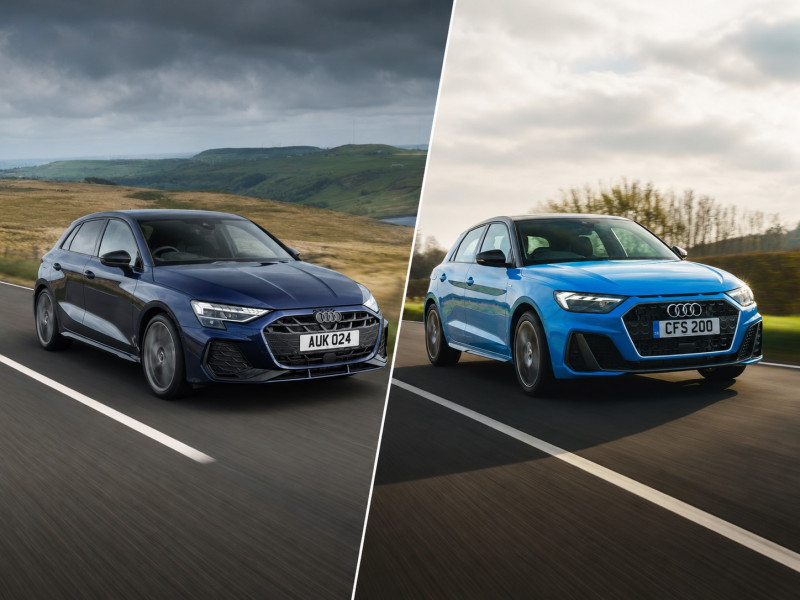
The Audi A1 is the smallest car in the Audi range. It has a sharper, more youthful look, with angular lines, a bold single-frame grille and striking LED lights on many versions. It works well as a premium city car because it feels compact without looking basic.
The Audi A3 takes a more mature approach. Its larger dimensions give it a stronger road presence, while the detailing feels more restrained and upmarket. If you want a car that looks more executive without stepping into a larger saloon or SUV, the A3 has the edge.
Interior quality and comfort
You expect an Audi cabin to feel well made, and both cars deliver that premium feel in their own way.
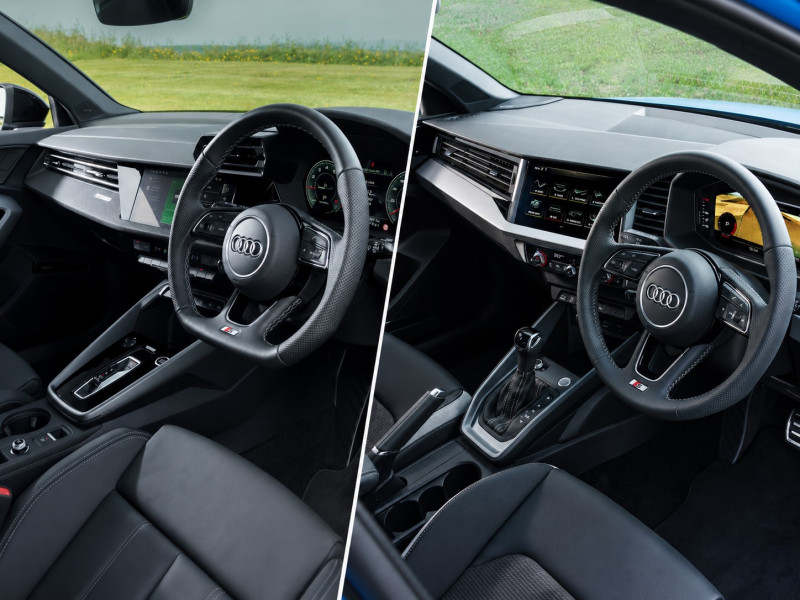
The A1 is impressive for a small hatchback. It can feel more upmarket than many mainstream superminis, with a clear dashboard layout, digital displays on many models and good front-seat comfort. There’s enough space up front for most adults, but the rear seats and boot are more limited. That’s the trade-off for its compact size.
The A3 steps things up. The cabin is noticeably roomier, especially in the back, and it feels better suited to longer journeys. Rear legroom, headroom and boot space are more generous, which makes the A3 a better choice if you regularly carry passengers, child seats or weekend luggage.
Technology and infotainment
There isn’t a huge gap between the A1 and A3 for everyday infotainment. Both can offer digital driver displays, smartphone integration and responsive touchscreen systems, depending on age and trim.
The A1 gives you the key features most drivers want, including clear displays, voice control on some models and a user-friendly infotainment setup. It feels modern without being overcomplicated.
The A3 generally offers more advanced technology, particularly on higher trims. Depending on the model, you may find a larger touchscreen, enhanced navigation, wireless charging, a premium Bang & Olufsen sound system, adaptive cruise control, park assist or a 360-degree camera. Not every used A3 will have these features, so check the specification of the exact car you’re viewing.
Engines and performance
The A1’s engine range is focused on petrol power. The 1.0-litre 3-cylinder TFSI is commonly found in 95PS and 116PS outputs, while the 1.5-litre TFSI adds more performance and uses cylinder-on-demand technology on some versions to help save fuel under light loads. The most powerful A1 40 TFSI uses a 2.0-litre petrol engine and feels quick for such a small car.
Gearboxes vary by year and trim, but you’ll find both manual and S tronic dual-clutch automatic options on the used market. Diesel engines are no longer offered in the newer A1, although older first-generation cars were available with diesel power.
The A3 gives you more choice. It shares some petrol engines with the A1, including 1.0-litre and 1.5-litre TFSI units, but adds broader options across the used market. These can include more powerful 2.0-litre petrol and diesel engines, and TFSI e plug-in hybrid models. That makes the A3 easier to match to different driving needs, from economical commuting to stronger motorway performance.
Driving experience
The A1 feels light, agile and easy to place on the road. Its small size makes it simple to thread through city traffic and park in tight spaces. The steering is sharp enough to make it enjoyable, and the suspension balances comfort and control well for a small car.
The A3 feels more settled and refined. It’s smoother on longer journeys and has the more grown-up driving feel, with better noise isolation and a stronger sense of solidity. Handling is composed rather than playful, and quattro all-wheel drive is available on selected versions for extra grip.
If most of your driving is urban, the A1 is the easier car to live with. If you spend more time on motorways, cover longer distances or want a car that feels more substantial, the A3 is the better fit.
Practicality and space
Practicality is where the difference between the A1 and A3 becomes clearer.
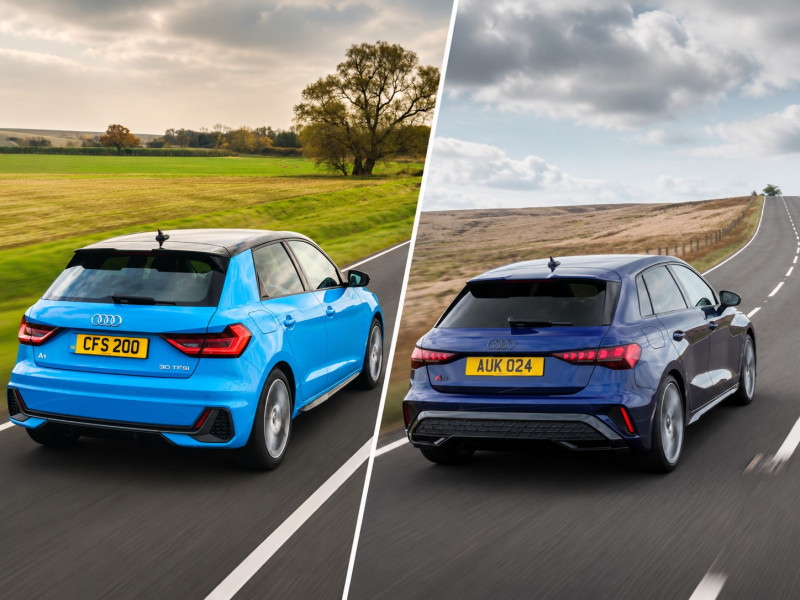
The A1 is ideal for town use. It’s compact, easy to manoeuvre and simple to park. For one or two people, it offers enough space for daily driving. The compromise is in the back seats and boot, which are better suited to occasional passengers and lighter luggage.
The A3 is the more practical car. It offers more passenger space, more boot space and a choice of Sportback or saloon body styles, depending on the generation and model. If you need a compact car that can handle family use, longer trips and regular rear-seat passengers, the A3 is the clear winner.
Running costs and efficiency
Both cars were designed with efficiency in mind, but the A1 should usually be cheaper to run. Its smaller size, lighter weight and petrol engines can help keep fuel, insurance and maintenance costs lower than the A3. That makes it appealing if you want a premium badge but still need to keep everyday costs under control.
The A3 will generally cost more to buy, insure and service, but it can make sense if you need its extra versatility. Diesel versions may suit higher-mileage drivers, while plug-in hybrid models can reduce fuel costs if you can charge regularly and your journeys fit the electric range. As always, the best option depends on your mileage, charging access and how you use the car.
Before buying any used car, check the service history, MOT record, tyres, brakes and overall condition. A well-maintained car is usually a better buy than a poorly looked-after example with a higher trim level.
Value for money
The A1 is the more accessible way into Audi ownership. It gives you premium design, a smart cabin and useful technology in a smaller package, which makes it appealing if you want luxury without the size or running costs of a larger car.
The A3 costs more, but it gives you more space, more refinement and more flexibility. It’s one of Audi’s best-known used hatchbacks, and its broader appeal makes it a strong choice if you want a car that can cover more roles.
When comparing used Audi A1 and Audi A3 models, look beyond the badge and monthly payment. Age, mileage, engine, gearbox, trim, service history and condition will all affect whether a car represents good value.
Which Audi is best for you?
The Audi A1 is best for city drivers, singles or couples who want a stylish, premium-feeling car without the higher running costs of a larger model. It’s easy to drive, easy to park and still feels like a proper Audi inside.
The Audi A3 is best for families, professionals or anyone who wants more space, comfort and technology. It’s the better all-rounder if you need a car that can handle commuting, longer journeys and regular passengers.
Both cars are strong choices. The A1 wins for compact convenience and lower running costs. The A3 wins for space, comfort and everyday versatility. Test drive both if you can, and focus on the car that fits your real driving needs rather than the one that looks best on paper.
Buying a used Audi A1 or Audi A3 with AA Cars
When you’re ready to compare used Audi A1 and Audi A3 models, AA Cars can help you buy with more confidence. Cars listed through AA Cars are from trusted dealers who have committed to AA Cars Standards, and vehicle history, MOT, mileage, accident and police reports are checked on every vehicle listed.
You can also use AA Cars advice and vehicle inspection services to help check whether a car is in good condition before you buy. That’s useful when comparing used premium cars, where condition, service history and specification can make a big difference to long-term value.
Browse used Audi A1 and Audi A3 models on AA Cars, compare the exact specification and choose the car that suits how you drive.


