31 March 2026
Average petrol prices at supermarkets have opened a 7.55p-a-litre gap with non-supermarket rivals, up 1.5p on the week before.
UK pump prices released by the Government today (Tuesday) show petrol still below 150p a litre at 148.78p a litre and diesel at 176.42p, up from 144.16p and 166.88p respectively from the week before. DESNZ weekly fuel price updates draw prices from four oil companies and two supermarkets, representing 60% of forecourts. The fuel companies are contacted by email every Monday morning, or the next working morning on bank holidays, asking for their fuel prices for that day.
The Government data shows that, while pump price increases slowed the week before, they have now returned to the previous rate of rise:
| Date | ULSP: Pump price (p/litre) | ULSD: Pump price (p/litre) | Petrol change | Diesel change |
|---|---|---|---|---|
| 05/01/2026 | 134.90 | 144.19 | ||
| 12/01/2026 | 133.43 | 142.63 | -1.46 | -1.56 |
| 19/01/2026 | 132.64 | 141.82 | -0.79 | -0.81 |
| 26/01/2026 | 132.00 | 141.26 | -0.64 | -0.56 |
| 02/02/2026 | 131.62 | 140.82 | -0.37 | -0.44 |
| 09/02/2026 | 131.46 | 140.72 | -0.16 | -0.09 |
| 16/02/2026 | 131.60 | 141.46 | 0.14 | 0.73 |
| 23/02/2026 | 131.71 | 141.46 | 0.11 | 0.00 |
| 02/03/2026 | 132.14 | 142.15 | 0.43 | 0.69 |
| 09/03/2026 | 135.67 | 149.01 | 3.53 | 6.87 |
| 16/03/2026 | 140.28 | 158.78 | 4.61 | 9.77 |
| 23/03/2026 | 144.16 | 166.88 | 3.89 | 8.10 |
| 30/03/2026 | 148.78 | 176.52 | 4.62 | 9.64 |
Weekly road fuel prices - GOV.UK
Fuel price data provided to the AA*, which is averaged from the CMA interim scheme, shows that supermarkets last week averaged 144.5p a litre for petrol as opposed to an average of 152.05p among oil company and independent sites.
The week before, the petrol price difference was 6.05p, with supermarket petrol averaging 139.9p versus 145.95p elsewhere. In the week before hostilities broke out in the Middle East, the supermarket versus non-supermarket price gap was 5.4p.
Diesel at supermarkets last week averaged 169.5p as opposed to 178.3p elsewhere.
“The AA’s 2,700 patrols have not reported shortages and nor has the AA seen an increase in breakdowns for ‘out of fuel’”
It helps to explain why drivers were drawn to the supermarkets last weekend, leading to pressure on supply at those forecourts. The AA had previously warned motorists that this might happen and to consider going to other nearby fuel stations to pay a bit more but avoid wasting time, fuel and money in queues.
Across the Channel, the same thing was happening. In France, fuel stations under pressure from demand were dotted across the country, according to Sunday’s mapping of forecourts that had run low on fuel or were dry **. As in the UK, the majority were supermarket or discount store locations.
Even so, on Sunday evening, only 1.6% of updates on French forecourts reported those running low on fuel, with just 0.2% completely out. Shortages in the UK were also largely limited, predictably happening mainly in cities and at the weekend.
AA analysis of UK driver refuelling habits, taken from polling of 13,045 drivers two weeks before the start of the Middle East conflict, shows that 60% of motorists always keep at least a quarter of a tank in reserve before deciding to fill up.
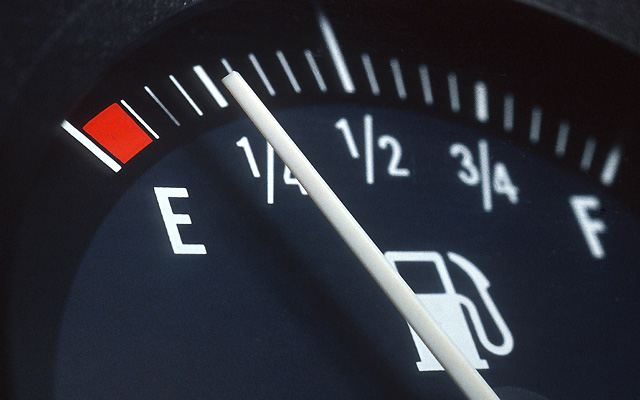
Only one in seven runs their tank down to the warning light before heading to the pumps.
However, that increases to a third among drivers aged between 25 and 44, who are also the group most likely to be budgeting their fuel spend to a set amount. Among those drivers, 46.5% have been trying to get by on £40 of fuel each time they fill up, before the surge in pump prices.
It shows that the majority of drivers always have 100 miles in reserve before filling up, probably for emergencies but also likely because of the experience of fuel strikes, protests and price surges after Covid and with the Ukraine war in recent years. That gives them good fuel resilience and the option to avoid forecourt queues by either going to another fuel station or coming back later.
It also helps to explain why there hasn’t been a repetition of the queues that followed the Francis Maude ‘jerry can’ episode of 2012.
However, there is a select group of drivers that is vulnerable to price surges and, in running the fuel in their tanks lower to maintain their usual trips, is more likely to be pressured when it comes to finding fuel. However, they are a minority.
“With drivers getting hammered by big price increases since they last filled up, it’s no wonder they are seeking out the cheaper fuel stations. These tend to be supermarkets, for now,” says Luke Bosdet, the AA’s spokesman on pump prices.
“Pressure on supermarket supply comes at predictable times and places: weekends and cities. However, generally speaking, the AA notes that disruptions have not been widespread and have been quickly resolved when they happen. The AA’s 2,700 patrols have not reported shortages, nor has the AA seen an increase in breakdowns for ‘out of fuel’.”
Bosdet adds: “It is amazing to see drivers in France also flocking to supermarkets and putting their forecourts under strain. The mirrored behaviour has been a bit of a revelation, although probably just as predictable.
“Inevitably, prices at the superstores will start to catch up with their rivals as new supply brings in the higher-cost fuel. But with views of the AA App price tracker up 500%, it shows how hard drivers are looking to find the cheaper fuel.”