A punctured tyre can be a frustrating and potentially dangerous experience for a driver. It can be caused by driving over sharp objects on the road, general wear and tear or most commonly hitting a pothole. This is when having a run-flat tyre will save the day.
So, what are run-flat tyres exactly?
They are special tyres designed to be driven for a limited distance even after a puncture or loss of air. Like the term implies, your tyre is running flat.
Run-flat tyres allow you to:
- Drive to a safe location or tyre repair centre even with a flat tyre, without having to change it by the side of the road
- Save space and reduce weight in your vehicle by eliminating the need for a spare tyre and jack
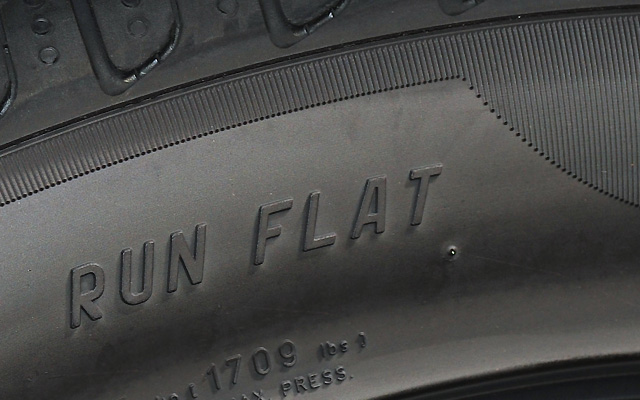
Run-flat tyres are different from your regular car tyre. To identify a run-flat tyre, check for the letters ‘RF’ or ‘Run-Flat’ on the sidewall of the tyre, or look for a symbol of a flat tyre with an arrow pointing upward. Some manufacturers use this to indicate that the tyre is a run-flat. Run-flat tyres typically have a thicker and stiffer sidewall than regular tyres.
How run-flat tyres work
There are two main types of run-flat tyres, self-supporting and support ring.
Self-supporting run-flat (SSR) tyres have reinforced sidewalls that holds the weight of the car when the tyre goes flat. They make it possible for you to continue driving at a slower speed to a safe location. Compared to regular tyres the construction of their sidewalls is stiffer and thicker.
Support ring run-flat tyres have a hard rubber or plastic ring attached to the inside of the tyre. When the tyre loses air pressure, the support ring takes over and supports the weight of your car, preventing the tyre from collapsing.
Both these types of run-flats allow you to drive a certain distance with a puncture, which makes them safe and convenient.
The main differences between run-flat tyres and conventional tyres are:
- Run-flat tyres have reinforced sidewalls that are thicker and stiffer than normal tyres
- They allow you to continue driving for a limited distance after a puncture or loss of air pressure in a tyre
- Run-flat tyres can be less comfortable to ride on compared to conventional tyres, because of their stiffer sidewalls
- Due to their specialised construction and technology, run-flat tyres are more expensive than conventional tyres
Just like regular tyres, run-flats can get a puncture. The difference is they are built to withstand a puncture and get you to safety.
We provide 24/7 roadside assistance.
Key features and design
To make run-flat tyres work well, they are built with stronger sidewalls that can handle the weight of the car even if the tyre is punctured. The sidewalls are made from materials like Kevlar or reinforced rubber.
The tyre tread is also made to last longer, with thicker rubber and deeper grooves. Run- flat tyres may look different from regular tyres, with flatter shapes and wider treads to spread out the weight of the car. They also provide better handling and grip, especially in wet weather, thanks to their stiffer construction and different tread patterns.
So, if you ever get a punctured run-flat tyre, don't worry too much, you can still drive for a limited distance and speed. Most run-flats let you drive for up to 50 miles at around 50 mph, which should give you enough time to get to safety.
Just remember not to drive on a run-flat tyre for too long, because it will eventually fail entirely. Once your tyre is replaced, ask the tyre centre to reset your tyre pressure monitoring system.
Benefits of run-flat tyres
The benefits of run-flat tyres are:
- The ability to drive for a certain distance even with a puncture
- Increased safety and reduced risk of accidents
- Less likely to lose control of the car
- Elimination of the need for immediate tyre replacement
- Enhanced stability and control when driving with a puncture
Considerations and limitations
To ensure that your tyres are safe and in good driving condition, it's important to check your cars Tyre Pressure Monitoring System (TPMS).
It’s an electronic system that monitors air pressure of the tyres on a vehicle and alerts the driver if the pressure drops. The TPMS can detect small changes in tyre pressure and warn the driver if a tyre is underinflated or overinflated, which can help to prevent accidents and damage.
There are two types of TPMS:
- Direct – sensors are inside the tyre and measure air pressure in real time
- Indirect – use the ABS system to calculate the tyre pressure by keeping an eye on the speed of the wheels
It's important to check with tyre fitters to ensure that they are able and willing to repair run- flat tyres, because not all tyre fitters have the equipment or expertise to do so.
Summary
Run-flat tyres have gained popularity because of their ability to provide drivers with added safety. They offer better handling and stability, when punctured.
However, it's worth noting that run-flat tyres can be more expensive than regular tyres and may not be compatible with all car models. Also, since run-flat tyres are self-supporting, they require a tyre pressure monitoring system to be installed on the vehicle to ensure safe operation.
The negative aspects of run flats are that they can reduce driver comfort, and tyre specialists are less likely to carry out tyre repairs on them.
Despite these limitations, run-flat tyres remain a popular choice for drivers who value added safety and convenience on the road.


