3 March 2026
Around a quarter of drivers (23%*) say that unmarked crossroads are their most disliked junction layout, according to new research by The AA’s Accident Assist team. Unmarked crossroads are mostly found on rural roads and forego either the accompanying road signs or road markings typically found at major crossroads. The removal of signs and paint on the road means no one has right of way, therefore requiring drivers to reduce their speed and take more time to observe and react before committing to a manoeuvre.
A poll of more than 13,000 drivers discovered that yellow box junctions were the most disliked by younger drivers, with 31% claiming it is their least favourite junction. Londoners detest yellow box junctions too, with almost two fifths saying it is their worst junction type. However, this may be due to over officious councils issuing fines for infringement**.
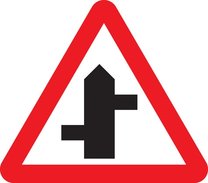
Staggered junctions, mini roundabouts and slip roads complete the top five most disliked junctions, whereas Give Way, Stop and controlled crossings such as Pelican crossings are favoured by drivers.
Top five most disliked junction designs – AA Accident Assist
- Unmarked Crossroads – 23%
- Yellow Box Junctions – 19%
- Staggered Junctions – 12%
- Mini Roundabouts – 9%
- Slip Roads – 6%
T and Staggered Junctions where most casualties occur
While more than one in 10 drivers dislike staggered junctions and just 2% despise T Junctions, data from the Department for Transport*** shows that these designs have the most casualties.
In 2024, more than 34,000 people were killed or injured at a T or Staggered Junction where 69% of casualties were heading straight on (23,561). More than 10,000 were turning right at the junction compared to 3,000 who were turning left. Round 2,800 drivers were setting off as they were hit.
Elsewhere, 12,544 casualties occurred at crossroads and 7,454 people were killed or injured at roundabouts in the same year.
“Turning across oncoming traffic remains a major cause of concern.”
AA Accident Assist is calling on drivers to be more cautious at all junctions, encouraging them to slow down, take extra time to look and ensure they allow as much space as possible for other road users – especially when turning right.
Casualty figures also highlight that turning right remains the most dangerous manoeuvre for drivers with 19,469 casualties taking place when turning across oncoming traffic. More than 6,500 casualties happened when drivers turned left.
Tim Rankin, managing director of AA Accident Assist, said; “Junctions can become crash hotspots, particularly if drivers don’t take the time to assess the situation properly. While unmarked crossroads are the most hated by drivers, it seems the lack of signs and road markings is creating the right behaviours by slowing down traffic and forcing people to look before they drive.
“We now need to replicate this attitude at all junctions to reduce crashes and casualties. There are too many instances where slowing down and taking more time to look would’ve avoided a crash, especially at T and staggered junctions.
“Turning across oncoming traffic remains a major cause of concern. The golden rule remains if you are unsure, wait. Drivers must be certain they can safely complete the move before committing.”
* Yonder received 13,481 responses from AA members to its online poll between the 8th to 18th September 2025. Yonder is a member of the British Polling Council and abides by its rules.
** AA launches ‘Caught in a Trap’ campaign
*** Reported road casualty statistics in Great Britain: interactive dashboard, from 2018