OH DEER! Deer-Vehicle Collisions hit six-year high as drivers warned of winter danger

AA Accident Assist and British Deer Society join forces to warn motorists of continued collision risk
- AA Accident Assist records 284 deer-vehicle collisions during the autumn rutting season, the highest number in six years
- Collisions during the rutting season have risen by 46% since 2021
- AA Accident Assist and British Deer Society urge drivers to remain alert as winter approaches
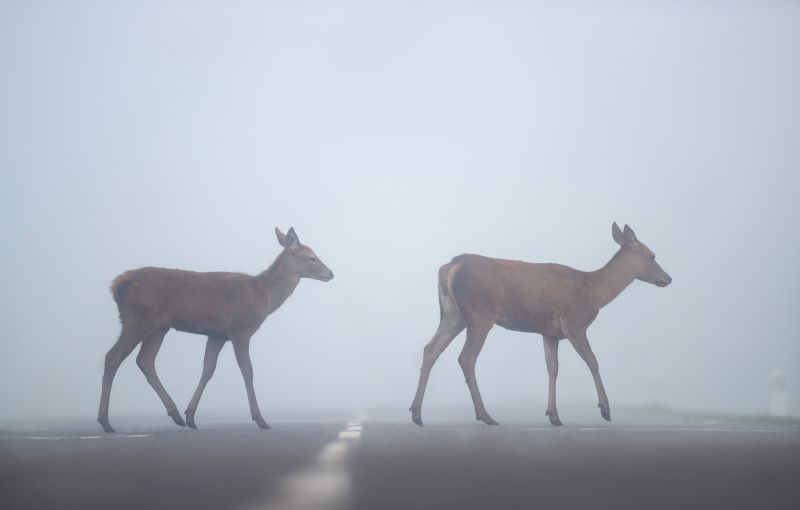
Deer-vehicles collisions (DVC) during the autumn rutting season have reached a six-year high, prompting AA Accident Assist and the British Deer Society (BDS) to issue a joint warning to drivers about the continued risk of collisions as winter approaches.
New figures from AA Accident Assist*, which helps AA members following road traffic collisions, show that 284 DVCs were recorded between 14 September and 13 November 2026, up 4% on the 273 incidents recorded during the same period last year.
The latest total represents a 46% increase compared to 2021, when 195 DVCs were recorded.
Although the traditional autumn rutting season is coming to an end, both organisations are urging motorists to remain vigilant, particularly on rural roads and routes surrounded by woodland.
With darker mornings and evenings making deer harder to spot, drivers are being encouraged to reduce their speed and remain alert in areas where animals may cross the road.
Deer-vehicle collisions during the peak autumn rutting season (14 September to 13 November)
- 2021 – 195
- 2022 – 222
- 2023 – 242
- 2024 – 276
- 2025 – 273
- 2026 – 284
The latest figures follow 1,106 DVCs recorded by AA Accident Assist between January and August 2026, highlighting the risk of collisions throughout the year.
AA Accident Assist figures do not represent the overall national picture for deer incidents, which is likely to be considerably higher.
AA Accident Assist
Tim Rankin, managing director of AA Accident Assist, said: “Deer-vehicle collisions can happen in a split second, often leaving drivers with little time to react. We know from helping AA members following collisions just how distressing these can be, potentially causing serious injuries and as well as thousands of pounds worth of damage to vehicles.
“Our figures show that incidents during the autumn rutting season have increased by almost half in five years. While the rutting season is drawing to a close, the danger hasn't passed.
“Darker mornings and evenings can make deer harder to spot, particularly on rural roads and through woodland. We would encourage drivers to reduce their speed in areas where deer may be present and remember that where there is one deer, others may follow.
“If a deer suddenly appears in front of your vehicle, brake firmly while maintaining control. Swerving to avoid an animal could result in a far more serious collision.”
British Deer Society
Charles Smith-Jones, Technical Adviser, British Deer Society, said: "Although peak autumn rutting activity is ending, deer remain active through late autumn and winter. Shorter days mean deer are often moving during periods of reduced visibility, particularly at dawn and dusk, but sometimes throughout the day.
“Drivers should remain alert on roads passing through woodland, farmland and other areas where deer are known to be present.
“If you see one deer, expect others nearby and reduce your speed accordingly. Taking a little more time on these roads can help prevent serious injuries to both people and deer.
“There is no absolutely safe period. Motorists can encounter deer on the roads at any time of day or night, sometimes even in built-up areas where they might least expect to see them."
AA Accident Assist and British Deer Society advice for avoiding deer-vehicle collisions
Both organisations are encouraging motorists to take extra care when travelling through areas where deer may be present and to follow the DeerAware guidance.
- Slow down: Reduce your speed when travelling through woodland, rural roads and areas with deer warning signs.
- Stay alert: Deer are often more active around dawn and dusk, when reduced visibility can make them harder to spot.
- Expect more than one: Deer often travel in groups, so be prepared for others to follow if one crosses the road.
- Avoid swerving: If a deer appears in your path, brake firmly while maintaining control. Swerving could lead to a more serious collision.
- Stay safe after a collision: Stop somewhere safe, switch on your hazard warning lights and avoid approaching an injured deer.
- Report the incident: Contact the police if a deer is injured, obstructing the road or presenting a danger to other road users.
* Figures are based on deer-related incidents recorded by AA Accident Assist. Rutting-season figures cover 14 September to 13 November each year, from 2021 to 2026.
The January to August 2026 figure covers incidents recorded between 1 January and 31 August 2026.
The figures represent incidents recorded by AA Accident Assist and do not reflect the total number of deer collisions across the UK.
Q&A
1. How many deer-vehicle collisions were recorded during the 2026 autumn rutting season?
AA Accident Assist recorded 284 deer-vehicle collisions between 14 September and 13 November 2026, the highest number recorded during the equivalent period in six years. This represents a 4% increase on the 273 incidents recorded in 2025 and a 46% increase compared with 2021, when 195 collisions were recorded.
2. Are deer-vehicle collisions increasing in the UK?
AA Accident Assist figures show that deer-vehicle collisions during the autumn rutting season have increased by 46% since 2021, rising from 195 to 284 in 2026. The figures cover incidents recorded by AA Accident Assist rather than all deer-vehicle collisions across the UK. The overall national number of incidents is likely to be considerably higher.
3. Are drivers still at risk of hitting deer during winter?
Yes. Although the peak autumn rutting season ends in November, deer remain active throughout late autumn and winter. AA Accident Assist and the British Deer Society warn that shorter days and reduced visibility can make deer harder to spot. Drivers should remain particularly alert on rural roads, through woodland and near farmland, especially around dawn and dusk.
4. What should drivers do if a deer suddenly appears in front of their vehicle?
Drivers should brake firmly while maintaining control of their vehicle. AA Accident Assist and the British Deer Society advise against swerving to avoid a deer, as this could result in a more serious collision. Drivers should reduce their speed in areas where deer may be present and remember that other deer may follow if one crosses the road.
5. Where and when are drivers most likely to encounter deer on the road?
Drivers should take particular care on roads passing through woodland, farmland and other areas where deer are known to be present. Deer are often active around dawn and dusk, when reduced visibility makes them harder to spot. However, the British Deer Society warns that deer can appear at any time of day or night, including in built-up areas.
6. What should drivers do after a collision with a deer?
Drivers involved in a deer-vehicle collision should stop somewhere safe, switch on their hazard warning lights and avoid approaching an injured deer. They should contact the police if the animal is injured, obstructing the road or presenting a danger to other road users. AA Accident Assist and the British Deer Society recommend following DeerAware safety guidance.
7. How can motorists reduce the risk of deer-vehicle collisions?
AA Accident Assist and the British Deer Society recommend reducing speed on rural roads, through woodland and in areas displaying deer warning signs. Drivers should remain alert during periods of reduced visibility, particularly at dawn and dusk. If one deer crosses the road, motorists should anticipate that others may follow. Drivers should avoid swerving and brake firmly while maintaining control if a deer appears in their path.
Deer collisions
Advice if you've had a collision with a deer while driving?
Animal damage and car insurance
Is your car insured against animal damage?