Skip to main content [Accesskey 'S']Go to home page [Accesskey '1']
Are you a business customer?
  • Broken down?|
  • Had an accident?|
  • Help and support
  • Breakdown cover
  • Report a breakdown
  • Personal breakdown cover
  • Multicar breakdown cover
  • Family breakdown cover
  • European breakdown cover
  • Motorbike breakdown cover
  • Electric car breakdown cover
  • Business breakdown cover
  • Caravan and motorhome breakdown cover
  • Instant breakdown cover
  • Report an accident
  • Wrong fuel assistance
  • Manage your cover
  • Breakdown guides
  • Car insurance
  • Multi-Car Discount
  • Van insurance
  • Electric car insurance
  • Short term car insurance
  • Motorbike insurance
  • Car insurance guides
  • Home insurance
  • Buildings insurance
  • Contents insurance
  • Home insurance guides
  • Travel insurance
  • Backpacker travel insurance
  • All insurance products
  • Car insurance claim
  • Home insurance claim
  • Manage your policy
  • MOTs
  • Car servicing
  • Mobile mechanics
  • Diagnostics
  • Brake pads and discs
  • Car battery replacement
  • Car key replacement
  • Oil and filter change
  • Vixa proactive car care
  • Wrong fuel assistance
  • Car warranty
  • Car servicing guides
  • MOT guides
  • Used cars for sale
  • New cars to lease
  • AA cars and vans
  • Car history check
  • Car warranty
  • Car finance
  • Sell your car
  • Vehicle inspection
  • Vehicle delivery
  • Car reviews
  • Car buying guides
  • Driving School
  • Driving instructor training
  • Driving School franchise
  • EV Driving School franchise
  • Driving instructor guides
  • Driving lessons
  • Refresher driving lessons
  • AA Driving Theory app
  • Manage your lessons
  • Learner driver insurance
  • Learner driving advice
  • Personal loans
  • Car loans
  • Debt consolidation loans
  • Home improvement loans
  • Manage your loan
  • Savings accounts
  • Easy Access Savings
  • AA Member Saver
  • Manage your savings
  • All finance products
  • Finance guides
  • Route planner
  • Traffic news
  • Mileage calculator
  • Fuel price report
  • Travel insurance
  • Backpacker travel insurance
  • Atlases travel guides and driving kits
  • Travel ideas and places to stay
  • Driving advice

How to replace a car battery

Safely and efficiently replace your battery the correct way with our essential step by step guide
Last updated 07 April 2025

Is your car struggling to start or not starting at all? Have you tried charging the battery or jump starting it, only to find the battery running flat again soon after?

It's likely time to change your car battery. Read on to learn more about how to safely change your battery the correct way.

Electrical faults that can cause a car battery to run flat

 If your battery continues to run flat after replacement, there may be an electrical fault that requires investigation by a professional.

Issues such as a faulty alternator, parasitic drain, or wiring problems can cause your battery to discharge quickly. It’s important to determine whether all of these systems are working correctly before replacing a battery.

What you’ll need to change your car battery

Before you do anything the first thing you need to do is identify the correct replacement battery for your vehicle. Check your vehicle's manual to ensure you get the right size and type. 

Tools you’ll need:

  • Common spanner sizes – Typically, 10mm or 13mm spanners are needed.
  • Socket wrench – Useful for hard-to-reach areas where a spanner might not fit.
  • Cloth – To cover the terminal you aren’t working on for safety.

Step by step guide for replacing your car battery

Our guide aims to help you when changing a car battery, but if you don’t feel confident opening the bonnet and doing it yourself then we recommend getting a professional mechanic to do the job instead.

Safety considerations 

 Before you replace your car battery, follow these safety steps:

  • Take the keys out of the ignition.
  • Cover the terminal you’re not working on with a cloth.
  • Disconnect the negative terminal first, then the positive terminal.
  • Check your vehicle’s manual if you’re unsure about anything.

If you have any safety concerns once you’ve started changing your battery, stop immediately and contact a professional mechanic or automotive service. It's better to get help from an expert than to risk damaging your vehicle or injuring yourself.

Step 1 – Open the bonnet 

First, locate the lever to open the bonnet inside the cabin of your car.

This lever is usually found near the driver’s seat, either on the side or under the dashboard. Pull the lever to release the bonnet catch.

Next, go to the front of the car and find the secondary release lever under the bonnet. This is often in the centre or slightly to one side. Slide or push the lever to fully release the bonnet.

Finally, lift the bonnet carefully and secure it using the support arm. The support arm is usually clipped to the side of the engine bay and should be locked into place to keep the bonnet open safely while you work.

Step 2 – Identify the battery 

Find the battery in the engine bay. It’s usually a rectangular box with two cables connected to it. Identify the positive and negative terminals.

The positive terminal has a plus sign (+) and often a red cover or cable. The negative terminal has a minus sign (-) and usually a black cover or cable. Make sure you can clearly tell them apart before moving on to the next step.

Step 3 – Disconnect the battery 

First, disconnect the negative terminal. Loosen the nut with a spanner and remove the cable.

Next, disconnect the positive terminal in the same way.

Move both cables out of the way to prevent them from touching the terminals.

Step 4 – Remove the battery 

Most batteries are held in place with a "tie-down" or clamp across the casing. Remove the bolts holding the battery down using a spanner or socket wrench.

Many batteries have built-in handles to help with lifting. Use these handles to carefully lift the battery out of the engine bay.

Step 5 – Replace the battery 

Place the new battery in the correct orientation and re-attach the tie-down strap to secure it.

First, remove the plastic caps (if they’re fitted) from the terminals. Second, connect the positive terminal, then connect the negative terminal.

Once everything is connected, test the battery by starting the vehicle.

Why car batteries stop charging 

Car batteries work through a chemical reaction that stores and releases electrical energy. Over time, the materials inside the battery, like lead plates and electrolyte fluid, degrade due to repeated charging and discharging cycles.

This degradation can be caused by several factors, including:

  • Sulphation – Lead sulphate crystals build up on the battery plates, reducing their ability to hold a charge.
  • Corrosion – The battery terminals and internal components can corrode, hindering the flow of electricity.
  • Temperature extremes – High temperatures can accelerate the chemical reactions inside the battery, leading to faster wear. Cold temperatures can reduce the battery's ability to deliver power.

These factors gradually reduce the battery's capacity, eventually leading to its inability to hold a charge.

Average lifespan of a car battery 

A new car battery typically lasts between 3 to 5 years. However, several factors can influence its lifespan and overall health:

  • Driving habits – Short trips and frequent starts can strain the battery, reducing its lifespan. Longer journeys help keep the battery charged.
  • Climate – Extreme temperatures, both hot and cold, can affect battery performance and longevity. High heat accelerates chemical reactions, leading to faster degradation, while cold temperatures can reduce the battery’s ability to deliver power.
  • Maintenance – Regularly checking and maintaining your battery can extend its life. This includes keeping the terminals clean and ensuring the battery is securely fastened.
  • Electrical usage – Excessive use of electronic accessories, such as lights, radio, and air conditioning, can drain the battery more quickly.

If you ever breakdown due to your battery or have any battery related issue and you’re an AA member, you can report your breakdown online or via the AA App, and we'll send a patrol to you. 

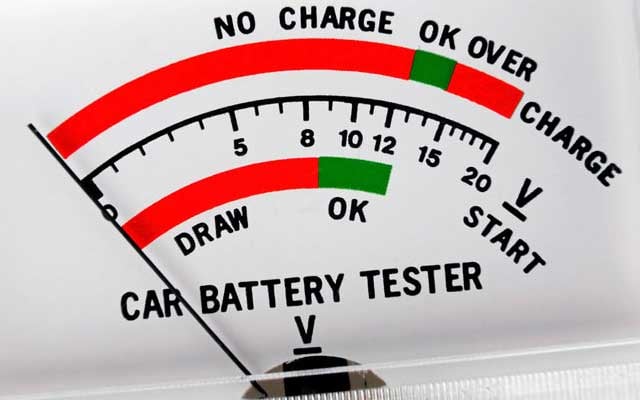
If you suspect your battery is just flat but not in need of replacing, check out our guide to flat batteries, where we have some info on tests you can carry out to determine your battery’s health.

If you're not member and need immediate support, don't buy breakdown cover online. Instead, call us for instant breakdown cover and we'll send a patrol to you. 

Related pages

Flat battery

Flat battery

Find out how The AA will fix your flat battery

Change a flat tyre

Find out how to change a flat tyre with our guide

Signs of head gasket failure

Can you repair a head gasket and is it worth fixing?

The top reasons why your car won't start

Why do cars sometimes fail to start up? Learn about the most common reasons you might have trouble starting your car.

Using jump leads

Using jump leads

Discover how to use jump leads safely with our expert guide

Looking for 24/7 assistance?

AA breakdown cover assists you any time of the day without age vehicle limit.

Get a quote
  1. Homearrow-right
  2. Breakdown coverarrow-right
  3. Advicearrow-right
  4. How to replace a car battery
  • About us
  • Gender pay gap
  • Help and support
  • Apps
  • Careers
  • Modern slavery
  • Terms of use
  • Privacy notice
  • Privacy hub
  • Cookies

© Automobile Association Developments Ltd. 2026