Keep it local: final bank holiday before Christmas set for shorter trips

-
Almost 19 million drivers making journeys of less than 50 miles on Friday
-
Family visits, shopping and local days out set to shape the final bank holiday before Christmas
-
More than 7 million drivers still undecided about their bank holiday Monday plans
-
“Whether you're travelling five miles or 500, allow extra time and make sure the car is ready before setting off.”- AA expert patrol
Britain looks set to keep it local for the final bank holiday before Christmas, with almost 19 million cars potentially making journeys of less than 50 miles on Friday, according to a new AA survey*.
Friday is expected to be the busiest day on the roads, with around 23.5 million drivers potentially travelling, followed by 22.9 million on Saturday, 21.7 million on Sunday and 21.6 million on bank holiday Monday.
Despite those big numbers, most journeys will be relatively short. Almost 19 million cars could travel less than 50 miles on Friday, with around 18.7 million doing so on Saturday, 17.9 million on Sunday and 17.7 million on Monday.
The longer-range forecast points to a changeable bank holiday, with showers or longer spells of rain possible alongside drier interludes. Strong winds and thunderstorms are also possible, while temperatures are more likely to be above normal overall.
More than 7 million drivers are still undecided about their bank holiday Monday plans, while around 6.9 million Sunday drivers are also yet to decide the reason for their journey, leaving scope for traffic patterns to shift at short notice.
How many cars could be on the road?
| Date | Planning to drive | Estimated cars |
| Friday 28 August | 68% | 23.5m |
| Saturday 29 August | 66% | 22.9m |
| Sunday 30 August | 63% | 21.7m |
| Monday 31 August | 63% | 21.6m |
Most trips will be relatively short, although there will still be a significant long-distance getaway, with more than 2 million cars expected to travel over 100 miles on Friday alone.
How far are drivers planning to travel?
| Distance | Friday | Saturday | Sunday | Monday |
| Under 50 miles | 18.9m | 18.7m | 17.9m | 17.7m |
| 51 to 100 miles | 2.6m | 2.4m | 2.2m | 2.2m |
| 101 to 150 miles | 0.9m | 0.8m | 0.7m | 0.7m |
| 151 to 200 miles | 0.6m | 0.4m | 0.4m | 0.5m |
| 201 to 250 miles | 0.2m | 0.2m | 0.2m | 0.2m |
| 251 to 300 miles | 0.2m | 0.2m | 0.1m | 0.1m |
| 301 to 350 miles | 0.1m | <0.1m | <0.1m | 0.1m |
| 351 to 400 miles | 0.1m | 0.1m | <0.1m | 0.1m |
| over 400 miles | 0.1m | 0.1m | 0.1m | <0.1m |
| Total travelling more than 100 miles | 2.1m | 1.7m | 1.6m | 1.6m |
Almost 4 million drivers are expected to be out for family visits on Sunday, while shopping could account for around 4.7 million cars on Friday and 4.2 million on Saturday.
Why drivers are taking to the road
| Journey Reason | Friday | Saturday | Sunday | Monday |
| Visiting Family | 13% | 16% | 18% | 12% |
| Shopping | 20% | 19% | 10% | 11% |
| Work | 22% | 9% | 8% | 17% |
| Sporting Event | 2% | 4% | 3% | 2% |
| Other Attractions/day out | 2% | 3% | 4% | 3% |
| Road Trip | 2% | 2% | 3% | 2% |
| Day trip to coast | 1% | 2% | 2% | 2% |
| Long weekend away | 3% | 2% | 3% | 2% |
| UK holiday | 3% | 3% | 2% | 3% |
| Undecided | 19% | 26% | 32% | 34% |
Where could roads be busiest?
Shorter journeys could put pressure on local roads around leisure and shopping destinations, alongside traditional holiday routes to the coast and South West.
Likely hotspots include:
- local routes around shopping centres, retail parks and garden centres
- roads heading towards the east coast, including routes to resorts such as Skegness
- routes towards the South West and Cornwall, including the A303, M5 and A38
- the M4 from London and routes leading towards Wales
- the M6 towards Blackpool and the North West coast
- roads serving popular seaside towns, national parks, ports and airports
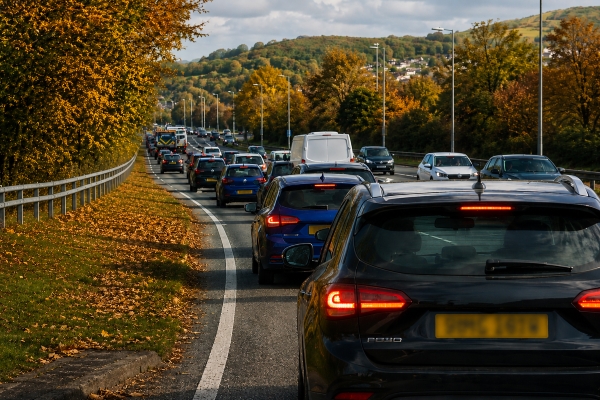
Drivers can use The AA Routeplanner to check live traffic conditions, delays and their route before setting off. The AA app can also help motorists find cheaper fuel nearby and identify useful stops along their journey.
Lee Morley, AA expert patrol, said: “The final bank holiday before Christmas is one last chance for families and friends to make the most of a long weekend, and for most people that doesn't mean travelling hundreds of miles. Many will be making shorter trips to see family, go shopping or enjoy a day out closer to home.
“The weather could have a big say in how the weekend develops. A significant number of drivers haven't yet decided exactly what they'll be doing, so a dry spell could encourage people to head out at short notice, while heavier rain could change when and where they travel.
“That doesn't mean longer-distance routes will be quiet. More than 2 million cars could travel over 100 miles on Friday alone, so motorways and major holiday routes will still see plenty of getaway traffic. Whether you're travelling five miles or 500, check The AA Routeplanner before setting off and make sure the car is ready.”
Before setting off, drivers should remember FLOWER: Fuel, Lights, Oil, Water, Electrics and Rubber. A few quick checks can help prevent avoidable breakdowns, especially when cars are carrying extra passengers, luggage or pets on longer bank holiday journeys. Drivers heading away for a longer break should also check their breakdown cover before travelling.
- Fuel – make sure you have enough petrol, diesel or charge for the journey, and plan stops in advance
- Lights – check all lights and indicators are working properly
- Oil – check the oil level and top up if needed
- Water – check coolant and screenwash levels before a long drive
- Electrics – look out for warning lights, check the battery if the car has been standing, and make sure devices are charged
- Rubber – check tyre pressures, tread depth and condition, including any spare or repair kit
* Yonder received 11,121 responses from AA members to its online poll between the 13 and 19 August 2026. Yonder is a member of the British Polling Council and abides by its rules. Travel volumes are calculated using an assumed figure of 34,485,000 cars on the road.
Estimated vehicle numbers have been scaled against 34,485,000 cars on the road. Figures may not sum due to rounding.